
Why connect brands and retailers in food wholesale
Connecting brands and retailers through a shared distribution infrastructure is the defining commercial strategy for independent food retail success in 2026. The industry term for this is brand-retailer alignment, and it describes the deliberate coordination of product supply, category curation, and market intelligence between food brands and the independent shops that sell them. Understanding why bridge brands and retailers matters requires looking at the structural pressures squeezing both sides: thin profit margins of around 29p on a £20.24 basket of staple products, rising operational costs, and a distribution system where wholesaler relationships determine who gets shelf space and who does not. Woodford sits at the centre of this equation as the UK’s leading strategic food wholesaler, connecting ambitious independent retailers with visionary food brands through curated ranges and reliable logistics.
What are the primary benefits of bridging brands and retailers?
Brand-retailer alignment delivers measurable commercial gains for both parties, and the most immediate benefit is supply chain efficiency. Wholesaler partnerships allow independent retailers to access thousands of SKUs through a single relationship, reducing the capital tied up in bulk forecasting and cutting dead stock risk. Ordering closer to real-time demand rather than weeks in advance frees working capital that independents can redirect into marketing, staffing, or store improvements.
The second major benefit is category intelligence. UK wholesalers now provide category data, planograms, and digital integration alongside product supply. That means a retailer stocking a new ambient snack range does not just receive boxes. They receive guidance on where to position products, which lines are trending, and which SKUs are underperforming in comparable stores.
Margin protection is the third benefit, and it is the one that matters most in the current cost environment. Retailers who consolidate purchasing through a single strategic wholesaler gain access to volume rebates and sharper pricing that individual brand negotiations rarely deliver. For brands, the benefit is equally clear: a wholesaler relationship replaces dozens of fragmented retailer conversations with a single, scalable route to market.
- Reduced dead stock risk: Ordering against real demand rather than forecasts cuts overstock and write-offs.
- Category curation support: Wholesalers provide range advice aligned to independent retailer shopper profiles.
- Volume rebates: Consolidated purchasing unlocks pricing tiers unavailable through direct brand negotiation.
- Market intelligence: Brands gain aggregated sales data across multiple retail accounts rather than single-store feedback.
- Faster product access: Retailers with active wholesaler relationships receive new product listings before passive accounts.
Pro Tip: Treat your wholesaler account manager as a category consultant, not just an order processor. Share your sales data monthly and ask for range reviews twice a year. Retailers who do this consistently outperform passive accounts on both margin and product availability.
How does UK food retail distribution shape brand access?
The UK food retail distribution system is not a level playing field. Brands absent from key wholesaler listings are effectively invisible to most independent retailers, regardless of how strong their direct marketing is. A brand can run national advertising, win trade press awards, and still fail to reach a single independent convenience store if it is not listed by that store’s chosen wholesaler.

This gatekeeping function means that brand power alone does not determine retail access. Logistical listing and wholesaler approval are the real determinants of distribution reach. A product must clear multiple decision points before it reaches a shelf: brand pitch, wholesaler category review, minimum order compliance, and physical distribution capability. Each stage adds cost and time.
“The distribution system is dominated by wholesaler listings rather than raw brand power. Brands that understand this invests in wholesaler relationships before they invest in consumer advertising.”
Strategic wholesaler relationships differ fundamentally from one-off supply contracts. A transactional contract gets a product into a warehouse. A strategic relationship gets it onto shelves, keeps it there, and generates the reorder data that justifies range expansion. The distinction matters enormously for brands planning a national rollout through independent retail.
The practical implication for food business professionals is clear. Selecting the right wholesale distribution partner is a commercial decision with long-term consequences. A wholesaler with strong independent retailer relationships, category expertise, and digital ordering infrastructure provides a brand with distribution reach that no direct sales team can replicate at equivalent cost.
What practical strategies enable successful brand-retailer collaboration?
The most effective brand-retailer collaborations share one characteristic: both parties treat the relationship as a commercial partnership with data flowing in both directions, not a one-way supply arrangement. Proactive data sharing between retailers and wholesalers produces early product access and better commercial terms. Brands that provide wholesalers with consumer demand evidence before launch secure faster listing decisions and more committed retail placement.
Category ecosystem fit matters more than product quality alone. Industry experts confirm that ecosystem fit drives long-term buyer confidence over brand power. A premium hot sauce brand that complements an existing ambient condiments range will outperform a technically superior product that sits awkwardly in the category. Retailers think in ranges, not individual products, and brands that understand this win more consistent reorders.
Supply chain readiness is the most commonly underestimated factor. Premature distribution before operational stability leads to costly delistings that damage brand reputation more severely than a delayed launch. A brand that cannot fulfil a reorder within an agreed lead time loses shelf space and credibility simultaneously.
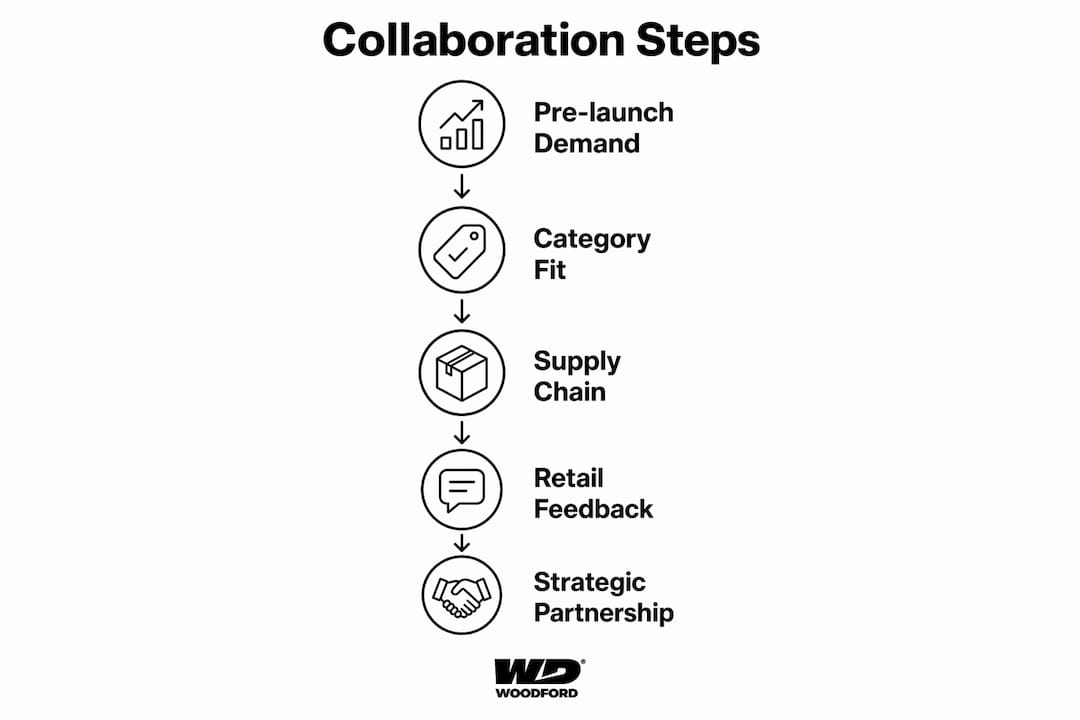
| Collaboration approach | What it delivers | Risk if skipped |
|---|---|---|
| Pre-launch demand evidence | Faster wholesaler listing decisions | Slow or rejected listing |
| Category ecosystem mapping | Consistent reorders and range retention | Poor sell-through and delisting |
| Data sharing with wholesaler | Early access to new products and better terms | Passive account status and weaker pricing |
| Supply chain readiness audit | Stable fulfilment and retailer confidence | Delisting and reputational damage |
Curated wholesale platforms increase average order values and reduce returns by matching products with retailers who have genuine intent to sell and reorder. The curation model works because it filters out poor-fit placements before they become costly returns or dead stock. Brands that choose curated wholesalers over broad-reach distributors typically see stronger sell-through rates and more durable retail relationships.
Pro Tip: Before approaching a wholesaler, map your product against the existing category range they supply. Identify two or three complementary lines already listed and explain how your product extends that range. This category fit approach converts more listing conversations into confirmed orders.
What pressures make brand-retailer alignment critical in 2026?
The economic environment facing independent food retailers in 2026 makes brand-retailer alignment not a commercial preference but an operational necessity. Rising minimum wages and National Insurance contributions are compressing margins that were already thin. Independent convenience retailers are demanding more margin-protecting support and sharper pricing from their wholesale partners as a direct response.
The IGD’s analysis of food system resilience identifies a structural problem at the core of independent retail. Retailers can no longer subsidise losses through non-core income streams. Cost reduction through better data collaboration and wholesale partnerships is now a survival requirement, not a growth strategy. IGD analysts describe a “workforce paradox” where labour costs rise while productivity gains from automation remain out of reach for most independents without external support.
| Cost pressure | Impact on independents | Partnership response |
|---|---|---|
| Rising minimum wage | Higher labour costs per transaction | Wholesaler efficiency and volume rebates |
| National Insurance increases | Reduced net margin on every sale | Consolidated purchasing for better pricing |
| Business rates | Fixed overhead regardless of revenue | Category curation to maximise sales per SKU |
| Supply chain volatility | Unpredictable product availability | Strategic wholesaler with reliable logistics |
Digital transformation adds another layer of pressure. Independents that rely on manual ordering, paper-based stock management, and reactive purchasing cannot compete on efficiency with larger format retailers. Automation and deeper wholesale partnerships are the two levers that IGD identifies as most effective for building long-term retail resilience. Neither is achievable without a wholesaler relationship that goes beyond transactional supply. Local food retailers across Europe face comparable pressures, and partnership-led models are emerging as the consistent response to margin compression in independent food retail.
The types of food wholesalers available to independent retailers vary significantly in the depth of support they provide. Strategic wholesalers that offer category data, digital ordering, and curated ranges deliver measurably more value than cash-and-carry models in a high-cost operating environment.
Woodford’s role in connecting food brands and independent retailers
Woodford works with food brands and independent retailers across the UK to create distribution relationships that go beyond moving boxes. As the UK’s leading strategic food wholesaler, Woodford curates quality food brands that fit the category needs of ambitious independent retailers, providing exclusive distribution, trend-led range selection, and dependable logistics. For brands, Woodford offers a direct route into independent retail without the complexity of managing dozens of individual retailer accounts. For retailers, Woodford provides access to a curated portfolio of products that are selected for category fit, consumer demand, and commercial viability. If you are a food brand seeking wider distribution or an independent retailer looking to strengthen your range, Woodford’s partnership model is built to deliver both.
Key takeaways
Connecting brands and retailers through strategic wholesale partnerships is the most effective way to protect margins, improve product-market fit, and build long-term resilience in independent food retail.
| Point | Details |
|---|---|
| Wholesaler listings determine access | Brands not listed by a retailer’s chosen wholesaler are invisible, regardless of marketing spend. |
| Data sharing drives better terms | Retailers who share sales data with wholesalers gain early product access and preferential pricing. |
| Category fit outperforms brand power | Products that complement existing ranges generate more consistent reorders than superior standalone products. |
| Supply chain readiness is non-negotiable | Premature distribution leads to delistings that damage brand reputation more than a delayed launch. |
| Cost pressures make partnerships essential | Rising wages, National Insurance, and business rates mean independent retailers need wholesaler support to protect margins. |
FAQ
Why do brands need wholesalers to reach independent retailers?
Brands not listed by a retailer’s chosen wholesaler are effectively invisible to that retailer, regardless of direct marketing efforts. The UK distribution system is structured around wholesaler listings, making wholesaler approval the primary gateway to independent retail shelf space.
What is the biggest risk in brand-retailer collaboration?
Premature distribution before supply chain stability is the highest-risk error. It leads to delistings that damage brand reputation and retailer confidence, which are significantly harder to recover from than a delayed but well-prepared market entry.
How can independent retailers improve their wholesaler relationships?
Retailers who share sales data and provide regular feedback to their wholesaler consistently receive early access to new products and better commercial terms. Treating the wholesaler relationship as a proactive commercial partnership rather than a transactional supply agreement produces the strongest outcomes.
What role does category fit play in brand-retailer partnerships?
Category ecosystem fit is a stronger predictor of long-term retail success than product quality alone. Brands that complement existing ranges and align with a retailer’s shopper profile generate more consistent reorders and longer-term placement.
How do rising costs in 2026 affect brand-retailer alignment?
Rising minimum wages, National Insurance contributions, and business rates are compressing independent retailer margins to the point where wholesaler support on pricing, efficiency, and category curation has become a commercial necessity rather than an optional advantage.


