
What is strategic wholesaling in the UK food industry?

Strategic wholesaling is defined as a value-driven approach to wholesale distribution that goes beyond moving volume to include tailored product curation, data-driven category insights, and integrated logistics partnerships. The UK wholesale sector is valued at £410 billion and employed 2.8 million people in 2023. That scale signals just how central wholesaling is to the UK food economy. Yet the most significant shift is not in size. It is in function. Strategic wholesaling has transformed wholesalers from passive intermediaries into active partners that support both food brands and independent retailers in building competitive, resilient businesses.
What is strategic wholesaling and how does it differ from traditional models?
Traditional wholesaling centres on one transaction: buy in bulk, sell at margin. Strategic wholesaling replaces that transactional logic with a partnership model built on shared goals, market intelligence, and supply chain integration. The difference is not cosmetic. It changes what a wholesaler does, what data they share, and how deeply they embed themselves in a retailer’s or brand’s operations.
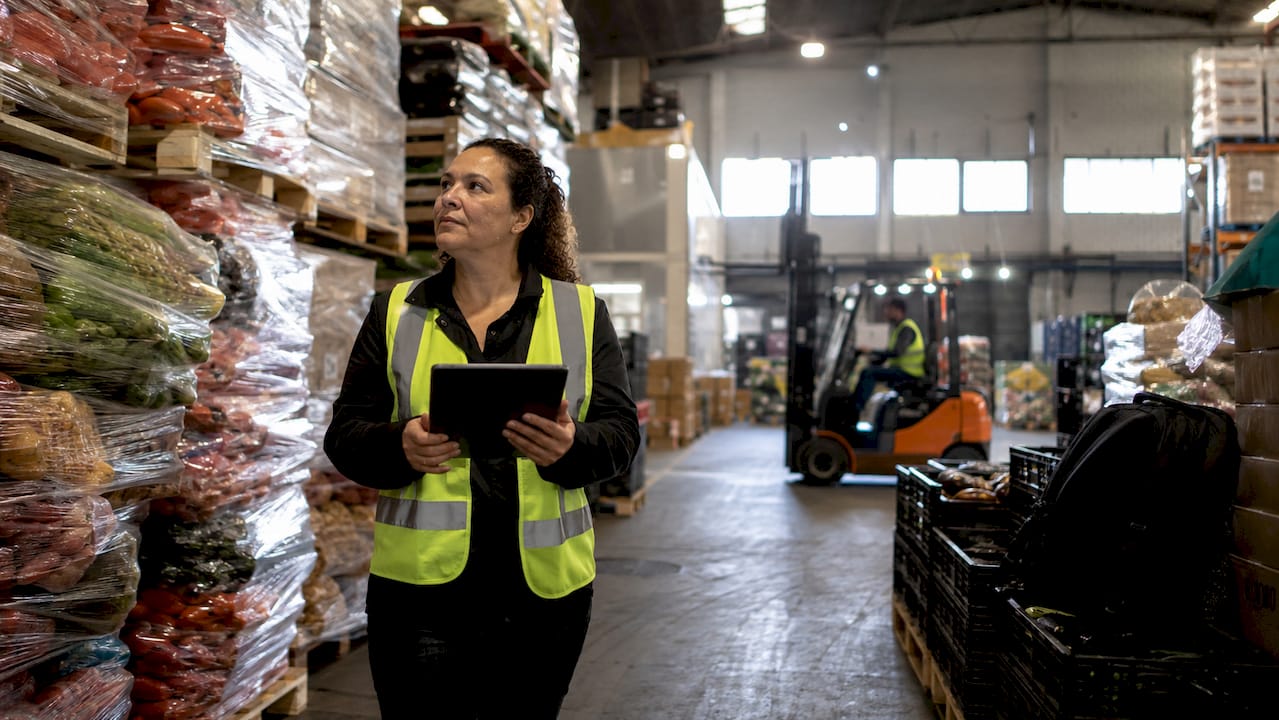
Traditional cash-and-carry models put the burden of product selection, stock management, and logistics planning squarely on the buyer. A strategic wholesale partner removes that burden by offering structured support across the entire supply chain. The result is a fundamentally different relationship.
The core functions that define strategic wholesaling include:
- Inventory management and demand forecasting. Strategic wholesalers use data to predict what retailers need before they run out, reducing costly gaps on shelf.
- Trade credit and flexible ordering. Trade credit from wholesalers helps independent retailers manage cash flow, particularly during slow trading periods when operating capital is tight.
- Risk absorption. Wholesalers hold unsold stock, manage supplier relationships, and absorb price volatility so retailers do not have to.
- Category advice and planograms. Leading UK wholesalers provide structured merchandising guidance to help retailers optimise their product ranges.
- Digital B2B integration. 70% of UK wholesalers used ERP systems in 2023 for ordering integration. That figure shows how deeply technology has embedded itself in the sector.
Pro Tip: When evaluating a wholesale partner, ask specifically about their category data capabilities. A wholesaler who can show you category-level sales trends is worth considerably more than one who can only quote you a price list.
How does strategic wholesaling support supply chain resilience?
Supply chain resilience is the ability to absorb shocks and keep product flowing to retailers without disruption. Strategic wholesaling builds that resilience through three mechanisms: risk absorption, financial support, and digital integration.
Wholesalers absorb risk by holding unsold stock and managing supplier relationships directly. This relieves both retailers and manufacturers from carrying the capital and space costs of buffer inventory. When a supply disruption hits, a well-stocked strategic wholesaler acts as a buffer between the disruption and the retailer’s shelf.
“Modern wholesaling has transformed wholesalers from passive intermediaries into strategic partners offering supply chain resilience, digital integration, and tailored product support. The shift means that a wholesaler’s value is no longer measured in pallets moved, but in problems solved.”
Trade credit is a further layer of resilience. For independent retailers with limited operating capital, the ability to receive stock now and pay later can determine whether a business survives a slow month. Strategic wholesalers build this into their offer as a deliberate tool for partner retention and retailer stability.
Digital integration is the third pillar. Effective strategic wholesaling requires integration of digital ordering platforms with retail inventory systems to prevent costly ordering errors and support AI-driven replenishment. When a retailer’s point-of-sale system connects directly to a wholesaler’s ordering platform, replenishment becomes automatic and accurate. That removes human error from one of the most expensive parts of the supply chain.
Strategic partnerships also drive physical infrastructure improvements. The Arla Foods and XPO Logistics distribution hub for chilled goods, launched in 2026, focused on resilience, safety, sustainability, and reduced road miles. That kind of centralised infrastructure investment is a direct expression of strategic wholesaling principles applied at scale.
What trends are shaping strategic wholesaling in the UK market?
The UK wholesale market grew 1.2% in 2024, with foodservice growing at 3.2%. Growth is modest, but the structural changes underneath it are significant. Fulfilment models, product strategies, and technology adoption are all shifting in ways that reward businesses who understand the direction of travel.
| Trend | What it means for food businesses |
|---|---|
| Delivery dominance | Delivery accounts for 65% of UK retailer wholesale fulfilment, making logistics reliability a top priority |
| Click and collect growth | Click and collect adoption is at a four-year high among symbol groups, reducing last-mile costs for retailers |
| Price-marked packs (PMPs) | PMPs increase value perception by +5 percentage points and sales uplift by +3 percentage points versus 2024 |
| Digital ordering platforms | Independent retailers increasingly favour digital ordering, shifting away from phone and paper-based systems |
| Sustainability focus | Strategic partnerships now routinely target reduced road miles and lower carbon footprints as measurable outcomes |
Price-marked packs deserve particular attention. During periods of inflation and economic uncertainty, PMPs build shopper trust and drive measurable sales uplift for independent retailers. A strategic wholesaler who curates a strong PMP range gives their retail partners a genuine competitive tool against the major multiples.
Pro Tip: If you are a food brand considering wholesale distribution, prioritise partners who actively manage PMP ranges. Retailers stocking your product in a PMP format will sell more of it, which strengthens your case for shelf space.
The shift toward local sourcing partnerships is also reshaping how strategic wholesalers curate their ranges. Retailers increasingly want products with clear provenance, and wholesalers who can source and certify local or regional lines hold a distinct advantage in the independent retail channel.
How can food businesses implement strategic wholesaling effectively?
Implementing a strategic wholesaling approach requires more than switching suppliers. It demands a clear assessment of your supply chain needs, a deliberate partner selection process, and a commitment to digital integration.
- Audit your current supply chain complexity. Map every product category, identify your highest-volume lines, and note where you experience the most stock-outs or ordering errors. This baseline tells you exactly what a wholesale partner needs to solve.
- Distinguish between generic and strategic wholesale partners. A generic wholesaler offers price and range. A strategic partner offers category advice, trade credit, digital ordering, and market data. The food distribution cycle for UK retailers involves multiple touchpoints where a strategic partner adds value that a generic one cannot.
- Prioritise digital integration from day one. Connect your inventory management system to your wholesaler’s ordering platform before you need it, not after a costly stock-out. AI-driven replenishment only works when the data flows cleanly between systems.
- Negotiate for category support, not just price. The shift in UK wholesaling is from price negotiation to margin enhancement and execution support. Ask your prospective partner what category data they will share with you and how often.
- Account for last-mile costs explicitly. Last-mile costs form the most expensive segment of the supply chain. Any wholesale arrangement that ignores delivery costs in its pricing model will erode your margins faster than you expect.
- Review performance quarterly. A strategic partnership is not a set-and-forget arrangement. Track fill rates, order accuracy, and category performance data every quarter and hold your partner accountable to agreed benchmarks.
What practical benefits do strategic wholesalers bring to independent retailers?
Independent retailers gain the most from strategic wholesaling because they lack the buying power and infrastructure that larger chains take for granted. A well-chosen wholesale partner effectively levels that playing field.
The practical benefits include:
- Access to curated, trend-led product ranges. Wholesalers who specialise in category curation bring independent retailers products that are already proven in the market, reducing the risk of slow-moving stock.
- Improved margin support. The focus has shifted from price discounting to margin enhancement through promotional execution, PMP ranges, and category advice. Retailers who engage with this support see better returns per square metre.
- Reduced administrative complexity. Consolidated deliveries, digital ordering, and a single account relationship replace the time-consuming process of managing multiple supplier relationships.
- Enhanced supply reliability. UK distributors who support independent retailers with dedicated account management and reliable stock availability give those retailers the confidence to commit to a range and promote it to their customers.
- Access to market intelligence. Strategic wholesalers share data on category trends, shopper behaviour, and competitor activity. That intelligence helps independent retailers make better buying decisions without the research budget of a major multiple.
The combination of these benefits explains why wholesalers increasingly offer tailored curation rather than broad product ranges. Specificity is more valuable than breadth when you are an independent retailer trying to differentiate your offer.
Key takeaways
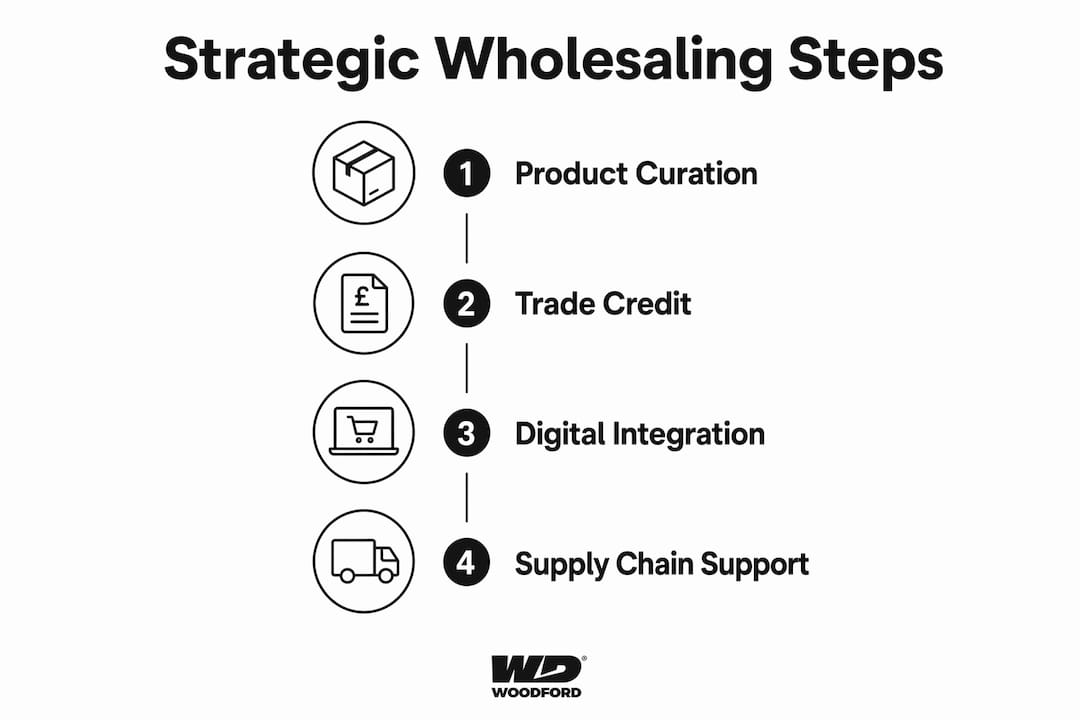
Strategic wholesaling delivers competitive advantage by combining product curation, trade credit, digital integration, and category intelligence into a single, structured partnership model.
| Point | Details |
|---|---|
| Definition matters | Strategic wholesaling is a partnership model, not just a distribution service. |
| Risk absorption is central | Wholesalers hold stock and buffer price volatility, protecting retailers from supply shocks. |
| Digital integration is non-negotiable | Connecting ordering platforms to inventory systems prevents costly errors and enables AI replenishment. |
| PMPs drive retailer performance | Price-marked packs increase value perception and sales uplift, giving independent retailers a competitive edge. |
| Last-mile costs must be planned | Ignoring last-mile delivery costs is the most common and expensive mistake in wholesale implementation. |
Woodford: the UK’s leading strategic food wholesaler
Woodford works with food brands and independent retailers who want more than a supplier. As the UK’s leading strategic food wholesaler, Woodford provides exclusive distribution, trend-led product curation, and reliable logistics built specifically for the independent retail channel. The team combines deep category expertise with hands-on account support, helping brands reach the right retailers and helping retailers stock the right products. Whether you are a food brand seeking wider distribution or an independent retailer looking for a partner who understands your market, Woodford offers the structure and insight to make it work. Visit woodford.food to find out more about partnership opportunities.
FAQ
What is the strategic wholesaling definition?
Strategic wholesaling is a distribution model where the wholesaler acts as an active partner, providing product curation, category data, trade credit, and logistics support rather than simply moving stock in bulk.
How does strategic wholesaling differ from retail?
Strategic wholesaling operates between manufacturers and retailers, supplying goods in volume with added services such as category advice and digital ordering. Retail sells directly to the end consumer, typically in smaller quantities.
What are the main benefits of strategic wholesaling for independent retailers?
Independent retailers gain access to curated product ranges, trade credit, consolidated deliveries, and category intelligence that would otherwise require significant internal resource to replicate.
How do I implement strategic wholesaling in my food business?
Start by auditing your supply chain, then select a partner who offers digital ordering integration, category support, and trade credit. Account for last-mile delivery costs explicitly in your financial model from the outset.
Why are price-marked packs important in strategic wholesaling?
PMPs increase shopper value perception by +5 percentage points and drive a +3 percentage point sales uplift versus 2024, making them a practical tool for independent retailers competing on value during periods of economic uncertainty.


