
Food brand curation checklist for independent retailers

TL;DR:Selecting food brands involves evaluating compliance, supply reliability, and consumer trends to optimize shelf space and margins. Retailers should use a structured checklist to assess differentiation, regulatory adherence, financial health, and market credibility before making decisions. Combining a mix of established and emerging brands, tailored to store context and shopper demographics, results in a resilient, distinctive assortment that drives repeat sales.
Selecting the right food brands for your shelves is one of the highest-stakes decisions you make as an independent retailer. Get it right, and you build a distinctive offer that keeps customers coming back. Get it wrong, and you tie up budget in slow-moving stock that fails compliance checks or falls flat with your shoppers. A structured food brand curation checklist cuts through that complexity, giving you a repeatable process that accounts for regulatory demands, margin requirements, supply reliability, and the consumer trends shaping what people actually want to buy in 2026.
Table of Contents
- Key takeaways
- 1. The food brand curation checklist: core evaluation criteria
- 2. Step-by-step checklist for food brand selection
- 3. Comparing brand types: a curation framework
- 4. Tailoring your curation to your store’s context
- My honest take on building a food brand assortment
- How Woodford takes the complexity out of brand curation
- FAQ
Key takeaways
| Point | Details |
|---|---|
| Start with compliance, not charisma | Verify allergen controls and labelling before any other evaluation criteria. |
| Use data to predict, not just reflect | Predictive trend data outperforms historical sales alone when selecting new brands. |
| Compare brands on multiple dimensions | Use a weighted scoring approach covering compliance, growth potential, and supply risk. |
| Tailor your mix to your shoppers | Adjust brand selection to match your specific customer demographics and store format. |
| Review your assortment regularly | Build scheduled review cycles into your curation process to stay ahead of category shifts. |
1. The food brand curation checklist: core evaluation criteria
Before you commit shelf space to any brand, you need a clear framework. Retail buyers evaluate new brands primarily on three pillars: product viability, financial health, and brand strength. Miss any of these in your assessment and you risk carrying a brand that underperforms, creates compliance headaches, or erodes your margin.
Product differentiation is your starting point. Ask whether the brand brings something genuinely distinct to your category or whether it simply duplicates what you already carry. A second coconut water or another oat biscuit needs a compelling reason to take up space. That reason might be a unique flavour profile, a certified accreditation, or a price point that unlocks a new shopper segment.
Regulatory compliance is non-negotiable. In the UK, allergen declarations, ingredient labelling, and country of origin requirements are legal obligations, not optional extras. Allergen control plans and third-party audits must be in place before approval. A single mislabelled product can trigger recalls and reputational damage that far outweighs any short-term profit.
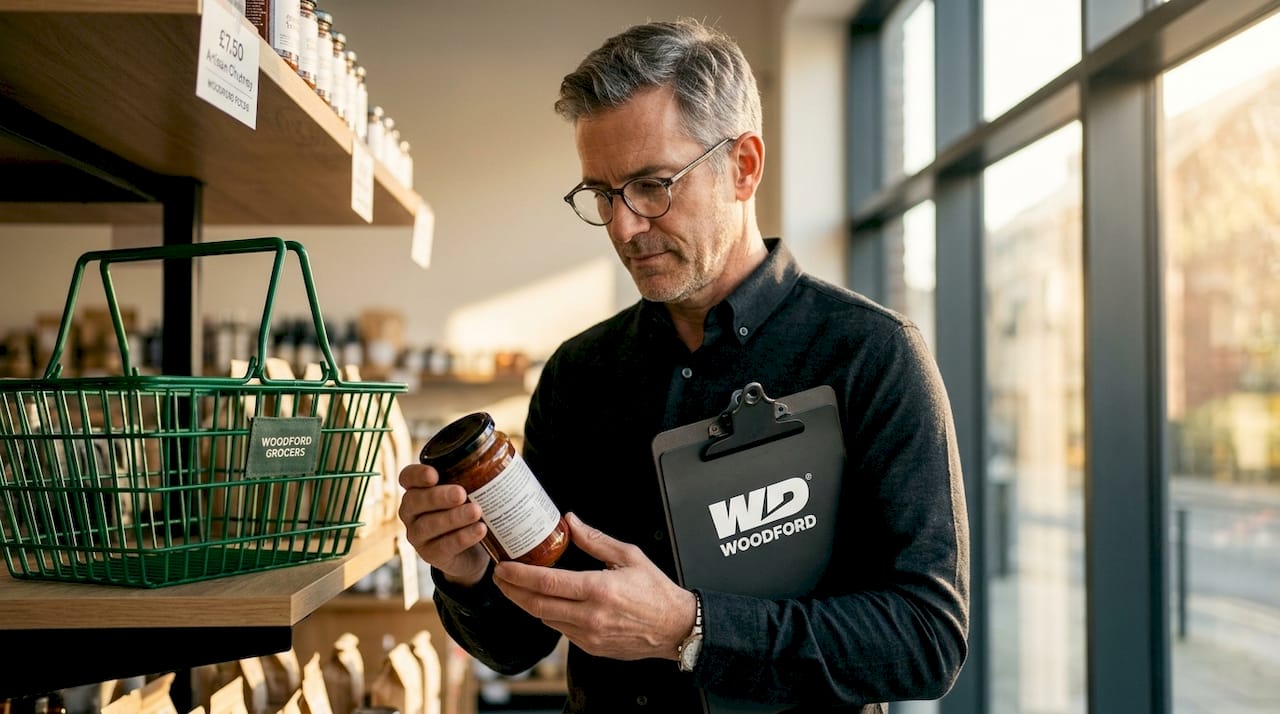
Financial viability covers margin, pricing, and MSRP competitiveness. If the brand’s recommended retail price sits too high for your shoppers or leaves you with a margin below your category threshold, it does not belong in your range regardless of how good the product tastes.
Brand credibility is the fourth pillar. Look for evidence of real market traction: sales data, press coverage, social proof, and demonstrated understanding of your shopper profile. Brands that demonstrate strategic fit with your store’s category ecosystem consistently earn more retailer trust than those simply leading with product superiority.
Pro Tip: Ask every prospective brand for a one-page category sell: if they cannot articulate how their product fits your shoppers and your existing range in a single page, they are not yet retail-ready.
2. Step-by-step checklist for food brand selection
Use this numbered checklist as a working document every time you evaluate a new brand. It covers safety, supply, packaging, trends, and consumer appeal in a logical order so nothing slips through.
- Request third-party audit certificates. Confirm the brand holds a current BRCGS, SQF, or equivalent food safety certification. Proof of shelf-life validation under real distribution conditions is equally important. Lab results from controlled settings do not always translate to commercial-scale reliability.
- Review the food safety plan. Check that the brand has a documented HACCP plan covering critical control points. This is a baseline requirement under UK food law and signals operational maturity.
- Audit allergen controls. The nine major allergens must be declared clearly on every label. Non-compliant allergen labelling exposes you to recalls and legal liability. Ask specifically about hidden allergens in processing aids, which are frequently overlooked.
- Evaluate packaging compliance and durability. Packaging must meet UK labelling regulations for font size, language, and mandatory declarations. Beyond compliance, assess whether the physical packaging survives transit and looks appealing on shelf. Packaging quality directly affects consumer trust and purchase decisions.
- Check supply chain consistency and scalability. Ask the brand for production forecasts tied to actual factory capacity. Lab-setting success does not always translate to commercial-scale reliability, and running out of stock after a successful launch is one of the fastest ways to lose shopper confidence.
- Match the brand against consumer trend data. Predictive assortment management using emerging flavour trends and dietary preference data outperforms decisions based solely on historical sales. Cross-reference the brand’s category with current trend signals before committing.
- Assess taste, repeat purchase potential, and packaging design. Run informal tastings with staff or loyal customers where possible. A product that wins on the shelf but disappoints at home will not generate repeat sales.
- Verify operational readiness. Confirm the brand can meet your minimum order quantities, lead times, and returns processes from day one. Operational gaps at launch create friction that independent retailers, who lack the support infrastructure of large chains, absorb disproportionately.
Pro Tip: Build a simple scoring sheet with a 1 to 5 rating for each checklist item. Any brand scoring below 3 on compliance or supply reliability should be paused regardless of its overall score.
3. Comparing brand types: a curation framework
Not all food brands carry the same risk and reward profile. Use this comparison table as part of your food brand evaluation process when choosing between emerging startups and established names.
| Dimension | Emerging startup | Established brand |
|---|---|---|
| Regulatory complexity | Higher: fewer certifications, less audit history | Lower: established compliance track record |
| Supply reliability | Variable: capacity may not match demand | Generally consistent: scaled production |
| Innovation potential | High: new formats, ingredients, dietary positioning | Moderate: extensions within known categories |
| Marketing support | Limited: often founder-led with small budgets | Strong: national advertising, trade spend available |
| Margin opportunity | Often better: less trade investment required | Tighter: retail pricing is more established |
| Consumer recognition | Low: requires shopper education in-store | High: drives footfall and basket attachment |
| Operational readiness | Risk of gaps in logistics and documentation | Well-developed: EDI, invoicing, returns processes |
Weighted scoring models that compare brands across compliance, growth potential, and operational risk give you the most objective basis for decisions. The weighting you apply should reflect your store’s strategic position. A specialist health food shop may weight innovation and dietary credentials heavily. A community convenience store may weight supply reliability and consumer recognition above everything else.
The practical lesson here is that a mixed portfolio usually outperforms a monoculture of either type. Established brands anchor your credibility and drive traffic. Startups with genuine differentiation give you the edge that chains cannot easily replicate and that shoppers will travel for.
4. Tailoring your curation to your store’s context
The best practices for food curation are not one-size-fits-all. Your shopper demographics, store format, and available budget all shape which brands belong in your range and which do not.
- Adjust your brand mix for niche versus broad-market focus. A store in a catchment area with a high proportion of health-conscious shoppers can support a deeper range of plant-based or free-from brands. A general convenience store needs broader appeal and proven sellers as its backbone.
- Balance premium and value offerings within your budget. Carrying too many premium lines without complementary entry-level options narrows your shopper base. Aim for a range structure where your hero product at each price tier has a logical complement, because curated assortments with a clear hero and supporting items strengthen category appeal without overwhelming shoppers.
- Incorporate trending categories with discipline. Not every trend warrants a new brand listing. Use current 2026 food trend data to identify which movements have genuine purchase momentum behind them rather than just social media noise.
- Build review cycles into your curation calendar. Limiting your tracking attributes to around ten key factors prevents complexity and keeps decision-making sharp. Set a quarterly review date to assess which brands are performing against agreed criteria and which need to be delisted or replaced.
- Time new product introductions carefully. Launching a brand at the wrong point in the season or ahead of insufficient consumer awareness is a common and costly mistake. Align new introductions with key retail moments or with broader trend cycles to give each brand the best chance of gaining traction.
My honest take on building a food brand assortment
I have spent years working with independent retailers across the UK on their brand selection decisions, and the same pattern appears repeatedly. The retailers who struggle most are not the ones who lack access to good products. They are the ones who prioritise excitement over evidence.
A charismatic brand founder and an attractive package are genuinely seductive. I understand why retailers take a chance on a brand that feels right without doing the full compliance and supply check. But the costs of that shortcut, a recall, an empty shelf during peak demand, or a product that simply does not resonate past the first purchase, are always larger than anticipated.
What actually works is a combination of rigorous process and genuine curiosity. Use the checklist. Score every brand consistently. Then let your knowledge of your own shoppers be the final filter. Sourcing exclusive food brands for your store is as much about fit as it is about quality. The most decorated product in a category is useless if your customers have never heard of it and you lack the marketing budget to build that awareness yourself.
The retailers I have seen build truly distinctive assortments always do one thing well: they think in terms of the whole category, not individual products. Every new brand they add has a clear role, a hero product, a price tier, and a shopper occasion it serves.
— Nadim
How Woodford takes the complexity out of brand curation
Independent retailers working with Woodford get access to a pre-vetted portfolio of food brands that have already passed the compliance, supply, and category fit checks described in this curation checklist. Woodford’s team analyses UK consumer trend data and retailer performance signals to identify which brands are genuinely ready for independent retail, not just brands that pitch well.
Rather than spending hours reviewing food safety documentation and chasing production forecasts from founders, you spend that time on your shoppers. Woodford handles the operational vetting so your curation decisions start from a position of confidence. Explore Woodford’s curated brand portfolio to see which categories and brands are currently available for independent retailers seeking a smarter food selection process.
FAQ
What should a food brand curation checklist include?
A solid curation checklist for food covers regulatory compliance, allergen controls, third-party audit certification, packaging durability, supply chain reliability, margin viability, and consumer trend alignment. Each factor should be scored consistently so brands can be compared objectively.
How do I evaluate an emerging food brand against an established one?
Compare both against the same criteria: compliance track record, supply reliability, operational readiness, and consumer fit for your store. Emerging brands often offer better margins and more differentiation, but carry higher compliance and supply risks that need careful verification.
How often should I review my food brand assortment?
A quarterly review cycle works well for most independent retailers. Set clear performance thresholds for each brand at the point of listing and assess against those criteria at each review rather than making ad hoc decisions based on short-term sales dips.
Why is allergen compliance so critical in food brand selection?
Non-compliant allergen labelling can trigger product recalls, regulatory penalties, and reputational damage. Clear allergen declarations on every label are a legal requirement, and hidden allergens in processing aids are a frequently overlooked risk that your curation process must address.
How do I use trend data in my food brand selection process?
Use predictive trend tools and category insight reports to identify which emerging flavours, dietary preferences, and formats have real purchase intent behind them. Cross-reference trend signals with your own shopper data to avoid listing products that trend online but do not convert in your specific store.
Recommended
- Strategic food brands for UK independent retailers - WOODFORD - Bringing quality foods your way
- Discover niche food categories to set your shop apart - WOODFORD - Bringing quality foods your way
- How to source exclusive food brands for your UK shop - WOODFORD - Bringing quality foods your way
- Why adapt to food trends: boost independents’ growth - WOODFORD - Bringing quality foods your way


