
Explaining food retail networks: a UK retailer's guide

TL;DR:Most independent retailers view their supply as simple transactions, but it is actually a complex network of decisions made by multiple stakeholders before products reach shelves. Understanding the entire food retail network enables smarter sourcing, better relationships, and early problem detection to prevent stockouts. Effective collaboration relies on respecting ordering systems, digital integration, contingency planning, and actively engaging within the network rather than passively accepting it as fixed.
Most independent retailers think of their supply as a series of phone calls, invoices, and deliveries. What it actually is, is a web of decisions made by farmers, processors, logistics operators, and wholesalers before a single product reaches your shelf. Explaining food retail networks properly means looking at the whole system, not just your nearest touchpoint. When you understand how the network operates, you start making smarter sourcing decisions, building better wholesaler relationships, and spotting problems before they become stockouts. This guide is built specifically for independent UK food retailers who want that clarity.
Table of Contents
- What are food retail networks and why do they matter
- How demand forecasting and replenishment shape independent retailers’ supply
- How wholesalers and independent retailers collaborate through ordering systems
- Digital integration’s role in streamlining wholesale-retailer relationships
- Risks and resilience: navigating disruption and cybersecurity in food retail networks
- Our perspective: the network is not a given, it is a choice
- Work with a wholesaler who understands your position
- Frequently asked questions
Key Takeaways
| Point | Details |
|---|---|
| Food retail networks | Food retail networks connect every stage from farm to store, with upstream choices shaping availability at retail. |
| Planning loop | Demand forecasting, inventory management, and replenishment form a cycle that keeps stock flowing efficiently. |
| Ordering discipline | Using structured ordering systems with cut-offs and minimums improves delivery reliability. |
| Digital integration | ERP-linked B2B ecommerce ensures pricing and stock data accuracy, reducing errors. |
| Risk management | Retailers must prepare for supply disruptions and cyber risks with contingency plans and network resilience. |
What are food retail networks and why do they matter
To improve your sourcing and collaboration, you first need to understand what food retail networks actually are and why they matter beyond your immediate supplier relationship.
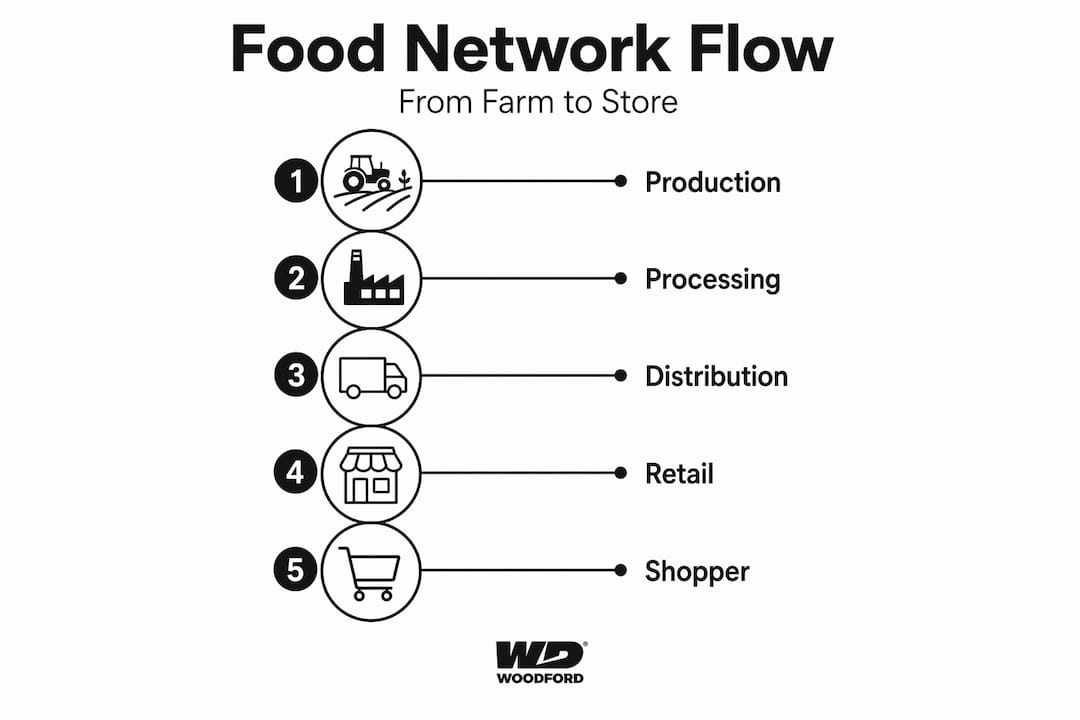
A retail grocery supply network is best understood as an end-to-end system of interconnected stages: production inputs and on-farm work, post-harvest handling and storage, processing, transport and logistics, and then wholesale and retail distribution, where decisions at earlier stages shape what appears in stores. That last part is the one most independent retailers underestimate. By the time a product arrives at your back door, it has already passed through four or five decision points, each of which affected its price, availability, and condition.
Think of it this way. A cold snap in southern Spain does not just affect Spanish supermarkets. It tightens the supply of salad leaves across the whole UK grocery distribution network within days. The independent deli owner in Bristol who does not understand this connection will panic-order from their usual wholesaler, find the shelves bare, and blame the supplier. The retailer who understands food supply chains will have flagged the weather event, spoken to their wholesaler early, and arranged a substitution before the shortage hit.
Understanding retail food systems means recognising that your store sits at the end of a long chain of interdependent decisions. Here is what that chain typically includes:
- Primary production: Farming, fishing, and livestock rearing, where yields, weather, and input costs are set
- Post-harvest handling: Cooling, grading, and short-term storage that determines shelf life before the product even enters distribution
- Processing and manufacturing: Where raw ingredients become the finished goods you stock
- Logistics and transport: The physical movement of goods, often through regional or national hubs
- Wholesale distribution: The stage that connects producers and brands to independent retailers like you
- Retail: Your store, which is the terminal point where all upstream decisions become visible to the consumer
Each stage introduces cost, risk, and delay. When you view your supply as part of this system rather than as a standalone transaction, you become a much more effective buyer.
How demand forecasting and replenishment shape independent retailers’ supply
With the network stages clear, let us look at how precise planning cycles shape what goods reach your shelves and ensure smooth replenishment.
Retailers typically run the grocery network through a planning loop that links demand forecasting to inventory positioning and then to replenishment and flow planning, moving goods from suppliers to distribution centres to stores. Decisions flow from forecast to inventory to execution. For independent retailers, this matters because your wholesaler is already operating within this loop, and how you place orders either fits into it or creates friction.
The practical steps in this loop work as follows:
- Demand forecasting: Wholesalers and their suppliers predict what volume of each product will be needed over a given period, factoring in seasonality, promotions, and historical sales data
- Inventory positioning: Stock is allocated across distribution centres based on those forecasts, which determines how quickly a product can be fulfilled once ordered
- Replenishment planning: As stock at distribution centres depletes, automated or manual triggers initiate re-orders from suppliers, keeping the pipeline flowing
- Flow execution: Physical goods move through the logistics network to reach retailers, guided by delivery schedules and vehicle routing
When your orders align with these cycles, your goods move efficiently. When they do not, you either sit at the back of the queue or trigger costly emergency fulfilment. A retailer who orders erratically or in volumes that do not match their actual sell-through rate creates noise in the network, which can result in being deprioritised during high-demand periods.
You can read more about wholesale logistics explained for a practical breakdown of how these cycles work in practice.
Pro Tip: Ask your wholesaler when their weekly planning cycle resets and build your order schedule around that date. Submitting orders just before a planning cycle refresh means your demand is captured in the next forecast, rather than falling into a gap.
How wholesalers and independent retailers collaborate through ordering systems
Understanding the planning behind supply leads naturally to how you engage with wholesalers effectively through defined ordering systems.
The days of ringing your rep on a mobile and agreeing a delivery over the phone are fading fast across the UK wholesale sector. Structured ordering systems now govern the relationship between independent retailers and their wholesale suppliers, and understanding these systems is not optional if you want reliable supply. The benefits of understanding ordering and delivery cut-offs directly shape whether your shelves are full or empty.
A clear example of how this works in practice: Ted’s Veg requires orders via its approved wholesale portal or REKKI, with a standard daily 11:00pm cut-off for next-day trade delivery on eligible days and a minimum order value of £100. Miss that cut-off by ten minutes and you wait another day. Place an order below the minimum and it simply will not be processed. These are not arbitrary rules; they exist because the logistics chain on the wholesaler’s side kicks off at a fixed point each night.
Here is what you need to understand and respect within any structured wholesale ordering relationship:
- Approved ordering platforms: Most wholesalers now require orders through a specified portal, app, or marketplace. Ad-hoc emails and phone calls are increasingly unsupported and may not be actioned reliably
- Daily cut-off times: These are non-negotiable because they trigger warehouse pick-and-pack cycles. Know your wholesaler’s cut-off and treat it as a hard deadline
- Minimum order values: These exist to make each delivery economically viable for the wholesaler. Consistently ordering below minimums may affect your account status
- Accurate delivery instructions: Wholesalers need precise delivery windows, access notes, and contact details. Incomplete information causes failed deliveries, which costs everyone time and money
- Timely issue reporting: If you receive a short delivery or a damaged batch, report it within the window specified in your terms, usually 24 to 48 hours. Late reports often cannot be processed
Pro Tip: When you onboard with a new wholesaler, read the ordering terms thoroughly before placing your first order. Treat the first month as a compliance period, following every process exactly as specified. It builds goodwill and establishes you as a reliable account from the outset.
Digital integration’s role in streamlining wholesale-retailer relationships
Beyond ordering procedures, technology plays a key role in making your wholesaler relationships efficient and error-free.
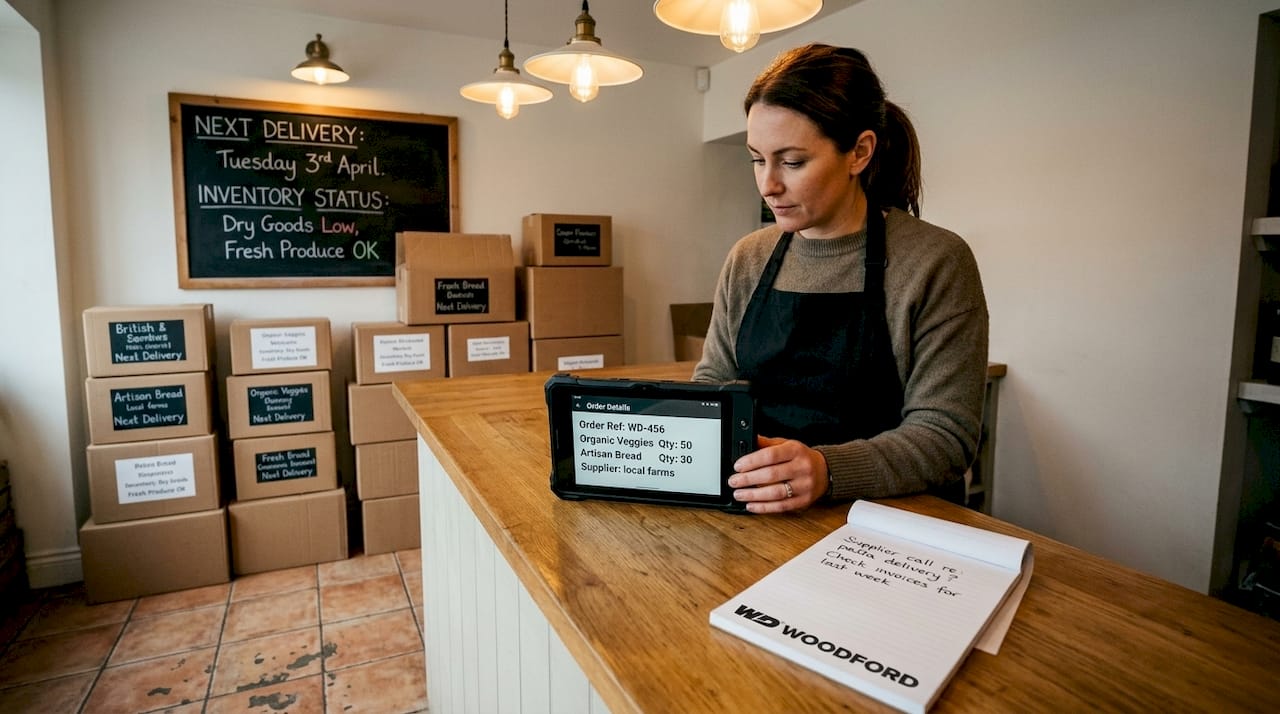
B2B ecommerce for wholesale handles account-specific pricing, frequent repeat purchasing, and integration with back-office systems such as ERP, so stock availability, pricing, and order history remain consistent. For an independent retailer, this is the difference between knowing exactly what is in stock and at what price before you place an order, versus discovering a substitution or price change only when the invoice arrives.
Here is how the digital and manual approaches compare across the key areas that affect you day-to-day:
| Area | Manual ordering | Digital integration |
|---|---|---|
| Pricing accuracy | Price agreed verbally, prone to error | Account-specific pricing pulled automatically |
| Stock visibility | Dependent on rep knowledge or a phone call | Real-time availability shown at point of order |
| Order history | Paper trail or email search | Centralised, searchable order history |
| Repeat purchasing | Re-typed each time, error-prone | Saved order templates, one-click reorder |
| Invoice reconciliation | Manual matching of orders to invoices | Automated matching via ERP integration |
The benefits of digital integration extend beyond convenience:
- Fewer pricing disputes: When your ordering portal shows the agreed price at the point of purchase, invoice discrepancies become rare rather than routine
- Faster replenishment cycles: Digital orders enter the wholesaler’s warehouse management system immediately, reducing processing lag
- Better purchasing data: Digital platforms generate order history data you can use to identify your own demand patterns and negotiate better terms
- Reduced error rate: Manual re-keying of product codes and quantities is one of the most common sources of wrong deliveries in independent retail
To understand how these workflows connect to wider efficiency gains, explore streamlined wholesaling workflows and what they mean for day-to-day operations.
Risks and resilience: navigating disruption and cybersecurity in food retail networks
While technology improves efficiency, it also introduces risks. Understanding these challenges is vital to maintaining supply chain resilience, particularly for independent retailers who lack the buffer stocks and alternative supplier pools of larger chains.
“After COVID stabilisation, it took 4 to 5 months to get affected global supply chain flows back into place, with warnings of longer-term impacts including higher costs and extended lead times.” — World Food Programme, March 2026
That timeline matters practically. If a global event tightens supply tomorrow, you cannot expect your normal wholesaler relationships to absorb the shock within days. Recovery takes months. Independent retailers who treated the pandemic purely as an anomaly, rather than a stress test of their supply model, have not updated their contingency thinking. Those who learned from it now carry slightly broader supplier lists and maintain minimum safety stock levels for their highest-turnover lines.
The second risk category is newer and growing. A cyber incident in the grocery supply chain can rapidly become a supply chain incident affecting ordering, warehouse management, transportation networks, supplier portals, electronic data interchange, cold chain monitoring, and store technology simultaneously. A single breach at a wholesaler or logistics operator can break multiple links in the network at once, leaving retailers unable to place orders or receive deliveries for days.
Practical resilience strategies for independent retailers include:
- Safety stock for critical lines: Identify your ten highest-volume or hardest-to-substitute products and maintain a rolling one to two week buffer wherever storage allows
- Approved substitution lists: Work with your wholesaler in advance to agree acceptable substitutions for key lines, so alternatives can be shipped automatically during shortages rather than requiring manual negotiation under pressure
- Multiple supplier relationships: Even if one wholesaler handles 80% of your volume, having a second approved supplier for core categories gives you options when primary supply fails
- Written contingency terms: Ask your wholesaler explicitly what happens to your orders during a system outage. Know the manual fallback process before you need it
Pro Tip: Treat your wholesaler’s cybersecurity practices as a supply risk you are entitled to ask about. If a key supplier cannot explain their incident response process in plain terms, that is a gap in your supply resilience worth factoring into your planning.
Our perspective: the network is not a given, it is a choice
Here is something that rarely gets said plainly in discussions about food market dynamics: the way independent retailers engage with their supply networks is a choice, not a fixed condition.
Most retail network analysis focuses on what the network does to retailers. We think that misses the point. The independent retailers who consistently outperform their peers do not experience the food industry structure as something that happens to them. They participate in it actively, treating their wholesaler relationships as commercial partnerships rather than utility services.
That means sharing your own sales data to help a wholesaler forecast better. It means telling a brand when their product is resonating with your customers, not just reordering quietly. It means asking to be included in early access to new product ranges before they go broad, because you have demonstrated you are a reliable and attentive account. Exploring retail food models that put independents in a more collaborative position, rather than a purely transactional one, is where real competitive advantage lives.
The food brands that are growing fastest right now are not chasing the multiples first. They are building their retail networks through independents who understand the product, communicate well, and give their range genuine shelf attention. If you present yourself as that kind of account, you will access better terms, earlier launches, and more responsive support when supply gets tight. That is not idealism. That is how the network actually works when you engage with it properly.
Work with a wholesaler who understands your position
At Woodford, we work specifically with independent UK food retailers who want more than a catalogue and a delivery slot. We curate ranges from food brands that are genuinely worth stocking, handle the logistics complexity so your ordering process stays clean, and give you visibility into what is coming before it hits the broader market. If you are ready to move from reactive sourcing to a supply relationship that works proactively for your business, explore what Woodford offers and see how our approach to wholesale fits the way ambitious independent retailers actually operate.
Frequently asked questions
What exactly is a food retail network?
A food retail network includes all stages from farming and processing through distribution to retail stores, where decisions at each stage affect product availability and quality before goods reach your shelves.
How do ordering cut-offs affect delivery for independent retailers?
Ordering cut-offs set daily deadlines that trigger warehouse fulfilment cycles; missing the 11:00pm cut-off at wholesalers like Ted’s Veg, for example, means your next-day delivery slot is lost entirely.
Why is digital integration important in wholesale-retailer transactions?
Digital integration gives you real-time stock visibility and consistent pricing at point of order; B2B ecommerce platforms connect your purchasing directly to wholesaler inventory and back-office systems, reducing errors and reconciliation work.
How long can supply disruptions last after a major global event?
Recovery typically takes four to five months after major supply chain disruptions, meaning independent retailers need safety stock and alternative supplier agreements in place well before a crisis hits.
What cybersecurity risks should independent retailers be aware of in supply networks?
A single cyber incident can disrupt ordering, warehousing and transport simultaneously across your supply network, making it essential to understand your wholesaler’s incident response process before a failure occurs.
Recommended
- Understanding the food distribution cycle for UK retailers - WOODFORD - Bringing quality foods your way
- Wholesale logistics explained: A guide for UK food retailers - WOODFORD - Bringing quality foods your way
- How UK distributors boost independent food retail success - WOODFORD - Bringing quality foods your way
- How to identify food trends: a guide for UK retailers - WOODFORD - Bringing quality foods your way


