
The role of wholesalers in UK supply chains
TL;DR:Wholesalers are vital intermediaries in the UK economy, providing strategic functions like inventory management, trade credit, and risk buffering. They enhance retail operations through logistics, data insights, and product variety, supporting independent retailers’ competitiveness and growth. Evolving digitally, wholesalers now act as strategic partners, offering tailored support and expanded distribution channels for brands and retailers alike.
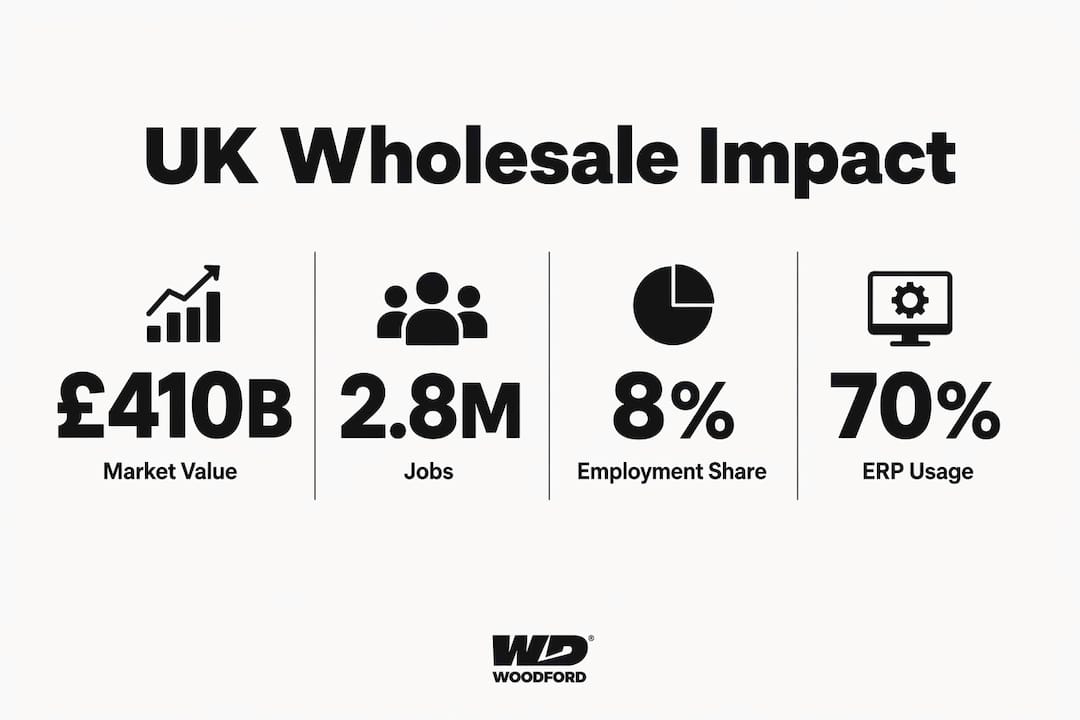
Wholesalers are defined as intermediaries who purchase goods in large volumes from manufacturers and supply them to retailers at a profit, sitting at the centre of the UK’s product distribution network. The role of wholesalers in UK commerce is not simply logistical. It is financial, strategic, and increasingly data-driven. The UK wholesale sector employed 2.8 million people in 2023 and carries a market value of £410 billion, making it one of the most consequential layers of the British economy. For independent retailers and food brands, understanding how wholesalers operate is not optional background knowledge. It is the foundation of every sourcing, pricing, and stocking decision you make.
What key functions do wholesalers perform within the UK supply chain?
The functions of wholesalers in UK distribution cover far more ground than simply moving pallets from A to B. Wholesalers perform six distinct operational roles that collectively reduce friction across the entire supply chain.
- Bulk purchasing and breaking bulk. Wholesalers buy in large quantities from manufacturers, then divide stock into smaller, commercially viable units for retailers. This means a corner shop in Leeds can access the same product as a regional supermarket without committing to a full production run.
- Warehousing and inventory management. Wholesalers hold stock on behalf of the supply chain, absorbing the capital and space costs that would otherwise fall on retailers or manufacturers. This is particularly valuable for seasonal or trend-driven products where demand is unpredictable.
- Trade credit provision. Wholesalers provide trade credit allowing retailers to buy now and pay later, which is vital for managing cash flow. For independent retailers with limited working capital, this function alone can determine whether a business survives a slow trading period.
- Delivery logistics and shipment consolidation. Rather than a retailer managing relationships with dozens of manufacturers, a wholesaler consolidates deliveries into a single, scheduled drop. This reduces transport costs, simplifies receiving, and cuts the administrative burden on retail teams.
- Risk absorption. Wholesalers hold unsold stock, absorb price fluctuations, and manage supplier relationships, shielding retailers from volatility in raw material costs or production delays.
- Market access for brands. For food and drink brands without an established sales force, a wholesaler provides immediate access to hundreds or thousands of retail outlets through a single commercial relationship.
Pro Tip: When evaluating a wholesale partner, ask specifically about their delivery cut-off times and ERP compatibility. As the Woodford food retail guide notes, understanding these operational details directly affects shelf availability and pricing consistency in your store.
The UK wholesale distribution network operates across national, regional, and specialist tiers. National wholesalers such as Booker and Bestway serve broad retail categories, while specialist food wholesalers focus on specific categories like premium ambient, chilled, or ethnic foods. Each tier serves a different retail need, and most independent retailers work with more than one.

How do wholesalers impact the UK economy and retail market dynamics?
The wholesalers’ impact on the UK economy is measurable, substantial, and often underestimated by retailers focused on day-to-day trading.
| Economic indicator | Figure |
|---|---|
| UK wholesale sector employment (2023) | 2.8 million people, 8% of total UK employment |
| UK wholesale sector market value | £410 billion |
| UK grocery wholesaling market size (2026) | £49.3 billion, growing at 5.4% CAGR from 2021 |
| Food and drink wholesale GVA (2023) | £16.9 billion, 11% of UK agri-food chain GVA |
| Net profit growth in wholesale (2023) | 5.3% |
The UK grocery wholesaling market reached £49.3 billion in 2026, growing at a compound annual rate of 5.4% since 2021. That growth rate outpaces many other sectors of the UK economy, signalling that wholesale is not a declining middleman model but an expanding infrastructure layer. Foodservice wholesaling sales rose 3.2% in 2024 alone, driven by the recovery of hospitality and out-of-home dining.
Food and drink wholesale contributed £16.9 billion in gross value added in 2023, representing 11% of the entire UK agri-food chain’s GVA. That figure grew 6.7% since 2022, which reflects both volume growth and the sector’s increasing sophistication. When a sector grows faster than inflation, it is gaining structural importance, not just keeping pace.
“The complexity of UK supply chains increases wholesale importance as risk buffers, stabilisers of price, and consolidators of supply.” — UK Government, Supply Chains and Market Power
The Competition and Markets Authority has specifically highlighted wholesalers’ role in buffering external shocks and counterbalancing market power imbalances between large manufacturers and small retailers. This is not a minor function. During the supply disruptions of 2021 to 2023, wholesalers who held buffer stock prevented thousands of independent retailers from experiencing complete stockouts on core lines. For a small retailer with no direct manufacturer relationship, that buffer is the difference between trading normally and losing customers permanently.
Wholesalers also provide critical liquidity to smaller retailers. Trade credit from wholesalers enables independent shops and food service operators to compete with larger chains that have superior purchasing power and longer payment terms with suppliers. Without this financial function, the independent retail sector in the UK would be structurally weaker.
In what ways are UK wholesalers evolving beyond traditional roles in 2026?
The traditional view of a wholesaler as a price-focused intermediary is outdated. In 2026, the most competitive wholesalers in the UK operate as strategic partners to both the brands they carry and the retailers they serve.
- Shift from price to margin support. Wholesalers are shifting focus from price negotiation to margin enhancement and execution support for retailers under tighter market conditions. This means helping retailers understand which products to range, how to position them, and what promotional mechanics drive the best return.
- Digital B2B integration. 70% of UK wholesalers used ERP systems in 2023, and that figure has continued to rise. Successful retailers now integrate wholesale ordering directly with their internal stock management systems, reducing manual errors and improving reorder accuracy. The shift to digital-first B2B ordering platforms has made it faster and cheaper to manage wholesale relationships at scale.
- Category advice and planograms. Leading wholesalers now provide retailers with shelf layout recommendations, category performance data, and new product introduction support. This is particularly valuable for independent retailers who lack the buying teams that larger chains employ.
- Market data and trend intelligence. Wholesalers now act as intelligence hubs holding data on market trends and merchandising that retailers can use for competitive advantage. Retailers who collaborate and share data with their wholesale partners consistently outperform those who treat the relationship as purely transactional.
- Infrastructure investment. The FMCG wholesale sector shows that only 8% of approximately 13,000 FMCG wholesalers have turnover exceeding £5 million. That concentration at the top means the largest wholesalers are investing heavily in temperature-controlled logistics, same-day delivery capability, and digital ordering infrastructure, while smaller regional operators compete on relationships and specialisation.
Pro Tip: When choosing between a national and a specialist wholesaler, consider your product category and customer base first. A specialist food wholesaler with deep category knowledge and curated brand relationships will often deliver better ranging advice and more relevant new product introductions than a generalist with a broader but shallower catalogue.
The logistics dimension of wholesale is also evolving rapidly. Same-day and next-day delivery expectations, driven by consumer-facing ecommerce, are now filtering into B2B wholesale. Retailers increasingly expect the same speed and visibility from their wholesale partners that they offer their own customers.
What are the practical benefits for UK retailers and brands in partnering with wholesalers?
The benefits of wholesalers in UK retail are most visible when you compare the operational reality of retailers who use them against those who attempt to source directly from manufacturers.
- Access to diverse product ranges without large capital outlay. A single wholesale account can give a retailer access to hundreds of brands and thousands of SKUs. Sourcing those products directly would require individual contracts, minimum order quantities, and credit negotiations with each manufacturer separately.
- Improved inventory turnover. Because wholesalers hold stock and offer flexible order quantities, retailers can order closer to demand rather than forecasting weeks ahead. This reduces the risk of dead stock and frees up working capital for other uses.
- Reduced stockholding risk. When a product does not sell, the retailer who ordered a small quantity from a wholesaler is far less exposed than one who committed to a full manufacturer minimum order. This flexibility is particularly valuable for new product trials and seasonal lines.
- Trend insights and merchandising expertise. Wholesalers who leverage granular product data help retailers identify growth opportunities and adapt quickly to consumer trends. For an independent retailer without a dedicated buyer, this intelligence is genuinely difficult to replicate independently.
- Delivery efficiency. Consolidated deliveries from a single wholesale partner reduce the number of vehicles arriving at a retail premises, cut receiving time, and simplify invoice reconciliation. For small retail teams, this operational saving is significant.
- Competitive positioning against multiples. Independent retailers who work with specialist wholesalers can access premium, niche, or trend-led products that the major multiples do not stock. This differentiation is one of the most effective ways for independent retailers to compete on range rather than price.
Understanding wholesale logistics in detail helps retailers make better decisions about which partners to prioritise and how to structure their ordering patterns for maximum efficiency. The retailers who treat their wholesale relationships as strategic rather than transactional consistently achieve better margins and stronger product ranges.
For food brands, the benefits run in the opposite direction. A wholesale partner with an established retailer network provides immediate distribution reach that would take years and significant investment to build independently. The independent food retail sector is particularly receptive to new products introduced through trusted wholesale relationships, making wholesalers a critical route to market for emerging brands.
Key takeaways
Wholesalers are the structural backbone of UK retail distribution, providing financial, logistical, and strategic functions that neither manufacturers nor retailers can efficiently replicate on their own.
| Point | Details |
|---|---|
| Economic scale | The UK wholesale sector is worth £410 billion and employs 2.8 million people, making it central to the national economy. |
| Financial function | Trade credit from wholesalers enables independent retailers to manage cash flow and compete with larger chains. |
| Risk absorption | Wholesalers buffer supply shocks and price volatility, protecting retailers from stockouts during market disruptions. |
| Evolving strategic role | Leading wholesalers now provide category data, planograms, and digital integration, not just product supply. |
| Retailer advantage | Partnering with a specialist wholesaler gives independent retailers access to curated ranges and trend intelligence unavailable through direct sourcing. |
How Woodford supports UK retailers and brands
Woodford is the UK’s leading strategic food wholesaler, working exclusively with independent retailers and ambitious food brands to deliver curated product ranges, reliable logistics, and genuine category expertise. Where generic wholesalers offer breadth, Woodford offers depth: a carefully selected portfolio of quality food brands matched to the needs of independent retail. If you are a retailer looking to strengthen your range with trend-led products, or a brand seeking distribution reach into the independent sector, Woodford provides the infrastructure and relationships to make it work. Explore the full range of Woodford’s food brands and find the right wholesale partnership for your business.
FAQ
What is the role of wholesalers in the UK?
Wholesalers purchase goods in bulk from manufacturers and supply them to retailers in smaller quantities, performing key functions including warehousing, trade credit provision, delivery consolidation, and risk absorption across the supply chain.
How large is the UK wholesale sector?
The UK wholesale sector had a market value of £410 billion in 2023 and employed 2.8 million people, representing 8% of total UK employment. The grocery wholesaling segment alone reached £49.3 billion in 2026.
How do wholesalers help independent retailers compete?
Wholesalers provide trade credit, flexible order quantities, and consolidated deliveries that give independent retailers access to diverse product ranges without the capital outlay required for direct manufacturer sourcing.
Are UK wholesalers becoming more digitally integrated?
70% of UK wholesalers used ERP systems in 2023, and digital B2B ordering platforms are now standard among larger operators. Retailers who integrate wholesale ordering with their own stock management systems achieve better shelf availability and pricing consistency.
What is the difference between a national and a specialist wholesaler?
National wholesalers offer broad product ranges and high-volume logistics, while specialist wholesalers focus on specific categories and provide deeper product knowledge, curated brand selections, and more tailored support for retailers in their niche.


