
Why choose ethical brands: a consumer guide for 2026
Ethical brands are defined as companies that integrate social responsibility, environmental sustainability, and transparency into their core operations, not just their marketing. Choosing them matters because the evidence is clear: brands perceived to do good can attribute 21% of consumer advocacy and 8% of price premium directly to their ethical associations. That is a measurable commercial signal, not a moral abstraction. For consumers interested in sustainable living, understanding why choose ethical brands is the starting point for making purchases that genuinely reflect your values.
What are the main benefits of choosing ethical brands?
The benefits of ethical brands extend well beyond personal satisfaction. When you buy from a brand with verified fair labour practices, you directly support better wages and safer working conditions for people in global supply chains. That connection between your purchase and a worker’s livelihood is real and traceable.

Environmental gains are equally concrete. Ethical brands typically use sustainably sourced materials, reduce chemical pollution, and design products with a longer lifespan in mind. These choices reduce pressure on ecosystems and cut the volume of waste entering landfill each year.
The consumer benefits are significant too. Shoppers who align purchases with their values report stronger emotional connections to the brands they support. 72% of UK sustainability-sensitive consumers are willing to pay more for environmentally friendly products. That willingness reflects genuine conviction, not trend-following.
- Labour standards: Ethical brands commit to living wages, safe factories, and fair contracts throughout their supply chains.
- Environmental impact: Sustainable sourcing, reduced packaging, and lower carbon footprints are standard expectations, not optional extras.
- Consumer empowerment: Buying ethically gives you direct influence over corporate behaviour through your spending choices.
- Social justice: Supporting ethical brands channels money towards communities and producers who are often marginalised in conventional supply chains.
- Advocacy effect: Satisfied ethical shoppers are significantly more likely to recommend brands to others, amplifying the positive impact.
Pro Tip: When comparing two similar products, check whether the brand publishes an annual impact report. Brands that measure and publish their social and environmental performance are far more likely to act on it.
How can consumers identify truly ethical brands and avoid greenwashing?
Greenwashing is the practice of making vague or misleading sustainability claims without the evidence to back them up. It is widespread, and it costs consumers both money and trust. Genuine ethical brands provide verifiable supply chain transparency and clear evidence of living wages, not just aspirational language on a website.
The distinction between “ethical” and “sustainable” is also worth understanding. Sustainable refers primarily to environmental impact, while ethical covers labour rights, fair trade, and social responsibility. The strongest brands address both. A product made from organic cotton but sewn in a factory with poor working conditions is sustainable in one dimension and unethical in another.
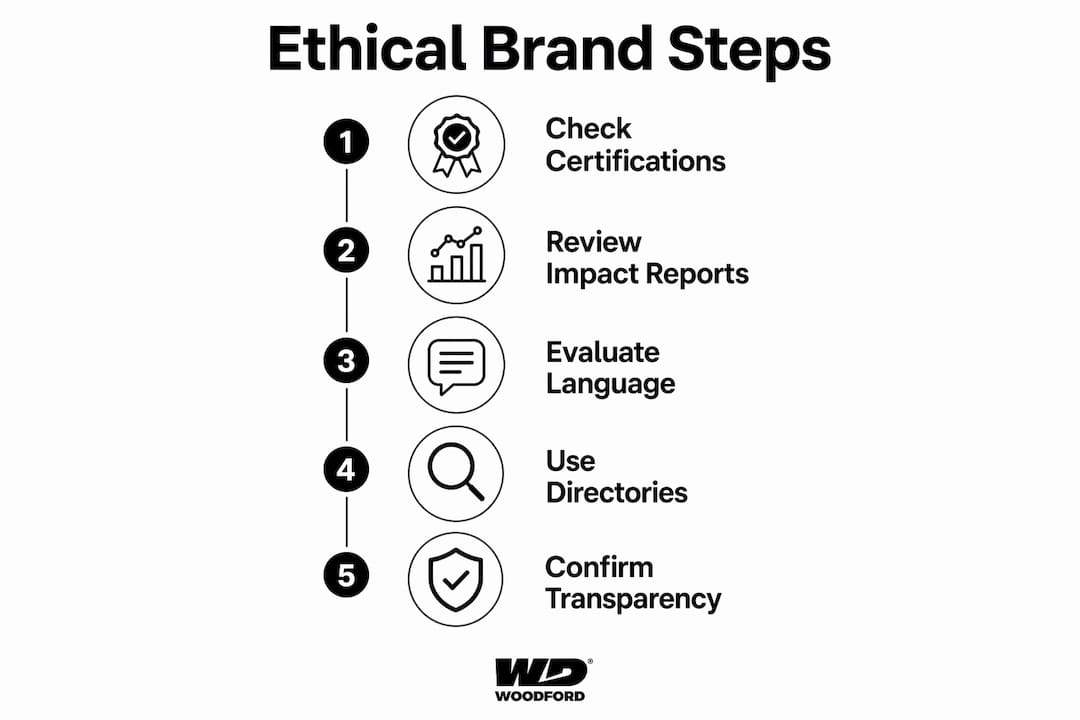
Third-party verification is the most reliable signal of genuine commitment. Certifications such as Fairtrade, B Corp, and the Soil Association require brands to meet independently audited standards. These are not self-awarded labels.
Five checks to verify an ethical brand:
- Supply chain disclosure: Does the brand name its factories and publish their locations? Opacity at this level is a red flag.
- Living wage evidence: Does the brand confirm workers are paid a living wage, not just a legal minimum?
- Independent audits: Are factory conditions verified by a third party, not just self-reported?
- Measurable targets: Does the brand publish specific, time-bound environmental and social goals?
- Complaints and accountability: Does the brand have a public process for addressing ethical failures?
Beyond certifications, look at the language a brand uses. Phrases like “eco-friendly,” “green,” or “conscious” without supporting data are warning signs. Authentic ethical brands use specific numbers and name their partners.
Pro Tip: Use directories such as Good On You or the Ethical Consumer magazine ratings to cross-check a brand’s claims before you buy. These platforms aggregate third-party data so you do not have to research from scratch.
What barriers do consumers face when choosing ethical brands?
Price is the most cited barrier. Ethical production costs more because it pays workers fairly and uses better materials. Price remains a barrier for many younger consumers even when they express strong support for ethical principles. The gap between what people believe and what they buy is well documented.
This is known as the value-action gap. Consumers care about ethics but are constrained by price and convenience, and that tension does not resolve itself through awareness campaigns alone. Retailers and brands need to lower the practical barriers, not just the moral ones.
“Sustainability is shifting from a communications exercise to an operational imperative. The goal is to make ethical choices cost-neutral and as convenient as conventional ones. Until that shift is complete, consumers will continue to face real trade-offs that good intentions alone cannot overcome.” — Sustainable Retail Barometer 2025, BearingPoint
The good news is that the retail sector is actively working to reduce these barriers through operational changes rather than marketing messages. That means more ethical options at accessible price points, better labelling, and easier access to second-hand and resale channels.
Practical ways to overcome the barriers:
- Start with one category: Choose one area, such as food, coffee, or household cleaning products, and commit to buying ethically there first.
- Use second-hand and resale: Only 4% of UK adults shop exclusively sustainably, but those who do are significantly more likely to prioritise pre-loved items. Resale is one of the most accessible entry points.
- Repair before replacing: Extending the life of what you already own is one of the most effective ethical choices available, at no extra cost.
- Compare cost per use: Ethical products often last longer. A higher upfront price frequently works out cheaper over time.
- Budget by priority: Identify your non-negotiable ethical values and spend more carefully in those categories while making compromises elsewhere.
How do ethical brands impact consumer loyalty and brand reputation?
Consumer loyalty to ethical brands is not just emotional. It is commercially measurable. 83% of British consumers believe brands can be both ethical and profitable, which means the old assumption that ethics and growth are in tension has largely collapsed. Consumers now expect integration, not trade-offs.
Authenticity is the key variable. Brands that embed ethics into their operations, rather than treating it as a communications strategy, build deeper trust. That trust translates into repeat purchases, word-of-mouth referrals, and resilience when things go wrong. A brand with a genuine ethical record can recover from a crisis far more effectively than one whose ethics were purely cosmetic.
The food sector illustrates this clearly. Brands that align their sourcing, packaging, and supplier relationships with ethical principles consistently outperform those that rely on packaging claims alone.
| Ethical brand behaviour | Consumer impact |
|---|---|
| Transparent supply chain | Higher trust and repeat purchase rates |
| Living wage commitment | Stronger emotional connection and advocacy |
| Third-party certification | Reduced scepticism and increased willingness to pay |
| Consistent ethical action | Long-term brand loyalty and crisis resilience |
| Published impact targets | Greater consumer confidence in brand claims |
Pro Tip: Follow a brand’s social media and press coverage for at least three months before making it a regular purchase. Consistent ethical behaviour over time is far more reliable than a single campaign or certification announcement.
Practical steps to start choosing ethical brands confidently
Ethical consumerism, the practice of making purchasing decisions based on social and environmental values, does not require a complete overhaul of your shopping habits. Incremental changes reduce consumer burnout and make sustainable habits stick over time. The goal is progress, not perfection.
Food and drink is one of the most accessible categories to start with. Choosing ethical tea or coffee from brands with Fairtrade or Rainforest Alliance certification is a low-cost, high-frequency habit that adds up quickly. The benefits of ethical sourcing in food and beverage include fairer pay for farmers, reduced pesticide use, and stronger rural communities in producing countries.
- Use ethical brand directories: Good On You, Ethical Consumer, and the B Corp directory provide independently verified ratings across multiple categories.
- Prioritise your non-negotiables: Decide which ethical issues matter most to you, whether that is labour rights, animal welfare, or carbon emissions, and focus your research there.
- Incorporate circular economy habits: Second-hand shopping, clothing swaps, and product repair all reduce demand for new production and extend the value of existing goods.
- Check for operational transparency: Look for brands that publish supplier lists, factory audits, and annual sustainability reports rather than relying on vague claims.
- Balance budget and values: Ethical shopping does not require spending more on everything. Buying less but better is a legitimate and effective strategy.
The shift in UK food retail trends shows that consumer demand for ethical products is growing across income brackets, not just among premium shoppers. That growth is creating more options at more price points, making ethical choices increasingly accessible.
Key takeaways
Ethical brands deliver measurable benefits for consumers, workers, and the environment, and the evidence from 2026 UK research confirms that supporting them is both a values-driven and commercially rational choice.
| Point | Details |
|---|---|
| Ethical brands drive advocacy | Brands perceived as ethical attribute 21% of consumer advocacy to their ethical associations. |
| Transparency is non-negotiable | Genuine ethical brands publish supply chain details, factory audits, and living wage evidence. |
| The value-action gap is real | Price and convenience remain the primary barriers between ethical intent and actual purchase. |
| Start small to build habits | Incremental changes, such as one ethical food purchase or repairing an item, reduce burnout. |
| Authenticity builds loyalty | Brands that embed ethics into operations, not just marketing, earn deeper and longer-lasting consumer trust. |
Woodford and ethical food brands worth knowing
Woodford works directly with independent retailers across the UK to make genuinely ethical food brands easier to find and stock. As the UK’s leading strategic food wholesaler, Woodford curates brands that meet real standards on sourcing, transparency, and quality, not just brands with good packaging. For consumers, that means the independent shops you already trust are increasingly stocked with products that reflect your values. For retailers, it means access to a range of quality food brands that resonate with the growing number of shoppers who want to buy better. Woodford’s approach connects ethical producers with the retailers best placed to champion them, making responsible shopping a practical reality rather than a niche pursuit.
FAQ
What are ethical brands?
Ethical brands are companies that integrate fair labour practices, environmental sustainability, and supply chain transparency into their core operations. They are independently verified rather than self-certified.
Why should I support ethical companies over conventional ones?
Ethical brands attribute 21% of consumer advocacy to their ethical associations, meaning your support has a measurable commercial impact that encourages more businesses to adopt responsible practices.
How do I spot greenwashing?
Look for vague terms like “eco-friendly” or “conscious” without supporting data. Genuine ethical brands publish specific supply chain information, third-party audit results, and time-bound sustainability targets.
Is ethical shopping only for high-income consumers?
No. Second-hand shopping, product repair, and choosing one ethical item per category are all low-cost entry points. The Sustainable Retail Barometer 2025 confirms that incremental changes are more sustainable than wholesale overhauls.
What is the value-action gap in ethical consumerism?
The value-action gap describes the disconnect between consumers who care about ethics and those who actually buy ethically. Price and convenience are the primary causes, and both are increasingly being addressed at the retail level.


