Wholesale procurement: a guide for UK independent food retailers
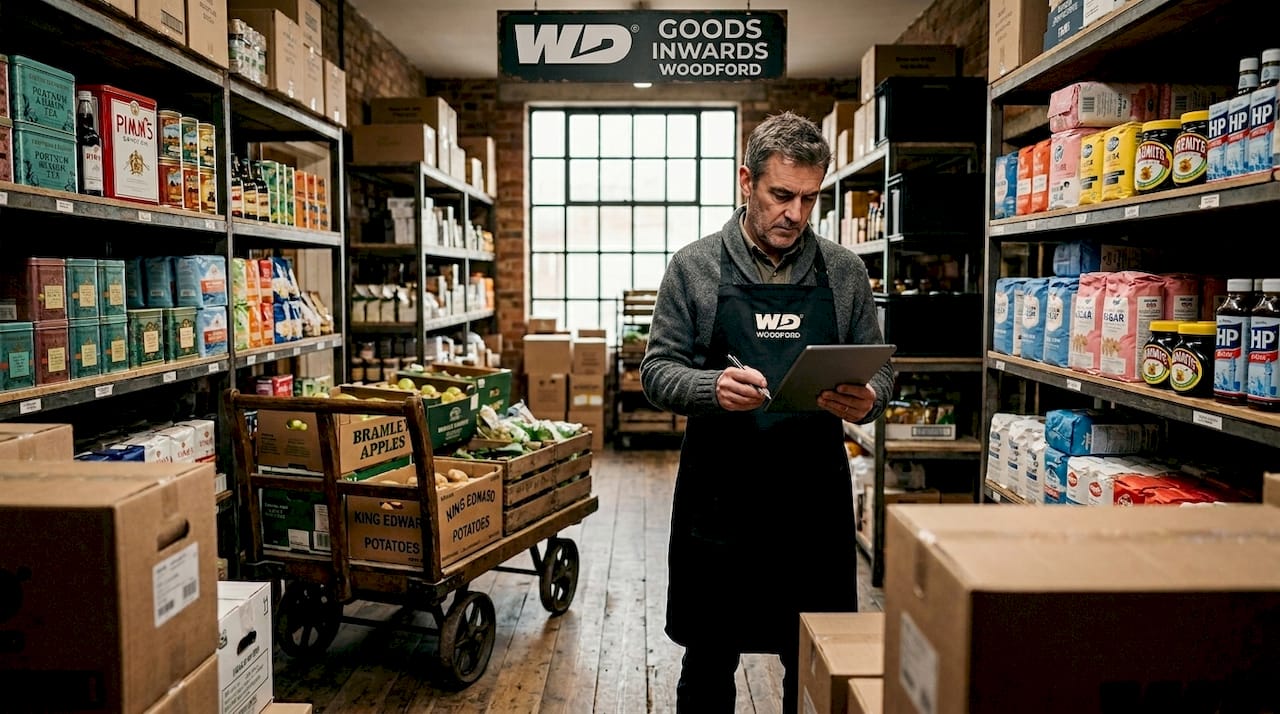
TL;DR:Wholesale procurement for UK independent food retailers is a critical ongoing relationship that influences product availability, costs, and margins. Focusing on supplier selection, negotiation, logistics, compliance, and data-driven review ensures procurement becomes a strategic discipline that enhances profitability and resilience. Treating procurement as a continuous, disciplined process allows independents to build consistency, adapt to trends, and gain a competitive edge in 2026.
Many independent food retailers assume wholesale procurement is little more than placing a big order and waiting for a lorry to arrive. That assumption is costing them money. For UK independents, procurement is the engine underneath everything: it determines which products you can stock, how much you pay for them, whether shelves stay full, and ultimately whether your margins hold. Get it right, and you create a business that can absorb supplier shocks and still turn a profit. Get it wrong, and you spend your days firefighting shortages, waste, and shrinking returns.
Table of Contents
- What is wholesale procurement?
- Key components and stages of wholesale procurement
- How wholesale procurement powers UK food retail economics
- Common challenges and best practices for independent retailers
- Why procurement excellence is your real competitive edge in 2026
- How Woodford helps UK independents master procurement
- Frequently asked questions
Key Takeaways
| Point | Details |
|---|---|
| Beyond bulk buying | Wholesale procurement is a full strategic process involving far more than ordering large quantities. |
| Process impacts profit | Well-managed procurement is directly linked to better margins and less waste for UK food retailers. |
| Complexities matter | Key steps like supplier management, compliance, and logistics require attention to avoid costly mistakes. |
| Best practice wins | Adopting best practices in procurement gives independents a competitive edge and supply stability. |
What is wholesale procurement?
At its core, wholesale procurement is the process of sourcing and purchasing products in bulk from manufacturers, distributors, or wholesalers (trade suppliers) to resell or use in a business, typically at lower per-unit prices than buying at retail. But for independent food retailers in the UK, it is far more than a transaction. It is an ongoing relationship with a network of supply chain partners, each playing a distinct role.
Understanding those roles matters enormously. Manufacturers produce the goods. Distributors move products from production facilities to regional or national points. Wholesalers aggregate products from multiple sources and sell them to trade buyers, often with added services like storage, delivery scheduling, and account management. As an independent retailer, you are buying from the latter end of that chain, and the terms you negotiate at each link directly affect what lands on your shelf and at what cost.
The reasons UK independents source through wholesale procurement rather than buying retail are straightforward:
- Access to lower per-unit prices through bulk purchasing
- Availability of trade-only product lines not sold to consumers
- Consolidated ordering from a single supplier rather than dozens of individual brands
- Consistent stock replenishment rather than ad hoc retail availability
- The ability to navigate UK food logistics efficiently with planned delivery schedules
The margin advantage is real, but it only materialises when you treat procurement as a discipline rather than a convenience. Retailers who understand the structure of their supply chain, and who they are actually buying from at each stage, are far better positioned to negotiate favourable terms and avoid getting squeezed. Food and beverage procurement insights highlight how even small operational improvements in purchasing processes can compound into meaningful margin gains over a trading year.
Key components and stages of wholesale procurement
With the basics established, let’s explore the fundamental steps and management areas that comprise effective wholesale procurement. According to food procurement specialists, procurement for food retailers and caterers includes supplier selection and management, price and category sourcing, ordering and logistics, compliance, and reporting and insight. Each stage feeds the next, and weakness in any one area creates problems downstream.
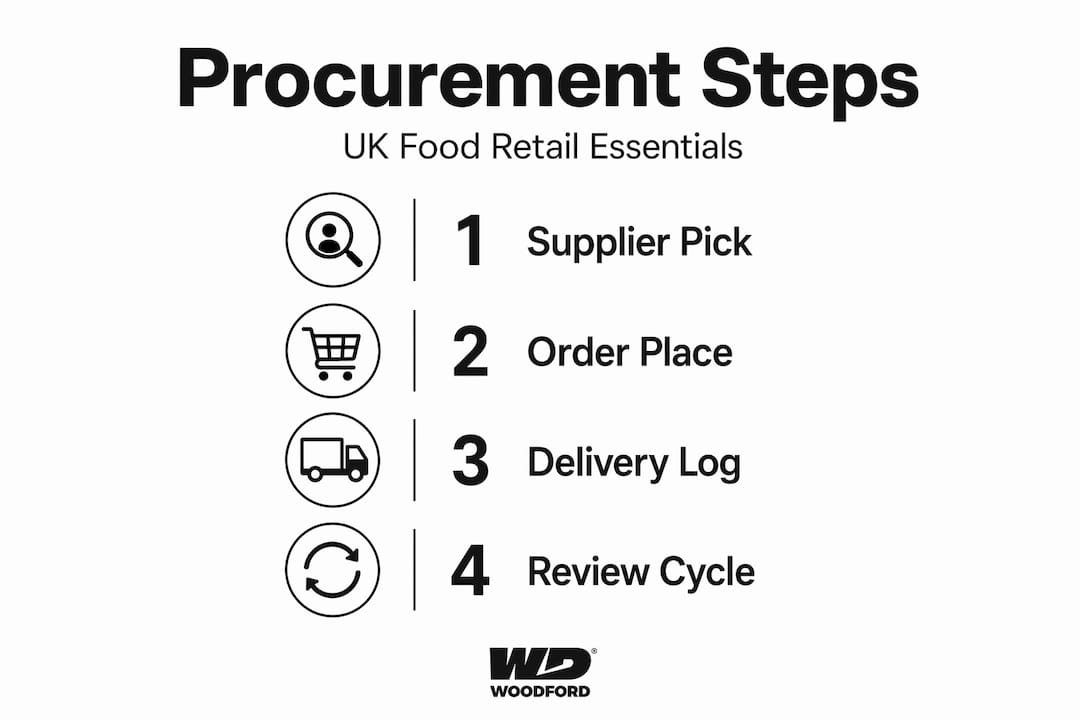
Here is how a well-run procurement cycle typically unfolds for a UK independent food retailer:
- Supplier identification and qualification. Before you place a single order, you need to know who you are buying from. That means verifying trade credentials, reviewing product ranges, checking food safety certifications, and evaluating suppliers and brands for fit with your customer base.
- Price and category negotiation. Once you have shortlisted suppliers, the negotiation phase determines your cost base. Volume commitments, payment terms, and promotional support all come into play here.
- Order placement and management. This is where most retailers focus their attention, but it is only one step in a much longer process. Ordering involves managing minimum order quantities (MOQs), lead times, and substitution policies.
- Logistics and delivery coordination. Understanding your distribution channels is critical. Will goods arrive chilled or ambient? Who is responsible if a delivery is late or damaged?
- Compliance and food safety. UK food law requires retailers to maintain records of suppliers and product provenance. Traceability is not optional; it is a legal obligation.
- Reporting and insight collection. The final stage is the one most independents skip. Tracking what you ordered, what sold, and what was wasted tells you how to improve your next procurement cycle.
| Stage | Primary focus | Common pitfall |
|---|---|---|
| Supplier selection | Range fit and food safety credentials | Choosing on price alone |
| Price negotiation | Margin protection and payment terms | Failing to review terms annually |
| Order management | Stock availability and MOQ compliance | Over-ordering slow lines |
| Logistics | Delivery reliability and cold chain | Ignoring substitution policies |
| Compliance | Traceability and allergen documentation | Incomplete supplier records |
| Reporting | Sales data and waste analysis | Skipping post-cycle review |
Pro Tip: Build a simple procurement calendar. Map your order deadlines, delivery windows, and contract review dates into a single document. It takes one afternoon to create and saves hours of reactive firefighting every week.
Automation is increasingly relevant here. Optimised logistics technology is helping food businesses reduce manual errors in ordering and inventory tracking, freeing up time that independent retailers can direct towards supplier relationships and product development.
How wholesale procurement powers UK food retail economics
Understanding the process is essential, but it is the impact on your bottom line where procurement’s value truly shows. Food retail in the UK operates on notoriously thin margins, and industry supply-chain analysis confirms that pressure is spread across every stage of the supply chain. That means your procurement decisions sit at the centre of a very tight equation.

Think about how a food pound breaks down. By the time a product reaches your shelf, costs have accumulated across raw materials, processing, packaging, distribution, and retail overheads. Your margin is what remains after all of that. If your procurement is inefficient, whether through poor supplier terms, excessive waste, or inconsistent ordering, that margin erodes quickly.
The UK grocery and foodservice wholesaling sector tracks performance across multi-year periods precisely because short-term thinking does not serve the industry well. Retailers who treat procurement as a strategic function rather than an operational task consistently outperform those who buy reactively.
Here is a direct comparison to illustrate the point:
| Scenario | Stock management | Waste level | Gross margin impact |
|---|---|---|---|
| Procurement done well | Consistent availability, low overstock | Minimal, driven by data | Margin protected or improved |
| Procurement done poorly | Frequent shortages and overstock | High, driven by guesswork | Margin consistently eroded |
The measurable benefits of strong procurement extend well beyond cost savings:
- Cost control through negotiated terms and volume consistency
- Fewer shortages by maintaining reliable supplier relationships and reorder triggers
- Better menu and range coverage by analysing food trends and sourcing accordingly
- Supply chain resilience when disruptions occur, as diversified supplier networks reduce dependency on any single source
- Improved food brand strategy through alignment between what you procure and what your customers actually want
It is worth underlining something that often gets overlooked. Procurement is not just about buying cheaply. It is about buying the right things, at the right time, from the right suppliers, so that your shelves reflect what your customers are looking for. The cost benefit is real, but it is only part of the story. Food manufacturing cost insights show that efficiency gains compound when procurement is integrated with production planning and demand forecasting, lessons that translate directly to independent retail buying decisions.
Common challenges and best practices for independent retailers
While wholesale procurement offers clear benefits, independent retailers often stumble at certain hurdles. Recognising these, and having a plan, can make all the difference.
One of the most practical breakdowns of the challenge comes from wholesale sourcing guidance for UK retailers, which notes that wholesale procurement often requires careful handling of account setup (trade buyer status), minimum order quantities and ordering rhythms, and logistics constraints such as delivery windows, substitutions, and damaged items. These factors directly affect product availability and waste. Getting caught out by any one of them can leave you overstocked on lines you cannot shift or short on products your customers expect to find.
“The biggest mistakes independent retailers make in procurement are not about price. They are about not understanding MOQs, not reading substitution clauses, and not reviewing supplier performance regularly. Fix those, and the price conversations get easier.” — Procurement adviser, UK food sector
The most common operational hurdles for UK independents include:
- Account setup delays. Many wholesalers require proof of trade buyer status before activating an account, which can slow your ability to access new suppliers quickly.
- Minimum order quantities. MOQs exist to help suppliers manage logistics efficiently, but they can create cash flow pressure for smaller retailers if not planned around carefully.
- Inconsistent ordering rhythms. Buying reactively, when you run out rather than on a planned schedule, leads to higher average costs and missed promotional opportunities.
- Substitution and damage handling. When a supplier substitutes a product or delivers damaged goods, you need a clear process for claiming credit and adjusting your stock records accordingly.
- Poor delivery logistics planning. Without a clear understanding of your food logistics requirements, you risk receiving goods you cannot store properly or at times that disrupt your operations.
Best practices to strengthen your procurement function:
- Review supplier contracts at least once a year, checking for changes to MOQs, payment terms, and delivery charges
- Build a preferred supplier list with at least two options for your highest-volume lines, reducing single-source dependency
- Use your sales data to set reorder points for each product category rather than guessing based on shelf appearance
- Understand how cross-docking logistics can reduce storage requirements and speed up your supply chain
- Document every supplier interaction, from delivery issues to substitution notices, so you have evidence to support claims or renegotiations
Pro Tip: Schedule a quarterly procurement review. Bring your sales data, your supplier records, and your waste logs into one conversation. Look for patterns: which lines are consistently short, which are consistently over-ordered, and which suppliers are performing below expectation. Thirty minutes of analysis can save thousands of pounds over a trading year.
Why procurement excellence is your real competitive edge in 2026
Here is something the standard procurement guides rarely say plainly. The independent retailers who are quietly outperforming larger competitors in 2026 are not doing it because they have found cheaper suppliers or a wider range. They are doing it because they have turned procurement into a discipline, not a chore.
Consistency is the competitive advantage that never gets discussed. A retailer who reliably stocks what customers expect, at a price that holds margin, builds loyalty faster than any marketing campaign. That consistency comes from procurement discipline, from knowing your supplier lead times, understanding your ordering rhythms, and reviewing performance data rather than assuming everything is fine because the shelves look full.
The ‘price-only’ mentality is a trap that many independents fall into, especially when margins are under pressure. It feels logical to chase the lowest wholesale price, but the hidden costs of poor supplier reliability, high substitution rates, and damaged deliveries quickly erode any saving. Factor in the management time spent firefighting supply problems, and the cheapest supplier often turns out to be the most expensive.
Consumer behaviour, compliance requirements, and margin pressures are all evolving rapidly in 2026. Retailers who adapt to food trends as part of their procurement strategy, not as an afterthought, are the ones capturing new customer demand before their competitors notice it. That requires treating procurement as a strategic function with its own review calendar, performance metrics, and supplier development goals.
The actionable challenge we put to every independent retailer we work with is this: spend as much time on your procurement process as you spend on your shopfloor. Invest equal attention to supplier analysis, contract review, and data-led ordering as you do to visual merchandising and customer service. The results are not glamorous, but they are durable.
How Woodford helps UK independents master procurement
If you are ready to apply these lessons and elevate your supply chain, here is how Woodford can smooth your procurement journey. At Woodford, we work exclusively with UK independent food retailers to remove the complexity from wholesale procurement. We provide direct trade terms, a carefully curated selection of trend-led food brands, and logistics support designed to protect your margins rather than erode them. We do not just supply products; we act as a strategic partner, helping you make procurement decisions that fit your range, your customers, and your business model. Explore our trusted brands and find out how partnering with Woodford can bring consistency, clarity, and genuine margin resilience to your procurement operation.
Frequently asked questions
How is wholesale procurement different from buying at retail?
Wholesale procurement involves buying in bulk directly from trade suppliers at lower per-unit prices with the intent to resell, whereas retail buying is for personal end-consumption without access to trade pricing.
What role does supplier selection play in procurement?
Supplier selection underpins every other procurement stage because the reliability, pricing, and compliance of your suppliers directly determines product availability and your ability to maintain consistent margins.
Why are minimum order quantities required in wholesale?
Minimum order quantities allow wholesalers to manage logistics and pricing efficiently, ensuring the economics of bulk delivery remain viable for both the supplier and the buyer.
How does procurement affect profit margins for independent retailers?
Efficient procurement lowers input costs and reduces waste, which is critical given that UK food industry margins are thin and cost pressure is distributed across every supply chain stage.
Recommended
- Wholesale logistics explained: A guide for UK food retailers - WOODFORD - Bringing quality foods your way
- Premium food wholesale: a guide for UK retailers and brands - WOODFORD - Bringing quality foods your way
- Best wholesale pricing strategies for UK food brands - WOODFORD - Bringing quality foods your way
- How UK distributors boost independent food retail success - WOODFORD - Bringing quality foods your way