The role of exclusivity in food marketing
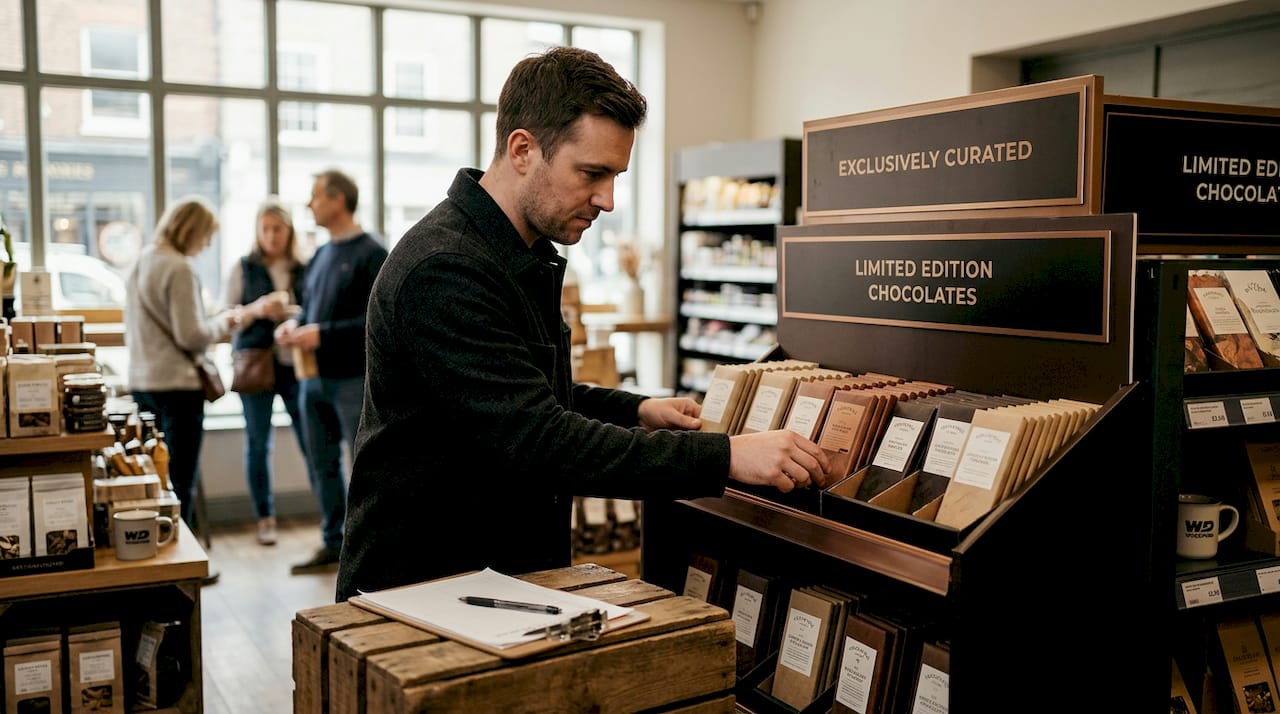
TL;DR:Exclusivity influences food perception by activating neurological reward centers, making products taste better.Strategic use of genuine scarcity, involving clear reasons, builds trust and strengthens long-term brand equity.
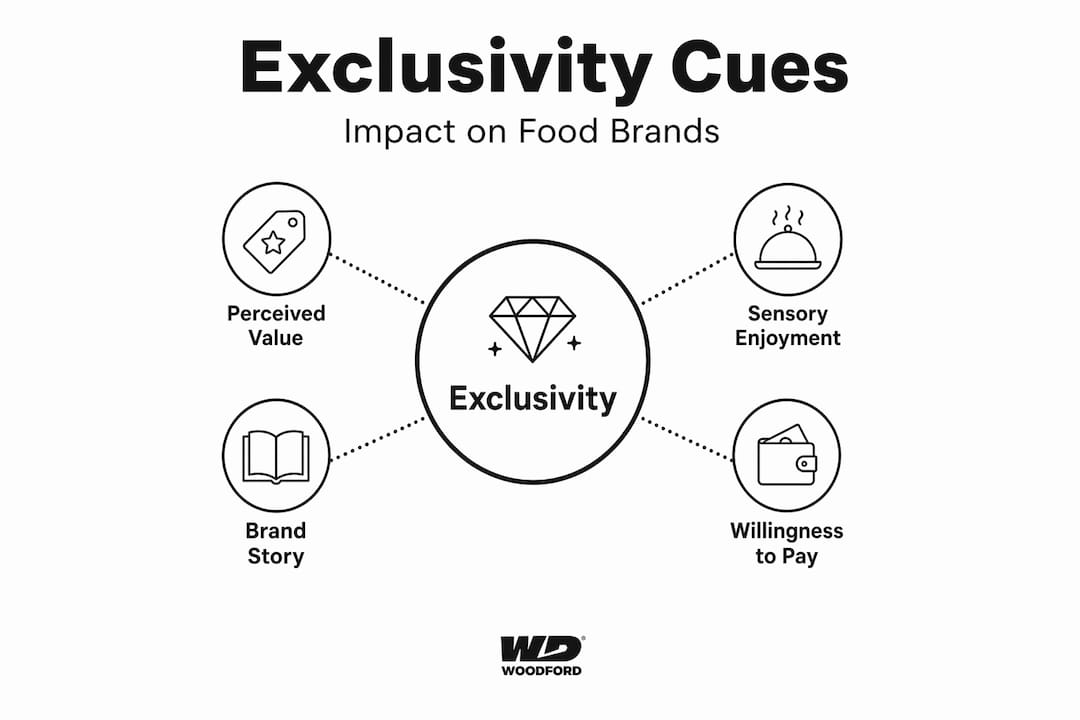
Exclusivity is doing something remarkable before a consumer even takes a bite. The role of exclusivity in food is not simply about making something hard to get. It reshapes how food tastes, how a brand is perceived, and what a product is worth in the mind of the buyer. Food professionals who treat scarcity as a gimmick are missing the deeper mechanism at work. This article unpacks the science, the psychology, and the practical strategies behind food exclusivity so you can apply it with intention, not guesswork.
Table of Contents
- Key takeaways
- The role of exclusivity in food perception
- Exclusivity as a psychological and brand mechanism
- Practical strategies for food brand exclusivity
- When exclusivity can work against you
- Food exclusivity benefits in the premiumisation era
- My perspective: what the industry keeps getting wrong
- How Woodford can help you source and position exclusive food brands
- FAQ
Key takeaways
| Point | Details |
|---|---|
| Price signals alter taste perception | Brain imaging confirms higher prices activate reward centres, making identical food taste better to consumers. |
| Scarcity type shapes emotional response | Limited stock creates stronger emotional attachment than limited time, affecting willingness to pay a premium. |
| Genuine exclusivity protects brand equity | Artificial or repeated scarcity claims erode trust and diminish long-term brand loyalty. |
| Exclusive distribution boosts retail investment | Exclusive regional rights motivate retailers to invest in premium presentation and staff product knowledge. |
| Relationship-based exclusivity is emerging | Loyalty access and early drops are becoming more powerful than product scarcity alone as consumer expectations shift. |
The role of exclusivity in food perception
The science here is more concrete than most marketers realise. When participants were served identical food at different price points, they consistently rated the higher-priced version as tastier. Brain scans taken during the experiment confirmed why: higher prices activate the medial orbitofrontal cortex, the region associated with reward and pleasure. The food had not changed. The signal around it had. That signal is doing real neurological work.
This matters enormously for food brand strategy. Exclusivity functions as an extrinsic cue, and extrinsic cues change the subjective sensory experience. A craft hot sauce in premium limited-run packaging, stocked in only a handful of independent retailers, will be experienced differently by the consumer than the same product on a supermarket shelf beside twelve competitors. The packaging, the scarcity signal, the retail context: all of it shapes what the tongue reports back.
Limited stock versus limited time
Not all scarcity is equal, and the distinction is commercially significant. Research involving 465 food consumers found that limited-stock scarcity created stronger emotional attachment to a product, while limited-time scarcity tended to enhance social class congruence. Put plainly: “only 500 jars made” connects people to the product emotionally, while “available this month only” makes people feel they belong to a particular social group by purchasing it.
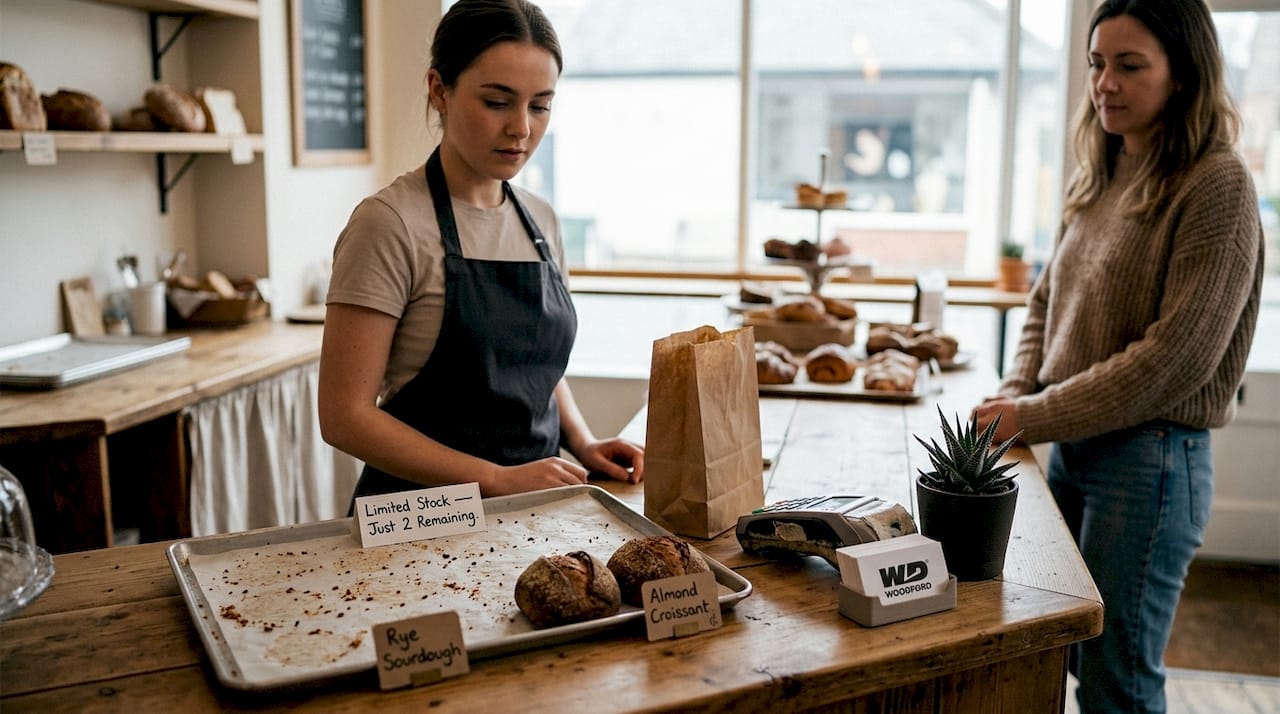
Both mechanisms increase perceived brand value and willingness to pay a premium. Understanding which one aligns with your brand’s identity determines which lever you pull. A heritage artisan producer with a compelling origin story will generally see stronger returns from stock-limited releases. A trend-led brand tapping seasonal occasions may benefit more from time-limited positioning.
Exclusivity as a psychological and brand mechanism
Exclusivity is not a marketing tactic you bolt on at the launch stage. It is, as luxury brand strategists have long argued, a coherent operating constraint that shapes every decision a brand makes. Exclusivity converts economic into cultural capital: it signals membership, confers status, and confirms the buyer’s identity as someone with discernment.
The risk of dilution is real and underappreciated in the food sector. When a product that built its reputation on scarcity becomes widely accessible, the brand does not simply lose a pricing advantage. It loses the psychological contract with the consumer who valued it precisely because not everyone could have it. The supermarket listing that triples volume can simultaneously halve brand equity.
Here is where exclusive distribution becomes a structural solution rather than a commercial nicety:
- Exclusive regional retail rights remove intra-brand price competition, protecting the margin integrity of both brand and retailer.
- Retailers with exclusivity have a commercial reason to invest: premium shelf placement, trained staff, and point-of-sale storytelling that reinforces brand positioning.
- Exclusive distribution rights increase retailer motivation for superior brand presentation, which in turn enhances the consumer’s overall perception of quality.
- Brands retain narrative control. When your product appears in curated independents rather than discounted on every e-commerce platform, the exclusivity signal remains intact.
“Exclusivity must be a non-negotiable operating constraint, not a rhetorical device. When brands treat scarcity as a story they tell rather than a reality they enforce, consumers notice. And they do not forgive it easily.”
The consumer legibility of your exclusivity matters too. If buyers cannot understand why something is limited, the signal becomes noise. The reason for scarcity should be clear: a single-origin supply constraint, a seasonal harvest, a production capacity tied to craft methods. Legible scarcity builds trust. Vague scarcity breeds scepticism.
Practical strategies for food brand exclusivity
The most effective food launches treat limited editions as storytelling vehicles, not sales mechanics. Flavour innovation works best when it sits at the intersection of novelty and familiarity: something surprising enough to generate interest, familiar enough to feel approachable. A limited wild fermented blackberry variant of an established hot sauce pulls in both loyal customers and curious new buyers.
Operationally, the brands that do this well share several characteristics:
- They announce limited releases through channels where their core audience already lives, building anticipation before stock is available.
- They set genuine inventory constraints and communicate them clearly, following the model of brands like Supreme and Oreo who institutionalised real limitation rather than manufactured urgency.
- They align release timing with cultural or seasonal moments that reinforce the product’s narrative: a truffle oil launched during the autumn foraging season carries more weight than one released in March.
- They use packaging as a signal. Limited-run design changes, numbered labels, or collaborations with British makers and artists tell the consumer that this iteration is genuinely distinct.
- They avoid countdowns to artificial deadlines. Nothing destroys exclusivity credibility faster than a “last chance” banner that resets monthly.
Pro Tip: When planning a limited edition release, work backwards from the distribution channel. If your exclusive retail partner cannot support the launch story in-store through staff training or dedicated display, the exclusivity signal will fall flat regardless of how good the product is.
Aligning your exclusivity cues with your food brand strategy rather than treating them as isolated campaigns is the difference between brands that build lasting premiums and those that see a spike followed by consumer indifference.
When exclusivity can work against you
There are contexts where exclusivity cues actively suppress purchase intent, and gift-giving is the clearest example. Research on gift purchasing suggests that buyers prefer popular, well-validated items when selecting for recipients, because popularity signals lower risk. An exclusive, limited product introduces uncertainty the gift buyer is unwilling to carry on behalf of someone else.
| Scenario | Exclusivity effect | Recommended approach |
|---|---|---|
| Self-purchase, known brand | Strongly positive | Lead with scarcity and story |
| Gift purchase, unfamiliar recipient | Negative or neutral | Pair with awards, press, or social proof |
| Impulse buy, new brand | Mixed | Combine scarcity with accessibility cues |
| Loyal consumer, repeat product | Positive | Use relationship-based access (early drops) |
The solution is not to abandon exclusivity in gift contexts, but to layer in external validation. A Great Taste Award, a chef endorsement, or a prominent press mention shifts the buyer’s risk perception without undermining the product’s premium positioning. The award says “this is chosen by experts,” which gives a gift buyer permission to act on the scarcity signal.
Artificial scarcity carries a compounding risk. Brands that treat scarcity as a rhetorical device rather than an operational reality lose consumer trust in ways that are genuinely difficult to recover from. The consumer who feels manipulated does not quietly move on. They share the experience.
Pro Tip: If you are moving towards relationship-based exclusivity models, such as early access for loyalty scheme members or subscriber-only drops, make the criteria for access visible and achievable. Hidden exclusivity frustrates rather than flatters.
Food exclusivity benefits in the premiumisation era
The current market context makes a strong case for getting exclusivity right. Consumers are choosing to trade down in some categories to fund premium indulgences in others. The “little luxury” behaviour that food brands observed post-pandemic has not reversed. It has matured into a settled consumer habit, and premium food market trends in 2026 confirm that willingness to pay for perceived value remains high even under inflationary pressure.
The food exclusivity benefits are tangible:
- Margin protection. A product positioned as exclusive commands a price that reflects its perceived value, not just its production cost. Retailers stocking it have less incentive to discount.
- Stronger emotional bonds. Limited offerings create experiences consumers want to repeat and share. The scarcity that made them seek it out becomes the memory that makes them return.
- Differentiation in crowded categories. In categories where shelf presence is competitive, exclusive sourcing and limited distribution give independent retailers a genuine reason to champion your brand over ubiquitous alternatives.
- Brand equity accumulation. Each successful limited release adds to the perception that this brand produces things worth seeking out. That perception compounds over time.
For independent retailers specifically, partnering with brands that understand premium food wholesale and can deliver genuinely exclusive lines is a meaningful competitive advantage against multiples who cannot offer the same curation.
My perspective: what the industry keeps getting wrong
I have worked with enough food brands to say plainly that the most common mistake is not failing to create exclusivity. It is failing to protect it once it exists.
I have seen brands build genuine premiums over years through careful distribution and compelling product stories, then undermine everything with one poorly negotiated supermarket deal. The volume looks compelling on a spreadsheet. The brand value that disappears does not show up in the same column.
What I think will matter most in the next few years is not product scarcity. It is relationship scarcity. The brands that give their most loyal customers access to things before anyone else, whether that is early releases, behind-the-scenes content, or founder conversations, will build something much harder to replicate than a numbered jar. Relationship-based models are already proving more durable than product drops alone.
I also think the industry underestimates how much consumers have learned. The countdown timer that resets does not fool anyone. The “limited edition” that appears every year at the same time is not limited. When exclusivity is genuine, consumers can feel it. When it is performed, they feel that too. And the brands that are honest about the operational realities behind their scarcity, the actual harvest sizes, the genuine production caps, tend to earn a loyalty that outperforms any FOMO campaign.
— Nadim
How Woodford can help you source and position exclusive food brands
Applying these exclusivity principles is significantly easier when you have access to the right products and partners from the outset. Woodford works directly with visionary food brands across the UK, offering independent retailers genuine exclusivity rather than the same lines available everywhere else. When you stock through Woodford, you are not competing on price against the same product in the supermarket next door. You are offering something your customers cannot get elsewhere.
Beyond product access, Woodford provides the strategic context that makes exclusivity work at retail level: guidance on positioning, support with brand storytelling, and logistics that protect product integrity from warehouse to shelf. If you want to explore how to source exclusive brands for your shop and build a range that genuinely stands apart, Woodford is the place to start. Visit Woodford’s full catalogue to discover what is currently available and what exclusive lines are coming to market.
FAQ
What is the role of exclusivity in food marketing?
Exclusivity in food marketing increases perceived value, enhances sensory enjoyment, and drives premium pricing by signalling scarcity, status, and brand distinction. It works through both psychological and neurological mechanisms that make limited products feel genuinely superior to equivalent mass-market alternatives.
Why does food taste better when it costs more?
Brain imaging research shows that higher price signals activate the brain’s reward centre, increasing actual pleasure derived from eating. This is not imagined: the sensory experience measurably changes based on price perception.
What are the risks of using exclusivity in food branding?
Artificial or repeated scarcity claims damage consumer trust and are difficult to recover from. Exclusivity cues can also reduce gift purchases, where buyers prefer popular, socially validated products over scarce ones.
How does exclusive distribution benefit food brands?
Exclusive distribution removes price competition between retailers, protects margins, and gives retail partners a commercial incentive to invest in premium product presentation and consumer education.
Is limited stock or limited time more effective for food launches?
Limited-stock scarcity tends to generate stronger emotional attachment, while limited-time scarcity drives social class alignment. The best choice depends on your brand identity and what kind of consumer response you are trying to build.
Recommended
- How to source exclusive food brands for your UK shop - WOODFORD - Bringing quality foods your way
- Strategic food brands for UK independent retailers - WOODFORD - Bringing quality foods your way
- Food brand strategy drives UK retail success in 2026 - WOODFORD - Bringing quality foods your way
- Discover niche food categories to set your shop apart - WOODFORD - Bringing quality foods your way