Wholesale logistics explained: A guide for UK food retailers
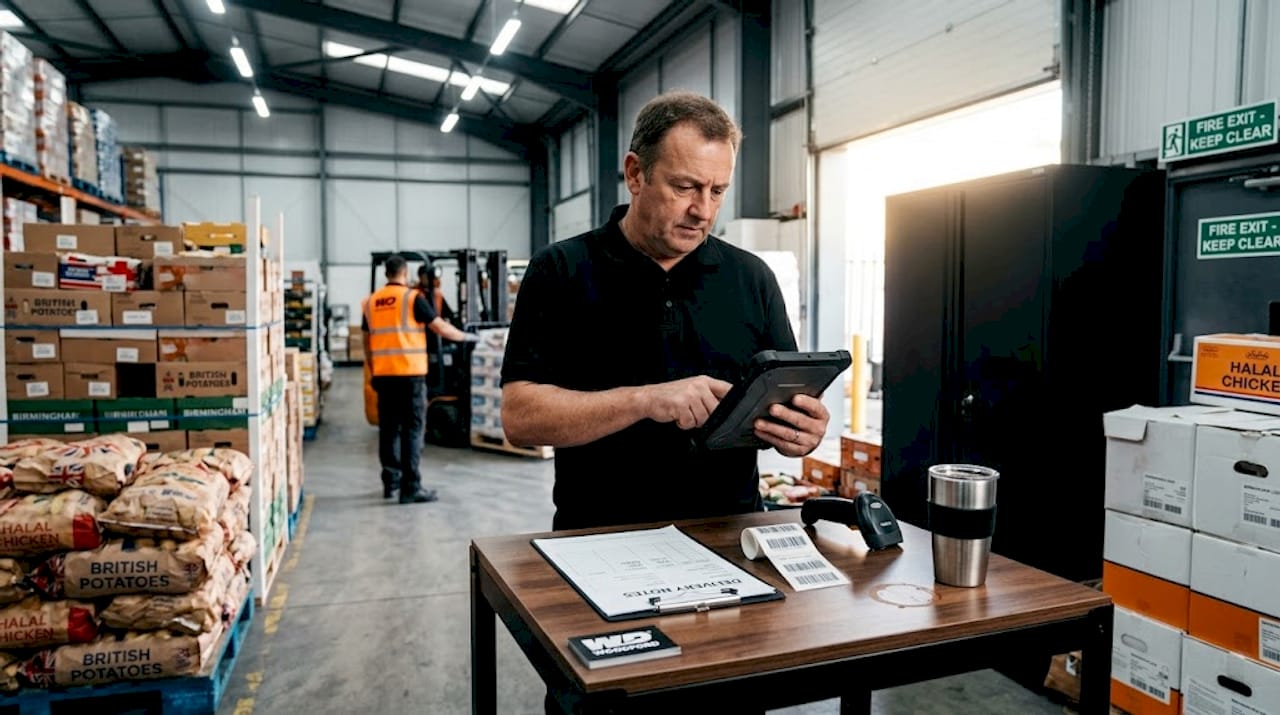
TL;DR:Wholesale logistics is a strategic operation critical for ensuring product freshness, compliance, and profit margins.Proper management of temperature control, traceability, and efficient delivery is essential for independent food retailers.Building strong, transparent partnerships with reliable wholesalers enhances supply chain performance and customer satisfaction.
Most independent food retailers and brand owners think of wholesale logistics as glorified delivery. Get the goods from A to B, keep them intact, and call it done. The reality is far more strategic. Wholesale logistics is the operational backbone that determines your margins, your product freshness, your compliance record, and ultimately your ability to compete. Get it right and you have a genuine commercial advantage. Get it wrong and you face stockouts, spoiled goods, and unhappy customers. This guide cuts through the noise and gives you a practical, clear-eyed picture of how wholesale logistics actually works in the UK food sector.
Table of Contents
- What is wholesale logistics and why does it matter?
- Core mechanics: The wholesale order-to-delivery process
- Key considerations for UK food retailers and brands
- Warehouse distribution, delivery planning, and routes
- What most guides miss about wholesale logistics for independents
- Optimise your wholesale logistics with Woodford
- Frequently asked questions
Key Takeaways
| Point | Details |
|---|---|
| Wholesale logistics defined | It covers the full pipeline from supplier warehouses through bulk distribution to business customers. |
| Compliance is critical | Temperature controls and food safety documentation are non-negotiable for independents. |
| Warehouse and routing impact | Good network design, warehouse ops, and delivery planning directly affect margins and availability. |
| Tailored strategies matter | Independent retailers must adapt best practices to fit their diverse, often complex order patterns. |
| Expert support available | Working with a logistics-savvy wholesaler can lift your supply chain performance. |
What is wholesale logistics and why does it matter?
Wholesale logistics is not simply the act of moving products. As a working definition, wholesale logistics is the set of activities that supports selling products in bulk to business customers. That distinction matters enormously. You are not dealing with individual consumers placing small orders. You are dealing with business-to-business (B2B) transactions where volume, reliability, and cost efficiency are the benchmarks that count.
This separates wholesale logistics fundamentally from retail logistics. Retail logistics, or business-to-consumer (B2C) fulfilment, is built around speed to the individual shopper, personalisation, and last-mile delivery to homes. Wholesale logistics, by contrast, is built around bulk movement, scheduled replenishment cycles, and maintaining supply to trade buyers such as independent food retailers, restaurants, and cafés.
| Factor | Wholesale logistics | Retail logistics |
|---|---|---|
| Customer type | Business buyers (B2B) | End consumers (B2C) |
| Order size | Large, bulk volumes | Small, individual quantities |
| Order frequency | Regular, repeat cycles | Variable, demand-driven |
| Temperature requirements | Multi-temperature, documented | Mostly ambient or single-temp |
| Compliance focus | HACCP, traceability, safety records | Consumer packaging regulations |
| Delivery model | Distribution centres to trade buyers | Warehouses to consumer doors |
“Independent food retailers who treat wholesale logistics as merely a cost line are leaving significant margin on the table. The real value lies in treating it as a strategic function that shapes your buying power, product availability, and customer experience.”
For independent retailers, understanding UK food logistics is not an academic exercise. It directly influences which products you can reliably stock, at what cost, and in what condition they arrive. Distribution centres sit at the heart of the system, acting as staging points where goods are received from suppliers, stored correctly, and then dispatched to you in the quantities and formats you need. The design and location of these facilities shapes lead times and minimum order quantities, two factors that hit independent retailers especially hard when they are not optimised.
Crucially, wholesale logistics is the foundation on which your margins are built. Poor logistics means higher wastage, emergency sourcing at premium prices, and unpredictable stock levels. Solid logistics means predictable costs, consistent availability, and the ability to plan your range with confidence. If you want practical food logistics tips tailored to your context, understanding these foundations is the essential starting point.
Core mechanics: The wholesale order-to-delivery process
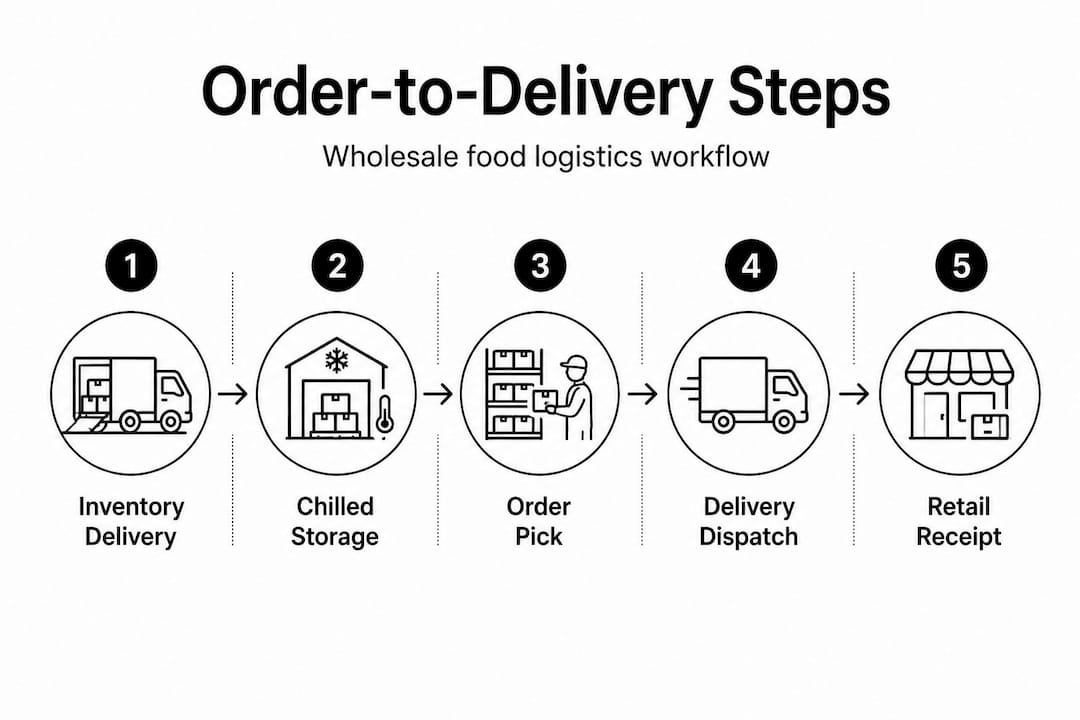
Visualising how wholesale logistics actually flows is the fastest way to identify where inefficiencies or risks might sit in your supply chain. Wholesale logistics mechanics revolve around order-to-delivery execution: receiving inventory, storage, picking and packing, invoicing and order management, planning delivery runs, and distributing via transport, often multi-temperature for food. Each of these stages has its own requirements and failure points.
Here is how a typical food wholesale order-to-delivery cycle unfolds:
- Inventory receipt. Goods arrive at the distribution centre from suppliers. They are checked against purchase orders, inspected for quality, and logged into the warehouse management system. Any discrepancies are flagged immediately to avoid cascading problems downstream.
- Storage and temperature zoning. Products are placed into appropriate storage zones: ambient shelving, chilled rooms, or frozen compartments. Correct placement is not optional for food businesses; it is a compliance requirement and a quality assurance measure.
- Order picking. When a retailer places an order, the warehouse team selects the correct SKUs (stock keeping units, meaning individual product lines) in the quantities required. Accuracy at this stage prevents costly returns and shortages on your shelf.
- Packing and labelling. Picked items are consolidated, packed, and labelled with accurate delivery information, batch codes, and any traceability documentation required for food safety compliance.
- Invoicing and order management. A confirmed invoice is generated and matched to the order. Good systems flag discrepancies before goods leave the warehouse, protecting both the wholesaler and the retailer from billing errors.
- Delivery run planning. Routes are optimised to minimise journey time while maintaining compliance with temperature windows. For chilled and frozen goods, this step is critical because every extra hour in transit is a risk.
- Transport and delivery. Goods are loaded onto appropriate vehicles (refrigerated, frozen, or ambient) and delivered to your store or storage facility at the agreed time.
| Stage | Key risk for food retailers | Best practice |
|---|---|---|
| Inventory receipt | Supplier shortages, quality failures | Rigorous goods-in checks |
| Storage | Temperature breach, stock rotation errors | FIFO (first in, first out) policy |
| Order picking | Picking errors, wrong SKUs | Barcode scanning, double-check systems |
| Delivery planning | Late arrivals, temperature breaches | Route optimisation software |
Pro Tip: Always request temperature logs for chilled or frozen deliveries. If your wholesaler cannot provide documented evidence that the cold chain was maintained from storage to your door, that is a red flag you need to act on immediately.
One increasingly popular technique worth knowing is cross-docking, where goods are transferred directly from inbound vehicles to outbound transport without extended storage. For high-turnover perishables, this can dramatically cut the time between supplier and shelf, improving freshness and reducing wastage.
Key considerations for UK food retailers and brands
The UK food sector carries compliance obligations that make wholesale logistics more demanding than many other product categories. This is not bureaucracy for its own sake. It reflects the very real risks associated with selling food products that can cause harm if mishandled. Wholesale logistics must support B2B order patterns, including bulk and repeated deliveries across potentially many SKUs, and if you handle chilled or frozen goods, it must maintain an unbroken temperature chain with documented controls.
For independent retailers, this creates a specific set of pressures that larger chains manage through dedicated teams and automated systems. You often have to navigate the same requirements with fewer resources. Here is what you need to prioritise:
- HACCP compliance. Hazard Analysis and Critical Control Points (HACCP) is a systematic approach to identifying and controlling food safety risks. Your wholesaler should be able to demonstrate HACCP-compliant processes for storage, handling, and transport.
- Unbroken cold chain. Every link in the temperature chain matters. A single breach, whether in the warehouse, during loading, or in transit, can render chilled or frozen stock unsafe and unusable. Insist on documented evidence.
- SKU variety management. Independent retailers typically carry a wide and varied range. Your logistics partner must be able to handle multi-SKU orders accurately and efficiently without the minimum order quantities that would lock you into excessive stock.
- Delivery frequency alignment. Regular, predictable deliveries are essential for managing fresh and short-life products. Irregular supply forces you into panic buying or overordering, both of which erode margin.
- Traceability documentation. UK food law requires clear records linking products to their source. Your logistics partner should provide batch codes, delivery notes, and supplier documentation that support full traceability in the event of a recall.
- Labelling accuracy. Mislabelled products are a compliance risk and a customer trust issue. Verify that your wholesaler’s packing and labelling processes meet UK food information regulations.
Pro Tip: When evaluating a wholesale logistics partner, ask specifically how they handle a temperature excursion event. A partner with a clear, documented escalation process is a far safer choice than one who assures you it never happens.
Choosing to work with strategic food brands that are already aligned with compliant logistics processes significantly reduces the burden on your business. When suppliers understand wholesale logistics and have built compliant processes from the start, they pass that reliability on to you.
Warehouse distribution, delivery planning, and routes
Efficient wholesale logistics does not stop at the warehouse door. The design of the distribution network, the layout of the warehouse itself, and the planning of delivery routes are all active levers that determine what you pay and what level of service you receive. Distribution centres act as hubs for inventory flow and order processing, meaning network design, routing, and warehouse operations are core levers for cost and service-level performance.
For independent food retailers, the practical implications of these decisions show up in your order minimums, lead times, and delivery reliability. Here is what matters most:
- Location of distribution centres. A distribution centre close to your region reduces transport time, lowers delivery costs, and supports tighter cold chain management for perishable goods.
- Warehouse racking and zoning. Well-designed warehouses use logical zoning and efficient racking systems to speed up order picking. Faster, more accurate picking means fewer errors and faster turnaround from order to delivery.
- Route optimisation. Good wholesalers use routing software to group nearby deliveries efficiently. This reduces cost per drop and ensures that chilled and frozen goods reach you within safe temperature windows.
- Flexible scheduling. Independent retailers often have specific delivery window requirements, whether due to staff availability, storage capacity, or trading hours. A logistics partner that can accommodate flexible scheduling is worth considerably more than one running a rigid timetable.
- Vehicle fleet capability. Confirm that your wholesaler operates multi-temperature vehicles. Running separate ambient and chilled deliveries is inefficient and costly. Combined, multi-temperature delivery is the standard you should expect.
There is also a strong argument for studying how food distribution channels are structured more broadly, so you can assess whether your current supply model is optimised or whether there are more efficient routes to market available to you.
Pro Tip: Ask your wholesaler for their average order-to-delivery lead time and their on-time delivery rate. These two figures tell you more about their operational capability than any brochure or sales conversation ever will. A reputable partner will share these metrics readily.
For specialist categories such as baking supplies, businesses like The Vanilla Valley demonstrate how thoughtful bulk procurement and distribution planning can unlock both quality and cost advantages, a principle that applies across every category in the independent food sector.
What most guides miss about wholesale logistics for independents
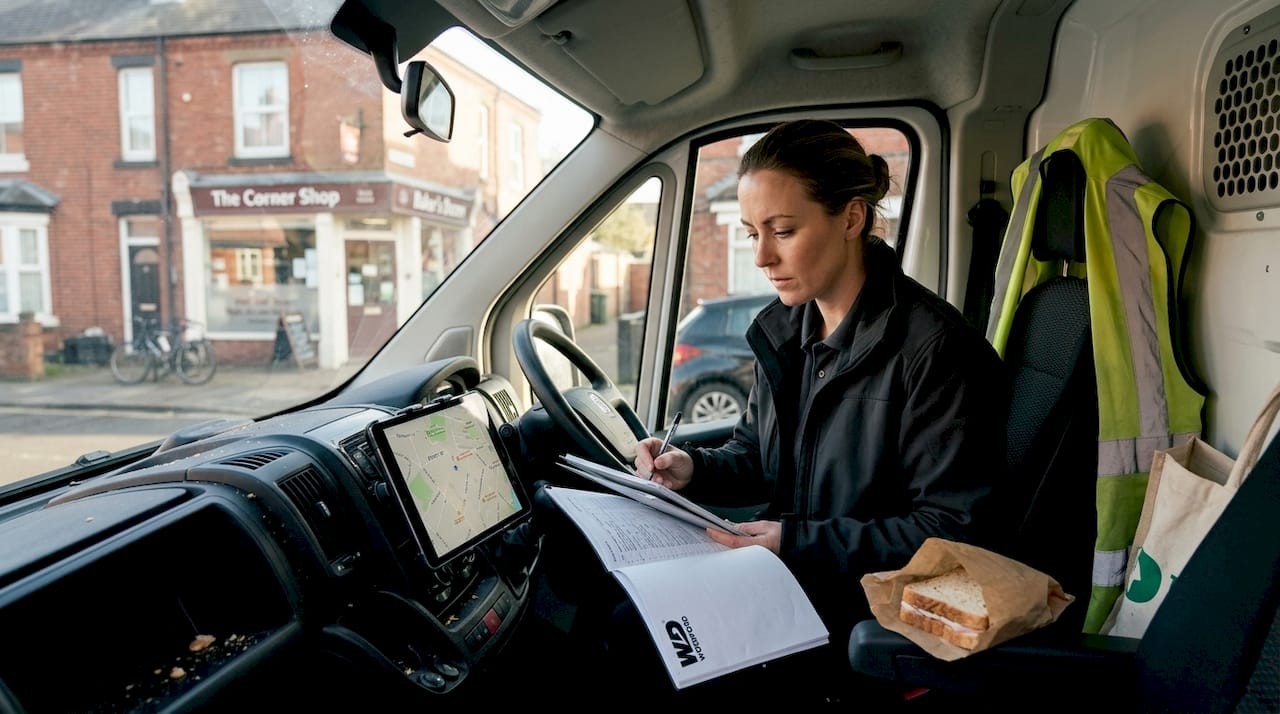
Most guides on wholesale logistics are written with large food businesses in mind. They assume dedicated logistics teams, sophisticated warehouse management systems, and the buying power to negotiate bespoke terms. The reality for independent UK food retailers and brand owners is quite different, and the gap between textbook best practice and everyday operations is where most problems occur.
The greatest risk for independents is underestimating the consequences of compliance failures. When a larger business misses a temperature monitoring log, they have legal teams, quality managers, and documented contingencies. When an independent retailer does the same, the consequences land personally and financially. The unbroken temperature chain and documented controls, including HACCP compliance, monitoring records, and safety processes, are non-negotiable regardless of your size.
The second thing most guides overlook is the multi-SKU challenge. A small independent might stock 800 or more product lines across ambient, chilled, and frozen categories. That is genuinely complex to manage, and wholesale logistics advice that focuses on single-temperature, limited-range distribution simply does not address it. You need a logistics partner who has experience managing this variety without pushing minimum order quantities that force you to overstock.
The third reality is that logistics quality compounds over time. A wholesaler who consistently delivers on time, in full, and in perfect condition allows you to reduce safety stock, improve cash flow, and build customer confidence in your range. A wholesaler who is inconsistent forces you into defensive stock management that ties up cash and clutters your shelves. The difference between these two scenarios is not dramatic on any given day, but over twelve months it is transformational.
Our view, built from working closely with independent retailers across the UK, is that navigating UK logistics successfully requires treating your wholesaler as a genuine partner, not a commodity supplier. That means sharing your range plans, your seasonal peaks, and your compliance concerns openly. Partnerships built on transparency consistently outperform transactional relationships where information only flows when there is a problem.
Optimise your wholesale logistics with Woodford
For UK independents ready to take their wholesale logistics from reactive to strategic, the right partner makes all the difference. At Woodford, we have built our entire operation around the specific realities of independent food retail: multi-SKU ranges, compliance demands, flexible delivery requirements, and the need for genuine reliability rather than vague promises. We work with ambitious retailers and visionary food brands to ensure that logistics complexity never becomes a ceiling on your growth. Explore our brands to see how we curate a range built for independents, and check our current promotions to see where great logistics and great value combine right now.
Frequently asked questions
How is wholesale logistics different from retail logistics?
Wholesale logistics focuses on bulk B2B distribution to business buyers such as retailers and foodservice operators, rather than fulfilling individual consumer orders. The scale, compliance requirements, and operational priorities are fundamentally different.
Why is temperature control important in food wholesale logistics?
Food safety law requires that chilled and frozen products maintain an unbroken temperature chain with documented evidence throughout storage and transport. A breach at any point can render stock unsafe and create serious legal and commercial consequences.
What are key steps in the wholesale logistics process?
The core steps cover order-to-delivery execution, including inventory receipt, temperature-appropriate storage, accurate picking and packing, invoicing, delivery run planning, and compliant transport to the buyer’s premises.
How can independent UK food retailers benefit from optimising their wholesale logistics?
Reliable wholesale logistics reduces wastage, cuts emergency sourcing costs, improves product freshness, and allows better range planning, all of which directly strengthen your margin and your reputation with customers.
What compliance requirements apply to food wholesale logistics in the UK?
Key requirements include maintaining a documented temperature chain through HACCP-compliant processes, full batch traceability, accurate labelling under UK food information regulations, and consistent monitoring and record-keeping throughout the supply chain.
Recommended
- Navigating UK food logistics for wholesalers in 2026 - WOODFORD - Bringing quality foods your way
- Food logistics tips for UK independent retailers in 2026 - WOODFORD - Bringing quality foods your way
- What is cross-docking in food logistics: a guide - WOODFORD - Bringing quality foods your way
- Strategic food brands for UK independent retailers - WOODFORD - Bringing quality foods your way