How to manage food inventory for better profit
TL;DR:Effective inventory management reduces food waste, increases profitability, and builds customer trust for UK retailers.Manual systems like FIFO and FEFO, combined with disciplined stock rotation and waste tracking, lay a strong foundation before adopting digital tools.
Stale bread in the bin, overripe produce nobody bought, shelves that ran dry on your busiest Saturday. These are not just operational irritations — they are margin killers. For independent food retailers across the UK, poor inventory control quietly erodes profitability every single week, and the damage adds up fast. The good news is that reducing waste through systematic tracking can lift profitability by 20 to 40%, while keeping shelves consistently stocked builds the customer trust that turns browsers into loyal regulars. This guide gives you the practical steps to make that happen.
Table of Contents
- Fundamentals of effective food inventory management
- Step-by-step: setting up inventory control for small stores
- Using technology to scale: AI tools, POS, and cloud platforms
- Tracking, benchmarking, and linking food waste to profitability
- What most guides miss: blending people, process, and tech for real results
- Power your inventory success with Woodford
- Frequently asked questions
Key Takeaways
| Point | Details |
|---|---|
| Use FEFO and FIFO methods | Prioritise expiry dates for perishables and rotate all stock regularly to keep shelves fresh and losses low. |
| Measure and reduce waste | Track waste as a percentage of sales and aim for under 2% to boost profitability. |
| Upgrade to tech as you grow | Start with manual or POS tools, scaling to AI for forecasting when managing multiple stores. |
| Link KPIs to profit | Treat food waste as a margin issue, using KPIs to tie buying decisions to waste and earnings. |
Fundamentals of effective food inventory management
Inventory management, at its simplest, is knowing what you have, where it is, how fast it moves, and when to reorder. For a small independent food retailer, that definition still covers an enormous amount of daily decision-making — from how many packs of smoked salmon to order for the weekend rush, to which batch of soft cheeses needs rotating before Friday.
The financial stakes are real. Retailers should treat food waste as a financial problem, not an environmental one, because every item binned is margin you have already paid for. A shop losing 5% of its food to waste is effectively working for free on a significant slice of its turnover. Tighten that to under 2% and you will notice the difference in your weekly P&L.
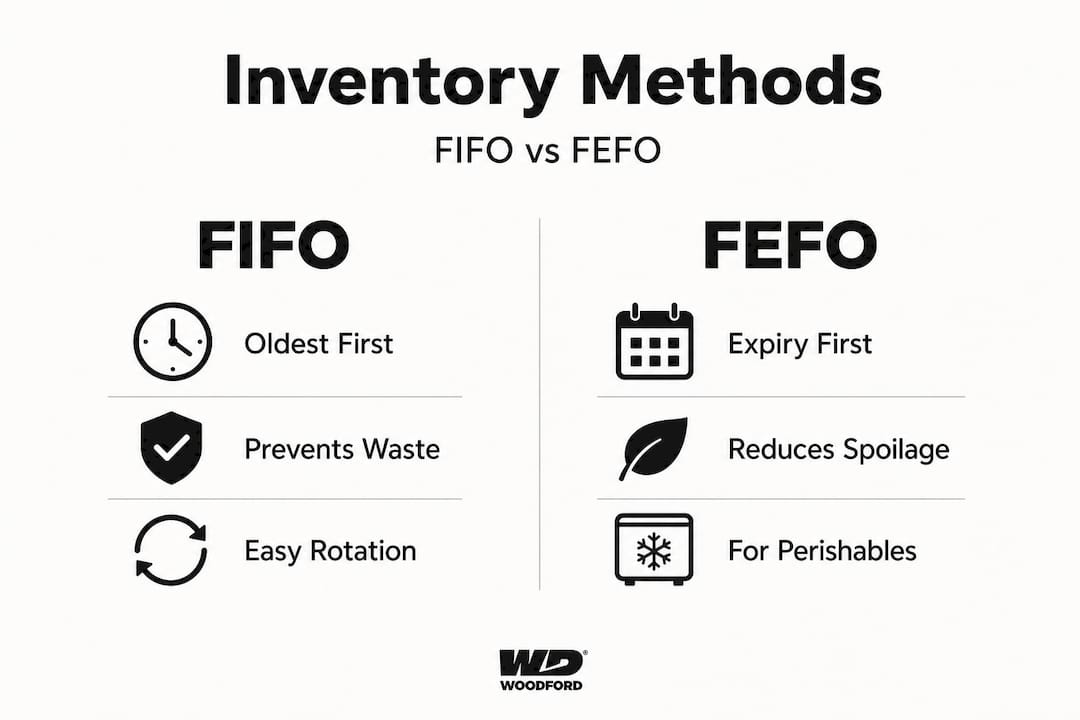
The core methods to learn first are FIFO (First In, First Out) and FEFO (First Expiry, First Out). FIFO means the oldest stock you received is always sold before newer deliveries. FEFO goes a step further for perishables — the item expiring soonest gets sold first, regardless of when it arrived. Both approaches reduce spoilage and keep product quality high for your customers.
Understanding your food distribution channels also shapes how you manage stock. The frequency and reliability of your supply directly affects what par levels you need to maintain and how much buffer stock is sensible to hold.
Key principles to build on:
- Write down your standard operating procedures (SOPs) so every member of staff handles stock the same way
- Track waste by category (fresh, chilled, ambient) to spot patterns quickly
- Treat shrinkage as a financial KPI, not an afterthought
- Review ordering decisions weekly, not just when shelves empty
| Principle | Why it matters | Practical application |
|---|---|---|
| FIFO | Prevents older stock sitting behind new deliveries | Date-stamp shelves; load from the back |
| FEFO | Critical for perishables with variable shelf life | Sort by expiry on receipt of every delivery |
| SOPs | Consistency across all staff, all shifts | One-page laminated guide per area |
| Waste tracking | Turns a hidden cost into a visible, manageable figure | Weekly waste log by category |
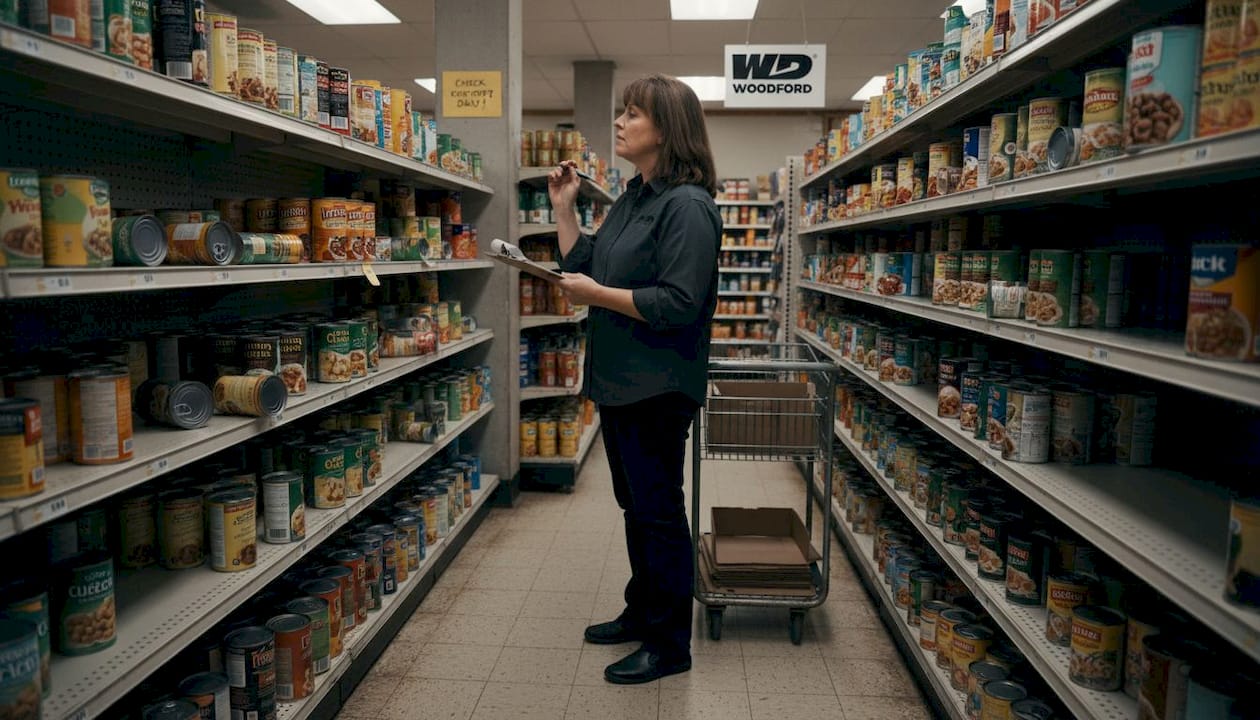
Pro Tip: Do a quick daily “walk” of your fresh and chilled sections at the start of your shift. A two-minute scan to spot any close-dated items means you can mark them down proactively rather than bin them at closing time.
Step-by-step: setting up inventory control for small stores
The most common mistake independent retailers make is assuming they need expensive software before they can get control of their stock. You do not. A clipboard, a spreadsheet, and a consistent process will take most small shops a very long way.
For FEFO and FIFO food storage, the rule is straightforward: label all items with their expiry dates and delivery dates on arrival, then rotate stock daily during restocking. Items with the nearest expiry go to the front. New deliveries go to the back. This single habit, applied consistently, eliminates most of the spoilage in a typical small food store.
Here is a practical process to follow:
- Conduct a full stock count. Before anything else, physically count everything in your store, chiller, and stockroom. Record it by category and sub-category (e.g., dairy, fresh produce, tinned goods).
- Assign every product a par level. A par level is the minimum quantity you want on hand before reordering. Base this on average weekly sales plus a sensible buffer. A busy weekend trade needs a higher buffer than a quiet Thursday.
- Label everything on arrival. Use colour-coded stickers or a simple marker to note delivery date and best-before on every item as soon as it comes off the van.
- Rotate stock during every restock. Pull older items forward without exception. Train every member of staff to do this as standard, not when they remember.
- Run a weekly cycle count. Do not wait for month-end to find surprises. Count a section of your store each week, rotating around all categories over four weeks so you always have current data.
- Log your waste daily. Note what you bin, the quantity, and the reason (expired, damaged, unsold). Review the log weekly and adjust ordering accordingly.
Manual ledger vs low-cost POS: which is right for you?
| Feature | Manual ledger/spreadsheet | Low-cost POS system |
|---|---|---|
| Setup cost | Minimal | £20-£80/month |
| Accuracy | Depends on discipline | Automatic via scanning |
| Time per week | 2-4 hours | Under 1 hour |
| Waste tracking | Manual entries only | Can generate reports |
| Suitable for | 1-site, under 300 SKUs | 1 to 2 sites, 300+ SKUs |
| Training required | Low | Moderate |
Pro Tip: If you are using spreadsheets, create a simple formula that flags any product whose stock level has not moved in seven days. Slow movers need attention before they become write-offs.
Once you have a count, par levels, and a rotation habit in place, the fundamentals are covered. The next question is whether your operation needs something more powerful.
Using technology to scale: AI tools, POS, and cloud platforms
At a certain point, manual systems create more problems than they solve. If you are managing more than 500 SKUs, running a second site, or struggling to keep pace with seasonal demand shifts, digital tools stop being a luxury and start being a necessity.
The trigger points for upgrading are usually clear: you are missing replenishment windows regularly, waste is creeping up despite good intentions, or your team is spending more time on admin than on the shop floor. This is when cross-docking in food logistics and smarter forecasting technology begin to pay dividends.
AI-driven retail planning tools boost fresh sales by 9% and reduce spoilage meaningfully, as demonstrated by A.F. Blakemore, the SPAR operator running more than 250 stores, which unified its retail planning across buying, replenishment, and forecasting using a single AI platform. The results included sharper demand forecasting, fewer out-of-stock incidents, and measurable waste reduction at scale.
You do not need 250 stores to benefit from better technology. Even a single-site retailer with a busy chilled section can use a cloud-based POS with automatic reorder alerts to cut time spent on manual counts and reduce costly gaps on shelf. When it comes to navigating UK food logistics, digital tools also make it easier to coordinate deliveries, flag supplier delays, and adjust orders in near real time.
Good trend analysis for UK food brands integrates naturally with digital inventory platforms, too. When you can see which categories are growing versus declining in your own sales data, you can rebalance your ordering before trends hit the mainstream and before you are left with slow-moving stock.
Core features to look for in a digital inventory system:
- Real-time stock level tracking across all categories
- Automatic low-stock alerts and reorder triggers
- Expiry date tracking for perishables
- Waste logging and reporting by category
- Integration with your supplier ordering system
- Sales data by SKU to identify fast and slow movers
Understanding weekly meal plans for streamlined food operations can also inform how you schedule deliveries and plan your chilled range around predictable demand patterns across the week.
Tracking, benchmarking, and linking food waste to profitability
Getting a handle on inventory is one thing. Knowing whether you are actually improving is another. The retailers who see the biggest gains are the ones who measure consistently and link their waste data directly to their margins.
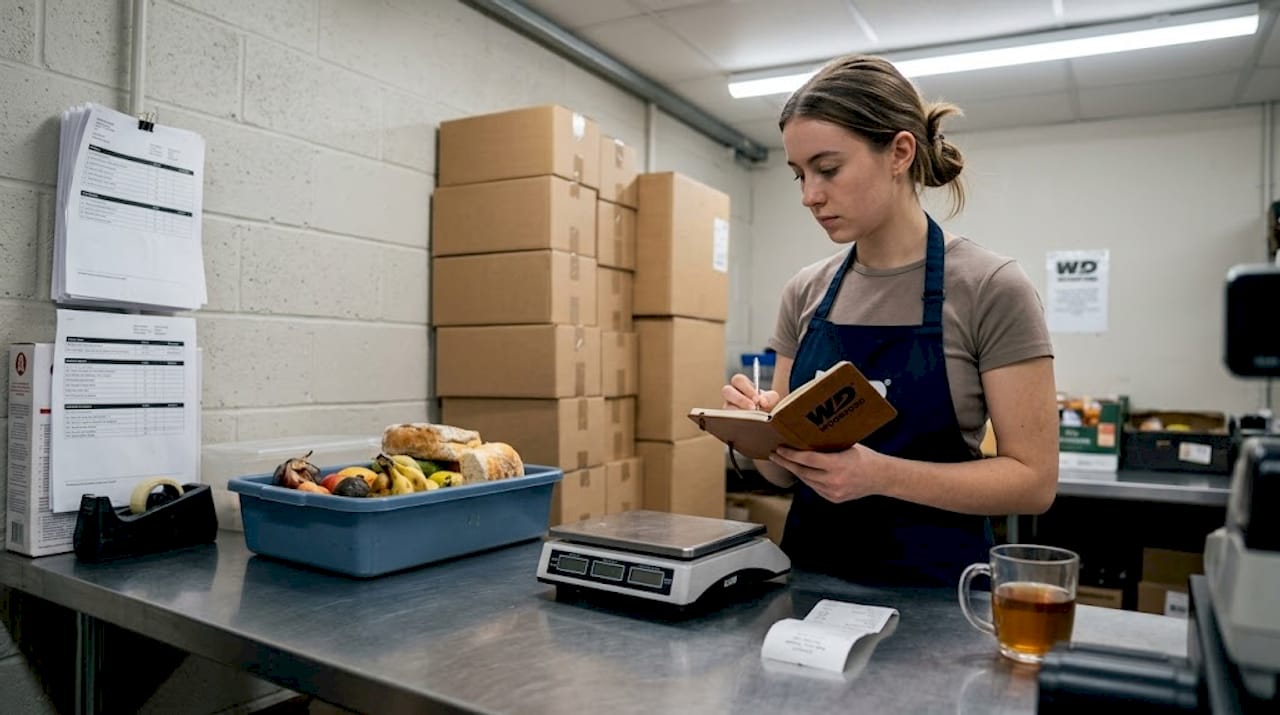
The most important metric to track is your shrink rate: total value of food lost (binned, expired, damaged) divided by total food sales, expressed as a percentage. Target a shrink rate below 2% to match top-performing independent retailers. Most poorly managed stores run at 5-8%, which is a significant and entirely preventable drag on profit.
“UK grocery retailers collectively waste 270,000 tonnes of food per year. For independents, the concentration of loss is almost always in fresh and chilled categories — exactly where the highest margins also live.”
Reducing waste by 20-40% through systematic tracking is not an industry outlier result — it is what disciplined stock management consistently delivers. The practical implication is that if your shop currently turns over £15,000 per week in food, shaving even 3 percentage points off your waste rate adds thousands of pounds back into your margin over the course of a year.
Cross-functional KPIs that link waste directly to buying decisions and gross margins are what separate retailers who improve from those who stay stuck. If your buying and your waste tracking live in separate mental boxes, you will keep making the same ordering mistakes.
Useful KPIs to track weekly:
- Shrink rate as a percentage of sales (target below 2%)
- Waste by category (fresh vs chilled vs ambient)
- Out-of-stock incidents per week (tracks the cost of under-ordering)
- Stock turn rate by category (how quickly categories sell through)
- Markdown volume (an early warning sign of buying imbalance)
Good food logistics practices for UK independent retailers support all of this by ensuring deliveries are timed to match actual demand rather than supplier convenience. Adapting to food trends is also a KPI conversation: stocking the wrong categories at the wrong time is one of the most expensive inventory errors an independent can make. Investing in strategic food brands with proven consumer demand reduces the risk that shelf space goes to slow-moving products.
Common tracking mistakes to avoid:
- Only counting stock at month-end, when surprises are already too late to fix
- Tracking waste quantity (units) instead of waste value (pounds sterling)
- Failing to connect buying volume decisions to historical waste data
- Ignoring seasonal patterns when setting par levels
What most guides miss: blending people, process, and tech for real results
Most advice about inventory management focuses on either the system or the technology. What it consistently underestimates is the human element.
We have seen retailers invest in sophisticated POS software only to find their waste rate barely moves, because the team was never trained to use the system consistently, or because the manager still orders by gut feel rather than by the data sitting in front of them. Technology does not manage stock. People manage stock, and technology helps them do it better when they understand why it matters.
The fundamentals — FIFO, FEFO, cycle counts, waste logs — are not a stepping stone you leave behind as you grow. They are the foundation everything else sits on. A 10-site operator with an AI forecasting platform still needs staff who rotate stock correctly and log waste accurately, or the data feeding the algorithm becomes unreliable. Garbage in, garbage out applies to food retail just as much as it does to software.
Our perspective is that growth in inventory management should be evolutionary rather than revolutionary. Master the manual basics first. When those basics are embedded in your culture and your team does them without being asked, that is when adding a digital layer multiplies your results rather than just adding complexity. Food brand strategy works the same way: disciplined stock management and smart brand selection compound over time.
The final point worth making is about KPIs. Most retailers who struggle to improve their waste rates are tracking the wrong things, or tracking the right things in the wrong way. Shrink rate as a percentage of sales is the number that matters. Everything else should connect back to it. If a buying decision, a new technology, or a change in rotation practice cannot be traced through to a movement in that figure, question whether it is actually improving your business.
Power your inventory success with Woodford
Managing your inventory well is only half the equation. The other half is having the right products to put on those well-managed shelves. At Woodford, we work specifically with independent UK food retailers to make sure your supply chain supports your profitability rather than working against it. From trend-led curation to hassle-free logistics, we take the friction out of the supply side so you can focus on running a tighter operation. Explore Woodford’s brands to see which products are generating genuine consumer demand right now, and check the latest Woodford promotions to find opportunities that support margin while keeping your customers coming back for something new.
Frequently asked questions
What is the best method for tracking perishables in a small food store?
Use the FEFO method: clearly label all items with expiry dates and rotate stock daily to ensure the first-expiring item is sold first. This single habit eliminates most spoilage in a typical small food shop.
How much can reducing food waste improve my shop’s profit?
Systematic tracking and waste reduction can increase profitability by 20 to 40% through less loss and more sales from consistently fresher stock on shelf.
Should independents invest in AI tools for inventory management?
AI-driven tools boost fresh sales by 9% and improve forecasting, but manual SOPs remain essential even as you scale; invest in technology only once your manual processes are consistently followed.
What tools are recommended for weekly inventory checks?
Simple POS software or a disciplined spreadsheet both work well; the best choice depends on your store size, SKU count, and how much time your team can reliably commit to the process.
How can I benchmark my shop’s food waste?
Divide the total value of food lost by total food sales to find your shrink rate, then target below 2% to match the performance of well-run independent food retailers in the UK.
Recommended
- Food logistics tips for UK independent retailers in 2026 - WOODFORD - Bringing quality foods your way
- What is cross-docking in food logistics: a guide - WOODFORD - Bringing quality foods your way
- Types of food distribution channels to boost your supply chain - WOODFORD - Bringing quality foods your way
- Navigating UK food logistics for wholesalers in 2026 - WOODFORD - Bringing quality foods your way