What is B2B food distribution? Boost your retail
TL;DR:B2B food distribution is essential for shops of all sizes, impacting product variety and food safety.Choosing the right distributor models and leveraging technology can improve efficiency and margins.Viewing supply chain as a strategic tool can give independents a competitive edge and growth opportunity.
Many independent retailers assume B2B food distribution is the exclusive territory of supermarket giants and national chains. It is not. This system underpins the product variety, pricing, and food safety standards of shops of every size, including yours. Whether you stock artisan cheeses, ambient grocery lines, or chilled ready meals, a B2B distribution network is almost certainly behind how those products reach your shelves. Understanding how this system works, who the key players are, and how to use it strategically can sharpen your product offering, reduce waste, and give you a genuine edge over competitors who treat supply as an afterthought.
Table of Contents
- Understanding B2B food distribution in the UK
- Types of food distributors and delivery models
- How B2B food distribution works: Key processes and systems
- Challenges and efficiency trends in food distribution
- Practical strategies for UK independent retailers
- Why independent retailers need to rethink B2B distribution
- Partnering with the right distributor for growth
- Frequently asked questions
Key Takeaways
| Point | Details |
|---|---|
| Broad reach | B2B food distribution is vital for both large chains and independent retailers across the UK. |
| Multiple distributor models | Choosing between broadline, specialist, or hybrid models can reshape your retail supply effectiveness. |
| Efficiency and technology | Modern technology and process optimisation help minimise waste and cut costs, especially for perishables. |
| Strategic selection | Aligning with the right B2B partners and brands enables smaller retailers to compete with much larger stores. |
Understanding B2B food distribution in the UK
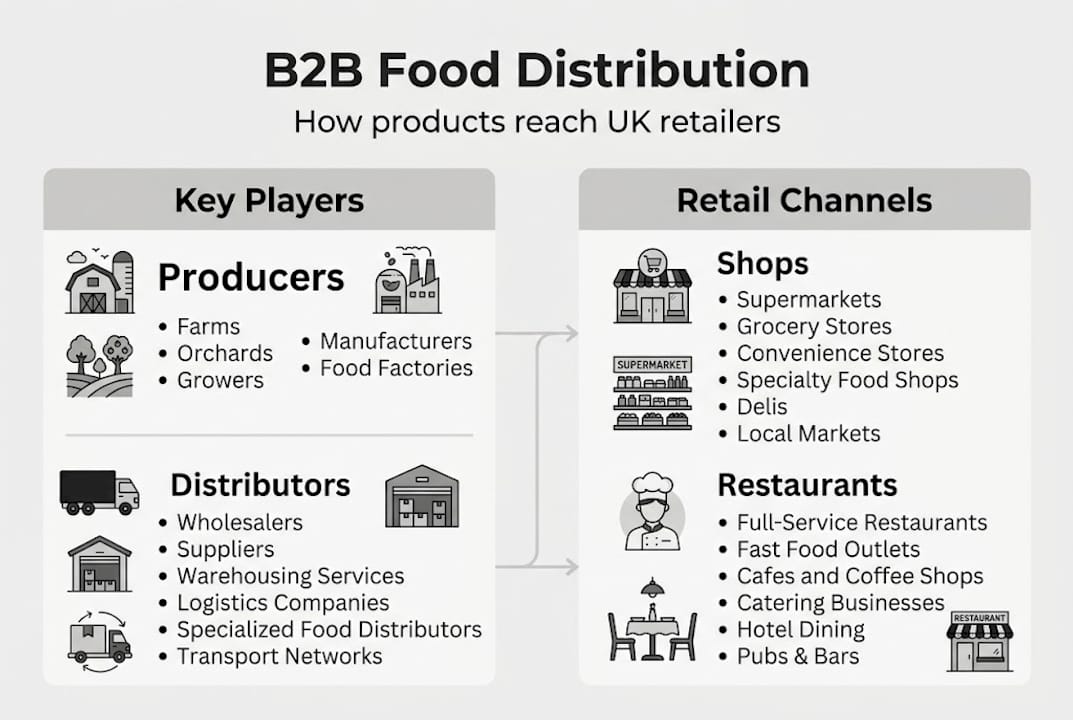
B2B food distribution is the commercial process by which food and drink products move from manufacturers and producers to businesses such as independent retailers, restaurants, and foodservice operators. Unlike B2C retail, where goods go directly to consumers, B2B distribution involves multiple intermediary layers, each adding value through storage, consolidation, temperature management, and logistics.
The key participants are manufacturers (who produce goods), wholesalers and distributors (who buy in bulk and resell), and end buyers such as independent retailers and foodservice operators. Some manufacturers distribute directly, but most rely on wholesalers to reach a fragmented retail market efficiently. This is especially true for smaller food brands that lack the infrastructure to service hundreds of individual shops.
The scale of this market is significant. The UK food wholesaling market is valued at approximately £130 billion for food and drink in 2026, with grocery wholesaling alone accounting for £49 billion. Over 16,000 businesses operate within this sector, supporting independent retailers through symbol groups and specialist suppliers.
One of the most technically demanding aspects of B2B food distribution is temperature control. Distributors typically manage vast product ranges, from 10,000 to over 100,000 SKUs (stock keeping units, meaning individual product lines), across ambient, chilled, and frozen categories. Maintaining cold chain integrity from warehouse to delivery vehicle to your stockroom is not optional. It is a legal and commercial requirement.
For independent retailers, understanding the food distribution channels available to you is the first step towards making smarter sourcing decisions. The structure of the market means you have more options than you might think, from national broadline wholesalers to niche regional specialists.
| Market segment | Approximate value (2026) |
|---|---|
| Total UK food & drink wholesaling | £130 billion |
| Grocery wholesaling | £49 billion |
| Businesses in the sector | 16,000+ |
Key participants in B2B food distribution include:
- Manufacturers and producers creating food and drink products at scale
- National broadline wholesalers supplying a full range of ambient, chilled, and frozen goods
- Specialist distributors focused on categories such as fresh produce, ethnic foods, or premium brands
- Symbol group operators supporting independent retailers with buying power and marketing
- Foodservice distributors serving restaurants, cafés, and institutions
Types of food distributors and delivery models
Not all distributors are built the same, and choosing the wrong model for your shop can quietly erode your margins. The two primary categories are broadline distributors and specialist distributors, and each suits different business needs.
Broadline distributors, as explored in this industry primer, supply an enormous range of products across multiple categories. They are the one-stop-shop option, convenient for shops that want to consolidate their ordering. The trade-off is that breadth often comes at the expense of depth. Specialist distributors, by contrast, focus on a specific niche, whether that is fine cheese, organic produce, or international foods. They typically offer better product knowledge, stronger brand relationships, and more curated ranges.
Delivery models also vary considerably. Delivered wholesale means a distributor brings stock directly to your premises on a scheduled route. This suits shops with limited transport or storage capacity. Cash-and-carry requires you to collect stock yourself, which gives you flexibility on timing but adds your own time and fuel costs into the equation. For many independent retailers, the distribution channel options available will depend on geography, order volume, and the categories you prioritise.
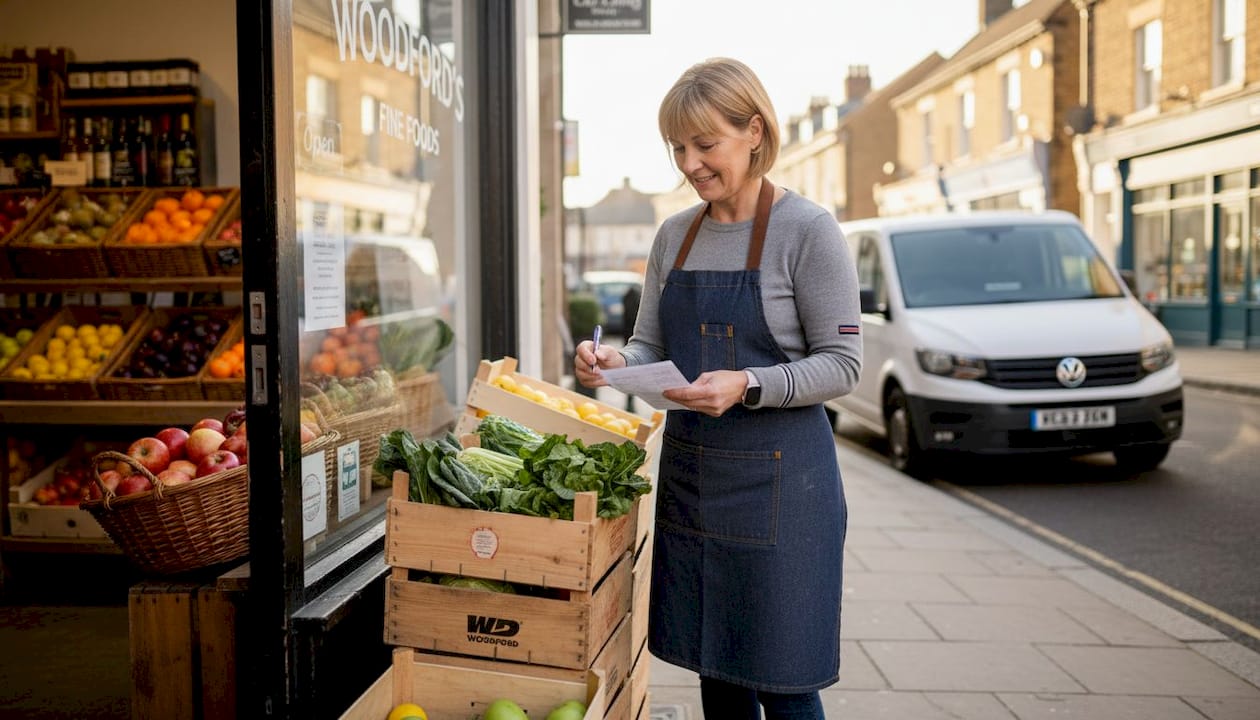
Hybrid models are increasingly common. A retailer might use a delivered broadline wholesaler for ambient staples while sourcing chilled or speciality lines from a regional specialist with a direct delivery route. This approach balances convenience with product differentiation.
Pro Tip: Before committing to any distributor, map out your top 20 selling lines and identify which model serves each category best. Mixing delivered and specialist sourcing can reduce both cost and product gaps without overcomplicating your supply chain.
| Distributor type | Strengths | Limitations |
|---|---|---|
| Broadline delivered | Wide range, convenient | Less specialised, variable quality |
| Specialist delivered | Curated, expert knowledge | Narrower range, higher MOQs sometimes |
| Cash-and-carry | Flexible timing, no delivery fee | Requires your own transport and time |
| Hybrid model | Best of both worlds | Requires more supplier management |
How B2B food distribution works: Key processes and systems
Once you recognise the key distributor models, it is essential to understand how the B2B process actually operates, from farm to till. The journey is more layered than most retailers realise.
As outlined in the foodservice distribution primer, B2B food distribution involves wholesalers and distributors procuring, storing, and delivering food products using temperature-controlled logistics and consolidated deliveries. Here is how that typically unfolds:
- Manufacturer production — Food is produced and packed to specification, often with retailer or distributor labelling requirements already built in.
- Procurement and inbound logistics — Distributors purchase stock in bulk, negotiating pricing tiers based on volume.
- Warehousing and storage — Goods are held in ambient, chilled, or frozen facilities, with strict stock rotation protocols.
- Order consolidation — Multiple product lines are picked and consolidated into a single delivery for each customer.
- Last-mile delivery — Temperature-controlled vehicles deliver to your premises on agreed schedules.
- Retailer receiving and compliance checks — You verify delivery accuracy, check temperatures, and log any discrepancies.
Just-in-time delivery is particularly critical for perishables. Rather than holding large volumes of short-life stock, distributors time deliveries to match your sell-through rate. This keeps your waste low and your shelves looking fresh. For practical guidance on managing this well, the food logistics tips available for UK independents are worth reviewing.
Technology is reshaping every stage of this process. Legacy systems based on phone orders and paper invoices are being replaced by EDI (electronic data interchange), AI-driven demand forecasting, and automated warehouse picking. Some distributors now use cross-docking in logistics, moving goods directly from inbound to outbound without intermediate storage, cutting handling time and costs significantly.
Compliance is non-negotiable. SMETA (Sedex Members Ethical Trade Audit) standards are increasingly required by major distributors and brands, covering labour rights, health and safety, and environmental practices across the supply chain.
“The most efficient distribution operations are not just fast. They are precise, compliant, and built around real-time data rather than gut instinct.”
Challenges and efficiency trends in food distribution
Understanding the workflow is not enough. The practical hurdles facing UK independent retailers in 2026 are real, and ignoring them is costly.
One telling indicator is order line data. Average lines per order declined to 9.69 in 2024 due to cost pressures, with perishable goods requiring just-in-time delivery to minimise waste. The same data shows a 7.29% stock loss rate from errors, meaning nearly one in thirteen units is lost before it ever reaches a customer. For a small shop operating on tight margins, that figure matters enormously.
The challenges facing independent retailers include:
- Perishable waste — Short shelf lives demand precise ordering and reliable delivery windows
- Power imbalances — Large retailers command better pricing and priority service from major distributors
- Compliance costs — Ethical auditing and food safety documentation require time and resource
- Rising delivery costs — Fuel, labour, and vehicle costs are passed through to buyers
- Demand volatility — Consumer trends shift quickly, making static ordering patterns risky
For a deeper look at how to navigate these pressures, navigating UK food logistics in 2026 covers the operational detail that matters most.
| Challenge | Impact on independents | Mitigation approach |
|---|---|---|
| Perishable waste | Margin erosion | Just-in-time ordering, smaller frequent deliveries |
| Power imbalance | Higher unit costs | Symbol group membership, specialist sourcing |
| Compliance burden | Admin overhead | Work with audited, certified distributors |
| Demand volatility | Overstock or stockouts | Use trend data to guide buying decisions |
Practical strategies for UK independent retailers
To wrap the main guide, here are specific actions you can take to turn today’s challenges into competitive advantages.
The foodservice market is projected to grow to £147 billion by 2031 at a 5.88% compound annual growth rate. That trajectory creates real opportunity for independents who position themselves well now. Here is how to start:
- Audit your current distributor relationships — Are you getting competitive pricing, reliable delivery, and access to the product ranges your customers want? If not, it is time to renegotiate or diversify.
- Invest in ordering technology — Even basic inventory management software reduces over-ordering and cuts waste. Many platforms integrate directly with distributor systems.
- Join a symbol group or buying consortium — Collective buying power gives independents access to pricing and terms that rival those of larger chains.
- Prioritise strategic food brands — Stocking brands with strong consumer pull reduces your selling effort and builds footfall.
- Use trend data proactively — A solid retail brand strategy built around emerging categories, such as high-protein snacks, functional drinks, or premium ambient lines, can set you apart from nearby competitors.
Pro Tip: Use trend analysis to anticipate what your customers will want in three to six months, not just what they are buying today. Distributors who work with forward-thinking retailers often give them first access to new product launches.
Collaboration is underrated. Sharing delivery slots with neighbouring independents, or coordinating orders through a shared buying group, can unlock minimum order thresholds and reduce per-unit delivery costs without increasing your own stock commitment.
Why independent retailers need to rethink B2B distribution
Most independent retailers treat B2B food distribution as a fixed cost: necessary, unglamorous, and largely outside their control. That framing is costing them money and opportunity.
The retailers we see growing above market rate are not just buying from better distributors. They are using their supply chain as a strategic tool. They know which brands are gaining traction before those brands go mainstream. They use delivery data to refine their ranges. They build relationships with specialist distributors who give them genuine exclusivity on products their competitors cannot easily replicate.
Supply is not just logistics. It is differentiation. When you stock something your nearest competitor cannot get, you stop competing on price and start competing on experience. That is a far more sustainable position for an independent retailer.
The uncomfortable truth is that many independents leave significant margin on the table by defaulting to the most convenient distributor rather than the most strategic one. Adapting to trends and aligning your supply chain to where consumer demand is heading is not a luxury. It is the difference between a shop that grows and one that gradually loses ground. Rethink your supply chain as a profit multiplier, not a sunk cost.
Partnering with the right distributor for growth
At Woodford, we work exclusively with independent retailers across the UK, connecting them with quality food brands that are carefully selected for consumer relevance and commercial viability. We are not a general wholesaler pushing volume. We curate product ranges that help your shop stand out, backed by logistics that are built around your needs rather than ours.
If you are ready to move beyond the default and build a supply chain that actively supports your growth, explore our food brands to see what we currently distribute. Whether you are looking to refresh a category, add a trending line, or simply work with a distributor who understands the independent retail market, partner with Woodford and find out what a strategic supply relationship actually looks like in practice.
Frequently asked questions
How does B2B food distribution differ from B2C?
B2B food distribution supplies businesses such as retailers and restaurants rather than individual consumers, typically involving bulk orders, scheduled deliveries, and commercial pricing structures.
What are the main types of food distributors in the UK?
Broadline distributors supply a wide range of goods across multiple categories, while specialist distributors focus on niche areas such as fresh produce, frozen foods, or premium ambient lines.
Why is just-in-time delivery important for perishable foods?
Just-in-time delivery reduces stock loss and waste by matching delivery timing to your actual sell-through rate, keeping products fresher and protecting your margins.
How big is the UK B2B food distribution market?
The UK food wholesaling market is valued at approximately £130 billion for food and drink in 2026, with over 16,000 businesses operating across the sector.
Recommended
- Types of food distribution channels to boost your supply chain - WOODFORD - Bringing quality foods your way
- WOODFORD - Bringing quality foods your way
- What is cross-docking in food logistics: a guide - WOODFORD - Bringing quality foods your way
- Why adapt to food trends: boost independents’ growth - WOODFORD - Bringing quality foods your way