Types of food wholesalers to boost your grocery store
TL;DR:Building relationships with multiple wholesaler types increases supply resilience and competitive advantage.Using broadline for essentials and specialty for differentiation helps stores stand out.Strategic partnerships with suppliers are more valuable than just focusing on lowest prices.
Independent grocery stores in the UK face a constant balancing act: stocking the right products, managing costs, and staying relevant to increasingly demanding shoppers. The supplier relationships you build are arguably your most powerful competitive tool. Yet many independent grocers approach wholesale partnerships reactively, choosing whoever is nearest or cheapest, rather than thinking strategically. Understanding the different types of food wholesalers available to you, and knowing which combination fits your store, can fundamentally change your buying power, your product range, and your ability to compete with the multiples.
Table of Contents
- Understanding the main types of food wholesalers
- Cash and carry wholesalers: Flexibility and fast access
- Broadline and specialty wholesalers: Variety versus expertise
- Drop-shippers, importers, and export-focused wholesalers
- Choosing the right wholesaler mix for your store
- Our perspective: What grocery retailers often overlook about food wholesaler partnerships
- Connect with trusted food wholesale partners
- Frequently asked questions
Key Takeaways
| Point | Details |
|---|---|
| Know your wholesaler options | Understanding all wholesaler types helps you match the right suppliers to your business needs. |
| Mix and match for resilience | Combining several wholesaler types allows you to adapt to supply disruptions and trends. |
| Prioritise supplier relationships | Strong supplier partnerships can unlock exclusive lines and better negotiation power. |
| Consider logistics and compliance | Factor in logistical ease, lead times, and regulatory requirements, especially with global or specialist suppliers. |
Understanding the main types of food wholesalers
A food wholesaler sits between producers and retailers, buying in bulk and supplying goods at a price that allows retailers to profit on resale. Food wholesalers play a central role in product distribution to retail, hospitality, and foodservice sectors. For independent grocers, they are the engine room of your stock strategy.
There are five principal types you will encounter:
- Cash and carry wholesalers: You visit a warehouse, select what you need, pay on the day, and take it with you.
- Broadline wholesalers: One-stop suppliers offering thousands of product lines with scheduled deliveries to your store.
- Specialty wholesalers: Focused suppliers who specialise in a particular category such as organic, world foods, or chilled produce.
- Drop-shippers: Wholesalers who ship products directly to your store from their own warehouse, cutting out intermediate handling.
- Import and export wholesalers: Businesses that source internationally, giving you access to exclusive or hard-to-find products.
Each model has a distinct role. The trap many grocers fall into is assuming one type is enough. Your food distribution channels should ideally draw from more than one source, creating resilience against stock shortages and price volatility.
Pro Tip: Build relationships with at least two wholesaler types from the start. If one supplier faces disruption, your shelves stay full and your customers stay loyal.
Cash and carry wholesalers: Flexibility and fast access
Cash and carry is often the first wholesaling experience for new independent grocers, and for good reason. You turn up, browse the warehouse aisles, buy what you need, and leave with stock in hand. There are no contracts, no minimum order commitments, and no waiting for a delivery slot. Cash and carry models provide immediate availability and are especially suited to smaller retailers who need to move quickly.
The key advantages are clear:
- Speed: Stock a gap on your shelves the same day.
- Flexibility: Buy only what you need, reducing waste and over-ordering.
- No commitment: Test new product lines without signing contracts.
- Cost control: You can see exactly what you’re spending before you spend it.
That said, cash and carry is not without its drawbacks. Unit prices can be higher than negotiated delivery accounts because you are buying smaller volumes. There is also no delivery, so you need a vehicle and the time to make regular runs. For a busy store owner, that time cost adds up fast.
The smartest use of cash and carry is as a tactical tool, not a primary supply strategy. Use it to fill gaps when your main supplier runs short, to trial a new product before committing to a full order, or to restock quickly around peak trading periods. Understanding UK food logistics also helps you plan these visits efficiently, reducing unnecessary journeys.
Pro Tip: Keep a running list of products you want to trial. Use your next cash and carry visit to test two or three at once, then track sales for four weeks before committing to a regular order.
Broadline and specialty wholesalers: Variety versus expertise
Beyond cash and carry, the two models that shape most independent grocers’ core supply strategy are broadline and specialty wholesalers. Choosing between them, or knowing how to use both, is where strategic food brands really come into play.
Broadline wholesalers enable one-stop sourcing while specialty suppliers focus on categories like fresh produce or organic products. Here is how they stack up:
| Feature | Broadline wholesalers | Specialty wholesalers |
|---|---|---|
| Product range | Thousands of SKUs across all categories | Deep range within one category |
| Account management | Single account, one invoice | Separate accounts per category |
| Pricing | Competitive on volume | Premium on niche or trending lines |
| Expertise | Generalist | Deep category knowledge |
| Trend access | Moderate | High for their specialism |
| Best for | Core everyday range | Differentiated or premium lines |
Broadline wholesalers give you logistical simplicity. One delivery, one invoice, one account manager. For your everyday essentials, ambient goods, and high-turnover lines, a broadline partner is hard to beat on efficiency.
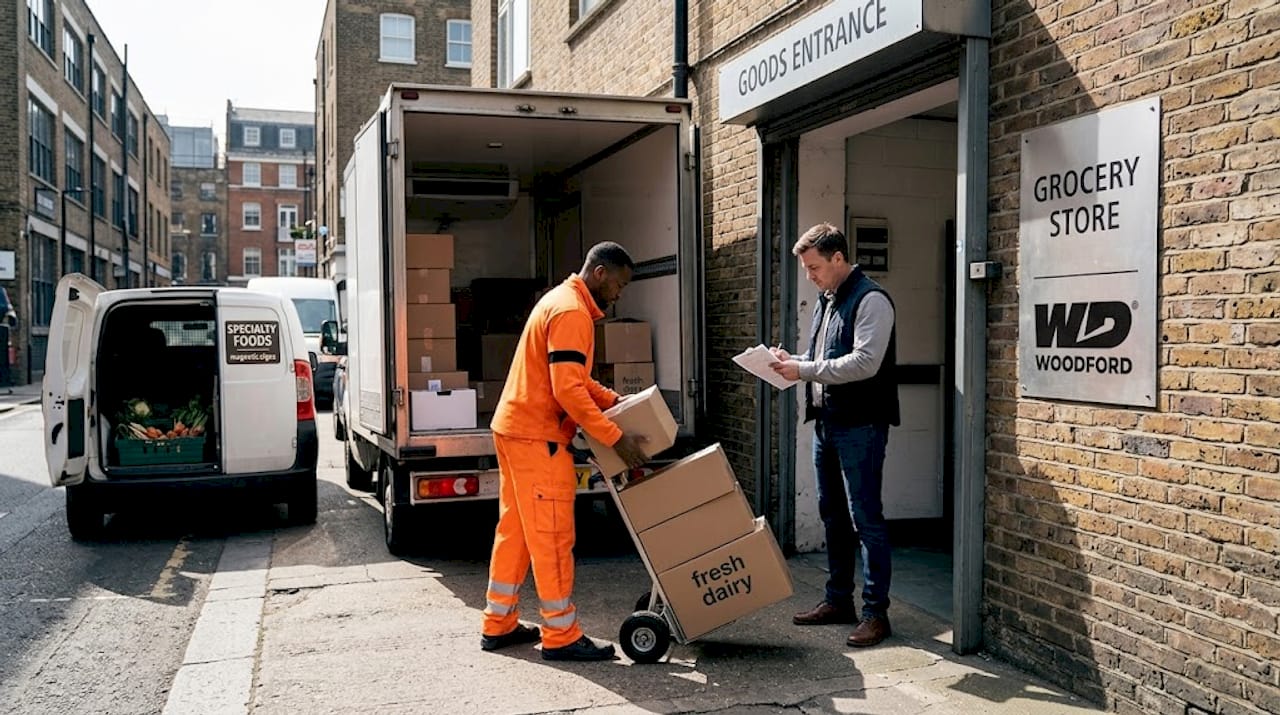
Specialty wholesalers, however, are where you win customer loyalty. A well-chosen specialty supplier of organic groceries or world foods can give your store an identity that the supermarkets simply cannot replicate. They also tend to know what is trending before it hits mainstream shelves, which matters enormously for retail brand strategies built around discovery and differentiation.
For most UK independents, the right answer is both: broadline for your staples, specialty for your edge.
Drop-shippers, importers, and export-focused wholesalers
To round out your options, consider the specialist and global wholesaler models that may give your store an edge. Drop-shipping and international sourcing expand product variety but entail different logistics and risks that you need to understand before committing.
| Model | Key benefit | Main risk | Best use case |
|---|---|---|---|
| Drop-shippers | No storage needed | Less control over fulfilment | Non-core or seasonal lines |
| Importers | Exclusive world foods | Lead times, compliance | Ethnic, premium, or niche lines |
| Export wholesalers | Global product access | Currency and regulatory shifts | Specialist or occasion-led ranges |
Drop-shipping suits products you want to offer without committing warehouse space. The wholesaler holds the stock and ships directly to you when you order. It works well for slower-moving or seasonal items, but be aware that quality control is harder when goods are handled entirely by a third party.
Import and export wholesalers are particularly valuable if your local community has strong demand for specific world foods. Partnering with a specialist importer gives you authentic products and genuine provenance, which shoppers increasingly value. The food logistics tips for working with international suppliers are well worth reading before you start.
Before using these models, work through this checklist:
- Do you have sufficient demand to justify the minimum order volumes?
- Are the products compliant with current UK food labelling and import regulations?
- Can your cash flow handle longer lead times between order and delivery?
- Do you have storage capacity, or does a drop-ship arrangement make more sense?
- Have you factored in any additional import costs or currency fluctuation risk?
For more on handling incoming stock efficiently, the cross-docking guide is a useful resource when planning your receiving process.
Choosing the right wholesaler mix for your store
Once you know the options, the final step is choosing the wholesaler mix that fits your goals. Successful UK grocers often blend multiple supplier types to maximise agility and product variety, and this approach consistently outperforms single-supplier dependency.
Here is a practical selection process to follow:
- Audit your current range. Identify which categories drive the most revenue and where you regularly face gaps or poor margins.
- Define your store identity. Are you a community essential, a premium destination, or a specialist in certain cuisines or dietary needs?
- Match wholesaler type to need. Core lines go to a reliable broadline partner. Differentiated products go to specialty or import suppliers.
- Evaluate delivery options. Does the supplier’s delivery schedule align with your selling patterns and storage capacity?
- Negotiate from knowledge. Once you understand the market, you can push for better terms, exclusive lines, or promotional support.
Pro Tip: Loyalty has a price. If you consistently give a wholesaler significant volume, ask for a dedicated account manager, preferential pricing, or early access to new products. Most will say yes.
“The grocers who thrive long-term are not those who find the cheapest supplier. They are the ones who build genuine partnerships, stay curious about new products, and treat their supply chain as a competitive advantage rather than a back-office function.”
The process of adapting to food trends is made significantly easier when your wholesaler mix gives you both stability and flexibility. Do not set your supplier list and forget it. Review it every six months.
Our perspective: What grocery retailers often overlook about food wholesaler partnerships
After working closely with independent grocers across the UK, we have noticed a consistent pattern. Most store owners focus heavily on price when choosing a wholesaler, and almost entirely overlook the strategic value of the relationship itself. Price matters, but it is rarely where the real competitive advantage is won.
The grocers who genuinely stand out are those who treat their wholesalers as partners, not just vendors. They share information about what their customers are asking for, they stay in regular contact with account managers, and they position themselves as engaged buyers worth looking after. In return, they get early access to trending lines, exclusive ranges, and sometimes marketing support that money simply cannot buy.
Combining a local or niche specialty supplier with a solid broadline contract is one of the most underused strategies in independent grocery. It is how you build a range that feels genuinely curated rather than simply available. A strong brand strategy in retail starts with this kind of intentional sourcing. Do not just buy what is on offer. Build a range that tells your customers exactly who you are.
Connect with trusted food wholesale partners
Ready to take the next step in finding the right wholesale partners? At Woodford Food, we work exclusively with ambitious independent retailers across the UK, connecting them with trend-led food brands and providing the logistical support to make those partnerships genuinely work. Whether you are looking to expand your product range, discover our brands that are already performing in independent grocery, or understand what a strategic wholesale partnership looks like in practice, we are here to help. If you represent a food brand looking to reach independent retailers, explore what we offer for brand owners and see how we can open those doors together.
Frequently asked questions
What is the main difference between a broadline and a specialty wholesaler?
A broadline wholesaler offers a wide variety of food products under one account, while a specialty wholesaler focuses on a specific category such as organic, chilled, or world foods. One-stop sourcing suits everyday essentials, while specialty partners are better for differentiated or premium lines.
How can I balance using cash and carry with delivery wholesalers?
Use cash and carry for urgent stock top-ups and trialling new lines, and use delivery wholesalers for planned bulk purchases and regular core products. Immediate availability from cash and carry complements the cost efficiency of scheduled delivery accounts well.
What are the risks of using international food wholesalers?
International wholesalers often involve longer lead times, shifting import regulations, and additional costs, so always verify compliance and confirm there is sufficient customer demand before committing. International sourcing works best when it is targeted rather than speculative.
How do I choose the best wholesaler for my grocery store?
Start by auditing your current product range and identifying your store’s identity, then match wholesaler types to specific needs. Blending multiple supplier types consistently delivers better agility, pricing, and product variety than relying on a single source.
Recommended
- Types of food distribution channels to boost your supply chain - WOODFORD - Bringing quality foods your way
- Strategic food brands for UK independent retailers - WOODFORD - Bringing quality foods your way
- Navigating UK food logistics for wholesalers in 2026 - WOODFORD - Bringing quality foods your way
- Food logistics tips for UK independent retailers in 2026 - WOODFORD - Bringing quality foods your way
- Production Kitchen Ideal for Caterers, Food Producers, Food Cart Operators, Restaurants, and Farmer’s Market Vendors | PepperLot