How packaging drives consumer choice and trust in UK food retail
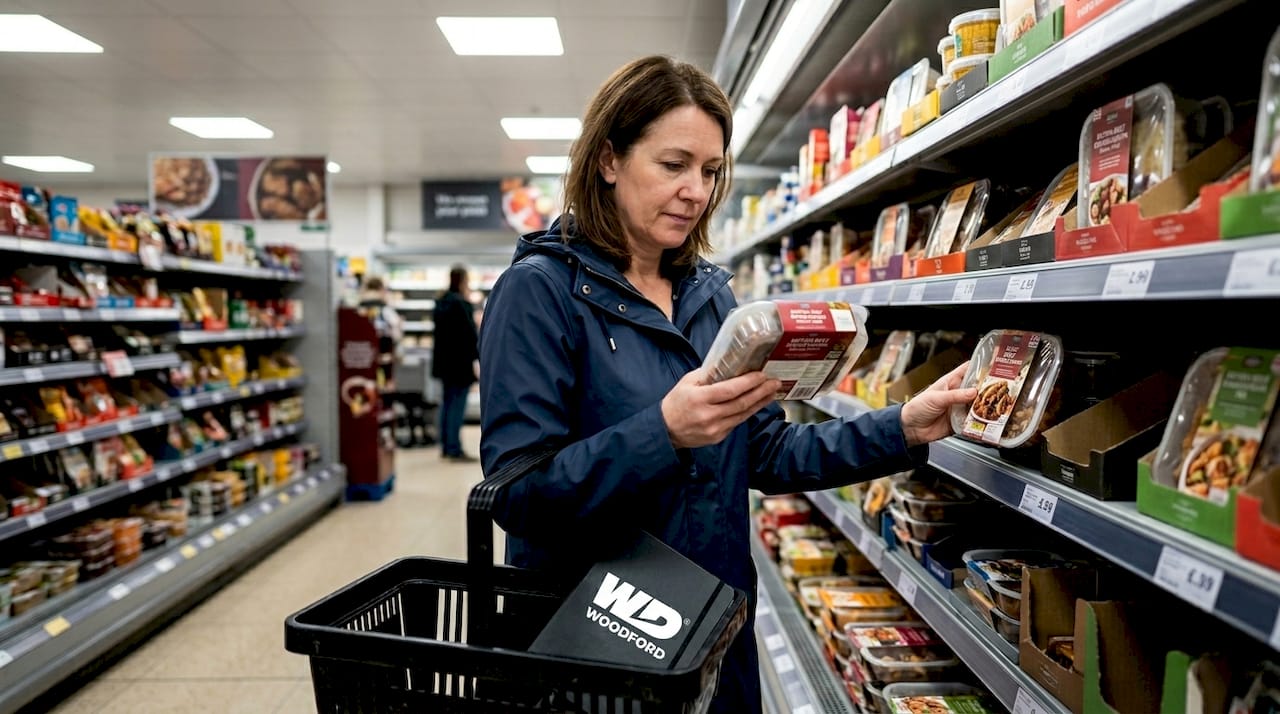
TL;DR:Packaging influences purchase decisions more quickly and effectively than taste, price, or brand reputation.It communicates quality, trust, and value through colour, typography, finish, usability, and sensory cues.
Most food retailers assume that taste, price, and brand reputation are the primary drivers of what lands in a customer’s basket. The reality is more surprising. Packaging is the first pitch on the shelf, working silently and rapidly to trigger or kill a purchase decision before the shopper has had a single conscious thought about price or quality. For independent food retailers in the UK, understanding how packaging shapes perception is not a luxury or a marketing exercise. It is one of the most practical, high-impact levers available for driving trial, building loyalty, and competing credibly against the major multiples.
Table of Contents
- Why packaging matters: more than just a container
- Key packaging elements that influence buying decisions
- From asset to risk: when packaging changes trigger backlash
- Sustainability and workflow: balancing message, compliance, and function
- Packaging for brand building and loyalty in UK food retail
- What most retailers miss about packaging’s power and how to win
- Discover smarter packaging and brand support with Woodford
- Frequently asked questions
Key Takeaways
| Point | Details |
|---|---|
| First impressions matter | Consumers assess food packaging in seconds, so design and clarity are critical for on-shelf success. |
| Balance function and trust | Practical features and honest information are as important as visual appeal for winning trust and purchases. |
| Test before big changes | Pilot packaging tweaks in real stores and communicate clearly to avoid consumer backlash. |
| Sustainability requires substance | Genuine recyclability and efficiency matter more than green optics—avoid over-packaging. |
| Consistency builds loyalty | Aligned packaging cues and design systems for private-labels reinforce preference and repeat buying. |
Why packaging matters: more than just a container
Think about the last time you watched a shopper hesitate in front of a fixture, reach for one product, then put it back and choose another. In almost every case, packaging made that call.
Packaging is evaluated in seconds. Colour, typography, structural finish, and tactile feel combine to create an instant impression of quality, trust, and appropriateness. A beautifully crafted product can fail to sell simply because its packaging signals the wrong thing to the wrong person at the wrong moment.
Here is what packaging actually communicates on the shelf:
- Colour triggers category recognition and emotional association. Deep greens say “natural.” Black with gold says “premium.” Bright yellow and red create urgency and value.
- Typography signals brand personality. A bold, geometric sans-serif font reads differently from a hand-drawn script, even on the same product.
- Pack finish such as matte, gloss, or soft-touch laminate changes how a product feels in the hand and what it signals about price point.
- Structure and usability including resealable closures, easy-open features, and portion-appropriate sizing all directly affect whether a shopper picks up a pack again.
- Incorrect or inconsistent design causes immediate rejection. A pack that looks cheap against its shelf neighbours will not get a second chance.
“Packaging is the first and fastest pitch in-store, with factors like colour, typography, finish and usability shaping whether it’s picked up or put back.”
This is why food brand strategy must treat packaging as a front-line commercial asset, not an afterthought reserved for the final stages of product development.
Pro Tip: Test new packaging within your actual shelf environment alongside competing products. Shopper reactions in context are far more reliable than focus group opinions formed in isolation.
Key packaging elements that influence buying decisions
Once you accept that packaging is a communication tool, the question becomes: which elements do the heaviest lifting? The answer varies by category, shopper profile, and price tier, but there are consistent patterns across UK food retail.
Visual elements are the first contact. Colour and imagery draw the eye, hierarchy guides the gaze, and the logo anchors brand recognition. Well-designed label hierarchy means shoppers absorb the most important messages, product name, key benefit, and flavour variant, in a single glance. Research confirms that packaging shapes consumer perception as a strategic communication tool, with information clarity sometimes outweighing aesthetics in purchase decisions.
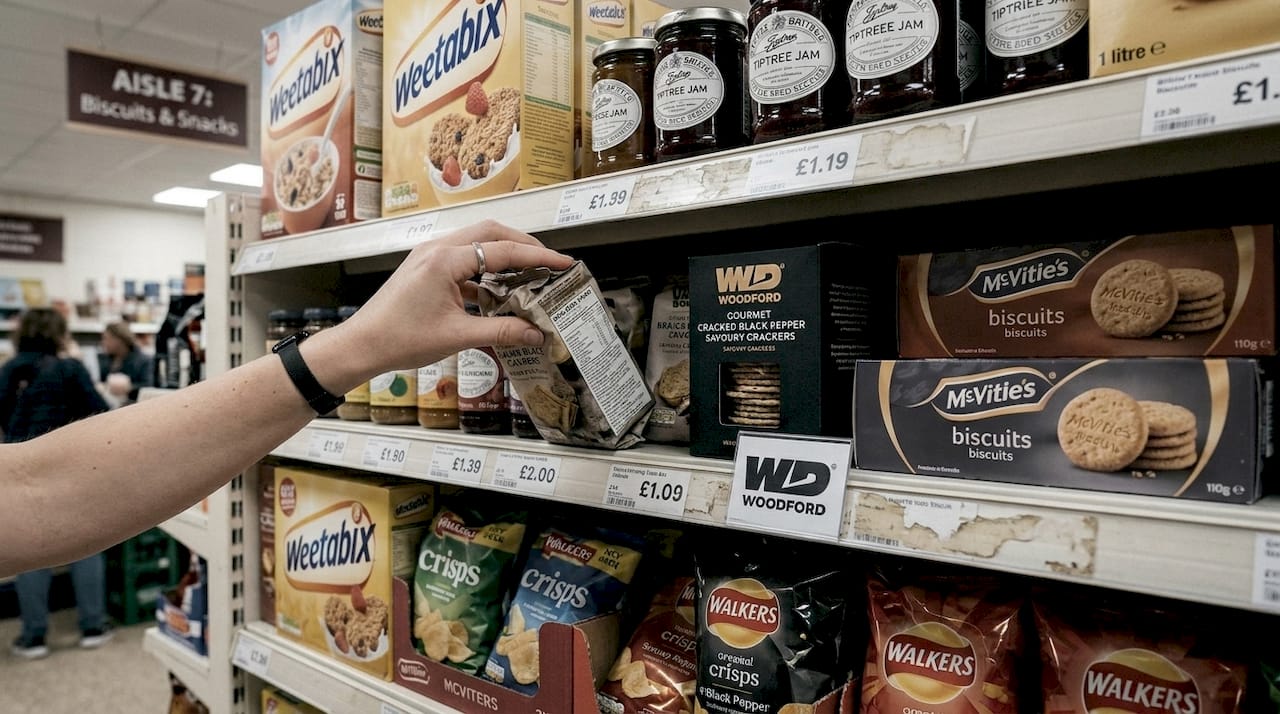
Functional elements are underrated. Resealable closures, microwaveable containers, and tamper-evident seals all build a form of functional trust. When a pack performs well after purchase, it reinforces the decision to buy again. Multisensory packaging cues including texture, weight, and even the sound of a seal being broken affect perceived quality and willingness to pay.
Informational elements on the back of pack are critical in UK food retail, where shoppers are increasingly ingredients-aware. Clear nutritional data, origin claims, allergen information, and honest “free from” statements build credibility. Cluttered or misleading back-of-pack copy erodes trust rapidly.
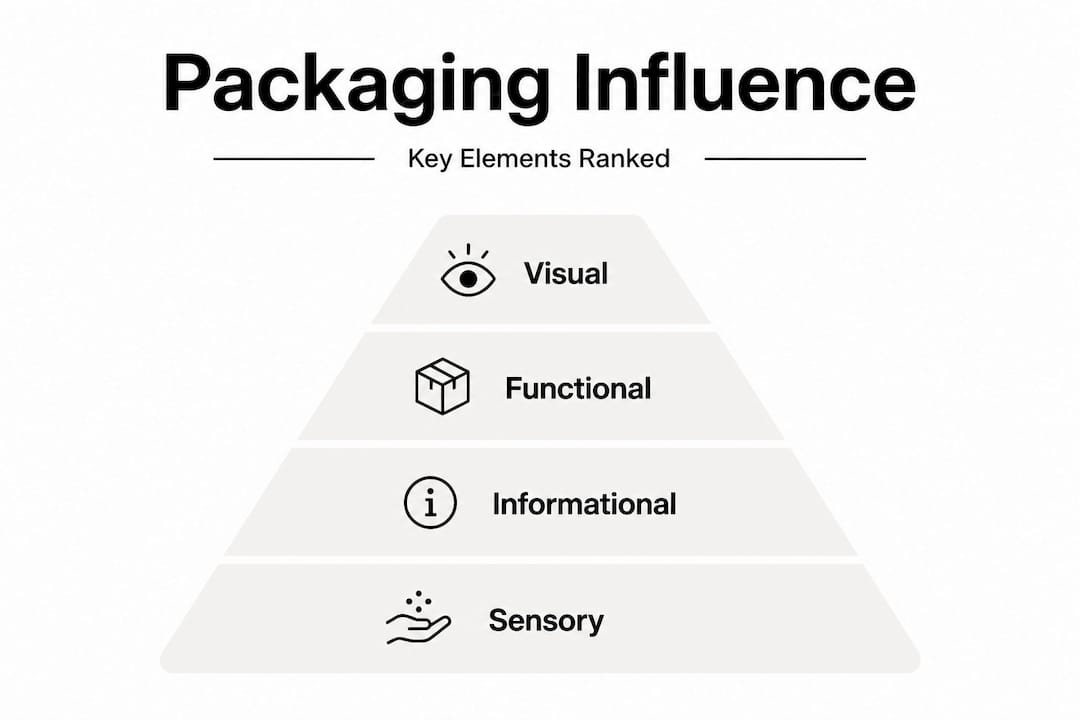
Sensory cues go beyond the visual. The weight of a jar, the resistance of a lid, the texture of a label, all these things form subconscious quality signals. However, there is a risk of what researchers call hedonic overload, meaning too many premium cues competing for attention create confusion rather than desire.
Here is a comparison of the four key packaging dimensions and their relative impact:
| Element | Primary impact | Key risks |
|---|---|---|
| Visual (colour, imagery, hierarchy) | Attention and first impression | Category code confusion, inconsistency |
| Functional (structure, usability, closures) | Repeat purchase, trust | Cost increase, supply chain complexity |
| Informational (nutritional, origin, claims) | Credibility and compliance | Over-cluttered, misleading claims |
| Sensory (texture, weight, sound) | Perceived quality, premium positioning | Hedonic overload, added cost |
The most effective packaging for independent retailers combines all four dimensions in a deliberate, joined-up way. Consider these numbered priorities when reviewing your range:
- Establish strong shelf standout before worrying about premium cues.
- Ensure functional features match your category’s usage occasions.
- Make back-of-pack information clear, honest, and compliant.
- Use sensory elements selectively and consistently across a range.
Exploring strategic food brands stocked by innovative wholesalers will show you how the best producers integrate all four dimensions without inflating cost.
From asset to risk: when packaging changes trigger backlash
Packaging is not a set-and-forget decision. Many retailers discover this the hard way when a packaging update intended to save costs, improve sustainability, or refresh a dated design triggers an unexpected wave of shopper confusion and complaint.
The mechanics of backlash are well understood. Consumers develop what psychologists call category codes: visual shorthand that tells them what to expect before they consciously read a word. When those codes change unexpectedly, trust drops, even if the product inside is identical or improved. Packaging changes can spark consumer backlash, as demonstrated by Sainsbury’s minced beef packaging shift, where shoppers questioned whether the product quality had changed, even though it had not.
Here is a summary of relevant UK packaging change scenarios and their typical outcomes:
| Brand or category | Change made | Initial reaction | Eventual outcome |
|---|---|---|---|
| Sainsbury’s minced beef | New pack format and appearance | Quality and trust concerns raised | Gradual acceptance with communication |
| Various premium ready meals | Shift to plastic-free board | Confusion over freshness signals | Mixed; dependent on in-store signage |
| Independent deli brands | Budget redesign mid-range | Perceived as downgrade | Sales dip until communicated clearly |
What this tells us is that communication is inseparable from packaging change. Shoppers need signposting, whether through shelf-edge labels, point-of-sale materials, or clear on-pack messaging that bridges the old and new design.
Key risks to manage when changing packaging:
- Breaking category visual codes without preparation
- Failing to communicate the reason for change (sustainability, improved function, refresh)
- Rolling out changes nationally before piloting in select stores
- Overlooking supply chain transition periods where old and new packs sit alongside each other
Understanding brand acceleration in food helps clarify when a packaging refresh is an opportunity and when it is a risk that needs careful management.
Pro Tip: Pilot any significant packaging change in a handful of stores with clear point-of-sale explanation before rolling out. The feedback you gather in two weeks is worth more than months of desk-based testing.
Sustainability and workflow: balancing message, compliance, and function
Sustainability in food packaging has moved from a nice-to-have to a regulatory and commercial reality for UK retailers. Yet the gap between what brands claim and what shoppers experience remains wide.
Only around 53% of UK grocery packaging is widely recyclable at kerbside, leaving significant room for improvement. Shoppers increasingly notice when claims feel superficial, a pack labelled “made with recycled material” that is nonetheless over-packaged or difficult to separate for recycling creates scepticism, not loyalty.
For independent retailers, the practical implications include:
- Extended Producer Responsibility (EPR) fees in the UK are linked to packaging weight and component count. A pack that looks eco-friendly but uses multi-layer materials or excessive secondary packaging will attract higher fees.
- Recyclability must be practical, not just theoretical. If your local authority does not collect a particular material, the claim is commercially and reputationally risky.
- Shelf-ready packaging and multi-functional designs can reduce cost, waste, and handling time simultaneously. As packaging design is increasingly shaped by workflow and display constraints, multi-functional packs that transition from delivery to shelf to consumer use reduce labour and damage.
“Sustainability in packaging is not just about materials. It is about operational fit, honest communication, and reducing total waste across the supply chain, not just swapping plastic for cardboard.”
Action steps for independent retailers:
- Audit your current range for EPR compliance and material recyclability.
- Ask suppliers for clear, verified sustainability credentials, not just on-pack claims.
- Prioritise shelf-ready formats where your team currently spends excessive time repacking or reticulating stock.
- Explore food distribution channels that provide sustainability-ready products and reduce your own packaging burden.
Packaging for brand building and loyalty in UK food retail
For independent retailers, packaging is one of the most controllable levers for building brand recognition and loyalty, particularly in private-label ranges. The major multiples have understood this for decades. The same principles apply at a smaller scale, and the competitive opportunity is real.
Private-label packaging builds brand preference through design consistency, usability, and clear value tier signals. A coherent own-brand packaging system, where colour palettes, typography, and structural choices align across categories, creates a visual identity that shoppers recognise and return to.
There is a persistent myth that premium cues and value signals are mutually exclusive. They are not. The most effective UK own-brand packaging communicates honest value without looking cheap, and aspirational quality without pretending to be something it is not. Think clean lines, quality materials used efficiently, and clear hierarchy. These elements cost less than overdesigned alternatives and perform better on the shelf.
Practical applications for independents:
- Build a packaging system, not just individual packs. Consistent colour-coding by tier (entry, mid, premium) helps shoppers navigate and trade up.
- Usability is non-negotiable. Reclosure, clear portion information, and durable structural choices improve the experience after purchase, which drives repeat purchase.
- Shelf presence matters at the category level. When reviewing your range, step back and evaluate how your products appear across a full shelf bay, not just as individual SKUs.
- Communicate value clearly. Back-of-pack storytelling about provenance, method, or quality ingredients is free real estate that most independent brands underuse.
Pro Tip: Review and update packaging at the category level rather than product by product. A single product refresh in isolation rarely shifts perception. Category-level coherence creates the shelf impact that changes buying behaviour.
Investing in strong brand strategy in UK food retail means treating packaging as a long-term asset, not a short-term cost to be minimised.
What most retailers miss about packaging’s power and how to win
Here is an uncomfortable truth: most independent retailers spend more time worrying about their wholesale price list than about the packaging of the products they stock. Yet packaging is almost certainly the faster lever for driving trial and shifting perception.
The conventional approach is to look at what the category leader does and replicate the general aesthetic. This is a reliable way to stay invisible. Category leaders set conventions, and shoppers recognise and trust those conventions. But they do not choose a product because it looks like everything else. They choose it because something made it stand out, even briefly, before instinct took over.
The most underused opportunity we see consistently is local consumer testing. Not expensive research panels or online surveys, but simply watching real shoppers interact with your shelf, asking a few questions, and iterating quickly. Independent retailers have an inherent advantage over the multiples here. You are closer to your customers. You can move faster. You can pilot a packaging tweak in one location this week and know if it works by the weekend.
Brands that succeed in UK retail are typically those that treat packaging as a living, evolving tool. They test. They listen. They communicate openly with shoppers when something changes. And they resist the urge to overcomplicate sustainability messaging or pile on premium cues until the core packaging job, standing out, communicating value, and inviting trial, is done well.
The retailers who outperform their peers are not necessarily stocking better products. They are stocking products whose packaging does more of the selling for them.
Discover smarter packaging and brand support with Woodford
At Woodford, we work directly with independent UK food retailers to take the guesswork out of product and packaging decisions. Our role is not simply to supply stock. We curate retail-ready brands whose packaging, positioning, and commercial terms are built to perform in independent retail environments. Whether you are looking to strengthen your private-label presence, refresh a category, or source brands that arrive shelf-ready and margin-positive, we provide the insight and the range to make it happen. Explore our brands to see which products are already driving measurable uplift for independent retailers like you, and speak to our team about a packaging and brand review tailored to your store.
Frequently asked questions
What are the most important features to prioritise in food packaging for UK independents?
Prioritise strong shelf appeal, clear information, and practicality. Resealability, finish and usability often differentiate products most strongly when shoppers compare options side by side.
How can packaging help increase brand loyalty for food retailers?
Consistent packaging reinforces recognition and trust across repeat visits. Design consistency and usability are the two factors most closely linked to private-label loyalty in UK grocery.
Do sustainable packaging claims really influence UK shopper behaviour?
Yes, particularly among environmentally conscious consumers, but only when claims are credible and the packaging itself is genuinely practical. 53% of UK grocery packaging meets recyclability standards, meaning scepticism is well-founded for the rest.
How quickly do consumers judge food packaging in-store?
Most shoppers make a pick-up or pass decision in just a few seconds. Purchase decisions on the shelf are driven primarily by rapid visual processing rather than considered evaluation.
Recommended
- Food brand strategy drives UK retail success in 2026 - WOODFORD - Bringing quality foods your way
- Strategic food brands for UK independent retailers - WOODFORD - Bringing quality foods your way
- Food logistics tips for UK independent retailers in 2026 - WOODFORD - Bringing quality foods your way
- What is brand acceleration in food: a guide for UK retailers - WOODFORD - Bringing quality foods your way
- Ecommerce branding strategies that drive 23% more sales