Market trends in wholesale: boost UK food retail in 2026

The UK wholesale market is shifting in ways that contradict what many independent retailers assume. Foodservice wholesale grew 3.2% in 2024 while retail wholesale fell 1.2% excluding tobacco, part of a broader trajectory pushing the sector towards £42bn by 2030. If you are still ordering stock based on gut feel and last year’s sales data, you are already behind. This article shows you how to read market trends, translate them into smarter inventory decisions, and position your shop to grow rather than simply survive.
Table of Contents
- Why market trends matter in wholesale
- Tracking and interpreting market trends
- Applying trend insights to inventory and pricing
- Evolving wholesale strategies: symbol groups versus independents
- Future-proofing through tech, insights and community value
- Connect your strategy to trusted wholesale solutions
- Frequently asked questions
Key Takeaways
| Point | Details |
|---|---|
| Trends drive wholesale success | Market trends directly affect inventory choices and margins for UK food retailers. |
| Data and agility matter | Using reports, tech tools, and real-time data helps independents make smarter inventory and pricing decisions. |
| Community value is a key differentiator | Independent retailers should leverage local insights and customer connections alongside technology for long-term growth. |
| Symbol groups’ strategies offer lessons | Adopting coordinated approaches and trend-focused tactics can help independents stay competitive. |
Why market trends matter in wholesale
Market trends in wholesale are not abstract economic theory. They are the signals that tell you which categories are growing, which suppliers are gaining leverage, and where your margins are about to be squeezed. In this context, a “market trend” covers three things: shifts in consumer behaviour (what shoppers want), technology adoption (how orders are placed and fulfilled), and competitive moves (what symbol groups and supermarkets are doing next).
For independent retailers, the stakes are concrete. Independents face margin drops of 3 percentage points in 2025, with delivered wholesale now accounting for 65% of the market and online ordering becoming the primary tool for managing cost pressures. That is not a warning for the future. It is happening now.
The good news is that trend awareness directly improves your buying decisions. When you know that health snacking is outpacing confectionery, or that premium soft drinks are growing faster than own-label cola, you can adjust your range before your competitors do. Adapting to food trends is not about chasing every fad. It is about making evidence-based choices that protect your margin and grow your basket size.
“The independents who thrive are not the ones with the biggest budgets. They are the ones who act on information faster than anyone else.”
Delivered wholesale and digital ordering platforms give you the agility to respond quickly. But only if you are watching the right signals in the first place.
Tracking and interpreting market trends
Knowing trends matter is one thing. Actually tracking them is another. Here are the most reliable sources and methods available to UK independent retailers right now.
1. Industry reports from IGD and Lumina Intelligence These are the gold standard for UK wholesale data. They cover category performance, channel shifts, and consumer sentiment. Most are available via subscription or through your wholesaler.
2. Wholesaler apps and digital ordering platforms Wholesalers use AI forecasting for stock management, with digital ordering now used by 79% of customers at JJ Foodservice alone. If your wholesaler has an app, the data inside it is a live trend feed.
3. Competitor pricing tools AI-powered tools can monitor competitor shelf prices and promotional activity in real time. This is no longer reserved for large chains.
4. Consumer surveys and in-store feedback A simple monthly survey at the till or a brief conversation with your regulars gives you hyper-local data that no national report can replicate.
5. Social media and search trend tools Google Trends and social listening tools flag emerging consumer interests weeks before they show up in sales data.
Here is a comparison of manual versus digital approaches to trend tracking:
| Approach | Cost | Speed | Accuracy | Best for |
|---|---|---|---|---|
| Manual (reports, trade press) | Low | Slow | Moderate | Strategic planning |
| Digital ordering platform data | Low to medium | Fast | High | Weekly buying decisions |
| AI forecasting tools | Medium to high | Very fast | Very high | Demand surge prediction |
| Consumer surveys | Low | Medium | Hyper-local | Range and category decisions |
Pro Tip: Set up a weekly review of your digital ordering platform’s bestseller and out-of-stock data. Sudden demand surges in a category are often the earliest signal of a broader trend. Pair this with trend analysis for food brands to understand the “why” behind the numbers.
Understanding brand acceleration in food also helps you identify which new products are likely to sustain growth versus those that will peak and fade within a quarter.
Applying trend insights to inventory and pricing
Tracking trends is only valuable if it changes what you buy and how you price it. Here is a practical framework for turning data into decisions.
Scenario planning for inventory
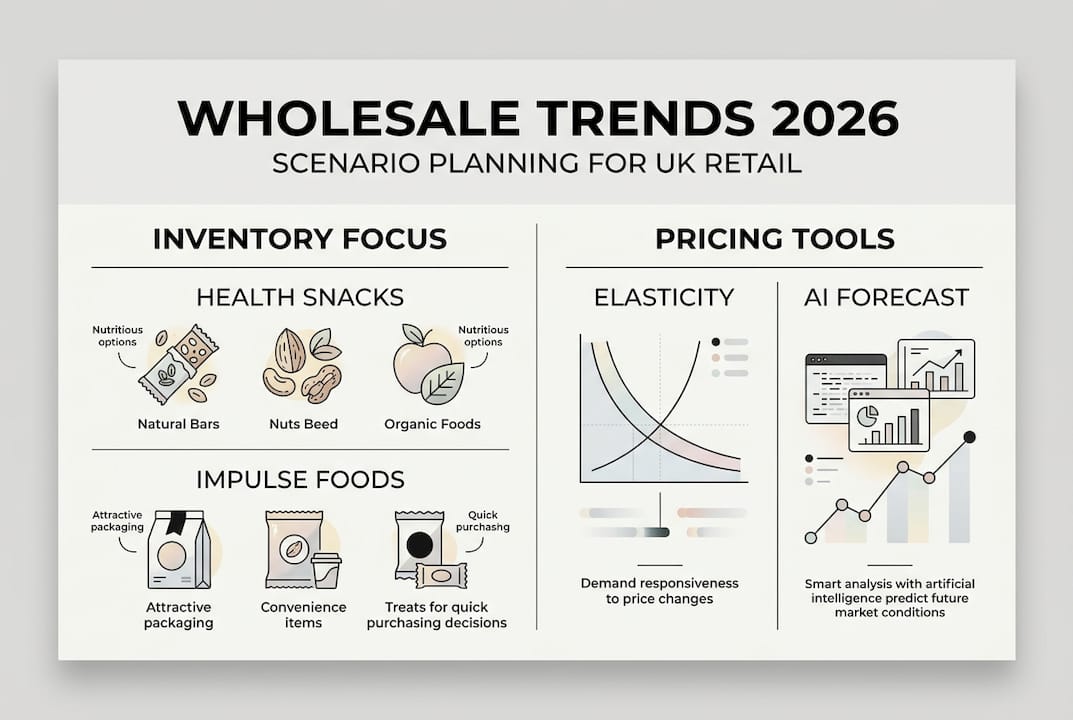
Scenario planning means preparing for more than one possible future. Instead of ordering based on a single forecast, you build three versions: a conservative case, a base case, and an optimistic case. Real-time data visibility and elasticity models allow wholesalers and retailers to stress-test their buying plans against demand shifts before committing to stock.
Elasticity models for smarter pricing
Price elasticity tells you how sensitive your customers are to price changes in a given category. Premium health products often have low elasticity (customers will pay more). Commodity staples have high elasticity (a small price rise loses sales fast). Knowing this helps you protect margin where you can and stay competitive where you must. A food cost control checklist is a useful starting point for building this discipline into your buying process.
Hyper-local pivots
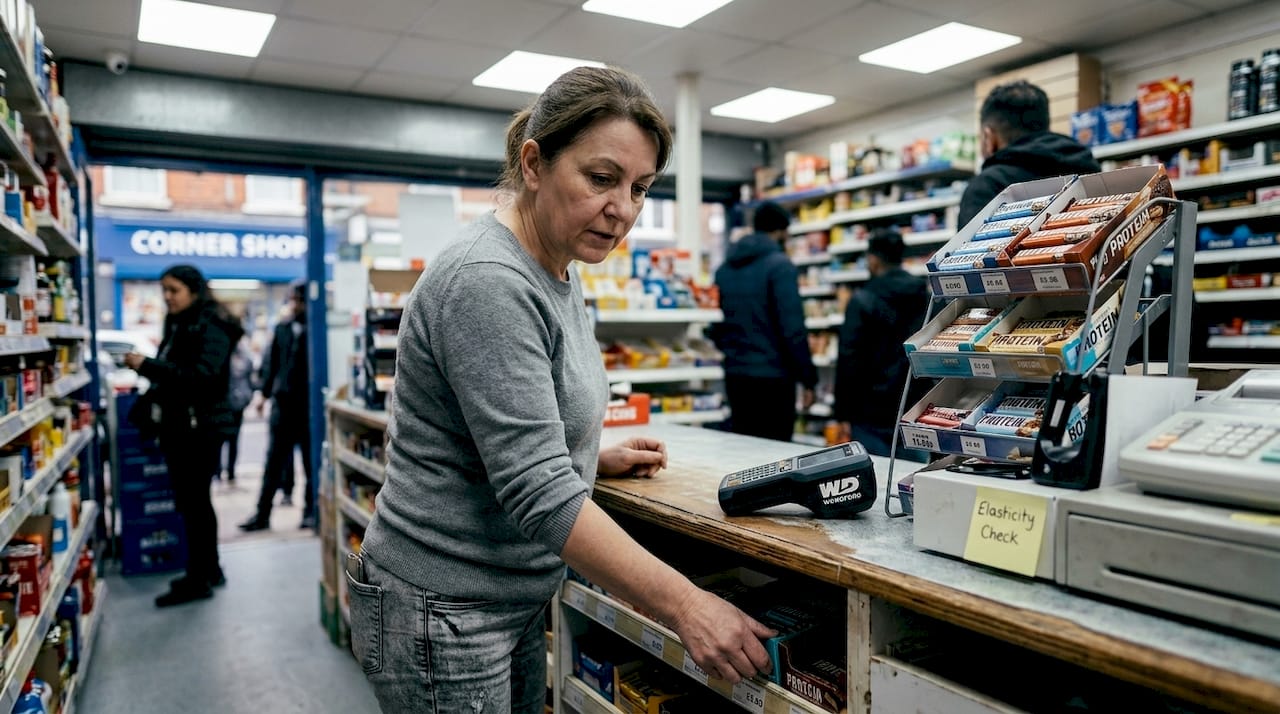
One genuine advantage independents have over chains is speed. You can change your range in days, not months. Use local consumer input, local events, and neighbourhood demographics to make fast pivots that a regional distribution centre simply cannot replicate.
Here is a snapshot of category performance to guide your range decisions:
| Category | 2025 trend direction | Recommended action |
|---|---|---|
| Health snacks and protein bars | Strong growth | Increase range depth |
| Premium soft drinks | Growing | Add new SKUs |
| Tobacco and cigarettes | Declining | Reduce reliance |
| Ambient ready meals | Stable to growing | Maintain and review |
| Impulse confectionery | Flat | Optimise placement |
Pro Tip: Diversify into impulse and health categories rather than defending declining ones. These segments offer better margin and align with where consumer spending is heading. Check strategic brands for retailers for curated options that fit this growth profile.
For the operational side of keeping your range responsive, logistics tips for independents covers how to reduce lead times and avoid overstock in fast-moving categories.
Evolving wholesale strategies: symbol groups versus independents
The gap between symbol group retailers and unaffiliated independents is widening. Understanding why gives you a clearer picture of what to do about it.
Symbol groups are forecast to grow +11.7% to reach 38.6% market share by 2028, while unaffiliated independents are projected to decline by 2.1%. The primary threat is supermarket convenience expansion, with major chains opening smaller formats in high-street and neighbourhood locations that directly compete with independent shops.
Here is how the two models compare strategically:
| Factor | Symbol groups | Unaffiliated independents |
|---|---|---|
| Buying power | High (national) | Low to medium |
| Trend adoption speed | Moderate (centralised) | Fast (local decisions) |
| Digital tool access | High | Variable |
| Community connection | Low | High |
| Foodservice capability | Moderate | Strong |
The data on foodservice is particularly striking. Independents outperform chains in foodservice with +4.2% sales growth in 2025 versus +0.8% for chains. This is a real competitive advantage that many independents underutilise.
Here are four strategic moves that close the gap with symbol groups:
- Build a foodservice offer. Even a small prepared food or hot drink range can shift your revenue mix towards a higher-growth channel.
- Reduce tobacco dependency. Over-reliance on tobacco retail is a structural vulnerability as regulation tightens and consumer habits shift.
- Adopt digital ordering tools. The efficiency gains from online wholesale ordering directly offset margin pressure.
- Leverage community positioning. Local provenance, personalised service, and neighbourhood relevance are advantages no supermarket convenience format can replicate.
Understanding food distribution channels helps you identify where your supply chain can be restructured to support these moves. And a sharper brand strategy for UK retail ensures your range reflects the trends your customers are already responding to.
Future-proofing through tech, insights and community value
Short-term cost pressures are real. But the independents who invest in the right capabilities now will be far better placed in three years than those who simply cut and wait.
KPMG’s research on UK grocery identifies “no regrets” strategies as the most effective approach: connected data systems, a genuine tech culture, and deep consumer insight. These are not expensive luxuries. They are the baseline for competing in a market where your rivals are already using them.
Here is what a future-proof independent retailer looks like in practice:
- Connected data: Your sales data, ordering platform, and supplier promotions are linked so you can spot patterns without manual effort.
- Tech culture: Your team uses digital tools as a matter of routine, not as an occasional experiment.
- Deep consumer insight: You know your top 20% of customers by name, by preference, and by what they are buying elsewhere.
- Community differentiation: Your shop is embedded in the local area through events, local supplier partnerships, and personalised service.
- Category agility: You can add or drop a product line within a week based on real demand signals.
“Independents who differentiate through community and unique product selection, rather than competing on price alone, consistently outperform those who try to match supermarket pricing.”
Pro Tip: Collaborate with local food producers and artisan suppliers. They give you exclusive products that symbol groups cannot stock, and they provide first-hand insight into emerging consumer tastes in your specific area.
For the logistics side of scaling these capabilities, food logistics for wholesalers outlines how to build a supply chain that supports rapid range changes without sacrificing reliability.
Connect your strategy to trusted wholesale solutions
The trends covered in this article are not predictions. They are already reshaping which independent retailers grow and which ones stagnate. At Woodford, we work directly with ambitious independents to make trend-led buying practical, not theoretical. Our curated brand range is built around the categories showing real growth, from premium soft drinks to health-focused snacking, and our wholesale solutions are designed to give you the agility that delivered wholesale promises. Browse our brand portfolio to see which products align with the trends your customers are already moving towards, and check our current promotions for category-building opportunities that protect your margin while expanding your range.
Frequently asked questions
How can independent food retailers benefit from market trends in wholesale?
By tracking and responding to market trends, independents can improve inventory selection, pricing, and consumer alignment. With margin drops of 3 percentage points already hitting independents in 2025, trend awareness is now a direct financial tool, not just a planning exercise.
What are the best tools for tracking wholesale market trends?
IGD and Lumina Intelligence reports, AI forecasting tools, and digital ordering platforms are the most effective options for UK retailers. Digital ordering is used by 79% of customers at leading wholesalers, making platform data one of the most accessible live trend sources available.
Why are symbol groups outperforming independents in market share?
Symbol groups benefit from coordinated buying, national digital infrastructure, and faster trend adoption at scale. Unaffiliated independents are projected to decline 2.1% by 2028, largely due to pressure from supermarket convenience formats entering their traditional trading areas.
How can retailers future-proof their wholesale strategy?
Embracing connected data, building a genuine tech culture, and differentiating through community positioning are the most durable approaches. “No regrets” strategies that invest in digital and consumer insight deliver competitive advantage regardless of how the broader market shifts.
Recommended
- Food logistics tips for UK independent retailers in 2026 - WOODFORD - Bringing quality foods your way
- Navigating UK food logistics for wholesalers in 2026 - WOODFORD - Bringing quality foods your way
- How to conduct trend analysis for UK food brands in 2026 - WOODFORD - Bringing quality foods your way
- Food brand strategy drives UK retail success in 2026 - WOODFORD - Bringing quality foods your way
- Food cost control checklist for UK restaurants in 2026