Innovation in UK food retail: A practical guide for independents
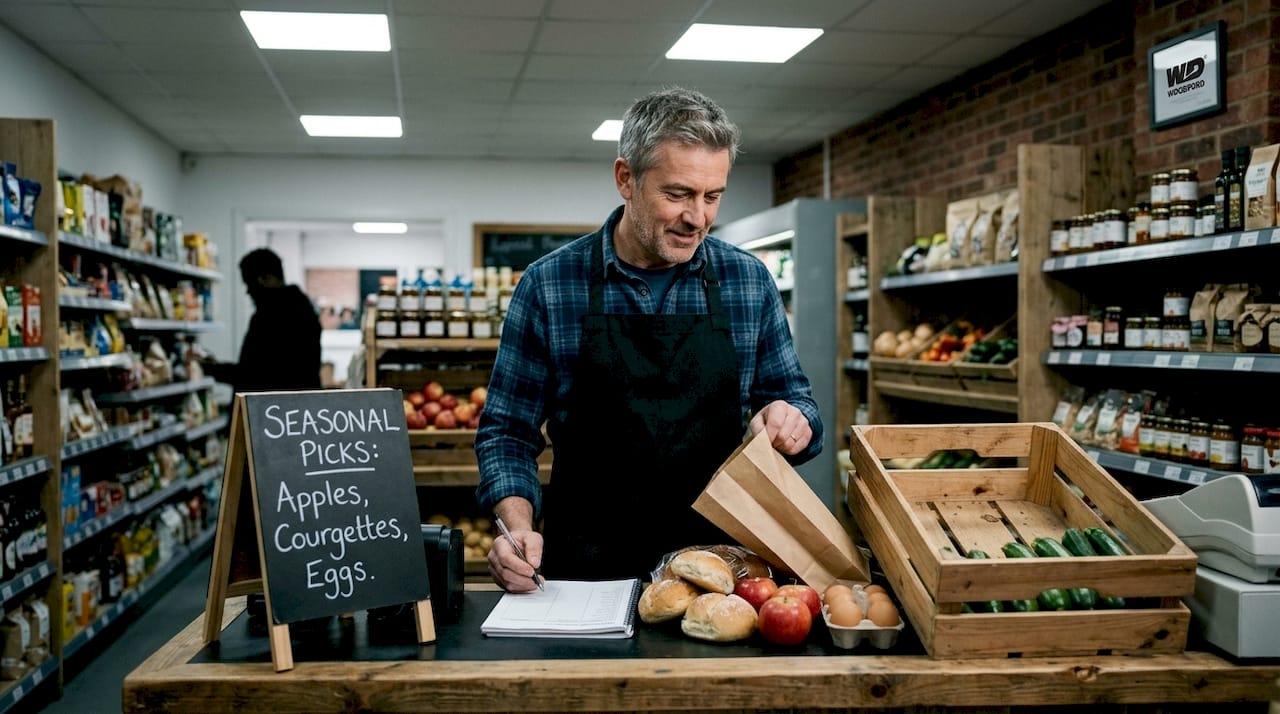
TL;DR:True innovation for independents focuses on product, process, service, and back-end technology improvements.Operational upgrades like energy-efficient refrigeration and demand forecasting offer quick, significant ROI.Success depends on deliberate change, thorough testing, clear measurement, and aligning innovations with customer needs.
The word “innovation” gets thrown around so freely in food retail that it’s lost much of its meaning. Walk into any trade show and you’ll see the same flashy self-checkout pods and AI-powered displays being pitched as the future. But the independents quietly outperforming their local competition aren’t necessarily the ones chasing the shiniest tools. They’re the ones making sharper decisions about product ranges, operational efficiency, and customer experience. This guide cuts through the noise and shows you what innovation actually looks like at your scale.
Table of Contents
- Understanding innovation in food retail: Beyond buzzwords
- How independents can leverage innovation for differentiation
- Operational innovation: Upgrades that drive efficiency and value
- Risks and realities: What independents must weigh before innovating
- From ideas to action: Applying innovation to your retail context
- A fresh perspective on innovation in food retail
- Connect with solutions that support your innovation journey
- Frequently asked questions
Key Takeaways
| Point | Details |
|---|---|
| Innovation goes beyond tech | Effective innovation includes product, process, and service improvements, not just technology upgrades. |
| Differentiate by adding real value | Focus your innovation efforts on what large retailers can’t match, such as local curation and personal service. |
| Prioritise operational upgrades | Target operational changes that offer clear ROI, such as energy efficiencies and layout improvements. |
| Test and iterate before scaling | Apply tight, measurable pilots to new ideas, scaling only what works in your retail setting. |
| Mind the risks | Assess pitfalls like technology friction and evaluation gaps to innovate responsibly and sustainably. |
Understanding innovation in food retail: Beyond buzzwords
Innovation in food retail is not a single thing. For independent retailers, it spans four distinct areas: product improvements (new lines, curated ranges), process improvements (how you order, stock, and replenish), service improvements (how customers experience your store), and technology improvements (tools that reduce friction or waste). Most of the conversation focuses on the last category, but the biggest gains often come from the first three.
The reason technology gets so much attention is partly marketing and partly genuine utility. But the most impactful technology in food retail right now is not customer-facing at all. It’s the back-end stuff: demand forecasting, automated replenishment, and inventory management. Demand forecasting technology has delivered a 1,070% return on investment for Vallarta Supermarkets by reducing waste and improving availability. That’s not a headline about a new app. It’s a quiet operational revolution.
For independent retailers, the lesson is straightforward. Innovation is increasingly about data-enabled decision-making, not customer-facing spectacle. Smarter forecasting reduces over-ordering. Better replenishment reduces out-of-stocks. Both directly affect margin and customer satisfaction.
“The retailers who will thrive are those who treat operational data as a competitive asset, not an administrative burden.” This mindset shift is what separates reactive independents from genuinely innovative ones.
Here’s a quick overview of innovation types and their typical impact for independents:
| Innovation type | Example | Typical impact |
|---|---|---|
| Product | Exclusive or curated local ranges | Higher margin, stronger loyalty |
| Process | Demand forecasting and smarter replenishment | Reduced waste, better availability |
| Service | Community events, personalised recommendations | Repeat visits, word-of-mouth |
| Technology | Energy-efficient refrigeration, loyalty platforms | Cost savings, increased basket size |
Understanding your food brand strategy is equally important here. Innovation doesn’t happen in a vacuum. It needs to align with what your store stands for and what your customers expect from you.
How independents can leverage innovation for differentiation
Large supermarket chains compete on price and convenience. You can’t win that fight directly. But you can win on depth, authenticity, and community relevance. These are the areas where innovation pays off most for independents.
Differentiation for independents is about building value that large platforms genuinely cannot replicate. A Tesco cannot stock your local producer’s small-batch chutney with a handwritten label and a story about the farm three miles away. You can. That’s not nostalgia. That’s a strategic advantage.
Digital innovation matters too, but not in the way most people assume. Personalisation and loyalty are where digital tools deliver real value for independents. Frictionless loyalty schemes that remember a customer’s preferences, send relevant offers, and reward consistent spending are far more effective than a flashy app nobody downloads.
Here’s how independent innovation tactics compare to what large chains typically do:
| Approach | Independent retailer | Large chain |
|---|---|---|
| Product range | Curated, local, exclusive | Broad, standardised |
| Loyalty | Personalised, relationship-led | Points-based, mass-market |
| Community | Events, local partnerships | Corporate sponsorship |
| Digital | Targeted, low-friction tools | Large-scale platforms |
| Service | Expert staff, personal touch | Efficient but impersonal |
Practical methods that work well for independents include:
- Subscription boxes featuring seasonal or locally sourced products
- Loyalty stamp cards or digital equivalents tied to specific product categories
- Tasting events and community evenings that build genuine relationships
- Exclusive product launches in partnership with emerging food brands
- Staff recommendation sections that highlight curated picks each week
- Click-and-collect options that blend physical and digital convenience without heavy investment
Choosing the right strategic food brands to stock is itself an act of innovation. When you carry a brand that your local supermarket doesn’t, you become the only destination for that product. That’s powerful positioning.
Staying on top of adapting to food trends also matters. A retailer who spots a shift in customer interest early and adjusts their range accordingly is innovating, even if they never buy a single piece of new technology.
Pro Tip: Before committing to any new product line or service format, run a four-week pilot in one section of your store. Set a simple target (sales volume, customer feedback, repeat purchase rate) and evaluate honestly. This approach costs little and tells you a lot before you scale.
Understanding your distribution channel options is also part of this picture. The right supply chain relationships give you access to exclusive products and faster turnaround, which directly supports your ability to differentiate.
Operational innovation: Upgrades that drive efficiency and value
Operational innovation is often the least glamorous and the most profitable. It covers everything from how your store is laid out to how your refrigeration units run. The returns here can be substantial and relatively quick.
Consider the case of Dike and Son, an independent supermarket that invested in energy-efficient refrigeration. The results included electricity savings of around £3,000 per month and the addition of 21 new shelf spaces due to improved unit design. More shelf space means more product variety. More product variety means higher basket spend. One operational upgrade created a chain of positive outcomes across the entire business.
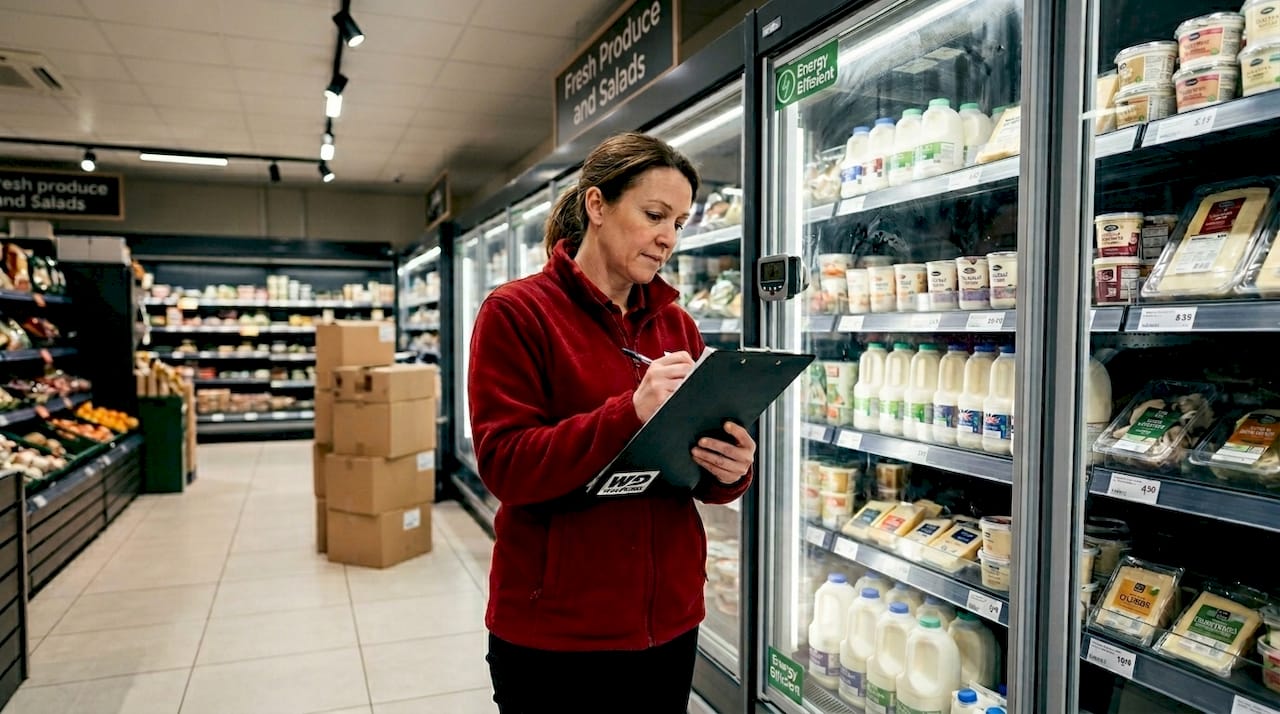
Here’s a summary of operational innovations and their measured benefits:
| Operational upgrade | Measured benefit |
|---|---|
| Energy-efficient refrigeration | Up to £3,000/month electricity savings |
| Improved shelf configuration | Up to 21 additional product facings |
| Demand forecasting software | Reduced waste, better stock availability |
| Staff scheduling tools | Lower labour costs, better peak coverage |
| Store layout reconfiguration | Higher average basket spend |
To prioritise which operational upgrades to pursue, follow this sequence:
- Audit your current costs. Identify your three largest operational expenses. Energy, waste, and labour are usually at the top.
- Map the customer journey. Walk your store as a customer would. Note friction points, empty shelves, and areas that feel uninviting.
- Research available solutions. Talk to suppliers, wholesalers, and trade bodies about what other independents are using successfully.
- Calculate potential ROI. Even a rough estimate helps you prioritise. A £5,000 investment that saves £3,000 per month pays back in under two months.
- Pilot before committing. Where possible, trial equipment or processes before full rollout.
- Review after 90 days. Measure against your original targets and decide whether to continue, adjust, or abandon.
Understanding UK food logistics is closely tied to operational performance. Your supply chain efficiency directly affects your ability to keep shelves stocked, reduce waste, and respond quickly to changes in demand.
Risks and realities: What independents must weigh before innovating
Innovation carries real risks. Not every new idea improves outcomes, and some well-intentioned changes create new problems. Being clear-eyed about this before you invest is essential.
Self-checkout technology is a useful example. It’s been widely adopted by large retailers, but the evidence shows it introduces significant risks: customer frustration when machines malfunction, increased theft through accidental and deliberate misuse, and a loss of the personal interaction that many shoppers value. For independents, where that personal touch is a core part of your offer, self-checkout may actively undermine your differentiation.
Key risks to consider before any innovation:
- Customer experience friction: New systems that confuse or frustrate customers can drive them away faster than any competitor
- Theft and loss: Some technologies create new vulnerabilities that offset their efficiency gains
- Staff training gaps: Poorly trained staff using new tools create inconsistency and errors
- Sustainability trade-offs: Some packaging or process innovations have hidden environmental costs that may conflict with your values or your customers’ expectations
- Measurement challenges: Without clear KPIs set in advance, it’s almost impossible to know whether an innovation has worked
There’s also a broader research gap worth acknowledging. UK food environment research tends to focus heavily on food availability rather than sustainability, affordability, or digital convenience. This means there’s limited robust evidence to draw on when evaluating many types of retail innovation. You’re often making decisions with incomplete data.
“Not all innovation improves outcomes. The most important question is not ‘can we do this?’ but ‘should we do this, for our customers, in our context?’” This is the discipline that separates thoughtful innovators from those chasing trends.
Pro Tip: Build a simple governance structure for innovation decisions. Before any pilot, write down what success looks like, who is responsible, and what the exit criteria are if it doesn’t work. A one-page document is enough. It forces clarity and prevents sunk-cost thinking.
For guidance on how to position your store’s innovation within a broader brand acceleration strategy, it’s worth thinking carefully about how each change reinforces or dilutes your overall identity.
From ideas to action: Applying innovation to your retail context
Having a good idea is the easy part. Turning it into a repeatable, measurable improvement is where most retailers struggle. The most successful independents use a structured approach rather than acting on instinct alone.
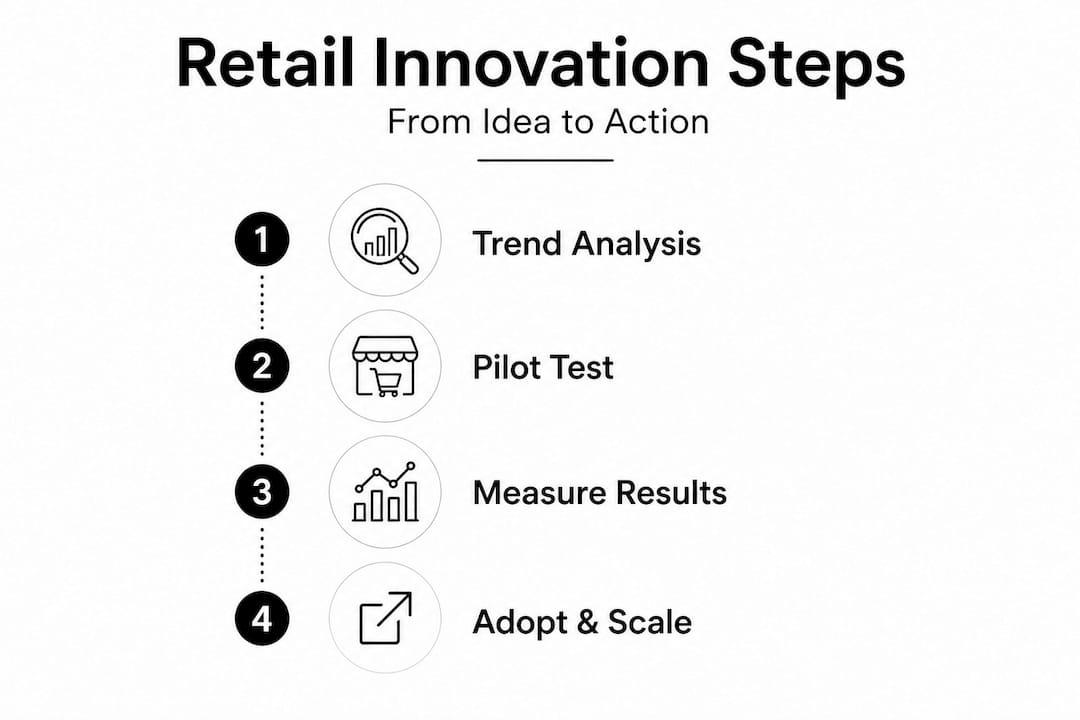
A test-and-learn approach is the most reliable method. Small pilots with sharp metrics allow you to gather real evidence before committing significant resources. The Ice Cream Farm’s approach demonstrates how tight feedback loops, rather than large-scale launches, produce sustainable growth.
Scenario-based planning is also becoming standard in UK grocery. Rather than rigid annual plans, leading retailers now model multiple possible futures and prepare responses in advance. This agility is something independents can actually do better than large chains, because your decision-making chain is shorter.
Here’s a practical five-step framework for applying innovation in your store:
- Identify the opportunity. Start with a customer problem or a cost inefficiency. What are customers asking for that you don’t currently offer? Where is waste highest?
- Pilot at small scale. Choose one product, one section, or one process. Keep the investment low and the timeframe short (four to eight weeks).
- Measure with precise KPIs. Set targets before you start. Sales uplift, waste reduction, customer feedback scores, or repeat purchase rates all work well.
- Review and adapt. At the end of the pilot, evaluate honestly. What worked? What didn’t? What would you change?
- Scale what works. Only expand initiatives that have demonstrated clear, measurable value. Resist the temptation to scale based on enthusiasm alone.
Conducting regular trend analysis for food brands feeds directly into step one. Understanding what’s shifting in consumer behaviour gives you better raw material for identifying genuine opportunities rather than chasing noise.
A fresh perspective on innovation in food retail
Here’s something the trade press rarely says plainly: most innovation fails not because the idea was bad, but because it wasn’t the right idea for that store, at that time, for those customers. The obsession with “what’s new” often crowds out the more valuable question of “what’s needed.”
We’ve seen retailers invest in digital loyalty platforms that their customer base simply didn’t want to use. We’ve seen beautiful new store layouts that confused regulars and reduced sales. The innovation was real. The fit was wrong.
The independents who consistently grow are not necessarily the most innovative in the conventional sense. They’re the most disciplined. They know their customers deeply. They change things deliberately, not reactively. And they measure outcomes rather than celebrating activity.
Adapting to food trends is part of this discipline. But adaptation is not the same as chasing every trend. It means reading what’s genuinely shifting in your customer base and responding with purpose.
“The most valuable innovation is often invisible to outsiders. It’s the buyer who spots a gap in the range six months before everyone else. It’s the manager who fixes the one thing customers quietly complained about for years. It’s the quiet, consistent improvement that compounds over time.”
Consistency beats spectacle. A store that reliably has what customers want, where they expect to find it, with staff who know their products, will outperform a store with a flashy new feature and unpredictable execution. That’s not a conservative argument against change. It’s a practical argument for choosing the right changes and doing them well.
Connect with solutions that support your innovation journey
At Woodford, we work directly with independent retailers across the UK who are navigating exactly these decisions. We understand that innovation for your store isn’t about adopting the latest trend wholesale. It’s about finding the right products, the right supply chain relationships, and the right promotional support to move your business forward with confidence. Whether you’re looking to refresh your range with brands that genuinely differentiate or take advantage of current promotions that make it easier to trial new lines without heavy upfront commitment, we’re here to make that process simpler and more profitable. Talk to us about how we can support your next step.
Frequently asked questions
What is the most cost-effective innovation for small food retailers?
Operational upgrades like energy-efficient refrigeration often deliver rapid ROI through lower energy bills and increased shelf capacity, making them one of the strongest first investments for independents.
How can independent retailers quickly test new ideas without major risk?
Start with a short, focused pilot in one area of your store, set clear targets upfront, and only scale the idea if the results justify it. Tight test-and-learn loops consistently outperform large-scale launches.
Does innovation always mean new technology?
Not at all. Innovation also covers product curation, logistics improvements, and service experience changes. Operational and service changes often deliver stronger returns than customer-facing technology.
What innovation risks should I prepare for before making changes?
The most common risks include customer friction from new systems, increased theft, staff training gaps, and difficulty measuring real impact. Self-checkout risks are a well-documented example of how innovation can create new problems alongside the benefits it promises.
How does digital innovation improve loyalty and retention?
Personalised loyalty schemes that feel frictionless and relevant to individual customers are the most effective digital tool for independents. Personalised pricing and loyalty offers can save customers up to £150 a year, making them a compelling reason to keep coming back.
Recommended
- Strategic food brands for UK independent retailers - WOODFORD - Bringing quality foods your way
- Food logistics tips for UK independent retailers in 2026 - WOODFORD - Bringing quality foods your way
- Why adapt to food trends: boost independents’ growth - WOODFORD - Bringing quality foods your way
- What is brand acceleration in food: a guide for UK retailers - WOODFORD - Bringing quality foods your way
- Innovative restaurant branding ideas to stand out in urban markets | Sorbey Blog | Sorbey