How UK distributors boost independent food retail success
TL;DR:The right distributor provides independents with extensive product ranges, cost savings, and support services.Building strategic partnerships with distributors enhances market competitiveness and growth potential.Diversify supplier relationships and engage actively for resilience and future-proofing in retail operations.
Independent food retailers are often told they simply cannot compete with the buying power of major supermarkets. That narrative is outdated, and frankly, it’s holding too many ambitious shop owners back. The real competitive advantage isn’t about size; it’s about who you partner with and how deeply you engage with those relationships. The right food distributor can give your independent store access to thousands of product lines, exclusive pricing, logistical support, and category expertise that most retailers never think to ask for. This guide maps out exactly how that works and what you can do about it today.
Table of Contents
- Understanding the UK food retail supply chain: Where do distributors fit?
- How distributors help independent retailers compete: Product range, pricing and support
- Leading names and market structure: Who are the key UK food distributors?
- Beyond products: Strategic partnerships and innovation with distributors
- Limitations, risks and future trends: What independents need to know
- Our perspective: What most independents get wrong about distributors
- Partnering for your retail success
- Frequently asked questions
Key Takeaways
| Point | Details |
|---|---|
| Distributors bridge the supply chain | Distributors connect manufacturers with independent retailers, handling essential logistics and stock management. |
| Driving retailer competitiveness | Access to a wide product range, exclusive deals, and tailored support helps independents match supermarkets. |
| Market options and group leverage | Major distributors offer group affiliations, rebates, and digital tools for further advantage. |
| Strategic partnership matters | Working closely with distributors on data, category management, and innovation unlocks new value. |
| Risks and future trends | Independents should diversify partnerships and adopt technology to stay ahead of structural challenges. |
Understanding the UK food retail supply chain: Where do distributors fit?
The UK food supply chain moves product through several distinct stages before anything reaches a shopper’s basket. It begins with primary producers, farmers, growers, and manufacturers, who create or process food at scale. From there, product passes through distribution, then into retail, and finally to the consumer. Each stage adds a layer of value, but also complexity.
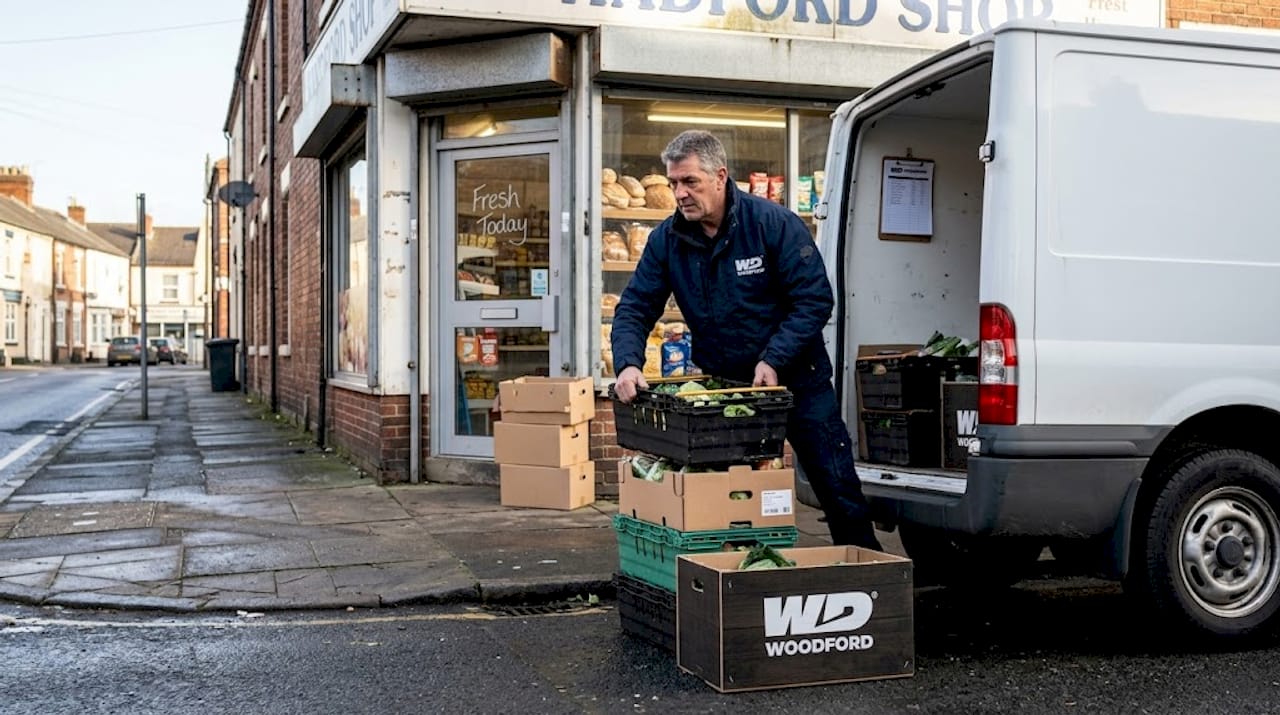
Distributors sit at the critical handoff point between production and retail. Distributors act as intermediaries in the UK food supply chain, handling logistics, storage, transportation, and inventory management to connect manufacturers with retailers, including independent food retailers. Without that intermediary layer, a small independent shop would need to negotiate directly with dozens, sometimes hundreds, of manufacturers, manage its own cold storage, and coordinate deliveries from multiple sources simultaneously. That’s simply not viable for most.
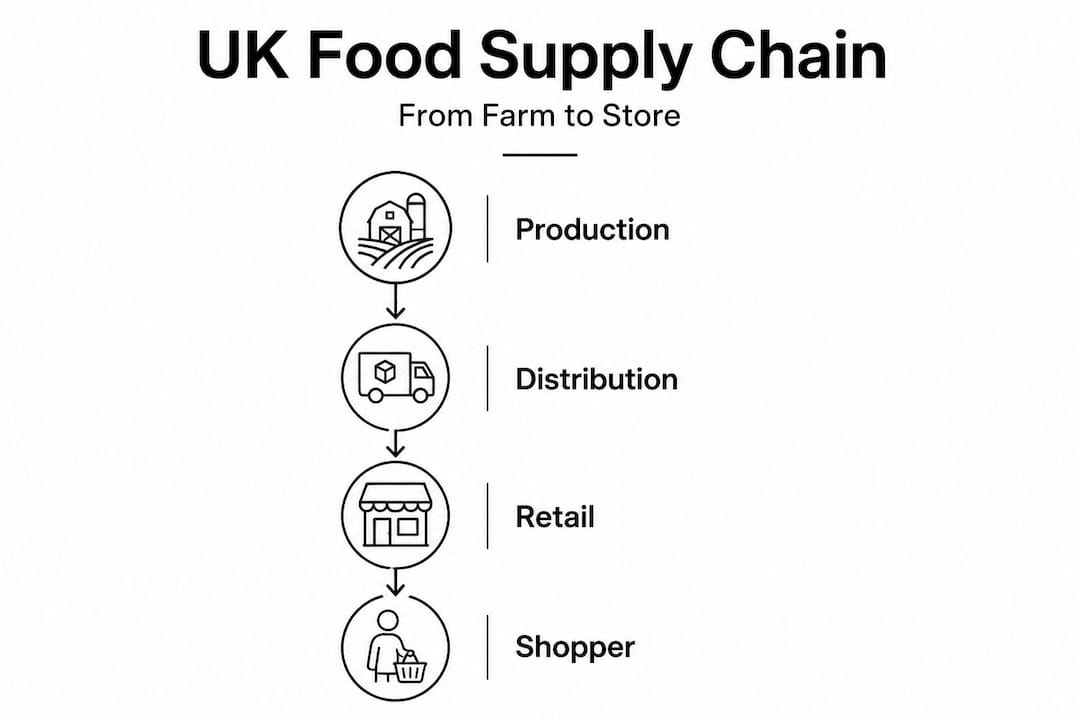
Here’s a simplified view of how the chain flows:
| Stage | Key player | Core function |
|---|---|---|
| Production | Farmers, manufacturers | Grow, process, package food |
| Distribution | Wholesalers, distributors | Store, sort, transport, invoice |
| Retail | Supermarkets, independents | Sell to consumers |
| Consumption | Shoppers | Purchase and use |
For independents, the distribution stage is where the most leverage exists. You can’t easily influence what manufacturers produce, and you can’t control what shoppers want. But you absolutely can choose your distribution partner strategically, and that choice shapes everything from your product range to your profit margins.
Key functions a distributor performs on your behalf include:
- Consolidated ordering: One invoice, one delivery, multiple brands
- Temperature-controlled logistics: Chilled, frozen, and ambient handled correctly
- Inventory buffering: They hold stock so you don’t have to over-order
- Compliance support: Date coding, labelling, and traceability managed upstream
For practical guidance on reducing complexity in your supply chain, food logistics tips for UK independents are worth reviewing before you renegotiate any contracts. And if you’ve heard the term cross-docking logistics and wondered whether it applies to your operation, it’s a method worth understanding as your volume grows.
“The distributor relationship is not just transactional. For an independent retailer, it is the infrastructure that makes competing possible.”
How distributors help independent retailers compete: Product range, pricing and support
Now that you know where distributors fit, let’s zoom in on how the right partnerships tangibly strengthen independent retailers’ operations and market position.
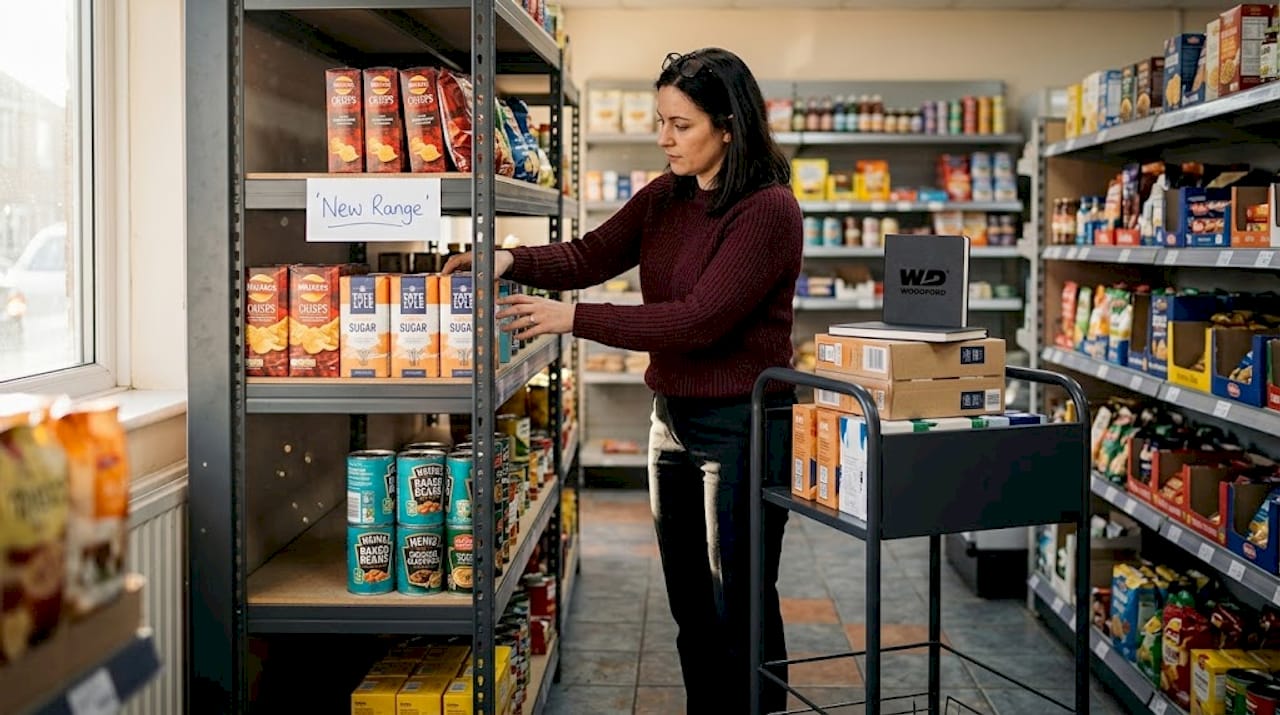
The most obvious benefit is range. Distributors like Booker provide access to wide product ranges, thousands of lines including fresh, chilled, and frozen, plus exclusive deals and support services, enabling smaller stores to compete with supermarkets through efficient supply without direct manufacturer dealings. That breadth is genuinely transformative for a shop that previously stocked 800 lines and wanted to reach 2,000.
Here’s how distributor sourcing compares to going directly to manufacturers:
| Factor | Via distributor | Direct from manufacturer |
|---|---|---|
| Product lines available | Thousands across categories | Limited to one brand |
| Minimum order quantity | Low, often per case | High, often pallet-level |
| Lead time | 24 to 48 hours typically | Days to weeks |
| Price stability | Negotiated group rates | Variable, contract-dependent |
| Account management support | Included | Rarely offered to small buyers |
The pricing advantage alone is significant. Because distributors aggregate demand from hundreds of retailers, they negotiate volume discounts that no single independent could achieve alone. Those savings flow downstream to you, either as lower cost prices or as the ability to price competitively on shelf without sacrificing margin.
Beyond price and range, the support services available through distributors are frequently underused. These include:
- Planograms: Visual shelf layouts optimised for your store format and shopper flow
- Category management advice: Guidance on which products to range, delist, or promote
- Point-of-sale materials: Branded displays, shelf-edge labels, and promotional signage
- Promotional calendars: Advance notice of upcoming deals tied to seasonal events
For independents looking to build a genuinely distinctive offer, exploring strategic food brand partnerships can help you identify which brands are worth prioritising in your range. Equally, adapting to food trends is far easier when your distributor is already curating trend-led products and flagging them proactively.
Pro Tip: Don’t just accept the standard account package. Ask your distributor’s business development manager specifically about joint innovation opportunities, tailored promotional deals for your local demographic, and any pilot schemes for new product categories. Most retailers never ask. The ones who do consistently get more.
Leading names and market structure: Who are the key UK food distributors?
The right distributor can unlock new levels of competitiveness; but who are the players behind these benefits, and how do they differ in what they offer?
Key UK distributors include Booker with approximately £7.7 billion in revenue and over 200 depots, operating symbol groups like Londis and Budgens. Bidfood operates at around £2.3 billion and Brakes/Sysco at an estimated £3.2 billion, both serving independents alongside the foodservice sector. Together, these three businesses represent enormous reach and infrastructure.
| Distributor | Est. revenue | Depot network | Symbol groups | Key strengths |
|---|---|---|---|---|
| Booker | ~£7.7B | 200+ | Londis, Budgens, Premier | Retail focus, range depth |
| Bidfood | ~£2.3B | 20+ regional | None | Foodservice, specialist lines |
| Brakes/Sysco | ~£3.2B | 30+ | None | Scale, chilled/frozen |
| Sugro | Buying group | Member-based | Various | Rebates, AI tools, planograms |
| Parfetts | ~£600M | 7 depots | Go Local | Northern England focus |
The top three distributors control 70% of the market, and independents who align with group affiliations like Sugro or Parfetts gain access to AI-driven demand forecasting tools, group rebates, and tailored planograms that would otherwise be out of reach.
Here’s how to maximise your position within this market structure:
- Join a symbol group or buying group if you haven’t already. The rebates and support services alone often justify the affiliation.
- Evaluate depot proximity before committing. Delivery reliability is directly linked to how close your nearest depot is.
- Ask about AI demand tools. Sugro and others now offer data-driven stock recommendations that reduce waste and improve availability.
- Review private label options. Distributor own-label products typically carry higher margins than branded equivalents at similar price points.
- Negotiate group rebates actively. These are rarely offered upfront; you need to ask and demonstrate volume potential.
For a broader view of how to build your brand mix strategically, strategic food brands is a useful reference when you’re deciding which distributor categories to prioritise.
Beyond products: Strategic partnerships and innovation with distributors
While the core offers are compelling, the smartest independents look further, turning their distributor into a strategic partner and catalyst for innovation.
Category management involves assortment planning, pricing strategy, and promotional coordination. When done well, it is a genuine growth tool. Distributors who offer category management support are essentially giving you the same analytical capability that large supermarket chains invest millions in building internally. You’d be foolish not to use it.
The collaboration opportunities available through a well-engaged distributor relationship include:
- Data sharing: Access to sales velocity data and basket analysis across similar store formats
- Joint innovation: Early access to new product development trials and exclusive launches
- Category management reviews: Quarterly sessions to optimise your range based on actual sell-through data
- Joint promotions: Co-funded promotional activity that reduces your marketing spend
- Sustainability alignment: Shared targets for waste reduction and carbon footprint
Looking ahead, AI for demand forecasting and net zero roadmaps are becoming standard expectations in distributor partnerships. Service level KPIs and waste reduction metrics are now part of the commercial conversation, not just an afterthought. Independents who engage with these tools early will be better positioned as regulations tighten and consumer expectations around sustainability sharpen.
Understanding the full range of distribution channels available to you is essential before you commit to any single model. Hybrid approaches, combining a primary distributor with specialist secondary suppliers, are increasingly common among the most successful independents.
“The retailers who treat their distributor as a growth partner rather than a supplier consistently outperform those who treat it as a necessary cost.”
Pro Tip: Schedule a formal quarterly partnership review with your distributor account manager. Set shared goals, not just purchase schedules. Bring your own sales data, your customer insights, and a list of categories where you want to grow. The more you give, the more tailored the support you’ll receive in return.
Limitations, risks and future trends: What independents need to know
No system is perfect. It’s essential to know the limitations, risks, and what lies ahead so you can future-proof your business.
Short food supply chains for local producers struggle with infrastructure gaps, including abattoirs and distribution hubs. Wholesalers can integrate long and short channels, but consolidation in the sector raises genuine competition concerns for smaller suppliers. As a retailer, you need to be aware that your distributor’s priorities may not always align perfectly with yours.
Key risks to manage include:
- Over-reliance on a single distributor: If they face disruption, so do you. Maintain at least one secondary supplier relationship.
- Thin margins under pressure: As distributor consolidation continues, pricing power can shift. Monitor your cost prices quarterly.
- Changing market structure: Acquisitions and mergers can change service levels overnight. Stay informed about ownership changes.
- Regulatory compliance gaps: Ensure your distributor meets all current food safety and labelling standards. Their failure becomes your problem.
- Carbon and efficiency trade-offs: Traditional wholesale is efficient at scale but carries a higher carbon footprint than direct or vertical supply models. Balancing efficiency with sustainability credentials matters increasingly to shoppers.
Practical actions to build resilience:
- Diversify your supplier base across at least two distributors for core categories
- Invest in basic data capability so you can analyse your own sales trends independently
- Monitor consolidation news in the wholesale sector through trade publications
- Engage with your distributor’s sustainability programme to stay ahead of incoming regulations
- Build direct relationships with two or three key local producers as a complement to your main distributor
For a structured approach to understanding where the market is heading, food trend analysis gives you a framework to apply to your own buying decisions as trends evolve.
Our perspective: What most independents get wrong about distributors
Here’s the uncomfortable truth that years of working across both independent retail and wholesale have made abundantly clear: most independents are leaving significant value on the table, not because the opportunity isn’t there, but because they’re approaching the distributor relationship entirely the wrong way.
The most common mistake is treating the distributor as an order-taking service. You call, you order, they deliver. That’s it. No conversation, no collaboration, no shared ambition. This approach is the retail equivalent of hiring a consultant and only asking them to make the coffee.
The independents who genuinely outpace the market treat their distributor relationship as a growth lever. They share their customer data. They ask for planogram reviews. They push for early access to new product launches. They attend trade events their distributor organises. They build personal relationships with category managers, not just account managers. The result is a supply chain that actively supports their commercial strategy rather than simply fulfilling it.
There’s also a widespread misconception that distributors only reward high-volume buyers. That’s simply not true. What distributors reward is engagement. A smaller retailer who consistently shares data, attends reviews, and pilots new categories is far more valuable to a distributor than a larger retailer who simply reorders the same lines every week. Volume matters, but strategic engagement matters more than most people realise.
The brand strategy insights that drive the most successful independents in 2026 are built on exactly this principle: the relationship is the strategy. Distributors have access to market intelligence, trend data, and supplier networks that most independents could never build independently. The question is whether you’re willing to engage deeply enough to access it.
Our honest advice: stop thinking about your distributor as a cost to manage and start thinking about them as a capability to activate. The retailers who make that mental shift consistently grow faster, waste less, and build more distinctive offers than those who don’t.
Partnering for your retail success
If you’re ready to rethink your distributor relationship and unlock new growth, here’s how our team can help.
At Woodford, we work exclusively with ambitious independent retailers who want more than a standard wholesale arrangement. We bridge the gap between visionary food brands and the independent stores best placed to champion them, providing exclusive distribution, trend-led curation, and logistics that simply work. Our approach is built on genuine partnership: we share category insights, support your ranging decisions, and connect you with brands that give your store a genuinely distinctive edge. Explore the Woodford brands we currently represent, and take a look at our retailer showcase to see the kind of results our partners are achieving. The next step is a conversation.
Frequently asked questions
What is the main role of a distributor in UK food retail?
A distributor connects producers with independent retailers, managing logistics, storage, and inventory to streamline supply. Distributors handle storage, transportation, and inventory management as intermediaries between manufacturers and retailers.
How do distributors help independents compete with supermarkets?
They provide access to broad product ranges, competitive pricing, and support services that independents can’t easily access directly from manufacturers. Wide product ranges and exclusive deals enable smaller stores to compete effectively without direct manufacturer dealings.
Who are the leading distributors for independent retailers in the UK?
Booker, Bidfood, and Brakes/Sysco are the largest, with significant reach and resources tailored for the independent sector. Booker alone operates 200+ depots with symbol groups including Londis and Budgens.
What are emerging trends for working with distributors?
AI for demand forecasting, tighter data partnerships, and focus on sustainability are shaping distributor and retailer relationships. AI demand forecasting and net zero roadmaps are now becoming standard expectations in forward-looking partnerships.
What risks should independents consider with distributors?
Watch for over-reliance, thin margins, and consolidation risks by maintaining diverse partnerships and monitoring trends. Consolidation raises competition concerns for smaller suppliers, making a diversified approach to sourcing essential.
Recommended
- Strategic food brands for UK independent retailers - WOODFORD - Bringing quality foods your way
- Food logistics tips for UK independent retailers in 2026 - WOODFORD - Bringing quality foods your way
- Food brand strategy drives UK retail success in 2026 - WOODFORD - Bringing quality foods your way
- WOODFORD - Bringing quality foods your way
- Best UK wholesale suppliers for gourmet vegan popcorn 2026 – PopCornaa