Food provenance: Build trust and boost sales for independents
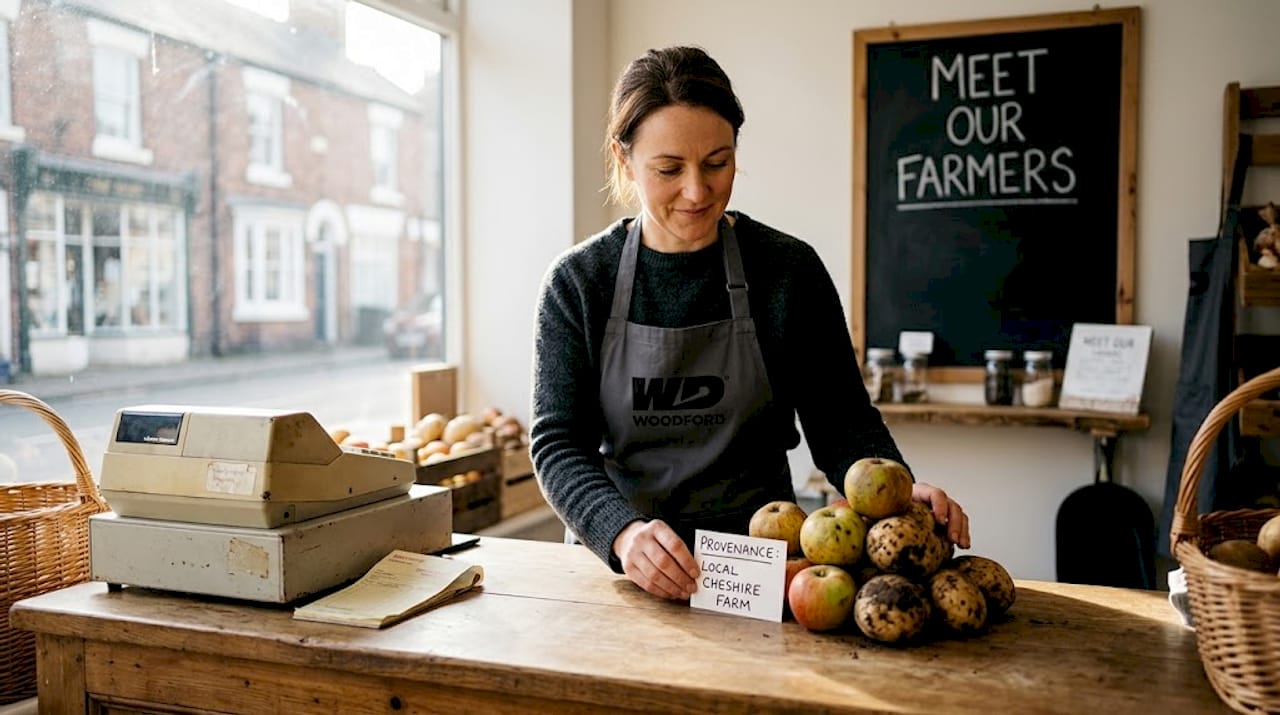
TL;DR:Food provenance includes origin, traceability, quality, sustainability, and cultural significance.Compliance with UK labelling laws and robust traceability systems ensure authenticity and legal safety.Embracing provenance builds customer loyalty, supports the local economy, and offers competitive advantages.
Nearly 64% of British consumers say food origin matters to them, yet many independent retailers still treat provenance as a nice-to-have rather than a genuine sales driver. That’s a missed opportunity. For UK independents, provenance is one of the few areas where you can genuinely outmanoeuvre the supermarkets. This article breaks down what food provenance actually means, what the law requires, how to verify it, and how to use it to build lasting customer loyalty and, ultimately, a stronger bottom line.
Table of Contents
- What is food provenance and why it matters
- Legal requirements and labelling rules in the UK
- Traceability systems and best practices
- Economic and brand benefits of provenance for independents
- Fresh perspective: Provenance as a competitive lever, not a hurdle
- Take your provenance story further with Woodford
- Frequently asked questions
Key Takeaways
| Point | Details |
|---|---|
| Provenance drives trust | Clearly telling your food’s story builds authentic trust with UK consumers and boosts loyalty. |
| Legal compliance is vital | Precise, transparent origin labelling protects your business from regulatory risks and consumer backlash. |
| Traceability practicalities | Audit trails, coding and site visits are robust, accessible ways to validate provenance for independents. |
| Economic impact of local sourcing | Sourcing locally retains more value for your community and supports job growth, outpacing major chains. |
| Brand storytelling enhances sales | Leveraging provenance for narrative branding offers competitive differentiation and justifies premium pricing. |
What is food provenance and why it matters
With so much noise around “local,” “artisan,” and “sustainable,” it helps to get precise. Food provenance refers to the origin and journey of food from farm to consumer, encompassing traceability, quality, sustainability, cultural significance, and economic impact. It is not simply a sticker on a package saying “Product of Wales.” It is the entire story behind the food: who grew it, how it was reared, what practices were used, and how it reached your shelf.
Think of provenance as having five core pillars:
- Traceability: Can you follow the food back to its source, step by step?
- Quality assurance: Does the origin correlate with recognised standards or certifications?
- Sustainability: Were environmental and ethical practices observed throughout production?
- Cultural or historical significance: Does the product carry regional heritage, such as a Protected Designation of Origin (PDO)?
- Economic context: Does purchasing this product support specific farming communities or local economies?
Each pillar contributes to the full picture that modern consumers are looking for. They are not just buying a block of cheese; they are buying the story of a hill farm in the Lake District, the care of a family who has been making the same recipe for four generations, and the reassurance that their money is going somewhere meaningful.
“Provenance is the difference between a product that sits on the shelf and one that sells itself. When customers understand where food comes from, they connect with it differently.”
Why does this matter to you as an independent retailer? Because provenance creates the emotional and rational case for choosing your shop over a supermarket. A shopper in a major chain cannot easily ask the person stacking shelves about the farm behind the chicken thighs. But you can tell that story at the counter, on a chalkboard, or through a simple card tucked into a gift box. That accessibility to authentic sourcing narratives is a genuine competitive advantage.
The ethical sourcing benefits go beyond reputation. Retailers who can demonstrate provenance often see stronger repeat purchase rates and more word-of-mouth referrals, because customers who feel good about where their food comes from tend to share that feeling. Provenance, done well, is free marketing.
Legal requirements and labelling rules in the UK
To truly harness provenance, retailers must also comply with UK regulations and avoid inadvertent mislabelling.
UK food origin labelling requirements mandate specific declarations for products including unprocessed meat, fish, fresh fruit and vegetables, honey, and olive oil. The general principle under the Food Information to Consumers (FIC) Regulation is that any absence of origin information must not mislead consumers. In practice, this means you cannot use imagery, language, or branding that implies a British origin when the product has been imported.
Here is a comparison of where mandatory labelling applies versus where it is discretionary:
| Product category | Mandatory origin labelling | Notes |
|---|---|---|
| Unprocessed beef, lamb, pork | Yes | Must state country of origin and rearing |
| Fresh fruit and vegetables | Yes | Must state country of origin |
| Honey | Yes | Must state “blend of EU/non-EU honeys” if applicable |
| Olive oil | Yes | Country of origin required |
| Processed meat products | No (generally) | But implied origin claims are regulated |
| Cheese and dairy | No (generally) | PDO/PGI labels carry strict rules |
| Bakery and confectionery | No | Misleading claims still prohibited |
Common pitfalls for independents include:
- Using Union flag imagery on a product where only the packaging takes place in the UK but the ingredients are sourced abroad.
- Describing a product as “Scotch beef” without verified documentation from an approved assurance scheme.
- Stocking products from multi-country supply chains without checking whether the label accurately reflects the primary ingredient origin.
- Relying on a supplier’s verbal assurance rather than written documentation.
- Assuming that “packed in the UK” and “produced in the UK” carry the same legal meaning. They do not.
The risks of misleading labelling are not abstract. Food fraud linked to false provenance claims, such as products sold as Scotch beef that do not meet the criteria, has resulted in significant reputational and financial damage for retailers caught in the supply chain, even when they were unaware of the fraud.
Pro Tip: Always request formal origin documentation from your suppliers, not just a word on a phone call. A brief email trail confirming country of rearing, growing, or processing could protect you significantly if a trading standards query ever arises. Review this documentation each time you reorder, not just at onboarding.
Sound food logistics tips can also help you stay on top of supply chain changes that might affect labelling accuracy, particularly when suppliers switch sources seasonally.
Traceability systems and best practices
With regulations handled, practical traceability is the next key step.
Traceability is not just a compliance box to tick. It is the operational backbone that allows you to substantiate every provenance claim you make. Without it, your storytelling rests on shaky ground. With it, you can confidently point a customer to the very field where their salad leaves were grown.
Traceability methodologies for UK food include product coding that links each batch to a specific harvest location and date, mass balance checks to verify that volumes of claimed-origin produce actually match purchasing records, annual recall tests to ensure you can withdraw product quickly if there is a safety or fraud issue, and both back-trace and forward-trace exercises. Back-tracing asks: where did this batch come from? Forward-tracing asks: where did all products from this batch go?

Red Tractor is arguably the most recognised UK farm assurance scheme and offers a practical model for independents to follow or look for in suppliers. Red Tractor’s whole-chain assurance combats fraud and confirms British origin throughout the supply chain, making it a credible signal to display on shelf or highlight in marketing. When you stock Red Tractor-assured products, you are not just stocking food; you are stocking verified provenance.
Practical traceability steps for independents:
- Request batch codes and lot numbers from suppliers for every delivery, and keep records for at least two years.
- Conduct a simple recall test twice a year: pick a product at random and see how quickly you can trace it back to the supplier and then forward to who you sold it to.
- Ask suppliers about site visit policies. Schemes like Red Tractor include site tours as part of their verification process. Some will allow key retail partners to participate.
- Use technology wisely. Even a basic spreadsheet linking product codes to supplier origin documents is far better than relying on memory.
- Cross-reference certifications. If a supplier claims ethical tea sourcing or organic certification, look up the certificate number on the certifying body’s public register before making that claim to customers.
Pro Tip: Conduct an unannounced check on your own records once a quarter. Pretend you have received a recall notice and see how fast you can trace the affected products. The exercise will immediately show you where your record-keeping has gaps.
Building genuine traceability into your buying habits takes time initially, but it becomes routine quickly. More importantly, it gives you the confidence to tell provenance stories that are not just compelling, but accurate.
Economic and brand benefits of provenance for independents
With robust provenance, the rewards become clear for independents who embrace it.
Let’s be direct: provenance pays. Not always immediately, but consistently over time for retailers who commit to it as a strategy rather than a seasonal marketing theme.
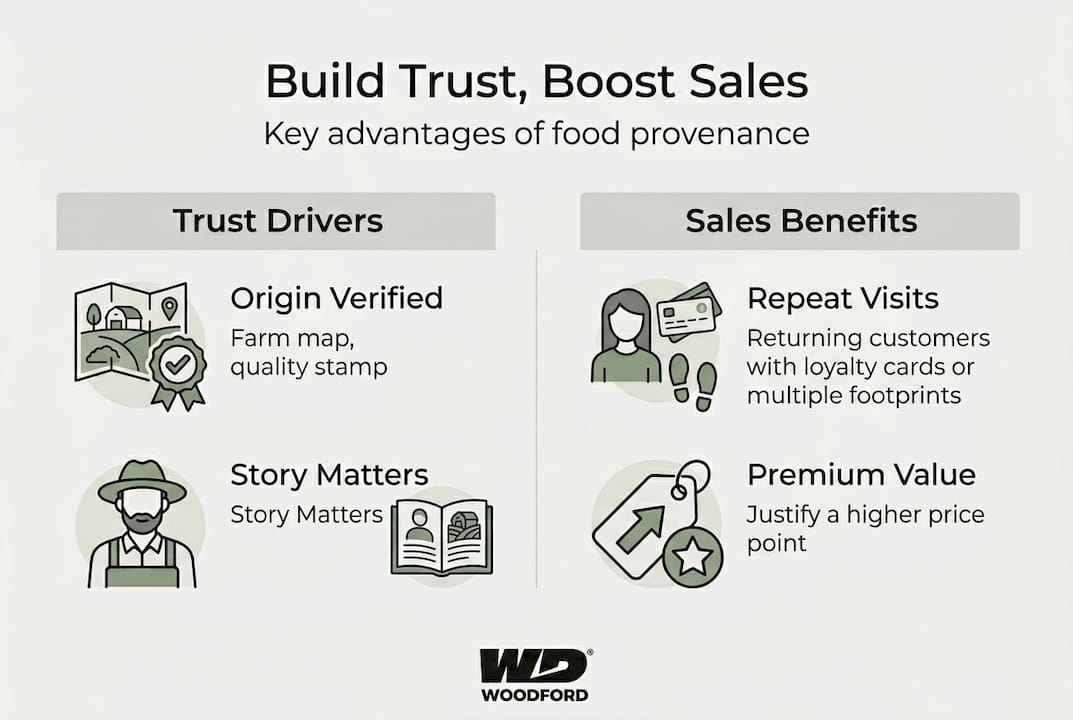
For independent UK retailers, food provenance enhances brand storytelling through authenticity, local sourcing, and sustainability narratives. The data backs this up: 22% of UK consumers say food origin is very important to them, and a further 42% say it is important. That is nearly two thirds of the market actively valuing what you, as an independent with strong supplier relationships, are uniquely positioned to offer.
The economic case for local sourcing is compelling:
- Local food spending retains up to 70p in every pound within the local economy, compared to just 30p when spent at large supermarket chains.
- Independent food retail supports roughly three times more jobs per pound of turnover than supermarket equivalents, at approximately £46,000 of turnover per job versus £144,000 at a major chain.
- Communities that shop locally see stronger local business networks, more reinvestment in local infrastructure, and greater economic resilience during downturns.
Statistic callout: Every £1 spent at an independent food retailer keeps up to 70p circulating in the local economy. That figure is a powerful talking point with ethically minded customers.
The brand storytelling opportunities are just as significant. Consider how Welsh food producers have used provenance as a tourism and purchase driver: regional identity, landscape imagery, and cultural heritage all contribute to what researchers call “attraction scores” for regional food products. You don’t have to be a Welsh producer to benefit from this logic. Stocking products with strong provenance narratives allows you to borrow their story and extend it to your own brand identity.
Benefits of provenance-led brand strategy for independents:
- Differentiation from multiples: No supermarket can replicate the personal connection you have with local and artisan suppliers.
- Premium positioning: Products with strong provenance stories command higher prices and better margins. Customers pay for meaning, not just macronutrients.
- Customer loyalty: Shoppers who feel aligned with your values return more often and are more forgiving when things occasionally go wrong.
- Social media content: Provenance is inherently visual and narrative-rich, making it ideal for Instagram, TikTok, and community newsletters.
- Press coverage: Local media actively seek stories about independent retailers championing regional producers.
Stocking strategic food brands with authentic provenance credentials is one of the most efficient ways to build this narrative without having to source every product yourself from scratch. And understanding how food trends drive growth can help you identify which provenance stories are gaining cultural momentum right now.
The benefits of ethical sourcing extend beyond coffee and tea, though those categories are particularly powerful. Consumers who prioritise ethical sourcing in one category often extend that behaviour across their entire basket, making them significantly more valuable customers over their lifetime.
Fresh perspective: Provenance as a competitive lever, not a hurdle
Most articles about food provenance treat it as a compliance challenge or a niche concern for specialist retailers. We think that framing misses the point entirely.
There is a common myth that provenance is expensive, bureaucratic, and only relevant to premium delis or farm shops with deep pockets. The reality is different. The paperwork and verification that provenance requires is largely a one-time investment per supplier relationship. Once you have solid documentation and a clear story, the ongoing cost is minimal. What you gain, however, compounds.
Supermarkets compete primarily on price and convenience. They cannot easily compete on authenticity, locality, or personal connection. Provenance is the territory where independents naturally win, and yet many surrender it by not investing in the story.
It is worth acknowledging the counter-argument honestly. Some industry experts note that provenance adds bureaucracy and costs for manufacturers, and question whether consumers will truly pay a premium during periods of economic pressure. That concern is legitimate. But it conflates the manufacturer’s challenge with the retailer’s opportunity. The manufacturer must invest in certification. The retailer simply needs to select and communicate.
A strong food brand strategy positions provenance not as an add-on, but as the foundation of your buying decisions and customer communications. Independents who embed provenance into their identity, rather than bolting it on seasonally, tend to see stronger customer retention and more resilient revenue even in tough economic climates. That is not a theoretical claim; it is what we observe consistently across the independent retailers we work with at Woodford.
Take your provenance story further with Woodford
At Woodford, we understand that sourcing and communicating genuine provenance is one of the most powerful things an independent retailer can do, and one of the most time-consuming to do alone. That is why we curate quality food brands specifically chosen for their authenticity, traceability credentials, and compelling brand stories. Every product in our range comes with the background you need to sell it confidently.
Explore our brands to discover producers whose provenance stories are ready to tell, and check out our current promotions for ways to introduce provenance-led products to your shelves without the risk. We handle the logistics so you can focus on building the relationships and stories that keep customers coming back.
Frequently asked questions
How can UK retailers verify the authenticity of food provenance claims?
UK retailers can use traceability systems such as Red Tractor audits, batch-level product coding, and formal written supplier documentation to verify authenticity. Cross-referencing certifications on public registers adds an additional layer of confidence.
What are the risks of inaccurate provenance labelling?
Misleading labels, such as “Packed in UK” used to imply British origin for imported ingredients, can result in trading standards penalties and serious reputational damage. Region-specific products like Scotch beef carry particular fraud risks if not properly verified.
Do consumers really pay more for provenance-driven products?
Many consumers value provenance and will pay a premium, though some experts caution that economic pressures may reduce willingness to pay more in certain periods. Independents who make provenance part of their overall value proposition tend to sustain higher margins even when consumer budgets are squeezed.
Are there economic benefits for independents sourcing locally?
Absolutely. Local food spending keeps up to 70p in every pound within the local economy, compared to just 30p at supermarket chains, and supports approximately three times more jobs per pound of turnover.
What is the simplest first step for an independent retailer to improve provenance?
Start with clear, written supplier documentation and accurate labelling, then introduce basic traceability practices such as product coding and simple recall tests. These require minimal investment but immediately strengthen your ability to tell credible provenance stories and protect yourself legally.
Recommended
- Strategic food brands for UK independent retailers - WOODFORD - Bringing quality foods your way
- Why adapt to food trends: boost independents’ growth - WOODFORD - Bringing quality foods your way
- Food logistics tips for UK independent retailers in 2026 - WOODFORD - Bringing quality foods your way
- What is brand acceleration in food: a guide for UK retailers - WOODFORD - Bringing quality foods your way