
How to evaluate food brands: a 2026 guide
TL;DR:Effective food brand evaluation involves systematically assessing certifications, ingredient transparency, sustainability, and market relevance to ensure genuine quality and commercial viability. Retailers should validate consumer demand through low-cost testing and demand signals before committing, to avoid product mismatches and poor sales. Balancing emerging and established brands with strong governance and operational clarity aids in building a differentiated, reliable, and profitable product range.
Evaluating food brands is the systematic process of examining certifications, ingredient transparency, sustainability credentials, and market positioning to determine genuine quality and commercial viability. For independent retailers, food buyers, and discerning consumers, this process separates brands worth stocking from those that rely on clever packaging and hollow claims. The tools available in 2026, from consumer insights platforms like Attest and Tastewise to regulatory frameworks like FSSC 22000 and ISO 22000, make rigorous brand assessment more achievable than ever. Getting it right means better purchasing decisions, stronger supplier relationships, and a product range that earns lasting consumer trust.
How to evaluate food brands: the essential pillars
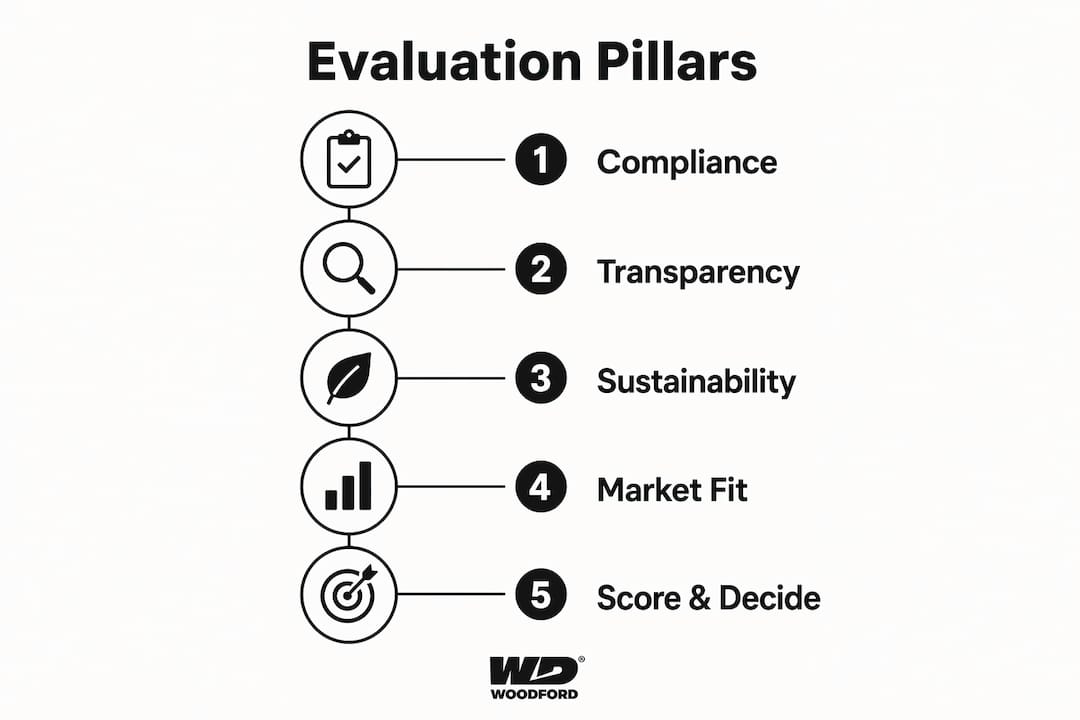
Structured brand evaluation rests on four core pillars: regulatory compliance, ingredient transparency, sustainability credibility, and market relevance. Assessing each pillar systematically, rather than relying on gut feel or brand reputation alone, is what separates professional buyers from reactive ones. A 1-5 scoring system applied across these pillars converts qualitative impressions into comparable, defensible data.
Regulatory compliance and certifications

Certifications are the baseline, not a bonus. Mandatory food safety standards in the UK require brands to meet specific labelling and safety requirements, while advanced certifications like FSSC 22000 and ISO 22000 signal that a brand has invested in systematic food safety management beyond the legal minimum. FSSAI, FSSC 22000, and ISO 22000 certifications, alongside GMP, GHP, and HACCP credentials, indicate hygienic production and traceability at scale. A brand that cannot produce current certification documentation on request scores a 1 on this pillar, regardless of how appealing its branding appears.
Ingredient transparency and traceability
Transparency is measurable. A brand with clear ownership of ingredient specifications and documented supplier approval processes demonstrates genuine governance, not just marketing language. Ask for batch traceability records and manufacturing site details. If the response is vague or the contact information on packaging leads nowhere, that is a governance failure, not a minor oversight.
Sustainability claims
Sustainability is the most manipulated category in food branding. Only independently audited certifications, such as B Corp status, provide credible evidence that sustainability claims are operational rather than aspirational. When assessing food brands for sustainability, check the audit date, the certifying body, and whether packaging claims align with the brand’s actual supply chain. A brand claiming “fully sustainable sourcing” without a named third-party auditor scores no higher than a 2.
Market relevance
A brand can be compliant and transparent yet commercially irrelevant. Evaluate whether it fills a genuine category gap, drives incremental sales, or competes directly with better-established products already on your shelves. Retail buyers prioritise measurable competitive advantage, focusing on whether a new brand adds incremental value or simply displaces existing revenue.
Pro Tip: Build a simple scoring sheet with these four pillars and rate every brand from 1 to 5 before any commercial conversation. Brands scoring below 12 out of 20 rarely justify the onboarding cost.
How can you validate consumer demand before committing?
Consumer demand validation is the step most buyers skip, and it is the one that explains most ranging mistakes. A brand can score well on compliance and sustainability yet fail commercially because it solves a problem consumers do not actually have. Practical validation does not require expensive research programmes.
- Define the consumer profile. Identify who the brand is genuinely for, not who the brand claims to target. Use surveys, social listening, and in-store behavioural data to map unmet needs in your specific retail context. A premium fermented drink brand may resonate strongly in a health-focused urban independent but perform poorly in a convenience-led suburban store.
- Test concepts before scaling. Low-cost concept validation, such as a product video campaign costing around £1,200 that generates over one million views within four months, can confirm market appetite before a single case is ordered. This approach is particularly relevant for emerging brands without an established sales history.
- Evaluate purchase intent directly. Test flavours, claims, and pricing with a representative sample of your actual customers. Purchase intent data collected at this stage is far more reliable than brand-supplied sell-in materials.
- Analyse demand signals across multiple sources. Menu data from restaurant aggregators, retail scan data, recipe search trends, and social engagement all point to the same underlying consumer behaviour. Platforms like Tastewise aggregate these signals into category-level trend data that supports a credible ranging decision.
- Build a velocity business case. Retail buyers evaluate new SKUs against the existing products they would displace. Know the margin, velocity, and trajectory of the SKU a new brand would replace before presenting or accepting a ranging proposal.
Pro Tip: Ask the brand for their top three performing retail accounts and request permission to speak with those buyers directly. A brand confident in its performance will always say yes.
What does a practical food brand checklist look like?
A checklist removes subjectivity from the evaluation process. The items below apply whether you are a retail buyer assessing a new supplier or a consumer deciding between products on a shelf.
- Certifications visible on pack. Check for recognised safety and quality marks. Absence of any certification on a processed food product is a red flag.
- Ingredient list clarity. Short, recognisable ingredient lists with named sources score higher than lists dominated by additives and generic descriptors.
- Manufacturing date and batch number. Both should be clearly printed and traceable. A brand that cannot explain its batch coding system has a traceability problem.
- Full manufacturer contact details. A registered address and direct contact, not just a social media handle, indicate operational accountability.
- Shelf-life validation under real conditions. Lab-tested durability frequently overstates actual performance in retail distribution. Ask whether shelf-life data was gathered under commercial storage conditions.
- Price relative to value. Evaluate cost per unit against ingredient quality, certifications, and comparable products. Both suspiciously cheap and unjustifiably premium pricing warrant scrutiny.
- Online reputation and community feedback. Check independent review platforms, food community forums, and retailer feedback. A pattern of suspiciously uniform five-star reviews signals manipulation.
- Start small. Order a trial quantity before committing to a full range. Consistency across multiple batches is the real test of a brand’s quality management.
The comparison below illustrates how these criteria play out across two common brand types.
| Criterion | Strong brand | Weak brand |
|---|---|---|
| Certifications | FSSC 22000, B Corp, current audit dates | No visible certification or expired documentation |
| Ingredient transparency | Named sources, short list, no hidden additives | Generic descriptors, long additive list |
| Traceability | Batch codes linked to supplier records | No batch coding or untraceable contact details |
| Sustainability claims | Third-party verified, specific targets | Vague language, no auditor named |
| Reviews | Mixed, detailed, verified purchasers | Uniformly perfect, unverified profiles |
Transparent packaging is not just an aesthetic choice. It is one of the clearest signals of a brand’s confidence in its own product.
Emerging versus established brands: how do they compare?
The decision to range an emerging brand alongside an established one is a strategic choice, not simply a product decision. Each type carries distinct risk and reward profiles that require different evaluation criteria.
Emerging food brands typically offer higher innovation potential and stronger margin opportunities, but they carry greater compliance risk, less predictable supply, and limited consumer recognition. Established brands provide consistent supply, proven compliance records, and built-in consumer demand, but margins are tighter and differentiation is harder to achieve.
| Factor | Emerging brand | Established brand |
|---|---|---|
| Margin potential | Higher, often 35-50% gross margin | Lower, typically 20-30% gross margin |
| Compliance risk | Higher, requires closer due diligence | Lower, track record available |
| Supply reliability | Variable, MOQ and lead time uncertainty | Consistent, with formal supply agreements |
| Consumer recognition | Low to moderate, requires investment | High, reduces ranging risk |
| Innovation value | Strong category differentiation | Limited, incremental improvements |
The most commercially resilient independent retailers blend both types deliberately. A range built entirely on established brands is safe but undifferentiated. A range built entirely on emerging brands is exciting but operationally fragile. The right ratio depends on your shop’s demographics, footfall patterns, and strategic positioning. Category white space analysis, combined with food provenance data, helps identify where an emerging brand adds genuine value rather than simply adding complexity.
Strong governance is the single most reliable differentiator between an emerging brand worth backing and one that will create operational problems within six months. Ask who owns ingredient specifications, who approves new suppliers, and who signs off on label changes. Vague or non-operational answers indicate a brand not yet ready for serious retail distribution.
Pro Tip: When evaluating an emerging brand, request a P&L breakdown by SKU and sales channel. Aggregate revenue figures can mask margin erosion that only becomes visible at the product level.
Key takeaways
Evaluating food brands effectively requires scoring certifications, ingredient transparency, sustainability credentials, and market fit against defined criteria before any commercial commitment is made.
| Point | Details |
|---|---|
| Use a structured scoring system | Rate brands 1-5 across compliance, transparency, sustainability, and market relevance to compare objectively. |
| Validate demand before ranging | Use concept testing, consumer surveys, and trend data to confirm genuine purchase intent before committing. |
| Apply a practical checklist | Verify certifications, batch traceability, shelf-life data, and pricing against real-world benchmarks. |
| Balance emerging and established brands | Blend both types to build a range that is differentiated, commercially viable, and operationally reliable. |
| Governance reveals true brand quality | Ask who owns ingredient specs and supplier approvals. Operational clarity separates credible brands from marketing-led ones. |
How Woodford helps you source and assess the right brands
Woodford works exclusively with independent retailers across the UK, curating food brands that have already been assessed against the criteria covered in this guide. Every brand in the Woodford portfolio has been evaluated for regulatory compliance, ingredient integrity, sustainability credibility, and genuine market fit. That means you spend less time on due diligence and more time building a product range that performs. If you are ready to move beyond generic wholesale and access brands that have been properly vetted, explore Woodford’s curated brand portfolio to find market-ready options aligned with your shop’s positioning and your customers’ expectations. The team at Woodford is available to discuss ranging strategy, compliance questions, and trend-led curation for your specific retail context.
FAQ
What certifications should I look for when evaluating food brands?
Look for FSSC 22000, ISO 22000, and HACCP certifications as indicators of advanced food safety management. B Corp status provides credible evidence of verified sustainability practices.
How do I spot greenwashing in food brand sustainability claims?
Reject any sustainability claim that does not name a third-party auditor and provide a recent audit date. Vague language like “eco-friendly” or “sustainably sourced” without documented verification is a reliable indicator of greenwashing.
What is the difference between assessing emerging and established food brands?
Emerging brands offer higher margins and innovation potential but carry greater compliance and supply risk. Established brands provide consistent supply and consumer recognition but deliver tighter margins and less category differentiation.
How can retailers validate consumer demand for a new food brand?
Use concept testing, purchase intent surveys, and demand signal analysis from menu data, retail scan data, and social trends before committing to a range. Platforms like Tastewise and Attest provide structured tools for this process.
What are the biggest red flags when assessing food brands?
Missing or expired certifications, untraceable batch codes, vague sustainability claims without auditor details, and uniformly perfect online reviews all indicate a brand that has not been subjected to proper scrutiny.


