How to adapt to food market trends 2026
TL;DR:UK food retailers face a challenging environment as one-third of shoppers are trading down to own-label and discounters in 2026. To succeed, independent stores must focus on clear value, adapt their ranges with trending health products like high-fibre snacks, and implement continuous, data-driven operational improvements. Partnering with experienced wholesalers like Woodford supports resilient assortment planning and compliance, enabling sustainable growth amid ongoing market pressures.
UK independent food retailers are facing one of the most demanding trading environments in recent memory. Shoppers are spending differently, buying less, and switching to cheaper alternatives wherever they can. Knowing how to adapt to food market trends 2026 is no longer a nice-to-have strategic exercise — it is the practical work that separates retailers who grow from those who quietly lose ground. This guide covers the four stages you need to move through: understanding the current pressures, preparing your range, getting your operations right, and measuring whether any of it is actually working.
Table of Contents
- How to adapt to food market trends 2026: understanding shopper behaviour and market pressures
- Preparing your retail assortment for 2026 food trends
- Streamlining operations and compliance for adaptive retailing
- Monitoring and verifying adaptation effectiveness
- Rethinking adaptation: why operational readiness beats single initiatives
- How Woodford can support your 2026 food retail adaptation
- Frequently asked questions
Key Takeaways
| Point | Details |
|---|---|
| Understand shopper behaviour shifts | 2026 shoppers trade down, change buying patterns, and demand clear value choices beyond just price cuts. |
| Prioritise fibre and protein in assortment | Emphasise high-fibre and high-protein convenient products with transparent health benefits to meet evolving demand. |
| Build operational readiness | Adopt continuous improvement and comply with 2026 packaging regulations to maintain agility and cost control. |
| Use data to verify results | Run short test cycles tracking sales and waste to optimise assortment and supplier commitments. |
| See adaptation as continuous | Effective trend response requires ongoing operational discipline, not one-off initiatives. |
How to adapt to food market trends 2026: understanding shopper behaviour and market pressures
Having set the stage with the key challenges UK food retailers face this year, let us look at what is actually driving shopper behaviour and why it matters to how you buy and merchandise.
The headline number is stark. 33% of shoppers changed how they shop to save money in 2026, with more switching to own-label, discounters, and buying fewer units. That is not a niche segment of your customer base. That is roughly one in three people walking through your door already behaving differently to how they did 18 months ago.
Food sales fell in April 2026 amid ongoing cost and geopolitical pressures, with continued trade-down and uneven demand expected across categories for the rest of the year. Supermarkets and discounters are responding with heavy promotional investment. As an independent, you cannot win on volume promotions. But you can win on something else entirely: clarity of value.
Here is what the trade-down trend actually looks like in practice, broken into the behaviours most likely to affect your store directly:
- Switching to own-label: Shoppers are replacing familiar branded lines with private-label equivalents, particularly in ambient grocery, dairy, and snacks.
- Buying fewer units per visit: Basket sizes are shrinking. Shoppers are making more frequent, smaller trips rather than stocking up.
- Choosing discounters for staples: Some shoppers are splitting their spending across multiple retailers, using discounters for basics and independents for specific, harder-to-find items.
- Prioritising essential categories: Spend on food is holding up better than non-food, but within food, shoppers are cutting back on premium treats.
| Shopper behaviour shift | Impact on independents | Recommended response |
|---|---|---|
| Trading down to own-label | Branded lines may slow | Introduce curated value-tier products |
| Smaller, more frequent baskets | Lower transaction values | Improve impulse fixture near till |
| Splitting spend between retailers | Reduced loyalty | Build range distinctiveness |
| Cutting premium treats | Premium lines flatten | Shift mix toward everyday health |
The instinct many retailers have is to respond by discounting. That is understandable, but it is the wrong frame. The benefits of adapting to food trends go well beyond short-term promotional response. Shoppers want to understand what they are getting for their money. Clear value communication on shelf, interesting products they cannot find elsewhere, and formats that match how they are shopping now — those things build the case for spending with you rather than somewhere cheaper.
Pro Tip: Do not drop prices across the board. Instead, identify two or three high-visibility lines where a sharper price or a multi-buy makes the value case loudly, and protect margins everywhere else.
Understanding the food brand strategy context for 2026 matters here too. Brands are managing their own margin pressures. Some are reducing pack sizes while holding prices, others are concentrating promotional spend in fewer accounts. Knowing how your suppliers are thinking helps you negotiate better terms and build more resilient ranging decisions.
Preparing your retail assortment for 2026 food trends
To meet shifting shopper preferences, your product assortment should be carefully curated around what shoppers are actively seeking out rather than what you have always stocked.
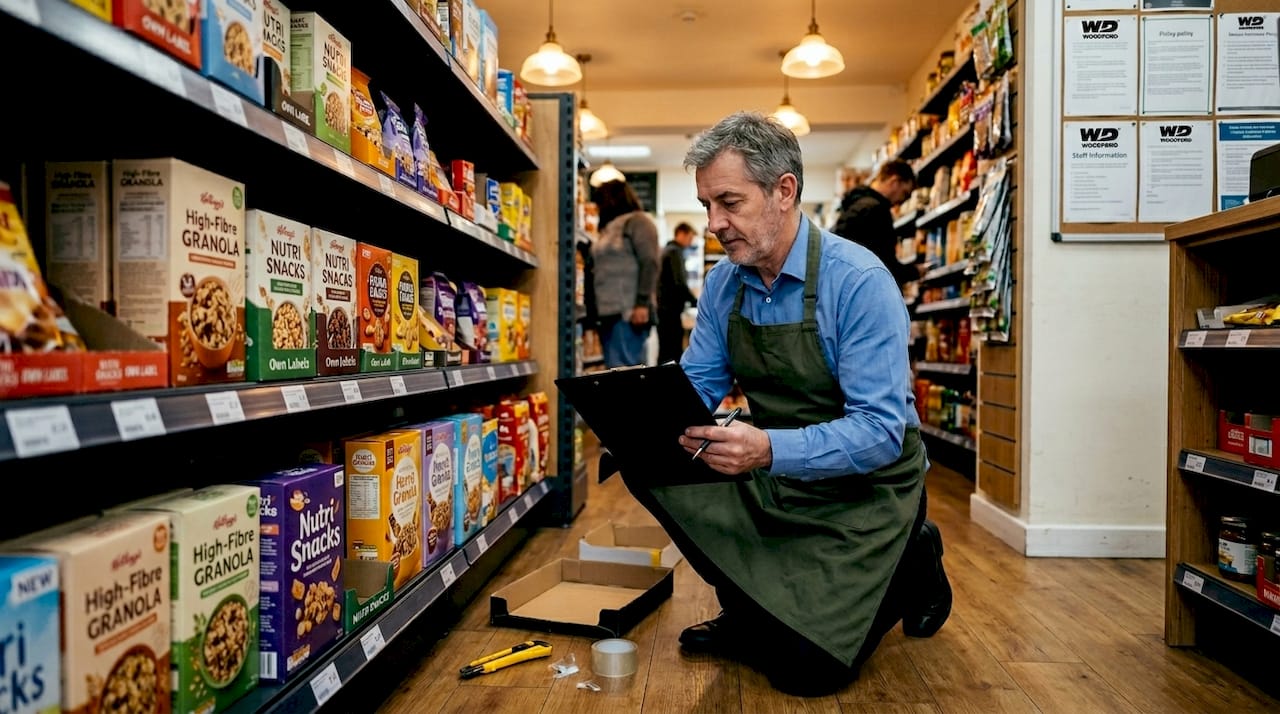
The biggest emerging trend in 2026 food trends analysis is fibre. Fibre is the next big frontier in food, rising as the next mainstream health lever after protein, with shoppers seeking clear “high in fibre” claims and gut health benefits. This is not a niche health food store story. Fibre is entering mainstream grocery as a shelf-front claim in the same way protein did three or four years ago.
Products like Tiba Tempeh Protein Bites show where the market is heading: high-protein and high-fibre formats designed for convenience and gut health, aimed squarely at the shopper who wants a snack that does something useful for them. These are not replacement meals. They are everyday, affordable, grab-and-go products that carry a clear health promise.
Here is how to translate that into a practical ranging review:
Products to prioritise:
- Ambient snack bars and bites with both high-protein and high-fibre claims
- Gut-friendly formats — kefir, tempeh, prebiotic drinks — in single-serve sizes
- Wholegrain convenience formats (wraps, pots, pouches) that are ready to eat
- Fibre-fortified everyday staples such as high-fibre bread, pasta, and cereal
Merchandising principles to apply:
- Group fibre and gut health claims together on a dedicated fixture or section header
- Use shelf talkers that explain the benefit in plain language: “fuller for longer” or “gut comfort” rather than technical nutrition language
- Place grab-and-go health snacks near the till, not buried in the health aisle
| Trend area | What to range | What to reduce |
|---|---|---|
| Fibre and gut health | Tempeh snacks, kefir, high-fibre bars | Low-claim, undifferentiated confectionery |
| High-protein convenience | Protein bites, pouches, wraps | Slow-moving premium novelty items |
| Value-health crossover | Nutritious own-label equivalents | Premium single-benefit items at high price points |
The key is that identifying the right food trends for your specific customer base takes more than reading trade press. It takes looking at your own sales data. Which health lines are gaining? Which premium lines are fading? Your store data is the most valuable future food market insight you have access to.
Pro Tip: When trialling a new trend-led line, give it a specific, clearly signed location rather than slotting it into an existing category. Shoppers who are looking for something new will not find it if it is buried among established products.
You can also look at how leading retailers are positioning 2026 food trends in their ranges for benchmarks and inspiration.
Streamlining operations and compliance for adaptive retailing
Beyond assortment, your operational foundation and compliance readiness are crucial to sustain adaptiveness over time, especially in a year when regulatory and cost pressures are hitting simultaneously.
One of the less-discussed but very real pressures this year is packaging compliance. UK packaging EPR changes starting in 2026 require retailers to manage packaging data, meet submission deadlines, and absorb associated fee structures. If you are not tracking the recyclability status of your packaging or coordinating with your suppliers on labelling requirements, you may face unexpected costs or compliance gaps.
Here is a practical sequence for getting your operational foundations right:
- Audit your current supplier packaging against new UK packaging EPR requirements, noting which lines are compliant and which need updates.
- Talk to your suppliers about fee management and whether any product reformulations or packaging changes are planned for 2026.
- Review your stock data processes to ensure you can report accurately on packaging categories when required.
- Build short product trial cycles of two to six weeks for new lines, tracking waste, margin, and sales velocity before committing to larger orders.
- Document your category performance so that decisions to list or delist products are based on repeatable data rather than gut feel.
Continuous improvement and operational discipline across process control, flexible production, and traceability are key for responding quickly to 2026 food industry trends. This is not manufacturing jargon. For a food retailer, it means having a system: a weekly review rhythm, a clear process for trialling new lines, and a method for cutting slow-moving stock before it becomes a margin problem.
Good UK food logistics navigation and ordering discipline are part of this. Ordering too much of a trend-led line before you have tested it is one of the most common and costly mistakes independents make. Start small, track fast, and scale only what earns its place.
Pro Tip: Create a simple one-page “new line tracker” for every product you trial. Record the date listed, the fixture location, the margin, and the weekly sales figure. Review it at the six-week mark without exception. Most decisions will be obvious from the data alone.
For food compliance essentials and logistics support specific to independents, having a wholesale partner who understands these pressures and can guide you through them removes a significant amount of operational complexity.
Monitoring and verifying adaptation effectiveness
Once your adaptations are in place operationally, it is vital to verify their success and refine your approach before you make bigger commitments.
Short assortment test windows of two to six weeks, tracking waste, returns, and gross margin, help build continuous improvement loops for trend-led category management. This is the step most retailers skip. They list a new product, wait to see if it sells, and never quite formalise what “selling well” actually means.
Here is how to build a proper verification loop:
- Set a specific sales velocity target before listing the product (for example, four units sold per week minimum).
- Track weekly sales, waste, and returns for six weeks without adjusting the fixture mid-cycle.
- At week six, review against the target. If it is meeting it, confirm with your supplier and scale up. If it is not, decide whether to reposition or delist.
- Record the decision and the reason. This builds a pattern of what works for your specific customer base over time.
Key metrics to track per new line:
- Weekly sales velocity (units sold per week)
- Waste percentage (unsold stock as a proportion of orders)
- Returns or complaints
- Gross margin by SKU
- Sell-through rate for limited-run or seasonal lines
| Metric | Target threshold | Action if missed |
|---|---|---|
| Weekly sales velocity | Defined before listing | Reposition fixture or delist |
| Waste percentage | Below 5% per order cycle | Reduce order quantity |
| Gross margin | Above category average | Review supplier terms |
| Sell-through rate | Above 85% per cycle | Adjust promotional support |
Trend analysis techniques can also sharpen how you interpret the data you are collecting. Understanding whether a slow-selling line is a poor fit for your customer base or simply needs better signage is a skill that develops over time, but it starts with having consistent data to interrogate.
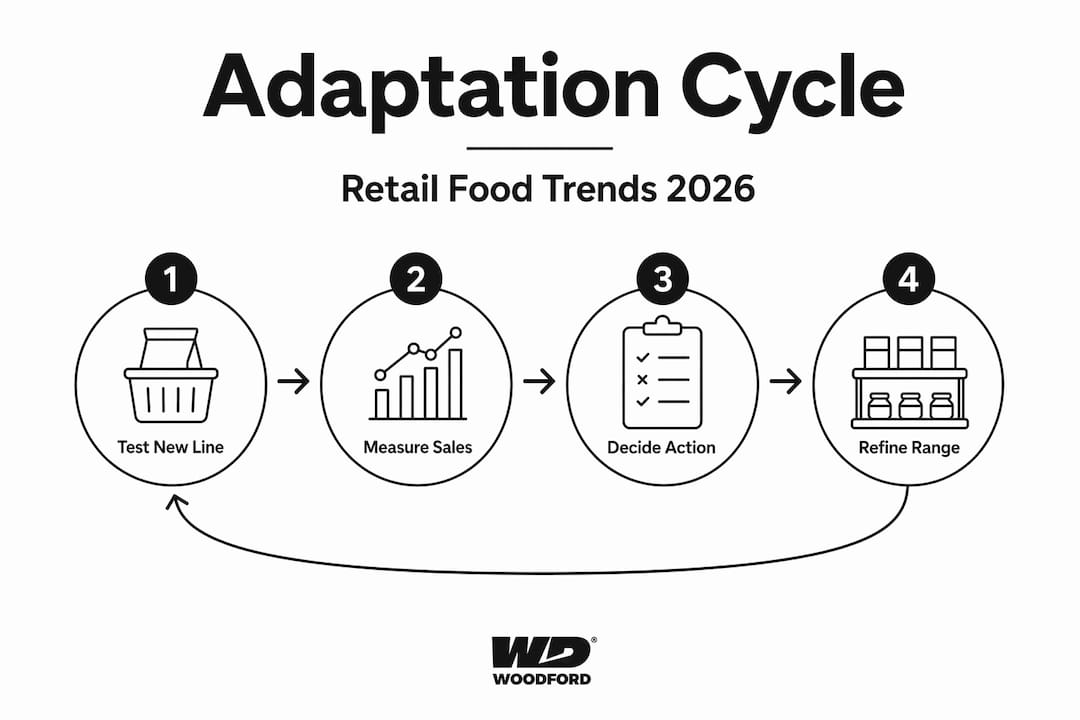
The long-term benefits of adapting to food trends only materialise if you close the loop: test, measure, decide, repeat. Retailers who do this consistently find they make fewer costly mistakes and build a range that genuinely reflects what their shoppers want.
Pro Tip: Keep a simple spreadsheet of every line you have trialled in the last 12 months, along with whether it stayed or was delisted. After six months, patterns will emerge. Some suppliers, formats, or health claims will consistently outperform. That is your future buying strategy, documented.
Rethinking adaptation: why operational readiness beats single initiatives
There is a version of adapting to food trends that looks like this: spot a trend in the trade press, call your supplier, list the product, wait for results. That approach can occasionally work. More often, it generates clutter on your shelves and confusion in your ranging.
The more durable approach is treating adaptation as an internal operational capability rather than a series of individual decisions. 2026 food industry trends are interconnected and require continuous improvement and operational discipline to manage multiple pressures simultaneously. That means cost, quality, compliance, and innovation are not separate problems to be solved in sequence. They are overlapping pressures that your store operation needs to handle at the same time.
Think about what that actually requires. You need a review cadence so you are looking at performance data regularly, not just when something goes wrong. You need a ranging process so that new products enter and exit your shelves according to evidence rather than enthusiasm or inertia. You need supplier relationships that give you flexibility, not just the lowest price. And you need practical food logistics tips built into your day-to-day ordering rather than bolted on as an afterthought.
Retailers who treat 2026 as a year requiring one major pivot will likely find themselves needing to pivot again in three months. The overlapping pressures of shopper trade-down, health trend acceleration, packaging compliance, and uneven demand are not resolving any time soon. Building the habit of continuous, data-driven adjustment is the answer. The advantages of genuinely adapting to food trends compound when adaptation becomes part of how you run your store rather than a project you occasionally revisit.
How Woodford can support your 2026 food retail adaptation
To help you put these adaptation strategies into action effectively, consider partnering with Woodford. As the UK’s leading strategic food wholesaler, we work directly with independent retailers facing exactly the pressures this article describes: cost volatility, trend responsiveness, compliance demands, and the need to differentiate your range without taking on unnecessary risk.
Through Woodford’s food retail platform, you get access to a curated range that already reflects 2026 demand signals, including fibre-rich and high-protein formats, gut health lines, and convenient single-serve products. We also offer expert guidance on adapting your assortment, navigating logistics, and managing compliance requirements specific to UK independents. Our approach is built around the same continuous improvement principles this article recommends: small tests, clear data, and a range that earns its place. If you want to build adaptation into how you operate rather than treating it as a one-off exercise, we are the wholesale partner built for exactly that.
Frequently asked questions
What are the biggest food shopper trends impacting UK independents in 2026?
Key trends include shoppers trading down to own-label and discounters, rising demand for high-fibre and gut-friendly foods, and growing appetite for convenient, high-protein snack formats driven by everyday health goals.
How should independent retailers prepare their product ranges for 2026 trends?
Retailers should prioritise fibre-rich and high-protein convenient products with clear health claims, and balance their range with value-tier options. Products like high-fibre protein bites show the format and positioning that is gaining traction with mainstream shoppers right now.
What operational changes are needed to adapt effectively in 2026?
Retailers must adopt continuous improvement disciplines, run short test cycles for new lines, and update their data and packaging processes for UK packaging EPR compliance. Operational discipline across all areas is what allows you to handle cost, quality, and trend pressures at the same time.
How can retailers measure if their adaptation strategies are working?
Track sales velocity, waste, returns, and gross margin in short 2 to 6 week test cycles, then make decisions based on whether the data meets your pre-set performance threshold. Set the target before you list the product, not after.
Recommended
- UK food retailers: lead with 2026’s top food trends - WOODFORD - Bringing quality foods your way
- Why adapt to food trends: boost independents’ growth - WOODFORD - Bringing quality foods your way
- How to conduct trend analysis for UK food brands in 2026 - WOODFORD - Bringing quality foods your way
- How to identify food trends: a guide for UK retailers - WOODFORD - Bringing quality foods your way