Food wholesaler growth: what UK retailers must know
TL;DR:UK food wholesaling is growing steadily driven by convenience store expansion, foodservice recovery, and delivery shifts.Independent retailers face opportunities with wider product assortments and support but also challenges with margins and increased complexity.Success relies on strategic partnerships, data-driven decisions, brand differentiation, and shifting focus beyond price competition.
The UK grocery wholesaling sector is worth £49.3 billion in 2025-26, growing at a CAGR of 5.4% over the past five years. Yet many independent retailers are watching their margins shrink even as the market expands around them. That disconnect is not accidental. It reflects a structural shift in how food reaches shelves, who controls the supply chain, and which retailers are positioned to benefit. This guide explains what is driving wholesaler growth, how it affects your business directly, and what practical steps you can take in 2026 to turn market momentum into genuine competitive advantage.
Table of Contents
- What drives food wholesaler growth in the UK?
- How independent retailers are impacted by wholesaler growth
- Challenges and risks for food wholesaler growth
- Strategies for independent retailers: leveraging wholesaler growth
- Our take: why UK independents must go beyond price in 2026
- Connecting with the right wholesale partner
- Frequently asked questions
Key Takeaways
| Point | Details |
|---|---|
| Sector growth drivers | Convenience, foodservice recovery, and delivery shifts are spurring UK food wholesaler expansion. |
| Retailer challenges | Margin pressure, regulatory burdens, and supermarket competition test independent retailers despite market growth. |
| Strategic actions | Partnering with symbol groups, adapting logistics, and using data can help retailers harness wholesaler opportunities. |
| Beyond price | Competitive advantage for independents in 2026 comes from service, brand value, and agility—not just low prices. |
What drives food wholesaler growth in the UK?
The UK food wholesaling sector has not grown by accident. Several converging forces have pushed revenues upward, and understanding them gives you a sharper lens for making smarter sourcing and stocking decisions.
The UK grocery and foodservice wholesaling sector grew 1.2% in 2024, with forecasts pointing to £42 billion by 2030 at a 2.5% CAGR. That steady trajectory reflects sustained demand rather than a short-term spike. Three structural shifts are doing most of the heavy lifting.
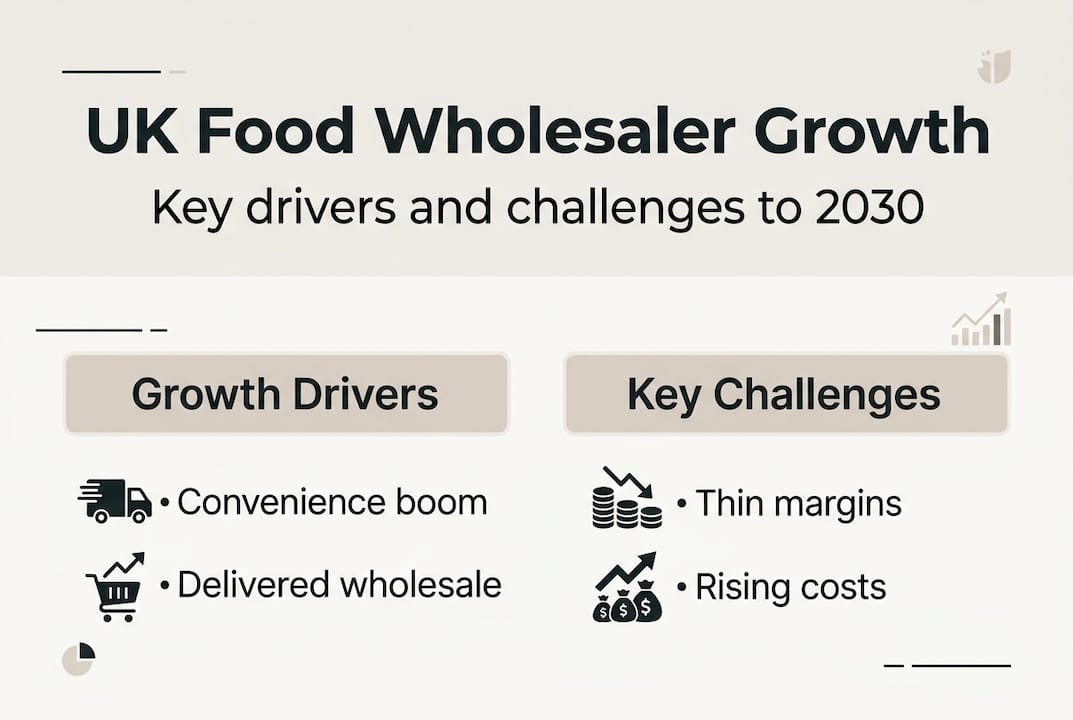
Convenience store expansion is the first major driver. The number of convenience outlets across the UK has grown consistently, and each new store needs a reliable supply chain. Wholesalers have stepped in to fill that gap, offering flexible delivery schedules and smaller minimum order quantities that suit independent operators. Good UK food logistics for wholesalers has become a genuine competitive differentiator in this space.
Foodservice recovery is the second force. Post-pandemic, restaurants, cafes, and contract caterers have rebuilt their volumes aggressively. Wholesalers serving the foodservice channel have seen some of the strongest growth in the sector, as operators prioritise consistency of supply and competitive pricing over shopping around.
The shift to delivered wholesale is the third driver. Cash and carry was once the default model, but retailers increasingly prefer having stock delivered directly to their premises. This change suits both parties: wholesalers can plan routes more efficiently, and retailers save time and fuel costs.
Shopper behaviour has also played a role. Top-up buying, where consumers visit a local store for a handful of items rather than doing a full weekly shop, has increased footfall in independent stores. That pattern creates demand for a broader, fresher assortment, which in turn pushes retailers toward wholesalers who can supply variety at short notice. Staying on top of trend analysis for food brands helps you anticipate which categories will benefit most from these shifts.
| Segment | Growth driver | Key channel |
|---|---|---|
| Grocery retail | Convenience expansion, top-up buying | Delivered wholesale |
| Foodservice | Post-pandemic recovery, contract catering | Direct delivery |
| Cash and carry | Traditional self-service model | Declining share |
| Symbol groups | Collective buying, promotional support | Hybrid delivered/C&C |
The table above illustrates why not all wholesale growth is equal. Foodservice and delivered wholesale are the engines. Cash and carry is under pressure. Knowing which segment your primary wholesaler serves tells you a great deal about their long-term reliability as a partner. Practical food logistics tips can help you align your ordering model with the channels that are actually growing.
How independent retailers are impacted by wholesaler growth
Understanding the market drivers is essential, but what does this growth mean for your everyday business as an independent retailer?
The honest answer is that wholesale growth creates both real opportunities and real pressure simultaneously. Independent retailers face declining sales of -2.1% forecast alongside margin erosion of three percentage points, with growing reliance on delivered wholesale to stay competitive. That is a difficult combination to manage.
“Wholesale growth does not automatically translate into retailer growth. The benefits flow to those who actively position themselves to capture them.”
On the opportunity side, a growing wholesale sector typically means wider product assortment, more promotional activity, and improved logistics infrastructure. Retailers who engage strategically with their wholesalers can access better terms, exclusive lines, and marketing support that would be impossible to source independently. Making strategic food brand choices is one of the most direct ways to differentiate your offer from the multiples.
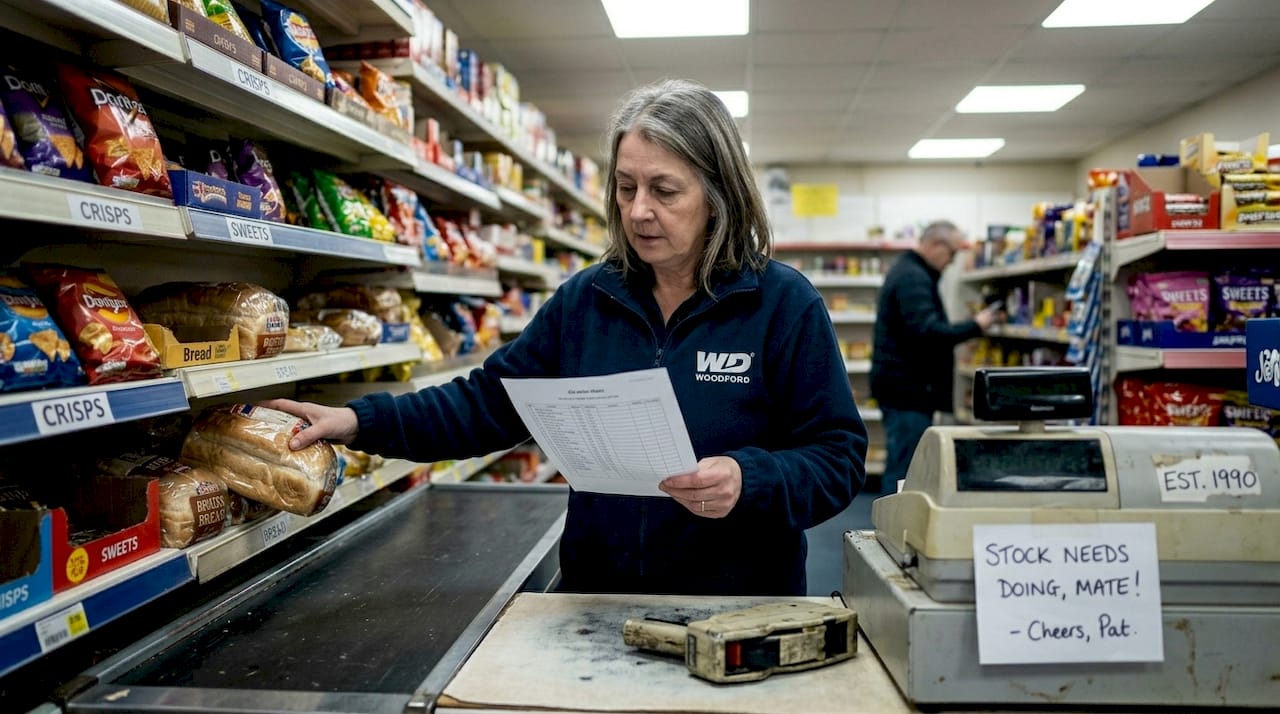
On the challenge side, the same growth that brings more choice also brings more complexity. Price-marked packs (PMPs) are a useful example. They reassure shoppers about value, but they cap your margin at a fixed point. If your cost price rises while the marked price stays static, you absorb the loss. That dynamic is becoming more common as wholesalers use PMPs to compete with supermarkets on headline price.
| Factor | Opportunity | Challenge |
|---|---|---|
| Wider assortment | More categories to stock | Harder to curate effectively |
| Delivered wholesale | Time saving, lower minimum orders | Less control over timing |
| Promotional pricing | Drives footfall | Compresses margin |
| Symbol group membership | Collective buying power | Membership costs and obligations |
Here are four steps worth considering as you re-optimise your approach:
- Audit which product categories are delivering genuine margin versus which are simply driving volume.
- Review your current wholesale relationships and assess whether delivered options could reduce your operating costs.
- Evaluate whether joining a symbol group would give you access to promotional support that offsets membership costs.
- Explore food distribution channels beyond your current setup to identify gaps in your supply chain.
The retailers who navigate this environment best are those who treat their wholesale relationships as strategic partnerships rather than transactional arrangements.
Challenges and risks for food wholesaler growth
While there are opportunities to seize from wholesaler growth, there are also significant hurdles to navigate.
The wholesale sector operates on notoriously thin margins. When costs rise, whether through business rates, energy bills, or wage increases, low margins amplify cost pressures in ways that quickly ripple through to retailers. A wholesaler under financial strain may reduce delivery frequency, cut promotional budgets, or pass costs upstream. None of those outcomes benefit you.
Supermarket competition remains a structural threat. The major multiples have invested heavily in their own supply chains, private label ranges, and price-matching programmes. That makes it harder for both wholesalers and independent retailers to compete on price alone. The Big 30 wholesaler rankings for 2026 show mixed results across the sector, with some wholesalers recording negative growth while foodservice continues to outperform cash and carry.
Regulatory pressure is adding another layer of complexity. Two pieces of legislation are particularly relevant right now:
- EPR (Extended Producer Responsibility): New packaging regulations are increasing costs across the supply chain, particularly for wholesalers handling large volumes of packaged goods.
- HFSS (High Fat, Salt, Sugar) regulations: Restrictions on the promotion and placement of HFSS products are reshaping how wholesalers and retailers can market certain categories, reducing promotional flexibility for some of the highest-volume lines.
- Tobacco and vape decline: Regulatory tightening on tobacco and disposable vapes has removed a significant revenue stream for many independent retailers who relied on these categories for footfall and margin.
Understanding how adapting to food trends can offset the decline in regulated categories is increasingly important for long-term planning.
Pro Tip: When assessing a new wholesale partner, ask specifically how they are managing EPR compliance and HFSS product placement. A wholesaler with a clear, documented approach to these regulations will cause you far fewer operational headaches than one who is still working it out.
Strategies for independent retailers: leveraging wholesaler growth
With the risks in mind, it is crucial to focus on practical steps that help your business thrive as the sector evolves.
Symbol group affiliation grew by +11.7% in the latest reporting period, which is not a coincidence. Retailers who align with symbol groups gain access to collective buying power, branded promotional support, and marketing infrastructure that is simply out of reach for truly independent operators. If you are not currently affiliated, the maths are worth revisiting.
The UK food and drink wholesaling market reached £129.7 billion in 2026, supporting 1.5 million jobs and contributing £57 billion in gross value added. That scale means the sector has real infrastructure to offer retailers who engage with it strategically.
Here are five actionable strategies for 2026:
- Partner with a symbol group or strategic wholesaler who offers promotional programmes, own-label ranges, and category management support rather than just product supply.
- Use data to drive product selection. Most modern wholesale platforms provide sales data and trend reports. Use them to stock what is actually selling in your area, not just what you have always stocked.
- Embrace digital ordering. Wholesalers who offer app-based or online ordering with real-time stock visibility give you a meaningful operational advantage. Prioritise them.
- Negotiate actively on margin. Volume commitments, prompt payment, and category exclusivity are all levers you can use. A clear food brand strategy makes those conversations much easier.
- Invest in your own brand identity. Stocking distinctive, trend-led products that your local competitors cannot easily replicate is one of the most durable ways to protect margin. The brand acceleration guide offers a practical framework for doing exactly that.
Pro Tip: When negotiating with a wholesaler, ask for a quarterly review of your account performance. Wholesalers value retailers who engage actively, and that engagement often translates into better promotional allocations and early access to new product launches.
Our take: why UK independents must go beyond price in 2026
Having shared pragmatic strategies, here is our perspective on what truly drives sustainable growth for independents.
The instinct to compete on price is understandable. When margins are tight and supermarkets are loud about their deals, matching their headline numbers feels like the only option. We think that instinct is wrong, and the data supports us. The independents who are growing in 2026 are not the ones with the lowest shelf prices. They are the ones with the sharpest product curation, the strongest local identity, and the most loyal customer relationships.
Price is a race to the bottom. Brand, knowledge, and service are not. A customer who trusts your recommendation on a new product, who knows you stock the things their local supermarket does not, and who feels genuinely welcomed in your store is worth far more than a customer who came in because your cola was 5p cheaper.
Wholesaler growth gives you access to a wider, more interesting product range than ever before. The question is whether you use that access to copy the multiples or to differentiate from them. Understanding food trends and retailer growth is how you make that differentiation systematic rather than accidental. The opportunity is real. The mindset shift is the hard part.
Connecting with the right wholesale partner
With this context, you are ready to partner with a wholesaler who matches your ambitions. At Woodford, we work specifically with independent retailers who want more than a catalogue and a delivery slot. We curate trend-led, exclusive food brands that give your store a genuine point of difference, and we handle the logistics so you can focus on your customers. Browse our brands to see the kind of distinctive, high-quality products we bring to independent retailers across the UK, and check our latest promotions to see what is available right now. If you want to talk through how we can support your supply chain, our team is ready.
Frequently asked questions
How is food wholesaler growth measured in the UK?
Growth is typically tracked by revenue, market size, and annual compound growth rates (CAGR) in major industry reports. UK grocery wholesaling reached £49.3 billion in 2025-26, growing at a CAGR of 5.4%.
What trends are influencing food wholesaler growth now?
Delivery models, convenience store expansion, and foodservice recovery are the primary growth engines. The post-pandemic shift to delivery now accounts for 65% of wholesale channel share.
Why are retailer margins shrinking despite wholesale growth?
Margins are pressured by rising operational costs, promotional pricing commitments, and intensified competition from supermarkets. Margin erosion of three percentage points is now a sector-wide trend for independent retailers.
How can independent retailers benefit from wholesaler growth?
By selecting strong wholesale partners, joining symbol groups, and using digital ordering tools to improve efficiency. Symbol group affiliation grew +11.7%, reflecting the real commercial advantage of collective partnerships.
Recommended
- Food logistics tips for UK independent retailers in 2026 - WOODFORD - Bringing quality foods your way
- Navigating UK food logistics for wholesalers in 2026 - WOODFORD - Bringing quality foods your way
- Strategic food brands for UK independent retailers - WOODFORD - Bringing quality foods your way
- What is brand acceleration in food: a guide for UK retailers - WOODFORD - Bringing quality foods your way