Food marketplace dynamics: strategies for UK independents
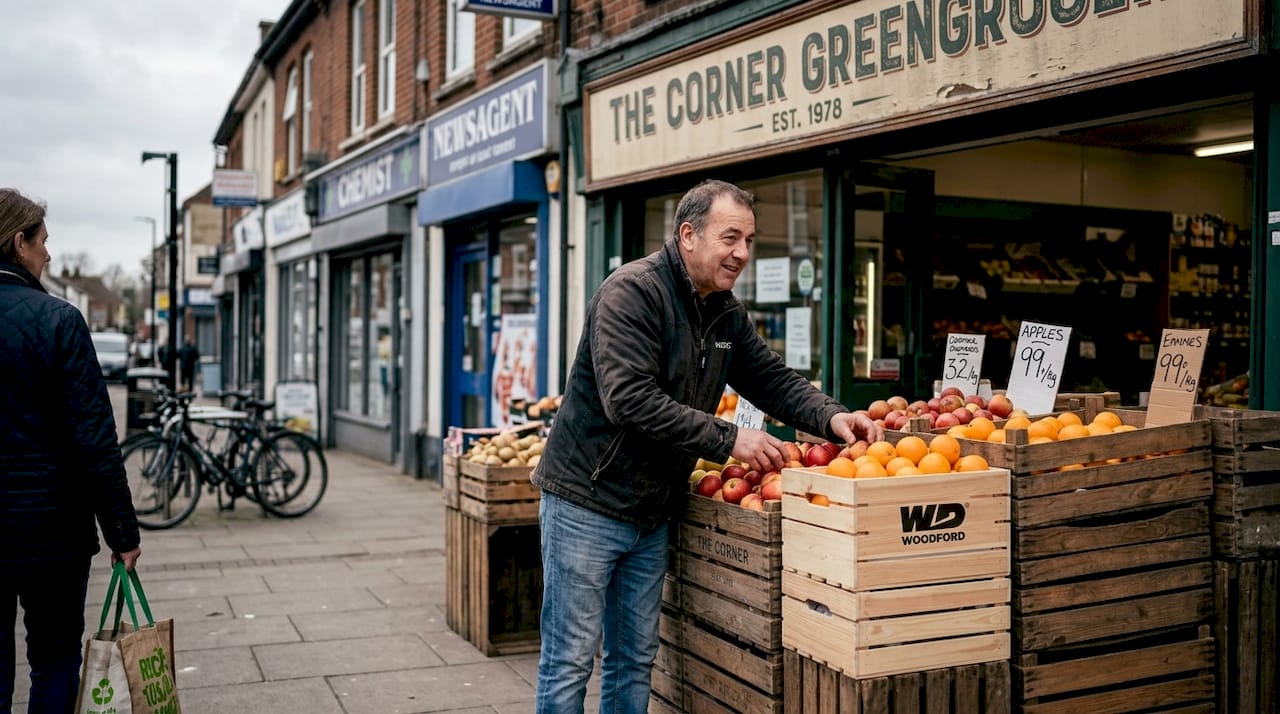
TL;DR:The UK food market is highly concentrated but offers growth opportunities for independents and niche brands.Success depends on authenticity, local provenance, community engagement, and reliable product availability.Market trends like online growth, premium own-label, and regulation shift competition toward value and experience.
The UK food market is not quite the closed shop that many assume. Yes, the top retailers hold ~67% of market share in 2025, with discounters accounting for roughly 19% and independents holding between 11% and 14%. But those numbers tell only part of the story. For independent retailers and emerging food brands, the remaining slice of the market represents genuine, growing opportunity. The key is understanding the forces at play well enough to act on them. This guide breaks down food marketplace dynamics in plain terms and shows you exactly where the openings are.
Table of Contents
- The structure of the UK food marketplace
- Forces shaping food marketplace competition
- Opportunities and challenges for independents and brands
- Emerging trends reshaping UK food marketplace dynamics
- What most guides on food marketplace dynamics miss
- How Woodford supports independent food retailers and brands
- Frequently asked questions
Key Takeaways
| Point | Details |
|---|---|
| UK market remains consolidated | Supermarkets dominate, but independents hold critical niches when they specialise. |
| Competition driven by data and value | Pricing, promotions, loyalty, and technology define the new battleground for consumers. |
| Independents thrive through differentiation | Focusing on quality, provenance, and stock availability is key to retaining loyal customers. |
| Changing trends require agility | Success depends on quickly adapting to premiumisation, regulation, and digital shifts. |
The structure of the UK food marketplace
Before you can exploit any opportunity, you need to understand the terrain. “Food marketplace dynamics” refers to the competitive forces, structural shifts, and consumer behaviours that determine how food is bought and sold across retail channels in the UK. It covers everything from pricing strategies and promotional cycles to supply chain pressures and shopper loyalty patterns.
The current market split tells a clear story:
| Retailer type | Approximate market share (2025) |
|---|---|
| Top 4 supermarkets | 67% |
| Discounters (Aldi, Lidl) | 19.2% |
| Independents and specialists | 11% |
| Other (online, convenience) | ~3% |
According to the USDA FAS Retail Foods Annual, the top four supermarkets hold 67% of the market, with discounters at 19.2% and independents at 11%. That concentration matters because it shapes everything: supplier terms, shelf pricing, promotional budgets, and even which products get discovered by shoppers.
Several structural shifts are currently redefining the landscape:
- Convenience format expansion: Major chains are aggressively opening smaller, local-format stores, moving directly into the territory that independents have traditionally owned.
- Symbol group growth: Groups like Nisa, Spar, and Costcutter are growing their footprints, giving affiliated independents better buying terms and marketing support.
- Discounter polarisation: Aldi and Lidl continue to grow, pulling price-sensitive shoppers away from both mid-market supermarkets and independents.
- Online consolidation: Grocery delivery and click-and-collect services are becoming standard expectations, not premium add-ons.
As one industry observer put it: “The middle ground in UK grocery is shrinking. Retailers either compete on price and scale, or they win on experience and distinctiveness.”
For independent retailers and strategic food brands, this polarisation is actually useful information. It signals where the viable spaces are. Chasing the discounters on price is a losing game. Owning a distinct, local identity is not. Tracking retailer trends closely helps you anticipate which format expansions are heading your way and prepare accordingly.
Forces shaping food marketplace competition
Understanding who holds market share is one thing. Understanding why competition plays out the way it does is another matter entirely.
Here is how the competitive strategies of supermarkets and independents compare:
| Competitive lever | Supermarkets | Independents |
|---|---|---|
| Pricing | Scale-driven, promotional cycles | Higher unit cost, value-add focus |
| Loyalty | Data-rich programmes (97% of shoppers) | Personal relationships, community ties |
| Range | Broad, algorithmically managed | Curated, locally relevant |
| Promotions | 28.8% of sales on promotion | Flexible, event-driven |
| Online | Fully integrated | Limited but growing |
Loyalty programmes cover 97% of shoppers, promotions account for 28.8% of grocery sales, and online channels now represent between 10% and 13% of total grocery spend. These figures from Assosia’s UK Grocery Retail Trends 2026 report reveal just how data-intensive modern grocery competition has become.
For supermarkets, loyalty cards are not just a marketing tool. They are a data engine. Every transaction feeds algorithms that personalise offers, manage inventory, and predict demand. Independents cannot replicate that infrastructure, but they do not need to. What they can do is build genuine human loyalty through consistent service, product knowledge, and community presence.
Dynamic pricing is another force worth watching. Major chains now adjust prices in near real-time based on demand signals and competitor activity. This makes price-matching an exhausting and ultimately futile strategy for smaller operators. A stronger food brand strategy focuses on value perception rather than price parity.
Regulation is also reshaping the competitive field. The HFSS (high fat, salt, and sugar) restrictions are forcing product reformulation and changing promotional placement rules, which affects ranging decisions across all retail formats. Brands that proactively reformulate or position around health credentials gain a real edge in this environment.
Pro Tip: Watch for supermarket convenience format rollouts in your area. When a major chain opens a local-format store nearby, your best response is not to match their prices. It is to amplify what makes your offer distinctly local: unique products, personal service, and community relevance. Shoppers who value those things will not be won back by a meal deal.
For deeper context on adapting to food trends, the competitive forces outlined here are the starting point for any serious strategic review.
Opportunities and challenges for independents and brands
The challenges facing independents are real and should not be minimised. Supermarket entry costs for new brands can exceed £100,000 when you factor in listing fees, promotional contributions, and compliance requirements. Meanwhile, supermarket convenience expansion is putting direct pressure on independent footfall in high streets and local neighbourhoods.
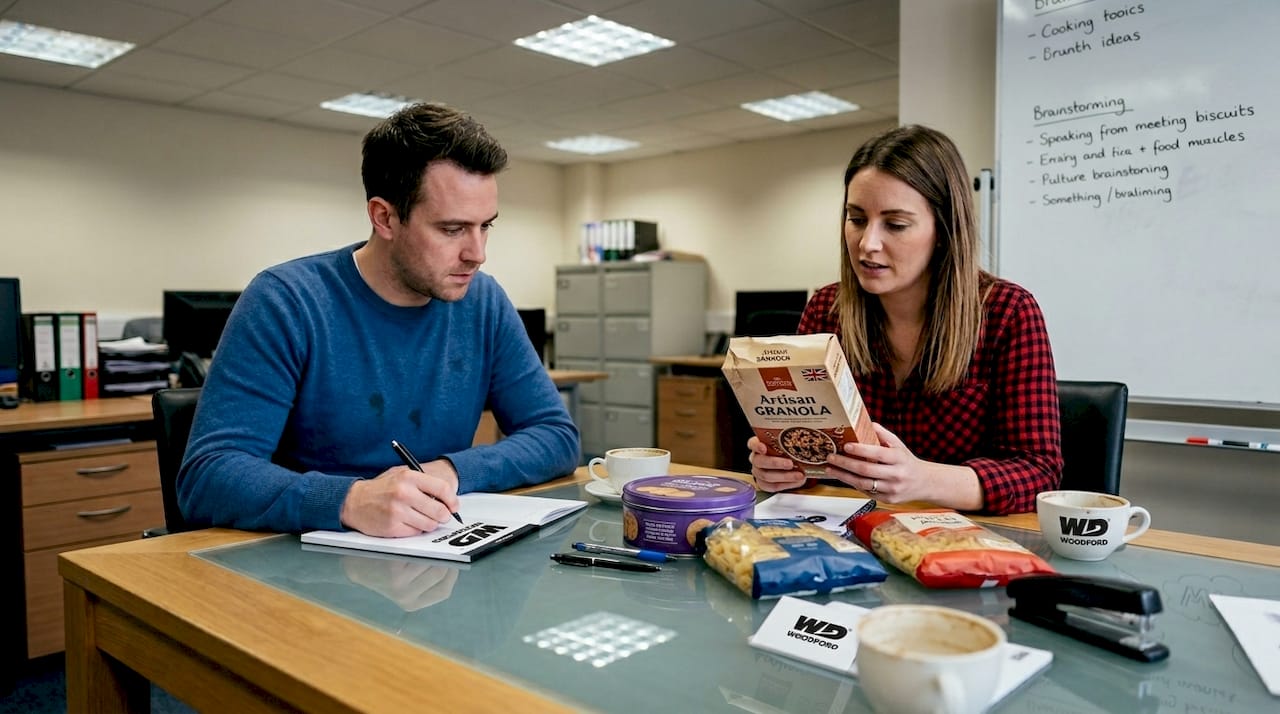
Yet 46% of shoppers visit independent food retailers at least once a month. That is not a niche audience. It is a substantial, loyal, and often higher-spending segment that actively seeks out quality, provenance, and a shopping experience that supermarkets simply cannot replicate.
Here is a practical framework for differentiating effectively:
- Lead with provenance: Shoppers increasingly want to know where their food comes from. Local sourcing stories, producer relationships, and regional identity are powerful selling tools that chains cannot credibly claim.
- Curate rather than compete: Stop trying to stock everything. A tightly curated range of genuinely distinctive products builds a stronger identity than a broad range that half-mirrors the supermarket down the road.
- Use wholesaler partnerships strategically: Working with the right wholesaler gives you access to better buying terms, trend-led product discovery, and logistics support that would otherwise be out of reach. This is how smaller operators gain the scale advantages that matter.
- Build community visibility: Events, tastings, social media presence, and local partnerships all reinforce the authenticity that is your greatest competitive asset.
- Maintain rigorous stock discipline: Out-of-stocks are a silent killer for independent retailers. Shoppers who cannot find what they came for do not always come back.
“The independent retailer’s greatest strength is the ability to make decisions in days, not quarters. That agility, combined with genuine community knowledge, is something no algorithm can replicate.”
Pro Tip: Prioritise stock availability above almost everything else. Research consistently shows that lost sales from out-of-stocks far exceed any revenue impact from minor price differences. A shopper who finds an empty shelf twice is likely to change their habits permanently.
For brands navigating this landscape, a solid trend analysis guide is invaluable for identifying which product categories are gaining traction with independent retail buyers. And strategic branding that speaks directly to the values of independent shoppers will always outperform generic positioning.
Emerging trends reshaping UK food marketplace dynamics
The competitive landscape is not static. Several trends are accelerating in ways that will fundamentally alter the opportunities available to independents and brands over the next few years.
Availability is overtaking price as the primary loyalty driver. The £2.1 billion lost annually to stock-outs across UK grocery is a staggering figure. It tells us that shoppers will tolerate higher prices far more readily than they will tolerate empty shelves. For independents, this is both a warning and an opportunity: get your availability right and you remove one of the most common reasons shoppers defect to larger stores.
Online grocery is growing fast. Online grocery is forecast to reach £31.7 billion by 2029, up from its current 10 to 13% share. Independents who are not thinking about click-and-collect, local delivery partnerships, or at minimum a strong social commerce presence risk being structurally invisible to a growing segment of shoppers.
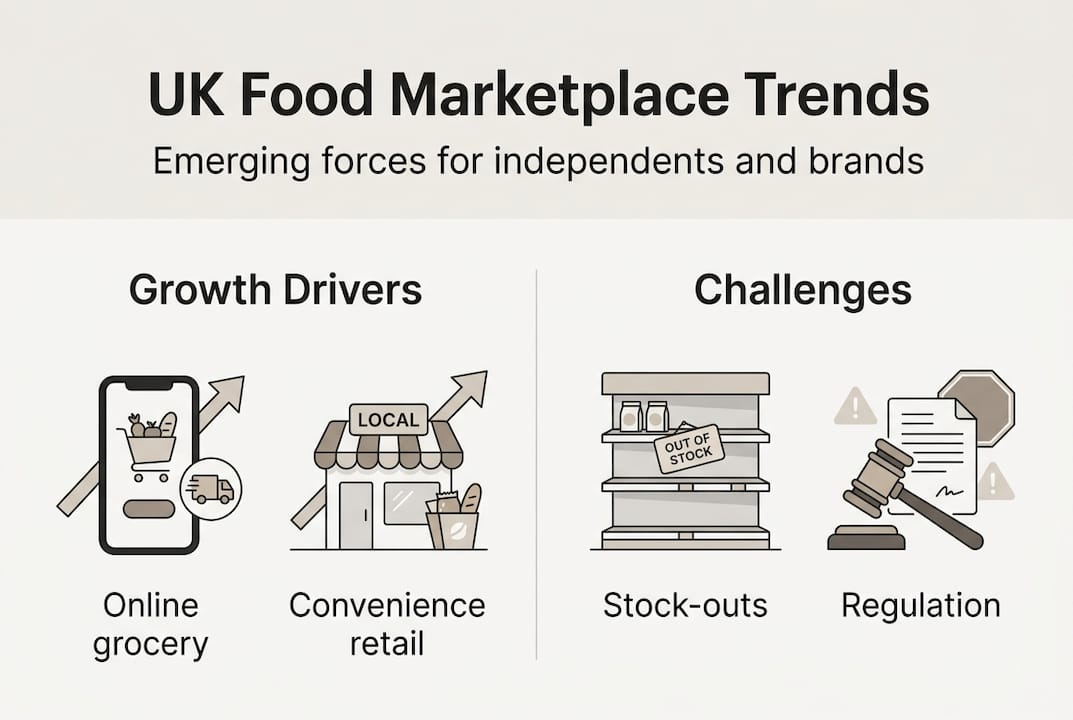
The overall market is expanding. The UK grocery market is projected to reach £214 billion by 2028 at a compound annual growth rate of 2.4%. Even in a market dominated by large players, that growth creates space for well-positioned independents and brands.
Key trends to monitor closely:
- Premium own-label growth: Major retailers are investing heavily in premium own-label ranges, directly competing with branded products at the quality end of the market.
- Discounter premiumisation: Aldi and Lidl are both introducing more premium lines, blurring the price-quality trade-off that once defined their positioning.
- HFSS regulatory impact: The HFSS regulations are forcing reformulation across categories, creating openings for brands that already lead on health credentials.
- Inflation normalisation: As food price inflation stabilises, value perception will shift back towards quality and experience rather than pure cost.
| Trend | Impact on independents | Urgency |
|---|---|---|
| Stock-out losses | High: availability = loyalty | Immediate |
| Online growth | Medium: local delivery opportunity | 12 to 24 months |
| HFSS regulation | Medium: range and ranging changes | Ongoing |
| Premium own-label | High: direct competition on quality | Now |
For a fuller picture of how to respond to these shifts, adapting to trends is the logical next step in building your strategic response.
What most guides on food marketplace dynamics miss
Most articles on this topic spend a lot of time describing the problem and very little time challenging the assumptions behind how independents respond to it. Here is the uncomfortable truth: many independents and smaller brands lose ground not because the market is unfair, but because they try to compete on supermarket terms.
Copying promotional mechanics, chasing listing fees, or building a range that mirrors what the major chains stock is a strategy that plays to your weaknesses, not your strengths. As major retailers win on scale and price, independents thrive through authenticity and local focus. That is not a consolation prize. It is a genuinely different and defensible competitive position.
Data-driven decision-making is also far more accessible than most independents realise. You do not need a loyalty card infrastructure to understand your customers. Sales patterns, basket analysis from your EPOS system, and even structured conversations with regular shoppers give you actionable insight that no algorithm can replicate at the local level.
The winners we see in this market blend three things: the agility to act quickly on what they observe, the authenticity to stay true to their community identity, and the discipline to partner smartly rather than trying to do everything alone. A strong brand strategy built on these foundations is far more durable than any short-term promotional push.
How Woodford supports independent food retailers and brands
If the insights in this guide have clarified where your opportunities lie, the next question is how to act on them efficiently. That is exactly where Woodford comes in. As the UK’s leading strategic food wholesaler, Woodford bridges the gap between visionary food brands and ambitious independent retailers, providing exclusive distribution, trend-led curation, and hassle-free logistics. Whether you are a brand seeking wider independent retail reach or a retailer looking to sharpen your range with products that genuinely resonate, explore our brands to see what is available right now. You can also browse current promotions to find timely opportunities that align with the trends shaping the market in 2026.
Frequently asked questions
What are the main competitive forces in the UK food marketplace?
Price wars, loyalty schemes, dynamic promotions, omnichannel growth, and regulation all shape competition between supermarkets, discounters, and independents. Loyalty programmes reach 97% of shoppers, with promotions accounting for 28.8% of grocery sales and online channels at 10 to 13% of total spend.
Why do independents struggle to compete on price?
Independents lack the buying scale of major chains, making price-matching structurally unviable. However, independents hold ~5% of food sales and can win decisively on authenticity, provenance, and personalised service where price is not the primary decision driver.
What UK market trends will impact food brands most in 2026?
Online expansion, premium own-label growth, HFSS-driven reformulation, and a consumer focus on availability over price will all reshape brand opportunities. £2.1 billion in annual stock-out losses underline just how critical product availability has become as a loyalty driver.
How can independent brands avoid losing customers to supermarkets?
Focus on differentiation through unique product quality, community relationships, and reliable availability rather than competing on price. Partnering with a wholesaler for scale and 46% of shoppers visiting indies monthly confirms there is a loyal audience actively seeking what independents offer.
Recommended
- Strategic food brands for UK independent retailers - WOODFORD - Bringing quality foods your way
- Food logistics tips for UK independent retailers in 2026 - WOODFORD - Bringing quality foods your way
- Why adapt to food trends: boost independents’ growth - WOODFORD - Bringing quality foods your way
- What is brand acceleration in food: a guide for UK retailers - WOODFORD - Bringing quality foods your way