Understanding the food distribution cycle for UK retailers
TL;DR:The food distribution cycle involves sourcing, warehousing, route planning, and final delivery stages.Monitoring KPIs like inventory turnover and on-time delivery helps reduce waste and improve stock management.Active analysis of logistics data provides negotiation leverage and enhances supply chain reliability for retailers.
Most independent retailers assume food moves from supplier to shelf almost automatically. It does not. Behind every product on your shelves sits a carefully orchestrated chain of sourcing, warehousing, route planning, and timed delivery. When any link in that chain breaks down, you feel it immediately: out-of-stocks, spoiled goods, margin leakage. Understanding how the food distribution cycle actually works gives you more than operational awareness. It gives you a genuine commercial edge, helping you reduce waste, improve stock freshness, and negotiate with suppliers from a position of knowledge rather than guesswork.
Table of Contents
- Setting the scene: What is the distribution cycle in food?
- Core stages of the food distribution cycle
- Key performance indicators in the distribution cycle
- Reducing food waste and loss in the distribution cycle
- What most guides won’t tell you about food distribution cycles
- Power your retail business with better distribution
- Frequently asked questions
Key Takeaways
| Point | Details |
|---|---|
| Distribution cycle stages | Knowing each step from processing to retailer empowers you to control quality and freshness. |
| Critical KPIs | Tracking inventory turnover and on-time deliveries reveals inefficiencies and profit leaks. |
| Food waste reduction | Strong batch tracking and logistics planning can directly reduce costly waste. |
| Retail advantage | Independent retailers who master their distribution cycle outperform competitors on consistency and costs. |
Setting the scene: What is the distribution cycle in food?
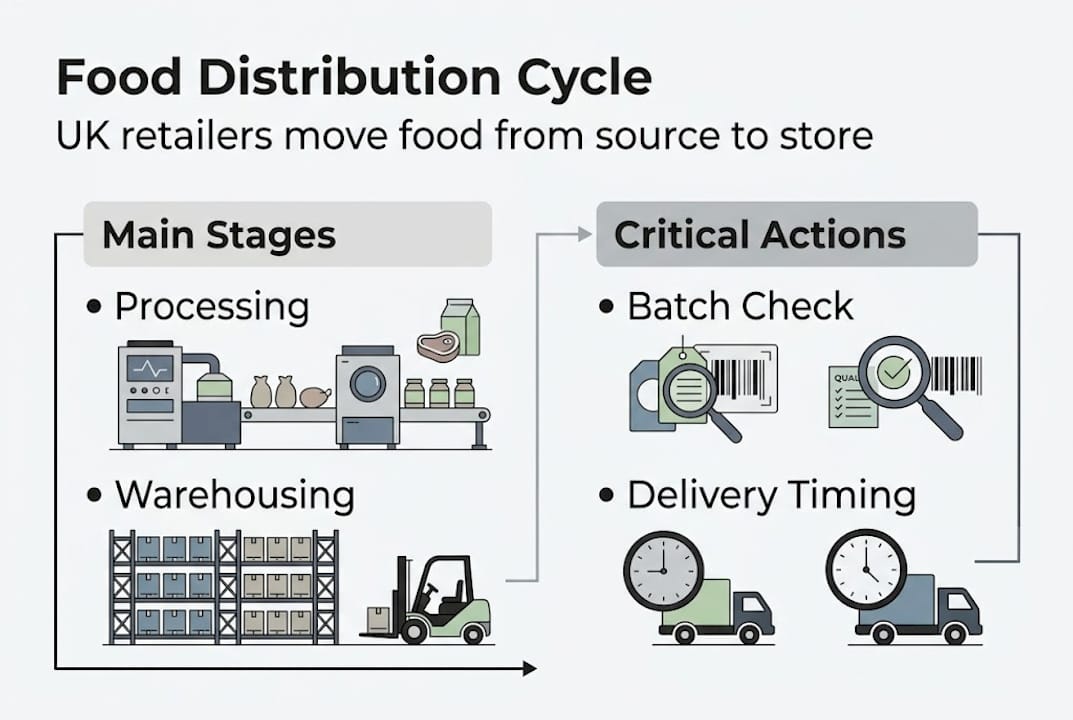
The term gets thrown around loosely, so let us be precise. The distribution cycle in food refers to the operational process within the food supply chain where products move from production or processing through warehouses, route planning, dispatch, and final delivery to retailers. It is not a vague concept. It is a sequence of handoffs, each with specific responsibilities, timelines, and risk points.
For independent retailers, this matters especially with perishables. A two-day delay in logistics does not just inconvenience you. It can render an entire delivery unsellable, wiping out your margin on that order. The precision of each stage directly affects the freshness and shelf life of what you stock.
Here is a simplified overview of the main stages:
| Stage | What happens | Why it matters to you |
|---|---|---|
| Production and processing | Raw materials become finished goods | Quality and compliance start here |
| Warehousing | Stock is stored, tracked, and batch-labelled | Inventory accuracy affects your orders |
| Route planning and dispatch | Loads are optimised and drivers scheduled | Affects delivery reliability and timing |
| Retail delivery | Goods arrive with proof of delivery (ePOD) | Confirms receipt and enables traceability |
To put the scale in context, the UK food wholesaling sector alone reaches over 400,000 businesses, ranging from large supermarket chains to small independent retailers like yours. The infrastructure supporting that reach is enormous, and understanding your place within it is the first step to managing it better.
For a broader view of how goods reach your shelves, it helps to study distribution channels explained so you can identify which route best fits your business model.
- Fresh produce typically moves fastest, requiring refrigerated warehousing and short dispatch windows
- Ambient goods allow more scheduling flexibility but still need strict rotation
- Specialist or premium products may require bespoke logistics arrangements
The cycle is not just background noise. It is the engine behind your stock availability.
Core stages of the food distribution cycle
Let us move through each stage in sequence so you understand exactly what is happening and where your attention is most valuable.
- Sourcing and production: This is where your products begin. Whether it is a small-batch hot sauce or a range of plant-based snacks, quality controls and compliance standards are set at this stage. Errors here create problems throughout the rest of the cycle.
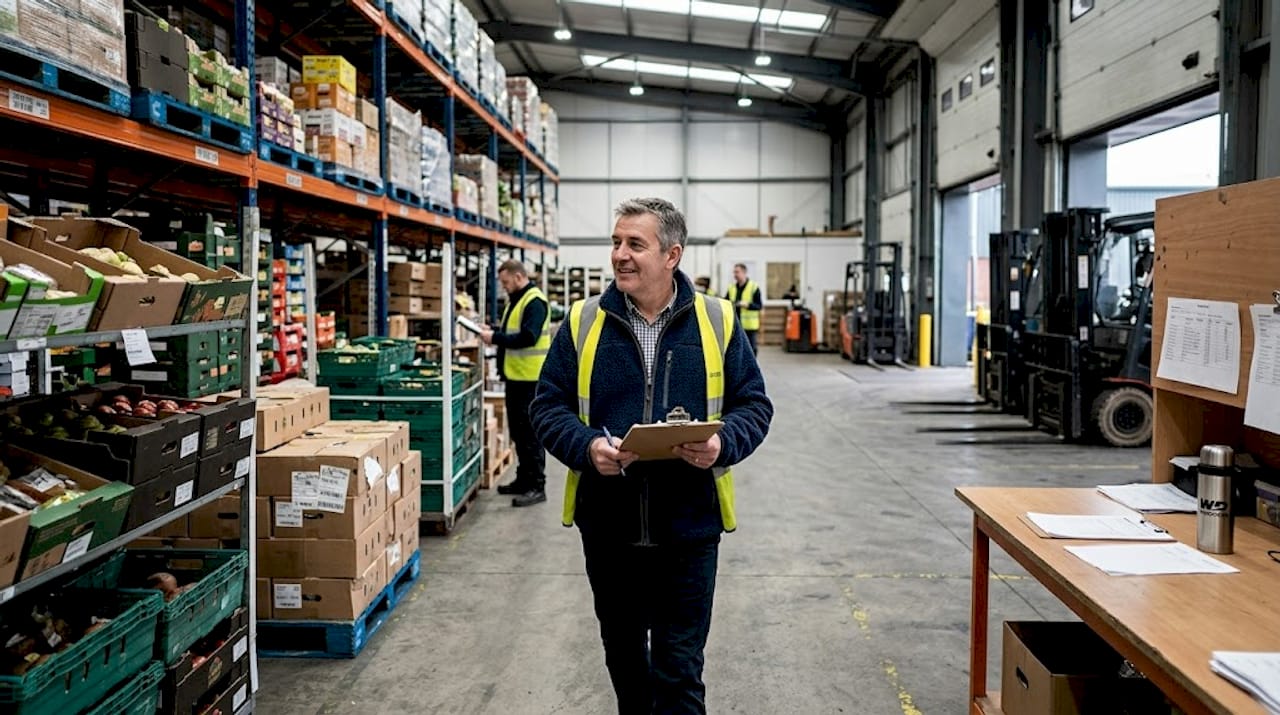
- Warehousing and batch tracking: Once goods arrive at a distribution warehouse, they are logged, batch-coded, and stored under appropriate conditions. Batch tracking at this stage feeds into inventory management and enables fast recalls if a quality issue emerges later.
- Route planning and dispatch: Logistics teams build delivery routes that balance cost, timing, and vehicle capacity. This is where delays are most likely to originate, particularly during peak periods or when volumes surge unexpectedly.
- Delivery and electronic proof of delivery (ePOD): Goods arrive at your store, and the delivery is confirmed digitally. ePOD systems record the handoff, creating an audit trail that protects both you and your supplier.
Timely delivery for perishables is not a courtesy. It is a contractual requirement with direct financial consequences for everyone in the chain.
Critical control points sit between each of these stages. Temperature monitoring during transit, accurate picking at the warehouse, and on-time arrival windows all determine whether your stock is sellable or destined for the bin. For practical guidance on managing these moving parts, logistics tips for retailers offer specific actions you can take today.
Pro Tip: Always cross-reference batch codes on incoming deliveries against your order records. If a product recall is issued, you will be able to identify affected stock in minutes rather than hours, protecting your customers and your reputation.
Understanding navigating food logistics becomes even more critical when you work with multiple suppliers across different categories.
Key performance indicators in the distribution cycle
Knowing the stages is useful. Measuring them is what creates competitive advantage. Two KPIs are particularly important for independent retailers: inventory turnover ratio and on-time delivery rate.
The inventory turnover ratio is calculated by dividing your cost of goods sold by your average inventory value. A high ratio means stock is moving quickly and you are not tying up cash in slow-moving products. A low ratio often signals over-ordering or poor stock rotation.
The on-time delivery rate is calculated by dividing the number of on-time deliveries by total deliveries, then multiplying by 100. Even a small improvement here reduces the likelihood of gaps on your shelves.
| KPI | What it reveals | Action if low |
|---|---|---|
| Inventory turnover ratio | How fast stock sells relative to what you hold | Review order volumes and rotation practices |
| On-time delivery rate | Reliability of your supply chain | Discuss lead times and scheduling with suppliers |
| Shrinkage rate | Loss from spoilage, damage, or error | Tighten receiving checks and storage conditions |
| Order accuracy rate | Whether you receive exactly what was ordered | Introduce ePOD verification on all deliveries |
Here is what each metric actually tells you in practice:
- Inventory turnover shows whether your buying decisions match actual customer demand
- On-time delivery rate reveals the reliability of your logistics partners
- Shrinkage rate exposes where waste is eating into your margin
- Order accuracy rate highlights whether fulfilment errors are a recurring problem
For retailers interested in faster-moving distribution models, cross-docking explained covers an approach that bypasses traditional warehousing to accelerate delivery timelines. It is particularly relevant for high-volume, fast-turnover categories.
Pro Tip: Track your on-time delivery rate monthly and segment it by supplier. You will quickly identify which partners are consistently late, giving you the data to renegotiate terms or switch to more reliable alternatives.
When you review various distribution channels, you will see that channel choice also influences which KPIs matter most for your specific operation.
Reducing food waste and loss in the distribution cycle
The numbers are striking. UK food waste totals 10.7 million tonnes per year. For independent retailers operating on thin margins, even a small reduction in waste directly improves profitability. The good news is that most avoidable waste is a distribution problem, not a demand problem.
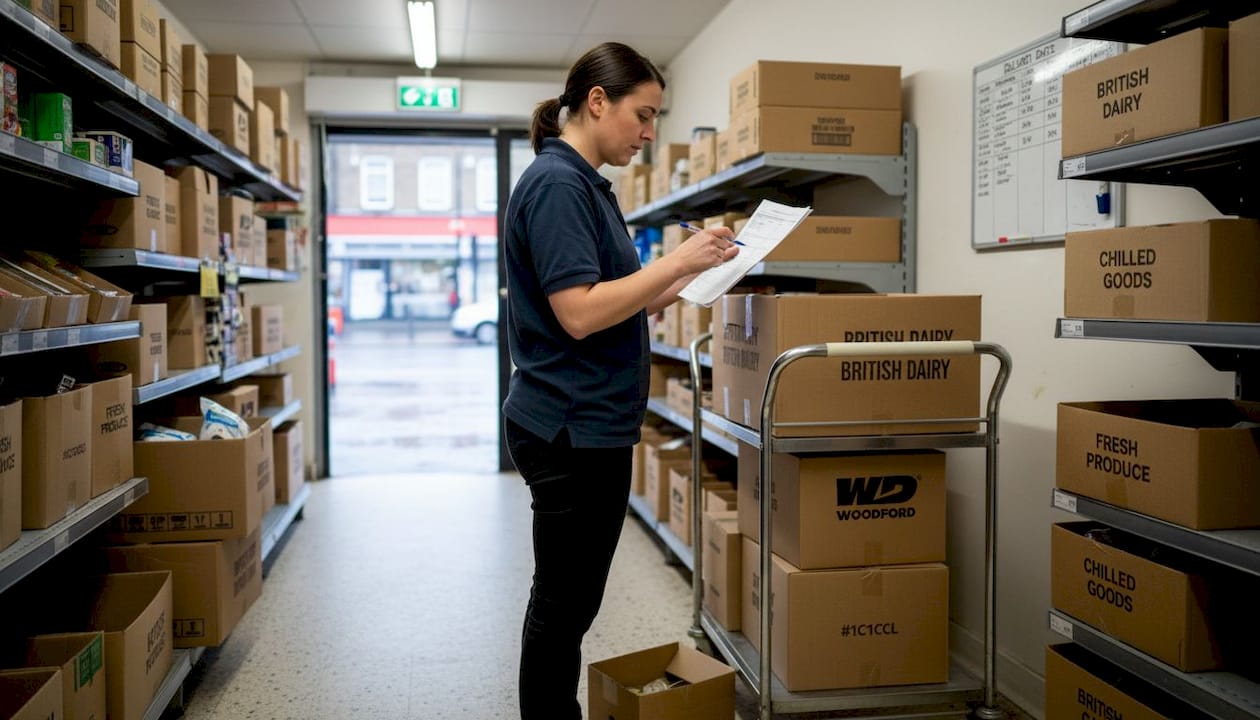
When batch tracking is absent or inconsistent, older stock gets buried behind newer deliveries. Products approach their use-by dates unnoticed. By the time someone realises, the goods are unsellable. This is not bad luck. It is a systems failure that better distribution cycle management can prevent.
Practical actions you can implement now:
- First-expiry, first-out (FEFO): Always rotate stock so the items with the nearest expiry date are at the front. This is especially critical for chilled and ambient food categories.
- Batch reporting reviews: Ask your wholesaler for batch reports on every delivery. This allows you to identify which batches are approaching expiry and act before wastage occurs.
- Stock rotation schedules: Build a weekly rotation check into your store operations. Assign it to a specific team member with accountability.
- Delivery condition checks: Inspect goods on arrival for temperature variance, damaged packaging, or incorrect batch labelling. Reject non-compliant deliveries rather than accepting them and writing off the loss later.
Pro Tip: Partner with wholesalers who provide ePOD and batch data as standard. This removes the manual burden of auditing and gives you an immediate record for food safety inspections or recall events.
Choosing suppliers who treat traceability as a priority rather than an afterthought is one of the best margin-protection decisions you can make. Exploring strategic food brands for your shelves is a useful starting point for identifying partners who operate this way.
What most guides won’t tell you about food distribution cycles
Most articles on this subject explain the stages and then stop. What they rarely address is how to use cycle data as a negotiation tool and a buying advantage.
Here is the uncomfortable truth: if you are not actively reviewing your delivery timing records and batch data each month, you are leaving margin on the table every single day. Retailers who scrutinise these figures discover patterns. They find that certain suppliers are consistently two days late, or that specific product categories always arrive with higher shrinkage rates. That is leverage.
Regular review of your practical logistics insights allows you to approach supplier conversations with facts rather than impressions. You can negotiate better delivery windows, request improved batch documentation, or simply switch to a partner whose performance data actually supports your operational needs.
The retailers who outpace competitors are not necessarily the ones who spend more. They are the ones who pay closer attention to what the data already shows them.
Power your retail business with better distribution
Understanding the food distribution cycle is only valuable if you act on it. At Woodford, we work specifically with independent retailers who want more than a transactional wholesale relationship. We provide exclusive distribution of trend-led food brands, backed by the logistics infrastructure and traceability data that makes your operation more efficient and your shelves more compelling. If you are ready to reduce waste, sharpen your inventory management, and stock products your customers cannot find elsewhere, explore our food brands and see how a strategic distribution partnership changes what is possible for your business.
Frequently asked questions
What are the main stages in the food distribution cycle?
The main stages are production or processing, warehousing and batch tracking, route planning and dispatch, and delivery to retailers with electronic proof of delivery.
Why is inventory management important in food distribution?
Efficient inventory management reduces waste, ensures freshness, and supports accurate order fulfilment. Your inventory turnover ratio is a direct indicator of how well your buying decisions match actual demand.
How does the distribution cycle help reduce food waste?
By optimising batch tracking and delivery timing, retailers prevent products from expiring unnoticed. Given that UK food waste reaches 10.7 million tonnes annually, even marginal improvements have a meaningful impact on your margins.
What KPI is essential for tracking delivery efficiency?
The on-time delivery rate is the most direct measure of how reliably your food shipments arrive as scheduled, making it essential for managing perishable stock.
Recommended
- Food logistics tips for UK independent retailers in 2026 - WOODFORD - Bringing quality foods your way
- Navigating UK food logistics for wholesalers in 2026 - WOODFORD - Bringing quality foods your way
- Food brand strategy drives UK retail success in 2026 - WOODFORD - Bringing quality foods your way
- Strategic food brands for UK independent retailers - WOODFORD - Bringing quality foods your way