How to master food brand wholesale for UK independents

TL;DR:Successful independents master wholesale relationships, build supplier partnerships, and use structural advantages.Choosing the right distribution model and negotiating favorable terms are essential for profit margins.Flexibility in logistics and quick product testing enable independents to outperform larger chains.
Supermarket chains are squeezing independent retailers from every direction. Shrinking margins, rising logistics costs, and the pressure to stock products that genuinely excite customers make running a successful independent shop harder than ever. Yet the retailers who thrive are not the ones with the biggest budgets. They are the ones who master the wholesale process, build smart supplier relationships, and use every structural advantage available to them. This guide walks you through exactly how to do that, from setting up your first trade account to negotiating better terms, managing deliveries, and identifying the opportunities that the big chains simply cannot move fast enough to capture.
Table of Contents
- Preparing to buy wholesale: requirements and options
- Step-by-step: how to set up and manage food brand wholesale accounts
- Distribution and logistics: getting deliveries right
- Opportunities, challenges, and maximising value from wholesale
- The overlooked edge: how independents can win with smarter wholesale
- Partner with experts for your next step in food wholesale
- Frequently asked questions
Key Takeaways
| Point | Details |
|---|---|
| Get the basics right | Have all required business documents ready to unlock wholesale accounts. |
| Explore every option | Compare brand-direct, buying groups, and wholesalers to find the most flexible and cost-effective supply partner. |
| Prioritise logistics agility | Use shared fulfilment and local hubs to reduce per-unit costs and avoid delivery delays. |
| Maximise buying power | Join a buying group or consolidate purchases to improve prices and support. |
| Adapt for resilience | Leverage own-label and premium lines plus regular reviews to stay competitive despite market pressures. |
Preparing to buy wholesale: requirements and options
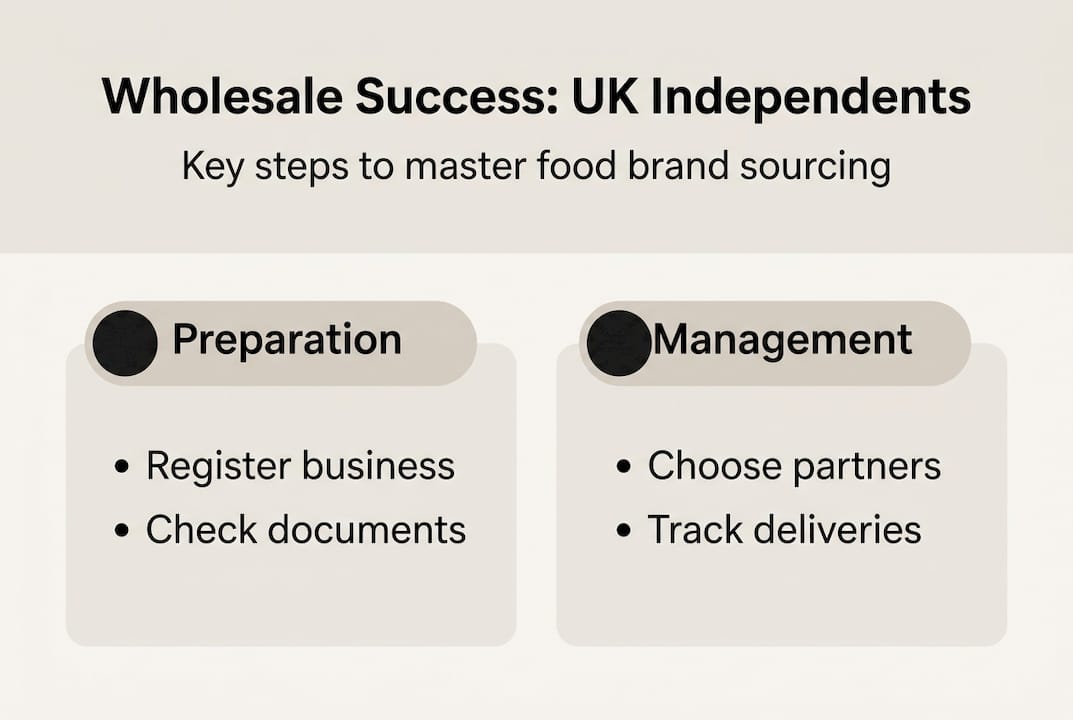
Before you can place your first bulk order, you need to get the paperwork in order. The wholesale process for UK retailers involves setting up trade accounts with wholesalers or food brands, providing documentation such as your VAT number and food hygiene certificates, and agreeing payment and delivery terms. Most wholesalers also require proof of business registration. Get these documents ready before you approach any supplier, because delays here slow everything else down.
Once your documentation is sorted, you face a structural choice about which distribution model suits your shop best:
- Direct from brands: Better margins and closer relationships, but higher minimum order quantities and more administrative work per supplier.
- Regional or national wholesalers: Broader range, consolidated deliveries, but less flexibility on pricing and product mix.
- Buying groups: Collective purchasing power, shared marketing, and profit-share arrangements that independents cannot access alone.
Buying groups deserve particular attention. The Wholesale Group operates with over £4.5bn in buying power, charges no membership fees, and offers profit-share arrangements alongside own-brand products and marketing support. For most independents, joining a buying group is the single fastest way to access pricing that competes with the multiples.
| Distribution model | Typical margin benefit | Minimum order | Best suited for |
|---|---|---|---|
| Direct from brand | High | Often £500+ | Flagship/exclusive lines |
| National wholesaler | Medium | Low to medium | Core range, convenience |
| Buying group | High | Flexible | Full range, independents |
Choosing the right model also shapes how much flexibility you retain. Working with strategic food brands through a curated distributor, for example, gives you access to trend-led products without the burden of managing twenty separate supplier relationships.
Pro Tip: Before signing with any wholesaler, ask specifically about payment terms. Net-30 or net-60 arrangements can make a significant difference to your cash flow, especially when you are growing your range.
Step-by-step: how to set up and manage food brand wholesale accounts
Once you understand the market routes and requirements, use this framework to begin and maintain wholesale relationships effectively.
- Submit your application. Complete the trade account form with your VAT number, food hygiene certificate, and business registration. Some brands will request references or recent accounts.
- Negotiate terms upfront. Agree payment terms (net-30 or net-60), minimum order quantities, delivery frequency, and any exclusivity arrangements before you sign anything.
- Place a trial order. Start with a smaller order to assess product quality, delivery reliability, and the supplier’s responsiveness before committing to larger volumes.
- Establish ordering and receiving procedures. Create a simple internal process for checking deliveries against invoices, logging quality issues, and escalating disputes quickly.
- Schedule annual pricing reviews. Markets shift. Build a review into your calendar every twelve months to renegotiate terms, consolidate suppliers, and drop relationships that are no longer performing.
Ongoing management is where many independents lose value. Standard ordering and annual reviews matter enormously, because unreliable deliveries and quality inconsistencies often cost more than any initial savings made on unit price. Track supplier performance consistently.
“The retailers who get the most from wholesale are the ones who treat supplier relationships like partnerships, not transactions. Regular communication, honest feedback, and a shared interest in growing sales make the difference.”
For communication, a brief monthly check-in with your key account contact is worth more than a formal quarterly review. It keeps issues small before they become expensive. Wholesalers like those in TWG’s network offer economies of scale, consistent supply through advanced warehousing, and dedicated support for independents of all sizes.
Pro Tip: When negotiating exclusivity on a product line, think carefully about whether it genuinely differentiates your shop or simply locks you into a supplier. Exclusivity is only valuable if the product has real local demand. Our brand acceleration guide covers how to assess this properly.
Distribution and logistics: getting deliveries right
With trade accounts in hand, the next challenge is ensuring deliveries arrive cost-effectively, without disruption or waste.
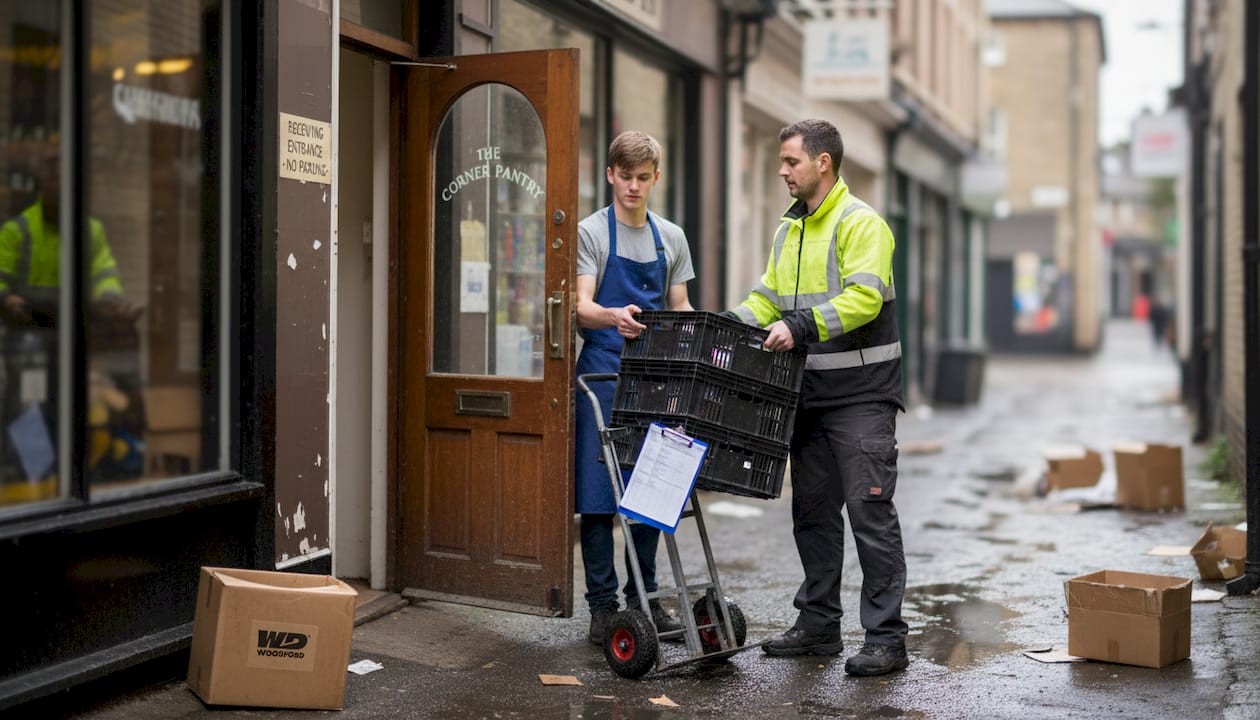
Logistics models for independents broadly fall into four categories: direct delivery from the supplier, shared delivery networks, micro-fulfilment hubs, and pallet-based consolidation. Each has a different cost profile and suits different product types.
| Logistics model | Per-unit cost | Cold-chain capable | Lead time | Best for |
|---|---|---|---|---|
| Direct supplier delivery | Low at volume | Yes | 2-5 days | High-volume core lines |
| Shared delivery network | Medium | Partial | 3-7 days | Mixed ambient range |
| Micro-fulfilment hub | £1.10-£8.50 | Yes (+30-75%) | 1-3 days | Perishables, niche lines |
| Pallet consolidation | Low | No | 5-10 days | Ambient bulk orders |
Micro-fulfilment for independent retailers shows per-unit costs ranging from £1.10 to £8.50 depending on scale, with cold-chain requirements adding 30 to 75% to those costs. Local hubs work best for perishables, while shared warehouses become cost-effective at around 200 units or more. Pilots have consistently shown reduced lead times and less waste compared to traditional models.
For specialist or premium products, shared fulfilment is worth exploring. The Gourmet Partners and Diamond Logistics case study demonstrates how independents can access reliable, scalable delivery without the overhead of a dedicated logistics contract.
When goods arrive, use this checklist to reduce errors and loss:
- Check delivery against the purchase order before signing anything
- Photograph any damaged or missing items immediately
- Log temperature on arrival for chilled or frozen goods
- Record batch numbers for traceability
- Raise disputes with the supplier within 24 hours
For more on reducing cost and complexity in your supply chain, our guide to distribution channel options is a practical starting point.
Opportunities, challenges, and maximising value from wholesale
Efficient logistics are only half the battle. It is crucial to recognise the broader market dynamics and adapt your wholesale strategy for long-term success.
Independent retailers face real structural pressure. Supermarket expansion and sustained food inflation are squeezing margins across almost every category. Yet the picture is not uniformly bleak. TWG reported 30% foodservice sales growth among its independent members, driven largely by curated premium and own-label ranges that the multiples cannot replicate at a local level.
Here is where independents can actively defend and grow their position:
- Own-label and exclusive lines: These protect margin and create loyalty that branded products alone cannot deliver.
- Premium and specialty products: Consumers willing to pay more for quality are actively seeking out independents. Curated ranges signal expertise and trust.
- Group buying: Joining a buying group or consolidating orders with other local retailers reduces per-unit cost without requiring volume you do not have.
- Regular supplier reviews: Consolidating from ten suppliers to six often reduces admin costs and improves delivery reliability simultaneously.
- Resilience planning: Identify backup suppliers for your top five lines so that a single delivery failure does not empty your shelves.
Pro Tip: Look at which products in your range are genuinely unique to your shop. Those are the ones worth protecting with exclusivity agreements or deeper supplier relationships. Everything else can be sourced on price. Our guide on adapting to food trends shows how to identify which emerging categories are worth backing early.
Speciality food brands grow faster with independent retailers precisely because independents can move quickly, test new lines, and build genuine community around products. That agility is a structural advantage, not a consolation prize.
The overlooked edge: how independents can win with smarter wholesale
Most wholesale guides focus on cost reduction. That is understandable, but it misses the bigger opportunity. The independents consistently outperforming their larger competitors are not just buying cheaper. They are buying smarter, moving faster, and using their size as a feature rather than a limitation.
Large chains need months to trial a new product category. You can test it in a fortnight. That speed, combined with genuine local knowledge, means you can identify winning products before the multiples even notice the trend. Group buying and flexible micro-fulfilment arrangements make it possible to act on that insight without taking on unsustainable stock risk.
The real edge is not price. It is the combination of consumer insight, supplier flexibility, and the willingness to back products that do not yet have a national marketing budget behind them. Retailers who understand food trends and growth early, and who have the supplier relationships to act on that understanding quickly, are the ones building genuinely resilient businesses. Stop competing with supermarkets on their terms. Start winning on yours.
Partner with experts for your next step in food wholesale
At Woodford, we work with ambitious independent retailers across the UK to take the complexity out of food brand sourcing and logistics. Whether you are building your range from scratch or looking to replace underperforming suppliers, we give you access to a curated portfolio of brands that are selected for quality, market relevance, and margin potential. Explore our partner brands to see what is available right now, or check our current promotions for time-sensitive opportunities. If you want personalised support in building a wholesale strategy that fits your shop, discover more at Woodford and speak to our team directly.
Frequently asked questions
What documents do I need to open a food wholesale account as a UK retailer?
You typically need a VAT number, food hygiene certificate, and proof of business registration. Most wholesalers request these before approving a new trade account.
Is working with a buying group better than direct food brand deals?
Buying groups generally offer stronger pricing and collective support. Groups like TWG bring £4.5bn buying power, no membership fees, and profit-share arrangements that individual direct deals rarely match.
What is micro-fulfilment and when is it a good choice?
Micro-fulfilment uses local hubs or shared warehouses to reduce lead times and waste. With per-unit costs from £1.10, it suits perishables and small-batch specialty orders particularly well.
How can I negotiate better pricing with wholesalers?
Consolidate your orders, join a buying group, or commit to regular volume agreements. The Big 30 wholesalers, including Booker and Sysco, respond to volume commitment and consolidated purchasing with meaningfully better terms.
Recommended
- Strategic food brands for UK independent retailers - WOODFORD - Bringing quality foods your way
- What is brand acceleration in food: a guide for UK retailers - WOODFORD - Bringing quality foods your way
- Food logistics tips for UK independent retailers in 2026 - WOODFORD - Bringing quality foods your way
- Food brand strategy drives UK retail success in 2026 - WOODFORD - Bringing quality foods your way