Direct to store delivery explained: boost supply chains
TL;DR:Direct to store delivery (DSD) enables faster, fresher stock by bypassing central warehouses.DSD enhances agility, supplier relationships, and local relevance for UK independent grocers.Proper planning and digital tools are essential to overcoming operational challenges in DSD.
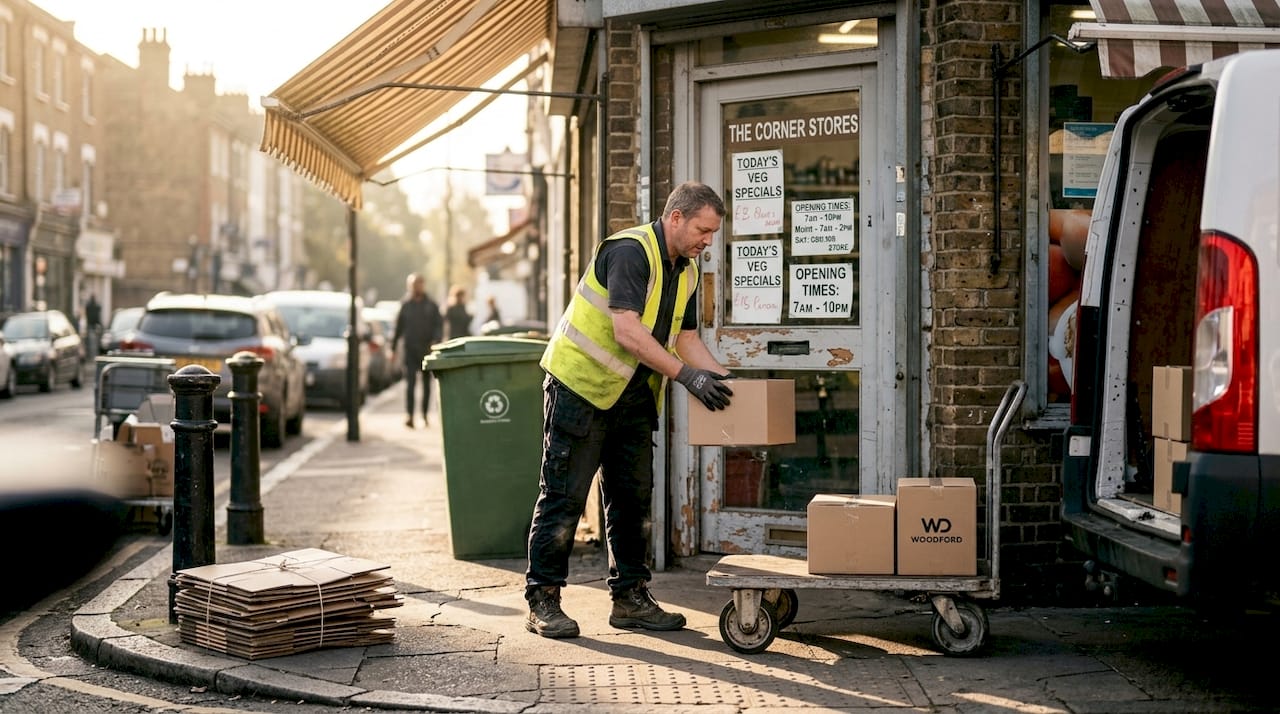
Many independent grocers assume that direct to store delivery (DSD) is a logistics model reserved for supermarket giants with vast buying power. That assumption is costing smaller retailers real money. When products travel through a central warehouse before reaching your shelves, you absorb extra handling costs, longer lead times, and the ever-present risk of reduced freshness. DSD flips this model entirely, allowing suppliers to deliver products straight to your store, cutting out the middleman warehouse. For UK independents looking to sharpen their competitive edge, understanding how DSD works could be one of the most valuable operational decisions you make this year.
Table of Contents
- What is direct to store delivery (DSD)?
- How direct to store delivery compares with traditional distribution
- Key benefits of direct to store delivery for UK independents
- Potential pitfalls and how to address them
- Getting started: Steps to implement DSD successfully
- A fresh perspective: Why DSD is about more than just efficiency
- Discover how WOODFORD can help you thrive with DSD
- Frequently asked questions
Key Takeaways
| Point | Details |
|---|---|
| DSD definition | Direct to store delivery means suppliers deliver products straight to store shelves, bypassing centralised warehouses. |
| Retailer advantages | UK independents benefit from fresher stock, better supplier relationships, and increased agility with DSD. |
| Challenges to plan for | Careful coordination and digital tools are needed to avoid delivery overlap and stock management issues. |
| Implementation steps | Start small, choose reliable suppliers, and use technology to streamline the shift to DSD. |
What is direct to store delivery (DSD)?
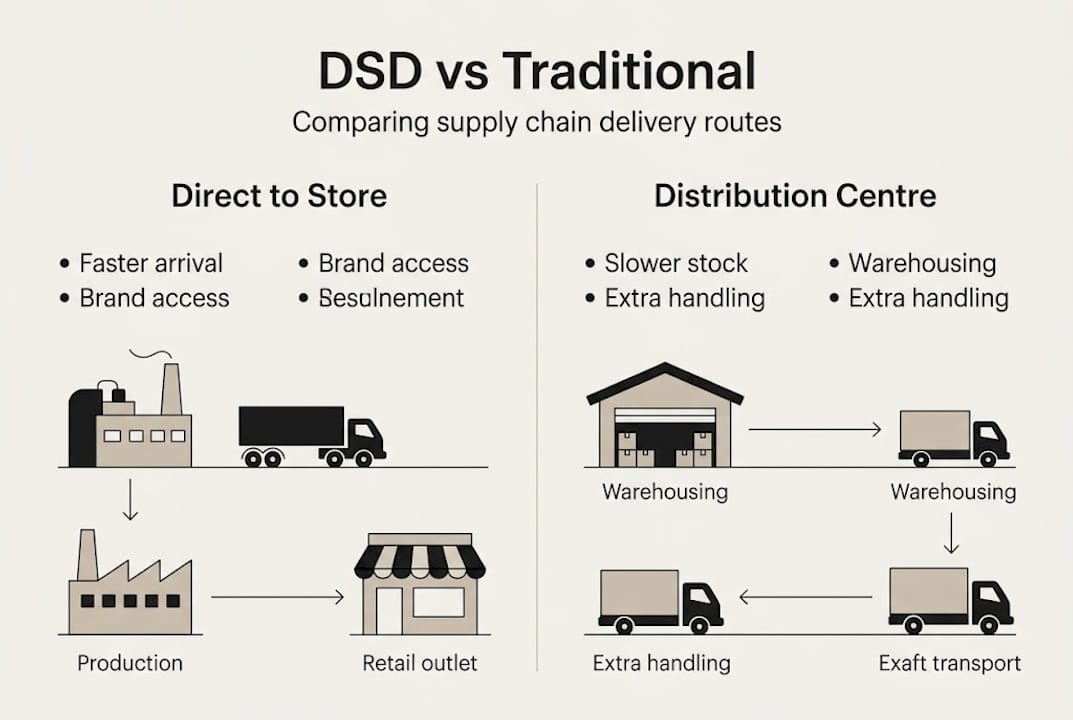
DSD is a supply chain model where a supplier or manufacturer delivers products directly to a retail location, bypassing any centralised distribution centre. Rather than your stock travelling from a supplier to a regional warehouse and then on to your shop, it arrives in a single, direct movement. This matters enormously for time-sensitive products.
In the UK grocery sector, DSD is particularly common for:
- Chilled and fresh produce such as dairy, ready meals, and deli items
- Bakery goods where shelf life is measured in hours, not days
- Beverages, including soft drinks and craft beers with rapid stock turnover
- Confectionery and snacks where promotional speed is critical
- Seasonal or limited-edition lines that need rapid shelf placement
As food distribution channels evolve, DSD is gaining traction precisely because it lets products move directly from supplier to store, skipping centralised warehousing. That single change in routing reduces spoilage, lowers handling costs, and gives you fresher stock without the warehouse premium.
The key distinction from traditional distributor-led models is control. In a conventional setup, a distributor manages the flow of goods and sets delivery schedules to suit their own network. With DSD, you negotiate directly with the supplier. Deliveries happen on timelines that suit your store, your footfall patterns, and your customers’ expectations.
“The real advantage of DSD isn’t just speed. It’s the ability for a small retailer to behave like a large one, responding to local demand without waiting for a centralised system to catch up.”
For UK independents, this agility is especially valuable. Consumer tastes shift quickly, regional preferences vary widely, and the ability to restock a bestselling line within 24 hours rather than 72 can be the difference between a loyal customer and a lost one. DSD is not a niche workaround. It is a legitimate, scalable supply chain strategy that is increasingly accessible to retailers of all sizes.
How direct to store delivery compares with traditional distribution
To appreciate what DSD offers, it helps to see it alongside the central distribution model most UK independents currently rely on.
In a traditional setup, goods travel from a manufacturer to a regional distribution centre, where they are sorted, stored, and then dispatched to individual stores. This model suits large supermarket chains with high volumes and predictable demand. For smaller retailers, however, it often means minimum order quantities that are too large, delivery windows that don’t suit your trading hours, and stock that has already aged in a warehouse before it reaches your shelves.
DSD removes that intermediate step. Cross-docking in food logistics research confirms that DSD reduces stock handling time and can cut refrigeration costs versus traditional warehousing. Fewer touches mean less risk of damage, temperature fluctuation, or administrative error.
Here is how the two models compare across the criteria that matter most to independents:
| Criteria | DSD | Central distribution |
|---|---|---|
| Speed to shelf | Fast, often same or next day | Slower, multi-stage journey |
| Product freshness | Higher, fewer handling stages | Lower, warehouse dwell time |
| Flexibility | High, supplier-negotiated | Low, fixed schedules |
| Cost | Variable, depends on volume | Predictable but often inflexible |
| Stock control | Retailer-led | Distributor-led |
| Supplier relationship | Direct and close | Indirect, via distributor |
| Risk | Coordination complexity | Dependency on single network |
Strategically, DSD gives you a closer relationship with strategic food brands that are often not accessible through traditional distribution networks. Smaller, innovative suppliers frequently prefer DSD because it gives them direct visibility of how their products perform at shelf level.
Pro Tip: A hybrid approach often works best. Use DSD for high-turnover, fresh, and trend-led lines where speed matters, and retain central distribution for ambient staples with predictable demand. This balances flexibility with operational simplicity.
Key benefits of direct to store delivery for UK independents
Having compared DSD with traditional options, it is important to highlight the specific advantages UK retailers can expect from switching or adding DSD to their supply chain.
The most immediate benefit is speed to shelf. When a product arrives directly from the supplier, it can be on the shelf within hours of delivery rather than days. For chilled goods, this translates directly into longer remaining shelf life for your customers and fewer write-offs for you. Food brand strategy analysis confirms that DSD enables fresher deliveries and increased responsiveness to local trends, which is a genuine competitive advantage in a market where freshness drives loyalty.
Beyond freshness, DSD delivers measurable operational benefits:
- Reduced inventory holding: Smaller, more frequent deliveries mean less capital tied up in back-room stock
- Improved cash flow: You pay for what you need, when you need it, rather than bulk-buying to hit minimum order thresholds
- Promotional agility: New lines, seasonal products, and promotional stock can reach your shelves faster than any centralised model allows
- Supplier accountability: When a supplier delivers directly, they have a vested interest in your success. That often translates into better terms, priority stock allocation, and early access to new products
- Local relevance: You can respond to neighbourhood demand signals quickly, stocking what your community actually wants rather than what a regional distribution algorithm suggests
For context, UK independent grocers who adopt flexible distribution options for UK retailers report stronger customer satisfaction scores and lower waste rates. The ability to adapt your range within days rather than weeks is not a luxury. In 2026, it is a baseline requirement for staying relevant.
DSD also strengthens your negotiating position. When you deal directly with a supplier, you build a relationship that a distributor-mediated model simply cannot replicate. That relationship is where the real long-term value lives.
Potential pitfalls and how to address them
While DSD offers notable benefits, it is critical to recognise and plan for the challenges that can arise in day-to-day operations.
The most common issue is coordination complexity. When multiple suppliers each deliver on their own schedules, your back room can quickly become chaotic. As UK food logistics challenges research highlights, independent retailers may face coordination risks and stock planning complexity with DSD. This is not a reason to avoid DSD. It is a reason to plan it properly.
Here are the most frequent pitfalls and how to address each one:
- Delivery overlap and congestion: Multiple suppliers arriving simultaneously disrupts your team and your customers. Solve this by assigning specific delivery windows to each supplier and communicating them clearly in writing.
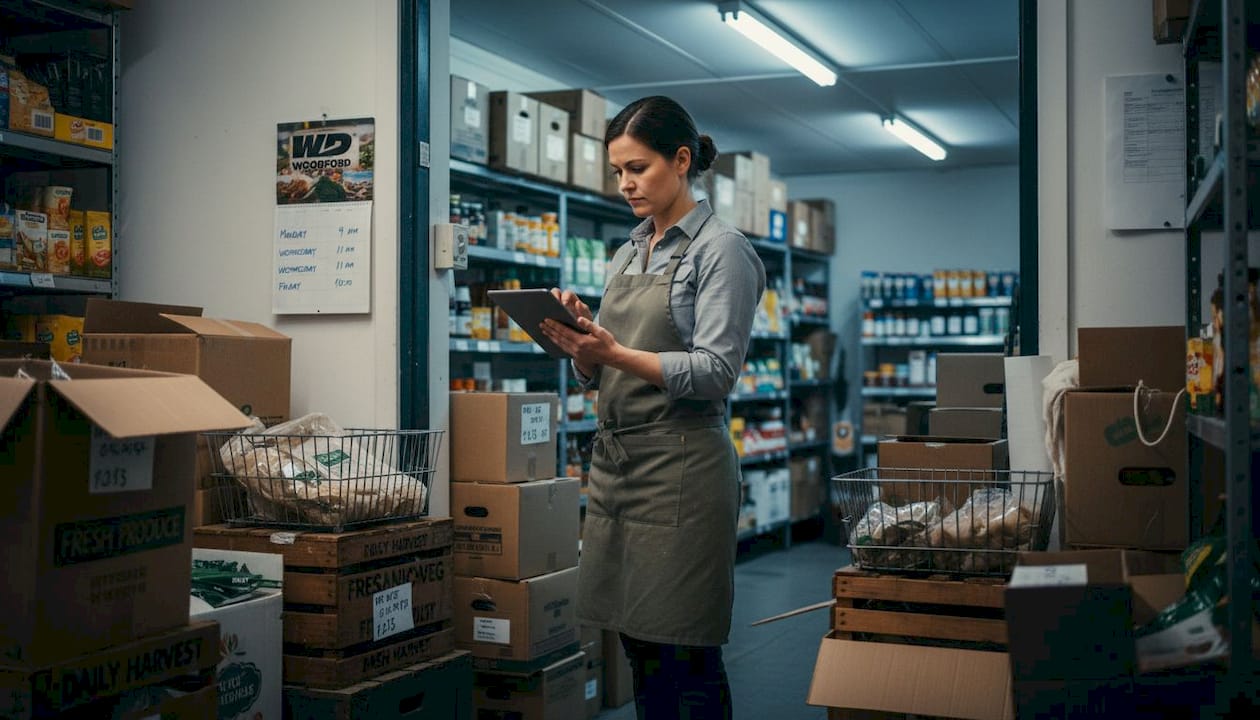
- Back-room space constraints: Frequent deliveries require organised receiving processes. Introduce a clear labelling and rotation system so staff can process arrivals quickly without creating clutter.
- Invoice and paperwork volume: Each DSD supplier generates its own paperwork. Use a simple digital tracking system to consolidate records and flag discrepancies early.
- Inconsistent delivery reliability: Not all suppliers have the same logistics capability. Vet suppliers carefully before committing to DSD arrangements, and build contingency plans for missed deliveries.
- Stock counting complexity: With stock arriving from multiple sources, manual counting becomes error-prone. Even a basic inventory management application can reduce mistakes significantly.
“The retailers who struggle with DSD are usually those who treat it as a passive arrangement. The ones who thrive treat every supplier relationship as an active partnership with clear expectations on both sides.”
Digital tools are your best ally here. Simple order management software, shared delivery calendars, and automated low-stock alerts can transform a potentially chaotic DSD setup into a smooth, reliable operation.
Getting started: Steps to implement DSD successfully
Knowing the risks, let us turn to practical advice for UK independents ready to take their first steps implementing DSD.
The first move is an honest assessment of your current product range. Identify which lines are time-sensitive, high-turnover, or frequently out of stock. These are your DSD candidates. Ambient staples with long shelf lives are usually better served by your existing distribution arrangements.
Pro Tip: Start with one or two DSD suppliers before scaling. A controlled trial lets you refine your receiving processes and identify any operational gaps without overwhelming your team.
Choosing the right suppliers is critical. Look for partners with a proven track record of reliable delivery, transparent communication, and the flexibility to accommodate your store’s trading patterns. Digital logistics tools research is clear that digital tools and supplier partnerships are vital to efficient DSD rollout.
Here is a practical rollout framework:
| Step | Action | Timeline |
|---|---|---|
| 1. Assess | Identify DSD-suitable product lines | Week 1 |
| 2. Select | Shortlist and vet potential DSD suppliers | Weeks 2 to 3 |
| 3. Plan | Agree delivery windows and in-store procedures | Week 4 |
| 4. Equip | Set up inventory and order tracking tools | Week 4 to 5 |
| 5. Trial | Run a pilot with one or two suppliers | Weeks 5 to 8 |
| 6. Review | Assess performance and refine processes | Week 9 |
| 7. Scale | Expand DSD to additional product lines | Week 10 onwards |
Once you have your pilot running, track metrics that matter: waste reduction, shelf availability, and supplier delivery reliability. These numbers will tell you quickly whether your DSD setup is working or needs adjustment. Retailers who also focus on adapting to food trends find that DSD gives them the agility to trial new ranges without the risk of overstocking through a central warehouse.
A fresh perspective: Why DSD is about more than just efficiency
Most conversations about DSD focus on speed and cost savings. Those benefits are real, but they miss the deeper opportunity that direct delivery creates for independent grocers.
DSD is fundamentally about identity. When you build direct relationships with suppliers, you gain access to products that your competitors simply cannot get through standard distribution networks. You become the retailer in your area that stocks the interesting craft drinks, the local bakery’s newest line, or the emerging health food brand before anyone else has heard of it. That is not a logistics advantage. That is a brand advantage.
Building a strategic food brand for your store is increasingly what separates thriving independents from those who are simply surviving. DSD is one of the most practical tools for making that happen. Your shelves become a curated expression of your community’s tastes, not a pale reflection of what a regional warehouse happened to have available.
The independents we see succeeding in 2026 are not just using DSD to cut costs. They are using it to tell a story about who they are and what they stand for. That story resonates with customers in ways that no supermarket loyalty card ever can.
Discover how WOODFORD can help you thrive with DSD
At Woodford, we work exclusively with UK independent retailers to make supply chains like DSD genuinely manageable and commercially rewarding. We connect ambitious shops with WOODFORD’s DSD solutions and a curated portfolio of trend-led food brands that are ready to deliver directly to your store. Whether you are just starting to explore DSD or looking to expand an existing setup, our team understands the operational realities of running an independent grocery business. Explore our brands to see the kind of exclusive, high-demand products your customers are already looking for, and visit Woodford Spotlight to discover what is new and available for direct delivery right now.
Frequently asked questions
Is direct to store delivery suitable for all types of grocery products?
DSD works best with chilled, bakery, and beverages and other high-turnover items that benefit from rapid shelf placement. Ambient products with long shelf lives are usually more efficiently handled through central distribution.
How can I avoid delivery overlap and store congestion with DSD?
Assign fixed delivery windows to each supplier and use digital tools to coordinate timings and inventory. Clear communication with suppliers about your store’s operational hours prevents most congestion issues before they start.
Does DSD save money compared to traditional distribution?
DSD can cut refrigeration costs and reduce stock handling time, but the savings depend heavily on proper planning and the reliability of your chosen suppliers. A poorly managed DSD setup can cost more than it saves.
What technology helps UK retailers manage direct to store delivery?
Inventory management systems and delivery scheduling software are especially helpful. Even entry-level digital logistics tools can significantly reduce errors and improve coordination across multiple DSD suppliers.
Recommended
- Types of food distribution channels to boost your supply chain - WOODFORD - Bringing quality foods your way
- What is cross-docking in food logistics: a guide - WOODFORD - Bringing quality foods your way
- Food logistics tips for UK independent retailers in 2026 - WOODFORD - Bringing quality foods your way
- Navigating UK food logistics for wholesalers in 2026 - WOODFORD - Bringing quality foods your way