Ambient food explained: a retailer's guide to new opportunities

TL;DR:Ambient food is now being reimagined with premium ingredients, bold flavors, and compelling provenance stories.Modern ambient products offer quality, storytelling, and discovery opportunities, not just shelf stability.Health and processing claims depend on ingredients and formulation, not storage method; many ambient foods are minimally processed.
The ambient aisle has a reputation problem. For years, independent retailers have treated it as the unglamorous workhorse of their shop floor: reliable, yes, but hardly exciting. That perception is now badly out of date. A new wave of brands is transforming shelf-stable food into something genuinely worth talking about, with premium ingredients, bold flavours, and compelling provenance stories. Whether you are looking to attract new shoppers, reduce waste, or simply find your next best-selling line, understanding what ambient food really means in 2026 could be the most profitable thing you do this year.
Table of Contents
- Understanding ambient food: definition, history and core features
- How ambient food is being reimagined in 2026
- The science behind ambient food: preservation, packaging and misconceptions
- Nuances: ambient food, ultra-processed foods and health
- Why the ambient aisle is the next innovation frontier
- Explore premium and innovative ambient foods with Woodford
- Frequently asked questions
Key Takeaways
| Point | Details |
|---|---|
| Ambient foods defined | Ambient foods are products that stay fresh at room temperature due to specialised preservation and packaging. |
| Innovation in the aisle | The ambient aisle is being transformed by premium ingredients, provenance and novel flavours. |
| Health distinctions | Not all ambient foods are ultra-processed—retailers must check ingredients to ensure quality. |
| Retailer opportunity | Curating unique ambient offerings can help independents stand out and meet evolving trends. |
Understanding ambient food: definition, history and core features
Ambient food refers to any product that can be safely stored at room temperature without refrigeration or freezing. The term “ambient” comes from the idea of storing food in the ambient, or surrounding, environment. It is a broad category that covers everything from tinned tomatoes and dried pasta to premium jarred sauces, vacuum-packed charcuterie, and sophisticated shelf-stable condiments.
This is worth separating clearly from chilled and frozen foods. Chilled foods require a controlled cold chain from production to purchase. Frozen foods demand sub-zero storage throughout. Ambient products, by contrast, sit on your standard shelving, require no specialist equipment, and can tolerate the temperature variations typical of a well-run independent retail environment.
Historically, ambient food is nothing new. Pickling, drying, and salting preserved food for centuries before modern technology arrived. The industrial era added canning on a mass scale, and then came the sophisticated preservation methods we see today. Long-life at room temperature is enabled by preservation and packaging approaches such as canning, drying, vacuum sealing, and aseptic packaging. Aseptic packaging, for those less familiar, involves sterilising the food and the container separately before filling under sterile conditions, which is how products like long-life soups and juices achieve such impressive shelf lives.
The practical benefits for independent retailers are significant:
- No cold chain costs: No specialist refrigeration or freezer units needed for storage or display.
- Reduced wastage: Longer shelf lives mean less stock written off as expired.
- Flexibility in ranging: You can trial new lines without the pressure of rapid turnover.
- Supply resilience: Products hold through delivery delays and seasonal demand spikes.
- Easier logistics: Ambient stock simplifies ordering, storage rotation, and supplier relationships.
These advantages have always existed. What is changing now is the calibre of products that sit within this category.
How ambient food is being reimagined in 2026
Having set out the basics, it is clear that innovation is reshaping this category at speed. The ambient aisle of five years ago was dominated by commodity products: own-label tins, basic condiments, and mass-market cereals. The ambient aisle of 2026 looks quite different.
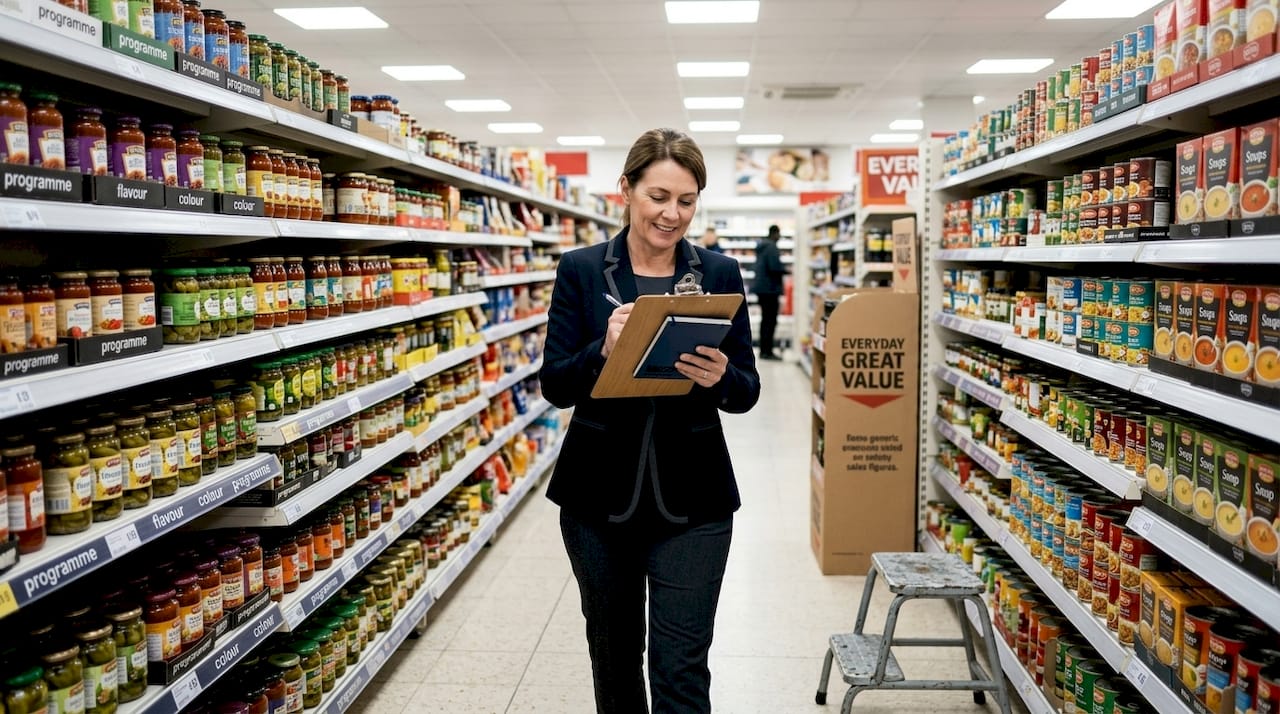
Mintel noted that the long-neglected ambient aisle is seeing renewed attention, with brands merging the practical benefits of canning and jarring with quality, provenance, exciting flavours, and personality. This is not a marginal shift. It represents a fundamental repositioning of what shelf-stable food can be.
| Feature | Old ambient positioning | New ambient positioning |
|---|---|---|
| Quality signals | Generic, commodity | Artisan, premium ingredients |
| Provenance | Rarely mentioned | Central to the brand story |
| Flavour profile | Safe, familiar | Bold, adventurous, global |
| Packaging | Functional | Design-led, shelf-standout |
| Shopper perception | Boring necessity | Exciting discovery |
| Price point | Budget-driven | Mid to premium |
The brands leading this charge are bringing a food service mindset to retail. Think of small-batch jarred pasta sauces made with a named tomato variety, or ambient fish products with clear traceability to a specific fishery. These products tell a story, and story-driven products earn space in the basket and on social media.
“The ambient aisle is no longer just a place to fill gaps. For our most forward-thinking retail partners, it has become the section where shopper conversations actually start.”
For independents, the opportunity here is genuine. You are not competing on price with the supermarkets in this space. You are competing on curation and discovery. Shoppers come to you because they trust your judgement. When you stock an ambient brand that nobody else in the area carries, you are giving them a reason to return.
Pro Tip: When evaluating new ambient lines, ask the brand two questions: where are the key ingredients sourced, and what makes this product different from a supermarket equivalent? If they cannot answer clearly, the product probably lacks the story that makes it worth stocking.
For broader context on adapting food trends to your shop’s identity, or if you want a structured approach to trend analysis for UK food brands, the evidence points in one direction: ambient is a category worth serious attention right now.
The science behind ambient food: preservation, packaging and misconceptions
But what actually keeps ambient foods safe and high quality over time? The answer lies in controlling the conditions that allow bacteria, moulds, and yeasts to grow. Every preservation method targets one or more of these conditions.
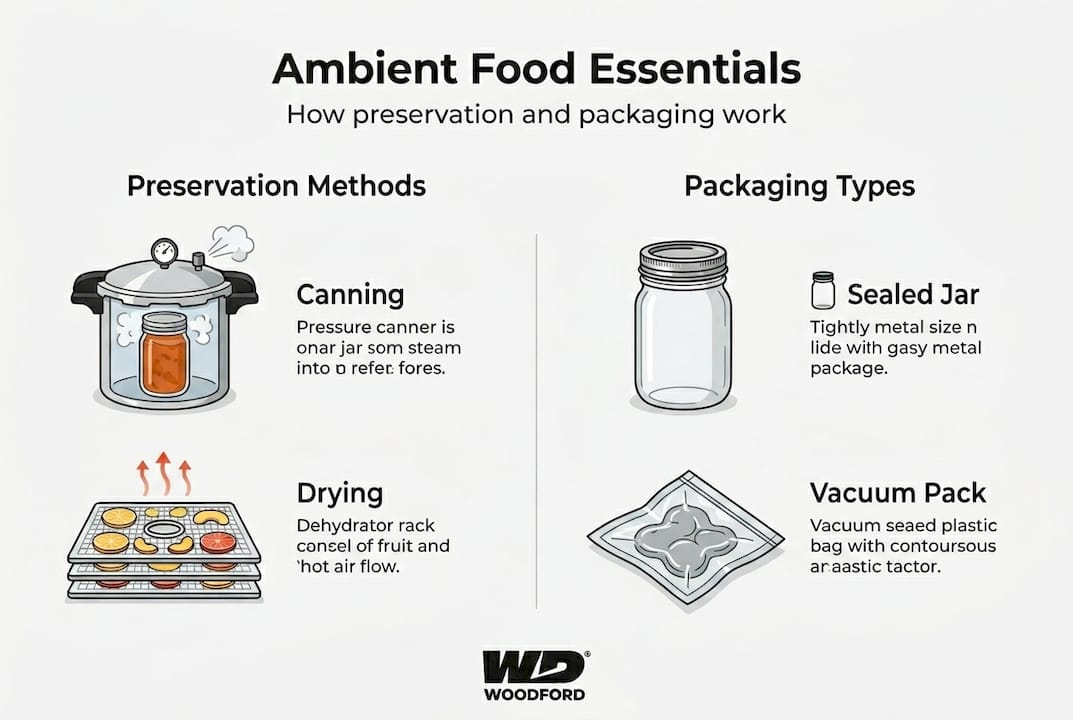
The key preservation approaches include canning, drying, vacuum sealing, and aseptic packaging. Here is how they differ in practice:
| Method | How it works | Typical products |
|---|---|---|
| Canning | Heat sterilisation inside sealed cans or jars | Tinned fish, soups, vegetables |
| Drying | Removing moisture to prevent microbial growth | Pasta, pulses, herbs, jerky |
| Vacuum sealing | Removing oxygen to inhibit aerobic spoilage | Charcuterie, coffee, nuts |
| Aseptic packaging | Sterilising product and container separately | Long-life soups, juices, dairy alternatives |
One of the most persistent misconceptions in retail is that ambient equals unhealthy. This is simply not accurate. Processing method does not determine nutritional quality. A tin of wild-caught sardines in olive oil is ambient, minimally processed, and nutritionally excellent. A brightly coloured children’s fruit pouch may be chilled and still packed with added sugars.
How should you assess supplier claims about quality and process? Work through these steps:
- Request the full ingredient list before committing to any line.
- Check the processing method declared on the label or in the brand’s technical sheet.
- Assess additive use: fewer additives generally indicates less intensive processing.
- Ask about sourcing: quality ambient products often start with quality raw materials.
- Review the nutritional panel against comparable fresh or chilled alternatives.
Pro Tip: If a supplier cannot provide a clear technical data sheet for their ambient product, treat that as a warning sign. Premium brands are usually proud to share this information.
For independents managing a mixed range, food logistics tips specific to ambient stock can help you keep your ordering, rotation, and display practices sharp without adding complexity to your operation.
Nuances: ambient food, ultra-processed foods and health
This leads to questions about health and how ambient fits into bigger debates about food quality. The conversation around ultra-processed foods, often called UPFs, has intensified considerably over the past few years. Ambient food sometimes gets caught in the crossfire unfairly.
It is important to be clear: ambient is a storage and processing category, not a health claim in either direction. The storage temperature of a product tells you nothing reliable about its nutritional profile. This distinction matters when you are making ranging decisions for health-conscious shoppers.
Ambient foods often overlap with ultra-processed foods in consumer and public-health discourse, but the suitability of any ambient item depends on its formulation and ingredient profile, not its storage temperature. A five-ingredient jarred ragu and a highly engineered ambient ready meal are both shelf-stable. They are not nutritionally equivalent.
UPFs, as defined in the widely used NOVA classification system, are products that undergo industrial processing and contain ingredients not typically found in a home kitchen: emulsifiers, stabilisers, artificial flavours, and so on. Some ambient products fall into this category. Many do not.
Here is what to look for when selecting genuinely health-positive ambient lines:
- Short ingredient lists: Products with five to eight recognisable ingredients are usually a good sign.
- No hidden additives: Check for emulsifiers (codes starting with E4), artificial sweeteners, and flavour enhancers.
- Whole food base: Products where the primary ingredients are whole foods, not reconstituted derivatives.
- Transparent labelling: Brands that list everything clearly are generally more trustworthy.
- Recognised certifications: Organic, Soil Association, or similar marks can indicate better processing standards.
“Ambient does not mean processed in a negative sense. Our best-selling ambient lines have cleaner ingredient lists than many products in our chilled section.”
As a retailer, your role is to do this scrutiny so your shoppers do not have to. That is part of what makes an independent retailer genuinely valuable.
Why the ambient aisle is the next innovation frontier
There is a view in independent retail that if a category is not chilled, it is not premium. We think that view is costing retailers real money. The honest truth is that some of the most interesting food brand strategy work happening in the UK food sector right now is focused squarely on ambient products.
The retailers who thrive in the next few years will be those who treat the ambient aisle as an opportunity hub, not a static fixture. Ambient products are ideal for trialling because the risk is lower: longer shelf lives mean you can introduce a new line without the pressure of a two-week sell-through window. They are also natural candidates for cross-promotion, pairing a premium ambient pasta with a fresh sauce, or placing a shelf-stable broth next to your butcher counter.
Conventional wisdom says ambient is for cost-cutting and margin protection. We disagree. The real opportunity is in discovery, storytelling, and giving shoppers products they cannot find anywhere else in their area. That is precisely the ground on which independent retailers win.
Explore premium and innovative ambient foods with Woodford
Ready to turn insight into action? At Woodford, we work exclusively with independent retailers who want to stock food brands worth talking about. Our curated selection of ambient products spans premium pantry staples, innovative condiments, and story-driven speciality lines. Every brand in our roster has been selected because it offers something a supermarket cannot replicate. Browse our current promotions for seasonal opportunities, or visit the Woodford product showcase to see the full range of ambient and speciality lines available to independent retailers right now. We handle the logistics. You handle the curation.
Frequently asked questions
What distinguishes ambient food from fresh and chilled foods?
Ambient foods are shelf-stable at room temperature because of specific preservation and packaging processes, unlike chilled or fresh foods which require refrigeration to remain safe and maintain quality.
Are all ambient foods ultra-processed?
No. Whether an ambient food is ultra-processed depends on its formulation and ingredient profile, not its storage temperature. Many ambient products are minimally processed with simple, recognisable ingredients.
What is driving renewed interest in ambient foods in 2026?
Mintel highlights that the renewed ambient attention is being driven by brands combining the convenience of preservation with quality ingredients, provenance, exciting flavours, and genuine personality, making the category far more compelling for independent retailers.
How can retailers identify high-potential ambient foods?
Focus on products that lead with provenance, premium raw materials, and a clear brand story rather than simply a long shelf-life. Brands merging preservation with quality and personality consistently outperform commodity lines in independent retail environments.
Recommended
- Why adapt to food trends: boost independents’ growth - WOODFORD - Bringing quality foods your way
- Strategic food brands for UK independent retailers - WOODFORD - Bringing quality foods your way
- What is brand acceleration in food: a guide for UK retailers - WOODFORD - Bringing quality foods your way
- Food logistics tips for UK independent retailers in 2026 - WOODFORD - Bringing quality foods your way