
Sustainable delivery options UK retailers should adopt now
Most UK retailers should prioritise three things in order: consolidate orders to cut wasted trips, switch trunking fuel to HVO or electric where routes allow, and start measuring emissions properly so you know what’s actually working. This sequence matters because consolidation is free, fuel switching is fast, and measurement stops you guessing.
Do this within the next 30 days:
- Offer grouped or next-day delivery slots instead of same-day everywhere, cutting van trips per postcode.
- Ask your current carrier for their fleet fuel mix and electric van numbers in writing.
- Log fuel and mileage data now, even in a spreadsheet, so you have a baseline before you change anything.
The government’s freight decarbonisation plan documents a GXO and B&Q programme that cut emissions forecasts by around 40% through fuel changes and route optimisation alone, no fleet rebuild required.
Pro Tip: Run a two-week order consolidation trial on your slowest-moving postcode before committing to any new carrier contract. You’ll see the mileage impact before you spend a penny.
Key Takeaways
The most effective sustainable delivery strategy for UK retailers combines order consolidation, HVO or EV fuel switching, and Defra-aligned emissions measurement, in that order of priority.
| Point | Details |
|---|---|
| Consolidate before you switch fuel | Grouping orders into fewer trips can cut transport energy use by up to 70% before any vehicle changes. |
| HVO bridges the EV gap | HVO cuts CO2 by up to 90% versus diesel and suits long-haul trunking where charging infrastructure isn’t ready. |
| Measure before you claim | Log vehicle type, fuel, distance and load data using Defra’s minimum dataset before reporting any emissions figure. |
| Compare carriers on data, not badges | Ask for fuel mix, route density and verified reporting rather than accepting marketing claims at face value. |
| Fix inbound freight first | Woodford’s order consolidation model addresses upstream freight mileage that last-mile-only strategies typically miss. |
Table of Contents
- What sustainable delivery options are available to UK retailers?
- How do sustainable carriers actually differ from each other?
- Which operational changes cut carbon the most?
- How do you measure and report transport emissions correctly?
- What does switching to greener delivery actually cost?
- What should you ask before choosing a delivery partner?
- Which sustainable delivery option fits your business type?
- What government funding supports sustainable delivery in the UK?
- How does greener delivery affect the customer experience?
- How have UK businesses transitioned to sustainable delivery?
- What are the legal requirements around Clean Air Zones and emissions?
- How Woodford helps food retailers deliver more sustainably
- Frequently asked questions
- Sources
What sustainable delivery options are available to UK retailers?
The options fall into a handful of clear categories, and which one suits you depends on what you’re shipping and how far it’s travelling.
Electric vehicle (EV) fleets work best for urban last-mile delivery under 100 miles, particularly for parcels and ambient goods. HVO (hydrotreated vegetable oil) is a drop-in diesel replacement suited to long-haul trunking and HGVs where charging infrastructure isn’t there yet. Modal shift to rail or river freight makes sense for bulk pallet movements over longer distances, especially inbound stock to distribution hubs. Consolidation and click & collect reduce the number of separate trips per customer, which matters most for grocery and multi-buy retail. Local couriers and cargo bikes suit dense urban areas and small parcels. Temperature-controlled green options matter specifically for perishable food, where you need low-emission transport that doesn’t compromise the cold chain.
For a UK food wholesaler, the practical fit usually looks like this: HVO for ambient pallet trunking between depots, EV or cargo bike for last-mile urban drops, and consolidation for anything going to independent retailers on a regular schedule.
UK parcel volumes are large and still climbing, which is why these emissions choices carry real weight at scale, not just per delivery. A single delivery is negligible; a million of them a week is not.
How do sustainable carriers actually differ from each other?
Marketing pages tend to blur together, so compare carriers on concrete dimensions instead of taking green claims at face value.
Look at six things: what parcel type or size the service is genuinely built for, whether the emissions approach is EV, HVO, offsets or a mix, coverage and delivery speed against your actual order patterns, any price premium attached to the green option, how transparent the reporting is, and whether cold-chain handling exists if you’re moving food.
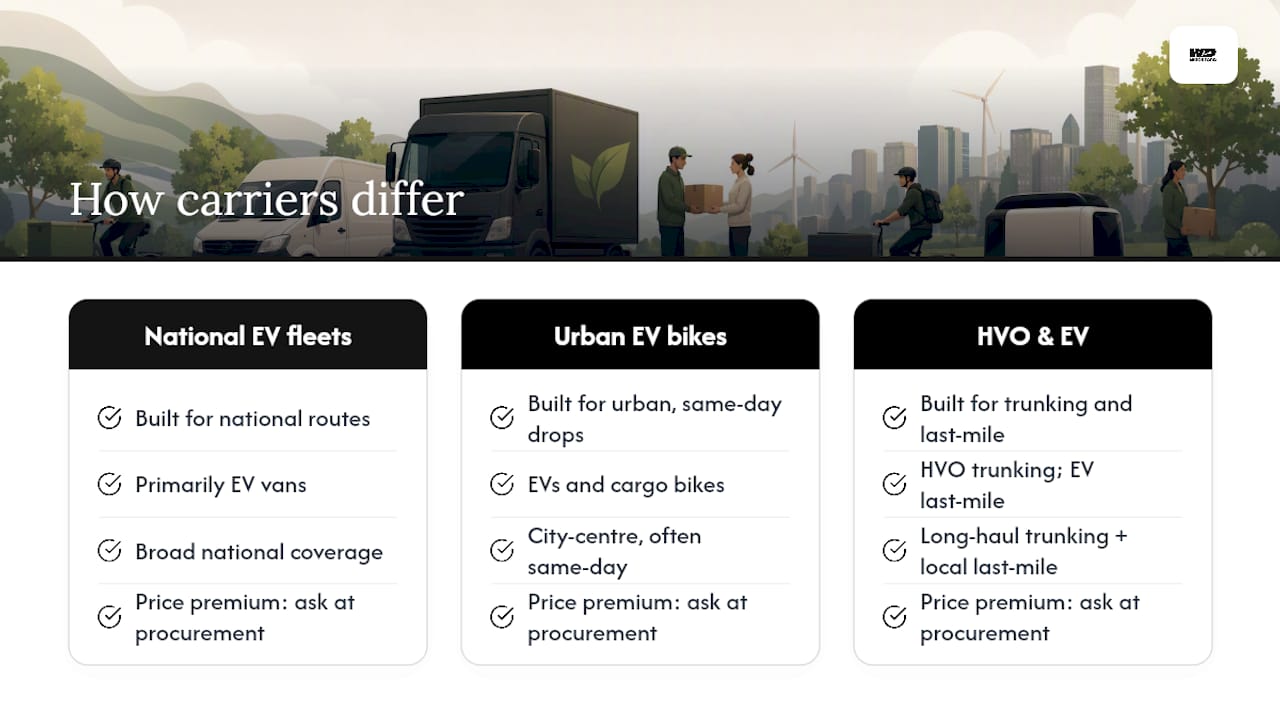
DPD (UK) publishes a sustainability dashboard showing EV counts and route data, which is worth checking directly rather than relying on a summary. Royal Mail now runs a large electric van fleet, with a meaningful share of routes fully electric. Evri has invested in EV last-mile capacity across urban depots. Paack operates urban, often same-day, last-mile services using electric and cargo bike fleets in city centres. HIVED focuses specifically on zero-emission last-mile delivery using electric vehicles and cargo bikes for retailers wanting a dedicated green option. DHL (UK) blends HVO trunking with EV last-mile and publishes carbon reporting at scale.
None of these is automatically the right answer for every business; a national wholesaler moving pallets has different needs from an urban grocer doing same-day drops. What matters is asking the right questions at procurement stage rather than accepting a green badge on a website.
Pro Tip: Ask any prospective carrier for their route density figures in your delivery postcodes, not just national averages. A carrier can be excellent nationally and mediocre exactly where you need them.
Urban emissions restrictions add another layer. In London specifically, route optimisation isn’t a nice-to-have; it’s what keeps deliveries compliant and reliable inside Clean Air Zone and ULEZ boundaries.
Which operational changes cut carbon the most?
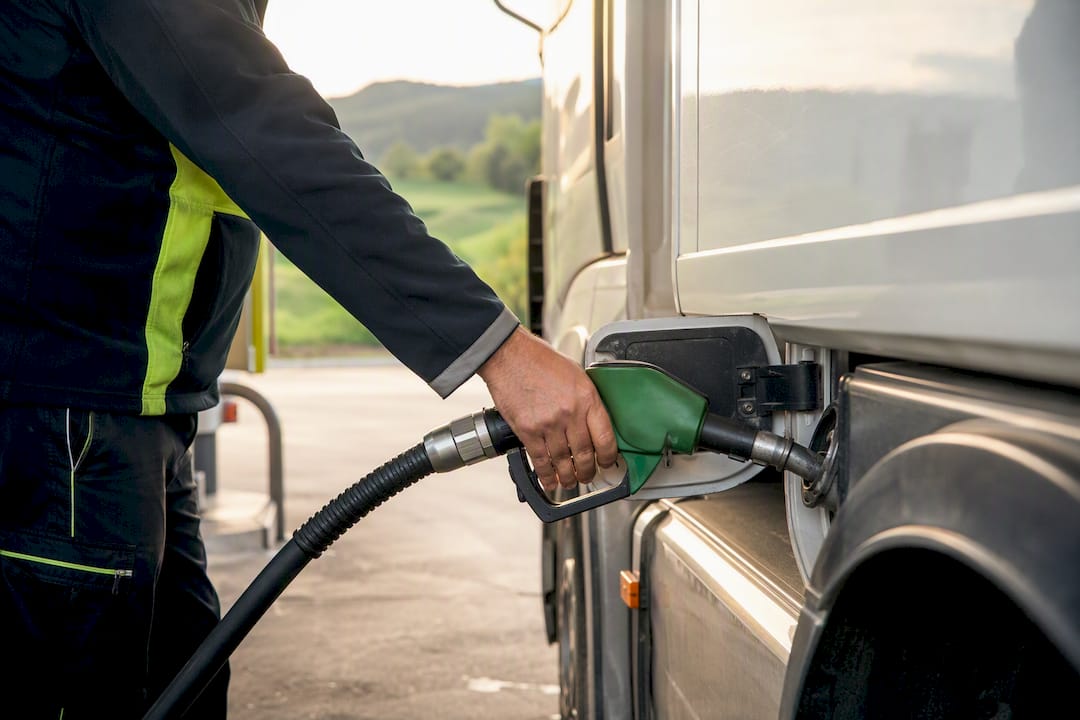
Consolidating deliveries into fewer, fuller trips can cut transport energy use by as much as 70%, and that’s before you touch the vehicles themselves. Switching HGV trunking fuel to HVO can greatly reduce CO2 emissions compared with diesel, a lifecycle reduction that doesn’t require new vehicles or charging infrastructure.
Route optimisation, better load factors, and telematics-based driver training deliver gains almost immediately because they change how existing fleets are used, not what they’re made of. GXO’s UK carbon reduction plan reports that over 80% of its sites now use route optimisation software, alongside HVO trials that produced substantial measured cuts on specific trunking routes.
Three practical moves worth piloting: consolidate orders going to the same postcode into fewer slots, optimise backhaul so return legs aren’t running empty, and shift non-urgent deliveries to off-peak windows when congestion, and therefore fuel burn, is lower.
Pro Tip: Get your fulfilment and transport planning teams talking to each other before you pilot anything. Warehouses that pick orders in isolation from delivery routing routinely create inefficient loads that no amount of clever fuel choice can fix.
How do you measure and report transport emissions correctly?
Start with the minimum dataset: vehicle types used, fuel consumed per vehicle, distance travelled, number of drops per customer, and load factors on each route. Without these five inputs, any emissions figure you report is a guess.
Decide your reporting boundary early. Scope 1 covers fuel you burn directly in owned vehicles; Scope 2 covers electricity used at depots; Scope 3 covers subcontracted carriers and outsourced transport, which for most retailers using third-party couriers is where most of the real number sits.
Track both absolute totals and an intensity metric, such as kgCO2e per pallet delivered, because absolute numbers alone hide whether you’re getting more efficient or simply shipping less.
Report both absolute emissions and intensity metrics for transport operations, using the minimum dataset of vehicle types, fuel used, distance, and load information as the baseline for any credible figure.
That’s the core of Defra’s freight-specific guidance, and it’s the fastest route to a number you can actually defend. Start logging fuel receipts and mileage this month; you can’t calculate anything retrospectively that you didn’t record at the time.
What does switching to greener delivery actually cost?
Costs land in four places: fleet capital if you’re buying EVs outright, the fuel price gap between HVO and standard diesel, route optimisation software licensing, and any reporting or verification work if you want your numbers independently checked.
Quick paybacks come from operational efficiency, telematics and consolidation, since these cost little beyond staff time and start saving fuel within weeks. Longer payback periods apply to EV HGVs and depot electrification, where charging infrastructure and vehicle costs take years to recoup.
A realistic rollout timeline looks like this:
- Weeks 1 to 6: Run a consolidation or off-peak delivery pilot on one route or postcode.
- Months 2 to 6: Evaluate the pilot against your baseline emissions data and customer satisfaction.
- Months 6 to 24: Phase in fuel switching or EV additions where the pilot showed clear savings, expanding gradually rather than fleet-wide overnight.
Worth exploring: local authority Clean Air Zone grants for van upgrades, and Zero Emission Vehicle grant schemes for eligible commercial vehicles. Check current eligibility directly with your local authority before budgeting around a specific figure.
What should you ask before choosing a delivery partner?
Ask any prospective carrier to show, not tell. Request published sustainability dashboards, actual fuel mix breakdowns, and verified emission factors rather than a one-line green claim on their homepage.
Build these into your RFP and service level agreement:
- Reporting cadence (monthly, quarterly) and format.
- Which Scope 3 boundary they report against.
- Carbon intensity metrics per pallet or per parcel, not just fleet-wide totals.
- Cold-chain evidence if you’re moving perishable stock.
Red flags worth walking away from: no data offered at all, offset claims with no third-party verification behind them, and any carrier vague about cold-chain controls when you specifically asked about temperature-sensitive goods. As CILT’s guidance on logistics partnerships puts it, the strongest partners offer integrated fulfilment and measurable route density improvements, not just a green badge bolted onto an existing service.
Contract reporting clauses should specify the metrics, the cadence, and who verifies the numbers, ideally an independent third party rather than the carrier marking its own homework.
Common question: does asking for this data slow down procurement? Slightly, upfront. It saves far more time later when you’re not renegotiating a contract because the green claims didn’t hold up.
Which sustainable delivery option fits your business type?
A small urban grocer doing same-day local drops gets the fastest win from switching to a cargo bike or EV local courier, since distances are short and volumes per drop are low.
A multi-site convenience retailer benefits most from consolidating inbound stock deliveries across sites before touching last-mile transport at all, since inbound freight is often the bigger carbon cost.
A national wholesale operation moving pallets of ambient goods should look first at HVO for trunking routes, since electrification of HGVs still lags behind demand on longer hauls.
A perishable food subscription service needs temperature-controlled green options above all else; a low-carbon claim means nothing if the cold chain fails.
These patterns reflect how UK operators like GXO and Royal Mail have sequenced their own transitions, fuel switching before full electrification, urban EV before rural EV. Woodford applies the same logic when helping independent food retailers sequence their own delivery choices around what their product range actually demands.
Pro Tip: Tell customers what you’re doing, not what you’ve achieved. “We’ve moved to grouped delivery slots to cut van trips” is honest and verifiable. “Carbon neutral delivery” without third-party verification behind it is a claim you may struggle to defend later.
What government funding supports sustainable delivery in the UK?
Several routes exist for UK retailers looking to offset the upfront cost of greener delivery, though eligibility and funding levels shift regularly, so always confirm current terms before budgeting around a specific figure.
Local authority Clean Air Zone support schemes offer grants or discounts for upgrading commercial vehicles operating within controlled zones, typically aimed at small and medium-sized fleets. Zero Emission Vehicle grants apply to eligible electric vans and HGVs, reducing the capital gap between an EV and its diesel equivalent. Workplace Charging Scheme funding helps businesses install EV charging infrastructure at depots or warehouses, which matters if you’re planning to electrify even part of your delivery fleet.
The government’s own freight decarbonisation plan sets out the wider policy direction, including support for HVO adoption and route optimisation technology as interim measures while EV infrastructure scales up nationally. That’s a useful signal for procurement teams: the direction of travel is fuel switching and efficiency first, full electrification later, which matches what operators like GXO are already doing in practice.
Most schemes require an application before purchase, not after, so build the funding search into your pilot planning stage rather than treating it as an afterthought. A local authority’s business support team or your regional Growth Hub is usually the fastest way to find what’s currently open in your area, since national scheme lists go out of date quickly.
How does greener delivery affect the customer experience?
Customers increasingly notice delivery choices, but they respond better to specific, honest claims than to broad sustainability language. Saying “we’ve reduced van trips to your area by 30% through grouped delivery slots” lands better than an unverified “eco-friendly delivery” badge, because it’s something a customer can picture.
Grouped delivery slots or click & collect can occasionally mean a slightly longer wait than same-day, so the trade-off needs explaining, not hiding. Retailers that frame this well tend to link the wait to a concrete benefit: fewer vans on the road, better fuel use, lower cost passed back where possible.
Transparency about what you’re actually doing, rather than a general green label, builds more trust than a logo ever will. If you’ve switched trunking fuel to HVO, say so. If you’re piloting consolidated slots, tell customers it’s a trial and ask for feedback. That approach also protects you from greenwashing accusations, which have become a real reputational risk as customers get more sceptical of vague claims.
Packaging choices sit alongside delivery method in how customers judge your environmental credentials, and the two often get conflated in a customer’s mind even when they’re separate operational decisions. Retailers thinking about how packaging shapes customer trust usually find it pays to address both together rather than fixing one and ignoring the other.
How have UK businesses transitioned to sustainable delivery?
GXO’s work with B&Q shows what a realistic transition looks like in practice: not a single dramatic fleet swap, but a combination of HVO trials, route optimisation software rolled out across the majority of sites, and load efficiency improvements, together cutting emissions forecasts by around 40%. The challenge GXO documents openly is that full electrification of heavy trunking still isn’t viable everywhere, which is exactly why HVO functions as a bridging fuel rather than a permanent fix.
Royal Mail’s transition illustrates a different challenge: scale. Operating close to 9,000 electric vans with a third of routes fully electric took years of phased depot electrification, not a single infrastructure investment. The lesson for smaller retailers is that partial electrification, tackling your highest-volume routes first, delivers most of the benefit without requiring a full fleet overhaul on day one.
A less obvious challenge sits in returns handling. Research from the University of Sheffield identifies failed deliveries and returns as among the highest carbon costs per parcel, since each one effectively doubles the transport footprint. Retailers piloting sustainable delivery often overlook this and focus solely on the outbound leg, missing a substantial share of the actual problem.
What are the legal requirements around Clean Air Zones and emissions?
Clean Air Zones and London’s ULEZ impose charges or restrictions on vehicles that don’t meet emissions standards, and these zones now cover a growing number of UK cities beyond London, including Birmingham, Bristol, and others. If your delivery fleet, or your carrier’s fleet, regularly enters these zones with non-compliant vehicles, you’re either paying daily charges or facing access restrictions that disrupt delivery reliability.
Government guidance on managing vehicle emissions makes clear that route optimisation isn’t just an efficiency tool inside these zones; it’s often what keeps deliveries compliant and cost-effective at all. Retailers using third-party carriers should confirm which zones their contracted vehicles are compliant with, since a carrier’s national fleet may include a mix of compliant and non-compliant vehicles depending on route.
There’s no single UK-wide “sustainable delivery” legal standard retailers must meet beyond general environmental reporting obligations that apply to larger companies under existing carbon reporting frameworks. The practical legal exposure for most retailers sits in Clean Air Zone compliance and in the risk of misleading environmental claims under existing consumer protection rules, which is precisely why unverified “carbon neutral” claims carry real reputational and regulatory risk if challenged.
How Woodford helps food retailers deliver more sustainably
Retailers weighing up carrier switches, EV fleets or HVO contracts often overlook a simpler lever: fixing the fulfilment and inbound freight side first, before touching last-mile delivery at all. That’s where Woodford sits differently from a standalone carrier. As a wholesale distribution partner, Woodford consolidates orders from multiple independent retailers into fewer, fuller inbound freight movements, which cuts the upstream mileage most sustainability conversations skip entirely.
A practical low-risk starting point: run a consolidation and eco-slot trial with Woodford on your regular ordering pattern, grouping deliveries into set weekly slots rather than ad hoc requests, and compare the mileage and order-fill efficiency against your current baseline over a month. Woodford’s digital ordering portal and fulfilment integration make that kind of trial straightforward to set up without renegotiating your entire delivery contract. If you’re weighing up how logistics and packing choices affect your overall footprint, it’s worth exploring wholesale logistics fundamentals alongside any carrier decision.
Get in touch through Woodford’s site to discuss a pilot consolidation run for your next ordering cycle.
Frequently asked questions
What is the most sustainable delivery option for a small UK retailer? Consolidating orders into grouped delivery slots or click & collect usually delivers the fastest, cheapest carbon reduction before any fuel or vehicle change is needed.
Do sustainable delivery options cost more? Operational changes like consolidation and route optimisation typically cost little beyond staff time; EV fleets and depot electrification carry higher upfront costs with longer payback periods.
Is HVO fuel actually more sustainable than diesel? HVO is a drop-in fuel that can cut CO2 emissions by up to 90% compared with diesel across its lifecycle, making it a practical bridge fuel for routes where electric vehicles aren’t yet viable.
How do Clean Air Zones affect delivery choices? Non-compliant vehicles entering Clean Air Zones or ULEZ face daily charges or access restrictions, making route optimisation and fleet compliance checks essential for reliable urban delivery.
Which UK carriers offer electric or low-emission delivery? Royal Mail, DPD, Evri, DHL, HIVED and Paack all operate electric or low-emission delivery services to varying degrees, with coverage and vehicle mix varying by region and route.


