
Guide to food retail compliance for UK managers
Food retail compliance is the set of legal and operational requirements that all UK food businesses must follow to ensure safe food handling, accurate allergen labelling, hygiene standards, and record keeping. Every food retailer in the UK, regardless of size, operates under assimilated EU Regulation 852/2004, which mandates a food safety management system built on Hazard Analysis and Critical Control Points (HACCP) principles. The Food Standards Agency (FSA) sets national policy, while local authority Environmental Health Officers (EHOs) carry out inspections and enforce the law. Getting this right is not optional. It is the legal and commercial foundation of every food retail operation.
What does a guide to food retail compliance cover?
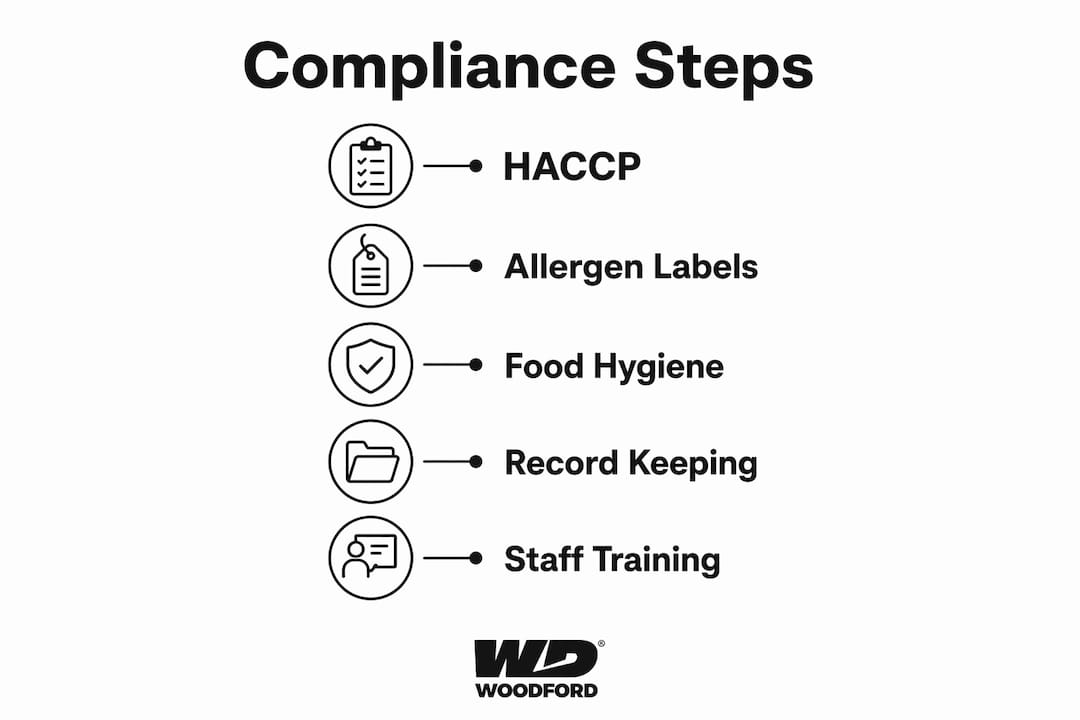
Food retail compliance spans five core areas: HACCP-based food safety management, allergen labelling, the Food Hygiene Rating Scheme (FHRS), record keeping, and staff training. Each area carries distinct legal obligations and inspection criteria. Compliance officers who treat these as separate checklists miss the point. They interact constantly. A supplier change, for example, can trigger HACCP updates, allergen label revisions, and new staff briefings all at once. Understanding how these areas connect is what separates reactive compliance from a genuinely well-run operation.
How to implement an effective HACCP-based food safety management system
HACCP is not a bureaucratic exercise. It is a structured method for identifying food safety hazards before they cause harm. All UK food businesses must implement HACCP regardless of turnover or headcount. That means a single-person deli counter and a regional supermarket chain face the same legal obligation, even if the scale of documentation differs.

The seven principles of HACCP
HACCP follows seven principles that apply to every food retail setting:
- Conduct a hazard analysis. Identify biological, chemical, and physical hazards at each stage of food handling.
- Determine critical control points (CCPs). These are the steps where control is essential to prevent or eliminate a hazard. Chilled storage temperature is a classic CCP for most retailers.
- Establish critical limits. Set the maximum or minimum values at each CCP. For chilled foods, this is typically 8°C or below.
- Monitor CCPs. Record temperatures, check dates, and log deliveries consistently.
- Establish corrective actions. Define what happens when a CCP falls outside its limit. Discard, quarantine, or re-cook, depending on the product.
- Verify the system works. Review records, audit practices, and test the system periodically.
- Document everything. Without records, the system does not legally exist.
Using Safer Food Better Business (SFBB) packs
Small retailers do not need to build a HACCP system from scratch. The FSA’s Safer Food Better Business packs provide a legally accepted, simplified HACCP framework designed specifically for small food businesses. EHOs across England, Wales, and Northern Ireland accept SFBB packs as proof of compliance. Scotland uses the equivalent CookSafe system. The pack includes diary sheets, cleaning schedules, and safe method cards that, when completed correctly, satisfy the documentation requirement.
Pro Tip: Treat your SFBB pack as a living document. A HACCP system must be reviewed and updated whenever you change a process, ingredient, or supplier. An outdated pack is a compliance failure waiting to happen.
The most common HACCP mistake in retail is treating the system as a one-off setup task. Compliance requires continuous engagement. When a new product line arrives, the HACCP plan needs reviewing. When a supplier changes a recipe, allergen records and CCPs may both need updating. This is not optional maintenance. It is a legal requirement.
| HACCP element | Retail example | Record to keep |
|---|---|---|
| Critical control point | Chilled display cabinet | Daily temperature log |
| Corrective action | Food above 8°C discarded | Corrective action record |
| Supplier verification | Delivery temperature check | Delivery acceptance log |
| Cleaning schedule | Deli counter sanitised twice daily | Signed cleaning diary |
What UK food retail managers need to know about allergen compliance and labelling
Allergen law is one of the highest-risk areas of food retail regulations for independent retailers. The law requires declaration of 14 major allergens: celery, cereals containing gluten, crustaceans, eggs, fish, lupin, milk, molluscs, mustard, peanuts, sesame, soybeans, sulphur dioxide and sulphites, and tree nuts. The rules differ depending on how food is sold.
Labelling rules by food category
- Prepacked foods require a full ingredients list with allergens emphasised, typically in bold or a contrasting colour.
- Prepacked for Direct Sale (PPDS) foods, such as sandwiches made and wrapped on the premises for sale in the same outlet, require full ingredient lists with allergens emphasised. This rule catches many retailers off guard.
- Non-prepacked foods, such as loose items sold from a deli counter, require allergen information to be available either on a label, a menu, or verbally from trained staff.
PPDS labelling is the most frequently overlooked requirement in independent retail. Many managers assume that wrapping food on the premises exempts them from full labelling. It does not. The law applies regardless of business size.
Managing allergen cross-contamination
Cross-contamination is as legally significant as mislabelling. Shared equipment, preparation surfaces, and storage areas all create risk. Colour-coded utensils, dedicated preparation zones, and documented cleaning procedures between allergen-containing and allergen-free products are the standard controls. Staff must understand not just which allergens are present, but how cross-contact occurs in practice.
Pro Tip: Run quarterly allergen awareness sessions with all customer-facing staff. Document attendance. If a customer suffers an allergic reaction and you face enforcement action, training records are a primary line of defence.
Failure to comply with allergen requirements can result in a local authority improvement notice. Businesses have 14 days to appeal such a notice from the date of issue. Missing that window removes the right to challenge the notice formally.
How does the Food Hygiene Rating Scheme work?
The Food Hygiene Rating Scheme (FHRS) assigns a score from 0 to 5 based on an unannounced EHO inspection. A score of 5 means hygiene standards are very good. A score of 0 means urgent improvement is required. The score is published online and, in Wales and Northern Ireland, must be displayed on the premises. In England, display is voluntary but increasingly expected by customers.
What inspectors assess
Inspectors evaluate three areas during a visit:
- Hygienic food handling. How food is prepared, cooked, cooled, and stored.
- Condition of facilities and building. Cleanliness, layout, equipment, and pest control.
- Food safety management. The quality and completeness of HACCP documentation and records.
The third category is where many retailers lose points. Good practices in the kitchen count for little if the paperwork does not reflect them. EHOs prioritise documented food safety records as proof of compliance. Observable cleanliness alone is not sufficient.
“The ‘Right to Reply’ allows food businesses to publicly respond to their hygiene rating, explaining unusual circumstances or corrective actions taken since the inspection. Replies appear alongside the rating on the FSA’s website, giving businesses a direct channel to manage public perception after an unfavourable score.”
Businesses have 21 calendar days to submit a written appeal against their rating. That window includes weekends and public holidays, so act quickly. An appeal is appropriate when the rating contains factual errors or when the inspection was conducted under genuinely exceptional circumstances. The Right to Reply is a separate tool and does not affect the score itself. It does, however, allow you to frame the narrative publicly while awaiting a re-inspection.
Essential record keeping and staff training for inspection readiness
Records are the evidence that your food safety system functions. EHOs treat documentation quality as a direct indicator of management competence. A well-maintained set of records signals that the business takes compliance seriously. A patchy or incomplete set raises immediate red flags.
Records every food retailer must maintain
- Temperature logs. Daily records for all refrigeration and hot-holding equipment.
- Cleaning schedules. Signed and dated records of all cleaning tasks.
- Delivery records. Temperature and condition checks for every incoming food delivery.
- Allergen management records. Ingredient specifications, supplier declarations, and any changes to recipes.
- Staff training records. Dates, topics covered, and signatures for every training session.
The minimum recommended retention period for most records is three months. Retaining records for two years is more prudent, particularly for businesses that handle high-risk foods or have faced previous enforcement action. Longer retention provides a stronger legal defence if a complaint or prosecution arises months after an incident.
Pro Tip: Assign a named compliance lead for each shift. That person is responsible for completing and signing all records before the shift ends. This single change eliminates the most common cause of incomplete documentation: the assumption that someone else has done it.
Staff training obligations extend beyond food hygiene certificates. Allergen awareness, HACCP procedures, and cleaning protocols all require documented training. A Level 2 Award in Food Safety in Catering is the standard baseline qualification for food handlers in the UK. Supervisors benefit from Level 3. Neither qualification replaces ongoing, site-specific training on your particular products and processes.
Common compliance pitfalls in UK food retail operations
The most damaging compliance failures are not dramatic. They are quiet, gradual, and entirely avoidable. Knowing where retailers most often go wrong is the fastest way to prevent the same mistakes in your own operation.
- Treating HACCP as a one-time task. Many retailers complete their SFBB pack during setup and never revisit it. Every change to ingredients, suppliers, or processes requires a review. Failing to update the plan is a common cause of inspection failure.
- Overlooking PPDS labelling. Retailers who wrap food on the premises frequently assume standard allergen signage is sufficient. It is not. Full ingredient lists with emphasised allergens are legally required for all PPDS products.
- Weak allergen cross-contamination controls. Verbal assurances to customers are not a control measure. Physical separation, documented cleaning procedures, and trained staff are.
- Ignoring the Right to Reply after a poor rating. A low FHRS score without a public response leaves the narrative entirely in the inspector’s hands. Using the Right to Reply to explain corrective actions taken is a straightforward reputation management step that many retailers skip.
- Failing to update records after supplier changes. A new supplier may use different ingredients, different packaging, or different allergen profiles. Records must reflect the current reality of your operation at all times.
Pro Tip: Schedule a quarterly compliance review. Block out two hours, pull every record set, and check for gaps. Cross-reference your HACCP plan against your current product list and supplier base. This single habit catches most drift before it becomes an inspection problem.
Compliance drift is the term for the gradual erosion of standards that occurs when no one is actively monitoring. It is not malicious. It happens because retail operations are busy and compliance tasks feel less urgent than serving customers. Building review cycles into the calendar is the only reliable way to prevent it.
Key takeaways
Food retail compliance in the UK requires a maintained HACCP system, accurate allergen labelling, complete records, and trained staff working together as a continuous process rather than a periodic exercise.
| Point | Details |
|---|---|
| HACCP is mandatory for all retailers | Every UK food business must implement HACCP regardless of size or turnover. |
| SFBB packs satisfy legal requirements | Small retailers can use FSA SFBB packs as a legally accepted HACCP system if kept current. |
| PPDS labelling is frequently missed | Food wrapped on the premises for direct sale requires full ingredient lists with allergens emphasised. |
| Records are the primary inspection evidence | EHOs assess documentation quality as proof that your food safety system actually functions. |
| Appeal and Right to Reply have strict deadlines | FHRS appeals must be submitted within 21 calendar days; Right to Reply is a separate reputation tool. |
Woodford supports retailers who take compliance seriously
Compliance starts with the products you stock. When your supply chain is reliable and your suppliers provide accurate ingredient and allergen information, compliance becomes significantly more manageable. Woodford works with independent retailers across the UK to source quality food brands that meet the standards your customers and regulators expect. Every brand in the Woodford portfolio is selected with quality and traceability in mind, giving you a stronger foundation for your own compliance processes. Browse the Woodford brand portfolio to find products that fit your range and your compliance requirements.
FAQ
What is HACCP and does it apply to small food retailers?
HACCP is a food safety management system based on identifying and controlling hazards at critical points in food handling. All UK food businesses must implement it regardless of size, with no minimum turnover or employee threshold.
What are the 14 allergens that must be declared?
The 14 major allergens are celery, cereals containing gluten, crustaceans, eggs, fish, lupin, milk, molluscs, mustard, peanuts, sesame, soybeans, sulphur dioxide and sulphites, and tree nuts. These must be declared on prepacked, PPDS, and non-prepacked foods.
How long do I have to appeal a Food Hygiene Rating?
Businesses have 21 calendar days to submit a written appeal, including weekends and public holidays. Missing this window removes the right to formally challenge the rating.
What records must a food retailer keep and for how long?
Retailers must keep temperature logs, cleaning schedules, delivery records, allergen management records, and staff training records. A minimum of three months is required, though retaining records for two years provides stronger legal protection.
What is the difference between an appeal and the Right to Reply?
An appeal challenges the accuracy of the hygiene rating and can result in a revised score. The Right to Reply allows a business to post a public response alongside the rating online, explaining circumstances or corrective actions, without changing the score itself.


