
Benefits of exclusive distribution: a UK supplier's guide
Exclusive distribution delivers greater distributor investment, tighter brand control, and faster market penetration — but only when the agreement is narrowly scoped, time-limited, and tied to measurable performance targets. For UK food and drink brands, it is often the difference between a distributor who treats your product as one of hundreds and one who builds a sales team around it.
The core commercial case comes down to four things:
- Committed distributor investment: a partner who knows no rival reseller will undercut them is far more likely to fund marketing, hire dedicated sales staff, and invest in warehousing capacity.
- Brand and pricing consistency: one authorised distributor means one set of trade prices, one promotional calendar, and one voice in the market.
- Faster channel penetration: a focused distributor with exclusive rights can open accounts and build retail presence more aggressively than a fragmented network of non-exclusive resellers.
- Simplified supply chain: a single distribution relationship reduces the administrative load on the supplier and makes forecasting and stock management more predictable.
The legal framework governing these arrangements in the UK is the Vertical Agreements Block Exemption Order 2022 (VABEO 2022), with practical guidance from the Competition and Markets Authority (CMA). Practical Law / Thomson Reuters and LexisNexis are the standard professional references for drafting compliant agreements. Woodford, as the UK’s leading strategic food wholesaler, structures its exclusive brand partnerships around exactly these principles.
Table of Contents
- What is exclusive distribution, and how does it differ from other models?
- What are the real commercial benefits of exclusive distribution?
- What does the evidence say about sales effects?
- Which products and situations benefit most from exclusivity?
- UK competition law: what are the legal limits on exclusivity?
- What are the main risks, and how do you manage them?
- Should you offer exclusivity? A practical decision checklist
- How Woodford helps UK food and drink brands use exclusive distribution effectively
- Key takeaways
- Useful sources and further reading
What is exclusive distribution, and how does it differ from other models?
Exclusive distribution means a supplier appoints a single authorised distributor for a defined territory, channel, or customer group. No other reseller may actively sell into that space. The distributor buys stock on their own account and resells it; they are not an agent acting on the supplier’s behalf.
That last point matters. Distributors are independent contractors who take title to goods and bear commercial risk, whereas agents conclude contracts in the supplier’s name and typically earn a commission. The distinction shapes everything from VAT treatment to competition law exposure.
The four main models sit on a spectrum of control:
| Model | Who holds stock | Pricing control | Typical use case |
|---|---|---|---|
| Exclusive distribution | Distributor buys and resells | Supplier sets recommended price; distributor has margin | Premium or specialist products; new market entry |
| Sole distribution | Distributor buys and resells | As above | Supplier retains right to sell direct; one distributor otherwise |
| Non-exclusive distribution | Multiple distributors buy and resell | Harder to maintain consistency | Commodity or high-volume products |
| Agency | Supplier retains title | Supplier controls price directly | High-value or regulated goods; bespoke contracts |
A craft gin brand entering the UK independent retail market illustrates the difference well. Under an exclusive arrangement, one specialist drinks distributor owns the territory, funds the launch campaign, and trains retail staff. Under a non-exclusive model, three distributors carry the product, none invests heavily, and the brand ends up at different prices in shops two streets apart.
Selective distribution sits between exclusive and non-exclusive: the supplier appoints multiple resellers but sets qualifying criteria (minimum service standards, specialist knowledge, physical environment). Under UK competition law, those criteria must be necessary, non-discriminatory, and proportionate to the product’s characteristics. Luxury food hampers or specialist dietary ranges often use selective systems where one exclusive partner is not commercially practical.
What are the real commercial benefits of exclusive distribution?
The benefits split naturally between what the supplier gains and what the distributor gains. Both sides need to see a clear return, or the arrangement will not hold.
Supplier-side advantages
Market penetration and focus. A distributor with exclusive rights has a direct financial incentive to open as many accounts as possible within their territory. Every new stockist they win is revenue they keep; every account a rival distributor might have taken is now theirs to pursue. That alignment of incentives is what drives deeper market penetration compared with a fragmented reseller network.
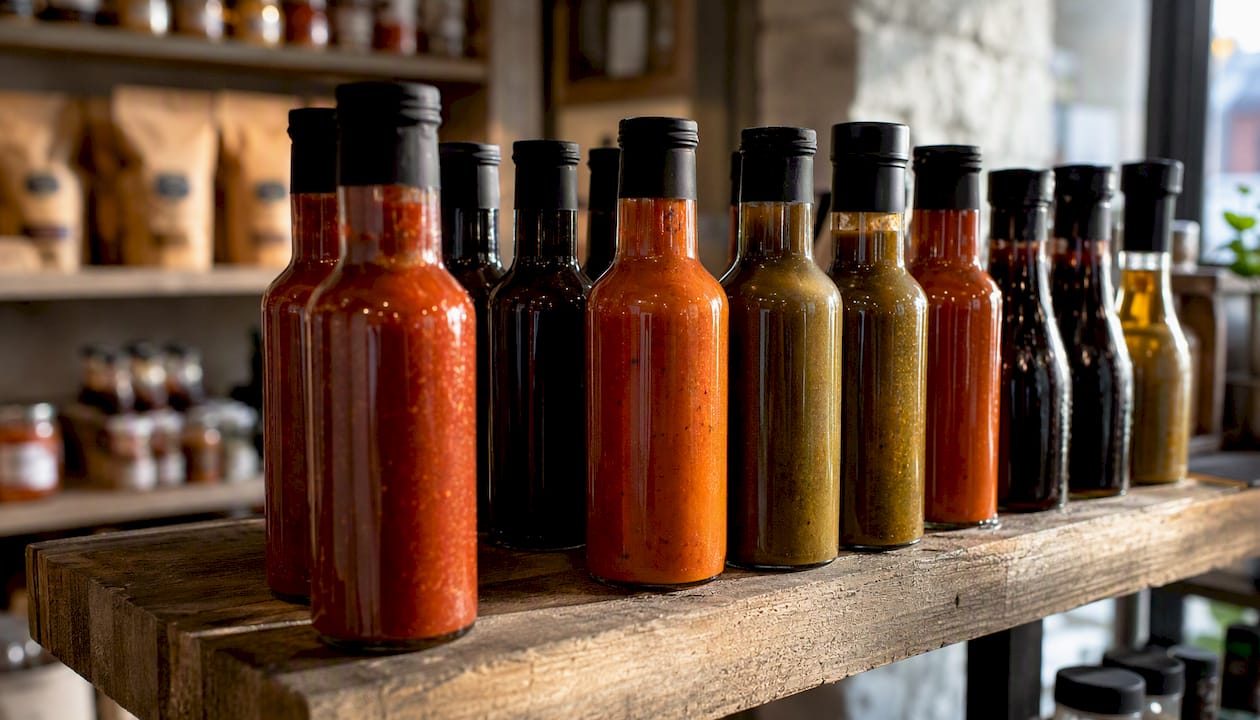
Brand consistency. One distributor means one trade price list, one set of point-of-sale materials, and one promotional schedule. For food and drink brands where shelf presentation and pricing parity matter, this is not a minor administrative convenience. A premium artisan sauce brand that sells through five non-exclusive distributors will almost certainly find its product discounted in one channel and full-price in another within six months.
Simplified account management. Instead of managing relationships with multiple distributors, chasing different invoices, and reconciling conflicting sell-in data, the supplier deals with a single point of accountability. That frees up commercial resource to focus on product development and marketing rather than channel administration.
Improved forecasting. A single distributor with contractual reporting obligations provides cleaner sell-through data. Suppliers can plan production runs, manage seasonal stock, and reduce waste with far greater accuracy than when data arrives piecemeal from multiple resellers.
Distributor-side advantages
The distributor’s case is equally compelling. Exclusivity creates a win-win incentive structure: the distributor invests in marketing spend, dedicated sales personnel, and warehousing because they have certainty that a competing reseller will not undercut them the moment the brand gains traction. Without that certainty, a rational distributor will always underinvest.

For a UK food wholesaler like Woodford, exclusive partnerships mean the commercial team can build genuine category expertise around a brand, invest in retailer education, and run promotional programmes that would be impossible to fund if the margin were shared across multiple resellers. You can read more about how exclusive food brand sourcing works in practice for independent UK retailers.
Pro Tip: Tie the distributor’s exclusivity to a funded marketing commitment from day one. Require them to spend a defined minimum on in-store activation, digital promotion, or trade events within the first six months. This converts the exclusivity from a passive right into an active growth engine.
What does the evidence say about sales effects?
The commercial logic is intuitive, but empirical evidence adds weight. A 2023 study published in the Journal of Retailing and Consumer Services examined the effect of exclusive distribution on the sales of ready-made meals in online retail. The study found that exclusive rights can improve marketing efficiencies and sales performance in certain product categories. The researchers noted that the effect is not uniform: it depends on product type, competitive intensity, and how well the distributor executes the exclusivity.
That caveat is worth taking seriously. The study focused on ready-made meals in online retail, a category with specific characteristics (short shelf life, high repeat purchase, price sensitivity). The findings do not automatically transfer to every food and drink segment.
Practitioner research from UK legal advisers reinforces the academic picture. Sprintlaw’s guidance on distribution rights notes that the win-win incentive structure only holds when the distributor has genuine certainty of their position. If the exclusivity is ambiguous, poorly drafted, or easily revoked, the distributor will behave like a non-exclusive partner regardless of what the contract says.
The practical implication: exclusivity works when it is credible and enforceable. A well-drafted agreement with clear scope, measurable KPIs, and automatic consequences for underperformance is what converts the theoretical incentive into actual distributor behaviour.
Which products and situations benefit most from exclusivity?
Not every product is a good candidate. Exclusivity makes most commercial sense when the product or the market has characteristics that reward focused, specialist distribution.
Products that tend to suit exclusive distribution:
- Premium or luxury goods where brand positioning depends on controlled presentation and pricing (artisan cheeses, premium spirits, high-end confectionery)
- New product launches where the supplier needs a distributor to invest in market education and trial-generation before the brand has any pull
- Products requiring specialist knowledge or after-sales support (functional foods, allergen-sensitive ranges, products with complex storage or handling requirements)
- Categories where the distributor needs to invest in cold-chain infrastructure, specialist equipment, or trained staff before the product can be sold effectively
- Brands entering a new geographic market or channel where they have no existing relationships and need a partner to build from scratch
Situations where exclusivity is less appropriate:
- Commodity or high-volume products where price competition between distributors benefits the supplier
- Mature categories where the brand already has strong pull and does not need a distributor to invest in demand creation
- Markets where a single distributor cannot realistically cover the territory (a national exclusive for a small regional distributor, for example)
Sprintlaw’s guidance on exclusivity clauses makes a point that applies equally to food and drink: exclusivity is commercially sensible only where the other party offers meaningful commitments in return. Minimum purchase volumes, funded marketing rollouts, and coverage targets are what distinguish a genuine exclusive partnership from a distributor simply locking up a territory.
For UK independent retail, the sweet spot is typically a differentiated food or drink brand with a clear story, a defined target consumer, and a distributor who has existing relationships with the right retailers. Woodford’s approach to boosting independent food retail success illustrates how that combination works in practice.
UK competition law: what are the legal limits on exclusivity?
Exclusive distribution agreements in the UK are governed primarily by the Vertical Agreements Block Exemption Order 2022) (VABEO 2022), which replaced the EU block exemption retained after Brexit. The CMA has published accompanying guidance that sets out how the exemption applies in practice.
The VABEO 2022 provides a safe harbour for vertical agreements where both supplier and distributor have a market share below 30%. Within that safe harbour, a supplier can legitimately grant a single distributor exclusive rights for a territory or customer group. Above the 30% threshold, agreements require individual assessment against the Chapter I prohibition of the Competition Act 1998.
Active vs passive sales: the critical distinction
Under UK competition law, a supplier can restrict a distributor’s active sales into another distributor’s exclusive territory. Active sales means proactively targeting customers in that territory through direct mail, dedicated website sections, or targeted advertising. What a supplier generally cannot do is restrict passive sales — responding to unsolicited orders from customers outside the exclusive territory.
LexisNexis guidance on UK distribution agreements is clear on this point: blanket bans on internet sales are problematic because online activity is typically treated as passive selling. A clause that prohibits a distributor from selling via their website at all is likely to fall outside the VABEO 2022 safe harbour.
Practical legal points for drafting:
- Restrict active sales into other exclusive territories; never restrict passive sales
- Online sales carve-outs must be carefully worded: you can require quality standards for online presentation, but not a blanket prohibition
- Selective distribution criteria must be necessary, non-discriminatory, and proportionate (relevant where you appoint multiple authorised resellers rather than one exclusive partner)
- Keep the exclusivity scope narrow: define the product list, the territory, and the customer categories precisely
- Include a time limit and a review mechanism; open-ended exclusivity raises greater competition law risk
Practical Law / Thomson Reuters and LexisNexis are the standard professional references for drafting compliant clauses and reviewing precedent agreements. For food-specific contract considerations, Woodford’s guide to food distributor contracts covers the key clauses in plain terms.
Sample KPI framework
| KPI | How to measure | Review frequency | Consequence if missed |
|---|---|---|---|
| Minimum annual purchase volume | Invoice value from supplier records | Quarterly | Written warning; reversion to non-exclusive after two consecutive misses |
| New retail accounts opened | Distributor report + supplier spot-check | Quarterly | Formal review meeting; target revised or exclusivity narrowed |
| Marketing spend commitment | Receipts and campaign reports submitted to supplier | Every six months | Deduction from next exclusivity renewal; right to appoint second distributor in territory |
| Sell-through reporting | Monthly data file submitted promptly after month end | Monthly | Breach notice; repeated failure triggers audit right |
Pro Tip: Treat the first contract term as a probationary period. Set the initial KPIs slightly below what you expect the distributor to achieve comfortably, then raise them at renewal. A distributor who hits targets in year one is far more motivated to negotiate hard for year two than one who has already failed.
What are the main risks, and how do you manage them?
Exclusivity concentrates commercial risk. The same commitment that motivates a good distributor can trap a supplier with a poor one.
The main risks:
- Partner underperformance: the distributor fails to open accounts, hit volume targets, or invest in marketing, but the exclusivity clause prevents the supplier from appointing anyone else.
- Over-dependence: the supplier’s entire UK revenue flows through one relationship. If that distributor faces financial difficulty, changes ownership, or pivots strategy, the supplier has no fallback.
- Channel blockage: a distributor who is not actively developing the territory is still blocking it. Competitors gain ground while the exclusive partner sits on the rights.
- Price erosion: without competition between resellers, the distributor may push for margin concessions at renewal, knowing the supplier has no immediate alternative.
- Online resale issues: the distributor sells via unauthorised marketplaces or at prices that undercut the brand’s direct channel, damaging brand equity.
- Loss of strategic flexibility: a long-term exclusive agreement can prevent the supplier from responding to new channel opportunities (direct-to-consumer, foodservice, export) that emerge after the contract is signed.
Mitigation in practice:
- Set a short initial term (12 months) with automatic reversion to non-exclusive status if KPIs are missed. Never grant open-ended exclusivity.
- Define KPIs with automatic consequences, not just review meetings. A clause that says “targets will be reviewed” is not a mitigation; a clause that says “exclusivity reverts to non-exclusive status if targets are missed for two consecutive quarters” is.
- Include carve-outs for named key accounts, inbound enquiries, and direct-to-consumer channels from the outset.
- Stagger exclusivity by product or region: grant exclusivity for a defined product range or a specific region first, then expand if performance warrants it.
- Require minimum purchase commitments with a financial consequence (price adjustment or loss of exclusivity) if they are not met.
- Build in audit rights and require monthly sell-through data. A distributor who resists reporting obligations is a warning sign before the contract is signed.
The most common cause of disputes in SME distribution agreements is not a legal technicality — it is vague targets and no automatic consequence for missing them. Draft the consequence clause first, then work backwards to the KPI.
Should you offer exclusivity? A practical decision checklist
Before entering any exclusive arrangement, work through these questions. If most answers are yes, exclusivity is likely worth pursuing. If several are no, a non-exclusive or selective model may serve you better.
Fit assessment:
- [ ] Does your product require specialist knowledge, handling, or after-sales support that justifies a committed partner?
- [ ] Is the distributor offering meaningful commitments in return (minimum volumes, funded marketing, coverage targets)?
- [ ] Can the distributor realistically cover the entire territory you are granting?
- [ ] Do you have a clear mechanism to measure distributor performance from month one?
- [ ] Is the initial term short enough (12 months or less) that you can exit without significant commercial damage if performance disappoints?
- [ ] Have you identified the carve-outs you need (existing customers, inbound leads, direct channels)?
- [ ] Has the agreement been reviewed against VABEO 2022 and CMA guidance?
Immediate negotiation action items:
- [ ] Insist on a defined product list and territory in the first draft; reject any clause that grants exclusivity over “all products” or “the UK” without further definition.
- [ ] Require the distributor to submit a written distribution plan (account targets, marketing budget, coverage timeline) before signing.
- [ ] Negotiate automatic reversion to non-exclusive status as the consequence for missing KPIs — not just a right to terminate.
- [ ] Include a carve-out schedule listing your existing customers and direct channels.
- [ ] Set a renewal date and make it clear that renewal requires a fresh performance review.
Woodford structures its exclusive food and drink partnerships around exactly these principles: defined product scopes, performance-linked terms, and regular review points that keep both parties accountable. The goal is an arrangement where the distributor earns exclusivity by delivering results, not one where exclusivity is granted upfront and performance is hoped for.
Pro Tip: Ask the distributor to name three accounts they will open in the first 90 days and put them in the contract as a milestone. If they cannot name three, they are not ready for exclusivity.
How Woodford helps UK food and drink brands use exclusive distribution effectively
For UK food and drink brands that want the commercial benefits of exclusivity without the administrative complexity of managing it alone, Woodford offers a different starting point. Rather than a generic wholesale listing, Woodford builds performance-linked exclusive distribution programmes around each brand: curated placement with independent retailers, full logistics and fulfilment, retail marketing support, and a digital ordering portal that gives brand owners real-time visibility of sell-through data.
The practical difference is accountability. Woodford’s exclusive partnerships come with defined account targets, funded in-store activation, and regular performance reviews built in from the start. Brand owners get the distributor investment and brand control that exclusivity is supposed to deliver, without having to negotiate those commitments clause by clause from a standing start.
If you are a UK food or drink brand considering exclusive distribution, or a retailer looking to stock differentiated brands that your competitors cannot easily replicate, the next step is a conversation about fit. Bring your current distribution situation, your target retail channels, and a clear sense of your volume expectations. Woodford’s team can assess whether an exclusive partnership makes commercial sense and what the terms would look like in practice.
Key takeaways
Exclusive distribution works when it is narrowly scoped, performance-linked, and compliant with VABEO 2022 — open-ended exclusivity without measurable KPIs is the single most common cause of distributor disputes.
| Point | Details |
|---|---|
| Core commercial benefit | Exclusivity motivates distributors to invest in marketing, sales staff, and warehousing because their investment cannot be undercut by rival resellers. |
| Legal safe harbour | VABEO 2022 protects exclusive agreements where both parties hold below 30% market share; passive sales and blanket online bans remain restricted under UK competition law. |
| Drafting essentials | Start with a 12-month term, measurable KPIs, and automatic reversion to non-exclusive status if targets are missed — never grant open-ended exclusivity. |
| Evidence base | A 2023 study in the Journal of Retailing and Consumer Services found exclusive rights can improve marketing efficiencies and sales, though results depend on product category and distributor execution. |
| Woodford’s approach | Woodford structures exclusive food and drink partnerships with defined scopes, performance-linked terms, and real-time sell-through reporting built in from day one. |
Useful sources and further reading
A short list of authoritative references for suppliers, distributors, and commercial teams working through exclusivity decisions in the UK:
- Distribution Rights in the UK | Sprintlaw UK
- Exclusive distribution agreement: key clauses & common SME pitfalls | Sprintlaw
- When should a UK B2B software company agree to an exclusivity clause? | Sprintlaw
- What Are The Benefits Of An Exclusive Distribution Agreement? | Steven Mather Solicitor
- Exclusive distribution | Practical Law) — Thomson Reuters)
- The effect of exclusive distribution on the sales of ready-made meals in online retail (ScienceDirect / Journal article)
- UK distribution agreements: structures, exclusivity models (LexisNexis UK)
- Selective distribution and competition law considerations | Lexology


