
Do UK retailers need an alcohol licence to sell alcohol?
Yes. If you sell alcohol by retail in England or Wales, you must hold a premises licence, and that licence must name a Designated Premises Supervisor (DPS) who holds a valid personal licence. This is a mandatory condition under the Licensing Act 2003, not a local authority preference you can negotiate around. Trade without one and you risk fines, seizure of stock, or prosecution.
Before you do anything else, two actions matter more than the rest:
- Check whether your specific premises need a licence. Most retail shop floors do, but online order fulfilment centres and delivery hubs raise separate questions covered later in this guide.
- Confirm your DPS arrangements are watertight. Without a named DPS holding a current personal licence, you cannot lawfully sell alcohol, even if your premises licence is otherwise in order.
The rest of this guide walks through alcohol licensing for UK retail in the order most independent shop owners and multi-site managers actually need it: which licence types apply, how to apply, what the DPS role really involves, how online and delivery sales change the picture, and what happens if someone objects to your application. Woodford works with retailers across this exact landscape every week, supplying trend-led drinks lines to shops that have already done the licensing groundwork. This is written for the shops still getting there.
Key Takeaways
UK retailers selling alcohol must hold a premises licence naming a valid DPS, apply with a complete operating schedule and plan, and check every wholesaler’s AWRS registration before buying stock.
| Point | Details |
|---|---|
| Premises licence is mandatory | Retail alcohol sales in England and Wales require a premises licence naming a DPS with a valid personal licence. |
| Prepare documents fully | Submit an operating schedule, prescribed-format plan, DPS consent form, and display the public notice for the full 28 days. |
| Budget realistically | Fees vary by rateable value band; allow 6 to 8 weeks for uncontested applications. |
| Verify every wholesaler | Check AWRS URNs against HMRC’s database before buying, and keep dated verification records. |
| Treat compliance as ongoing | Train staff regularly, document DPS authorisations in writing, and self-audit to avoid enforcement action. |
Table of Contents
- Alcohol licensing UK retail: which licences exist and when each applies
- How to apply for a premises licence
- Personal licence and DPS: roles, rules and how to make changes
- Temporary Event Notices: limits and practical steps for occasional sales
- Selling alcohol online and by delivery: which premises actually needs the licence
- Buying alcohol for resale: AWRS and wholesaler due diligence
- What happens after you apply: representations, hearings and appeals
- Mandatory conditions, enforcement and common offences
- What premises licences typically cost and how long they take
- Staying compliant day to day: training, records and self-audits
- A practical checklist for independent retailers
- Where to check the official guidance and legislation
- Frequently asked questions
- Sources
Alcohol licensing UK retail: which licences exist and when each applies
Four types of authorisation cover almost every legal route to selling alcohol in England and Wales, and picking the right one from the outset saves weeks of wasted paperwork.
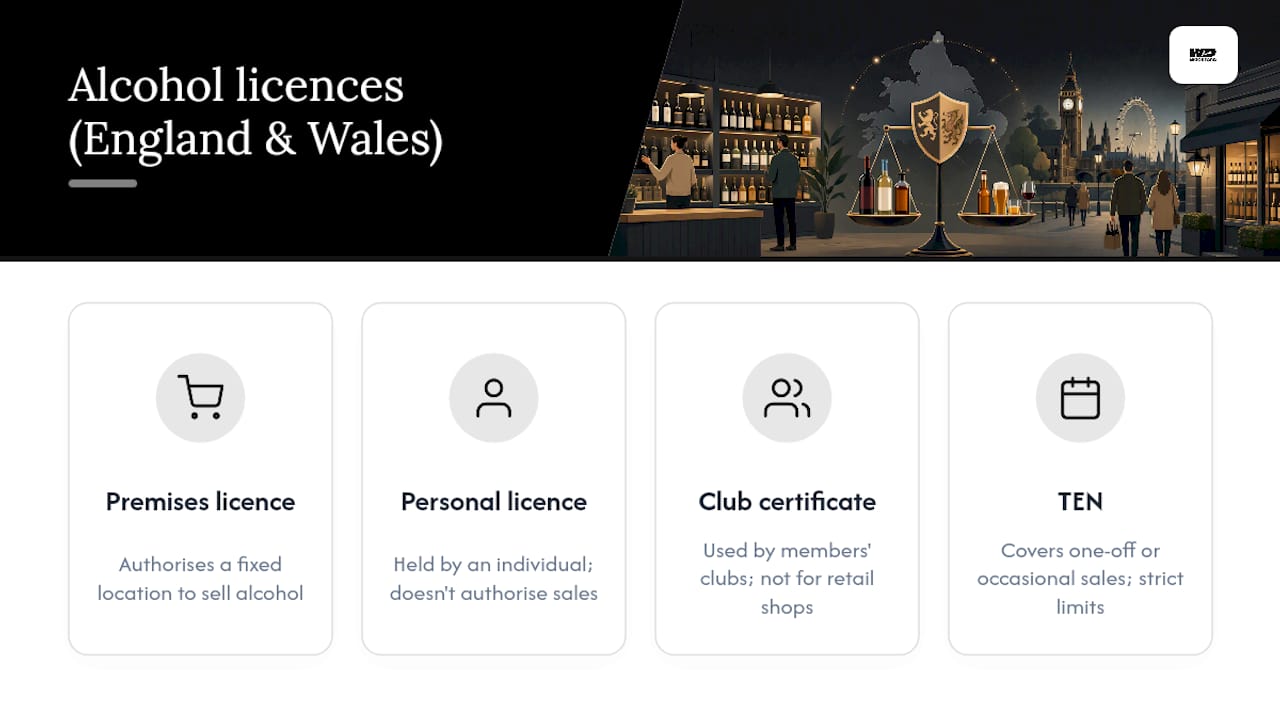
A premises licence is what most retailers need. It authorises a fixed location, whether that’s a convenience store, an off-licence, a farm shop, or a supermarket, to sell alcohol on a permanent basis. This is the licence type that carries the mandatory DPS condition and it’s the one this guide focuses on throughout.
A personal licence is held by an individual, not a business. It doesn’t authorise alcohol sales on its own, but a premises licence for retail sale of alcohol must name someone holding one as the DPS. Many small retailers hold both: the shop holds the premises licence, and the owner or a trusted manager holds the personal licence and takes on the DPS role.
A club premises certificate is a different mechanism entirely, used by members’ clubs (working men’s clubs, sports and social clubs) that supply alcohol to members and guests rather than sell it to the general public. If you’re running a retail shop, this doesn’t apply to you, but it’s worth knowing the distinction if you’re advising a client or landlord who runs a licensed club above or beside your premises.
A Temporary Event Notice (TEN) covers one-off or occasional sales, a wine tasting evening, a pop-up stall at a food festival, a Christmas market pitch, without the cost and process of a full premises licence. TENs have strict limits, covered in detail further down.
The legal framework across all four sits in the Licensing Act 2003, which applies specifically to England and Wales. Scotland runs its own regime under the Licensing (Scotland) Act 2005, administered through local licensing boards rather than councils, and Northern Ireland operates under separate legislation with its own licensing courts. If you trade across borders, do not assume a licence granted in one nation carries any weight in another. Each nation’s system needs its own separate application.
How to apply for a premises licence
Applying for a premises licence means assembling a specific set of documents and submitting them to your local licensing authority, usually the council covering the premises’ location. Get the paperwork wrong and you’re looking at delays measured in months, not days.
Your application needs:
- A completed application form naming the applicant, the premises, and the licensable activities you want to carry out (retail sale of alcohol, late-night refreshment, and so on).
- An operating schedule setting out your trading hours, the activities you intend to carry out, and the steps you’ll take to promote the four licensing objectives: preventing crime and disorder, public safety, preventing public nuisance, and protecting children from harm.
- A scale plan of the premises in the prescribed format, showing the extent of the building, points of sale, and any areas used for storage.
- DPS consent form, signed by the person you’re nominating as Designated Premises Supervisor, confirming they hold a personal licence and agree to take on the role.
- The application fee, calculated against a banding system tied to the premises’ non-domestic rateable value.
- A public notice, which you must display at the premises for 28 days from the date you submit your application, and which must also be advertised in a local newspaper.
Skipping the public notice, or taking it down before the 28 days are up, is one of the most common reasons applications stall. The GOV.UK premises licence guidance is blunt about this: incomplete display periods can invalidate the whole application, forcing you to restart the clock.
A strong operating schedule does more than list your opening hours. It should show the licensing authority you’ve thought about how you’ll actually run a compliant shop: refusals training for staff, a Challenge 25 policy, CCTV coverage of the till area, how you’ll handle deliveries if you offer them, and what you’ll do if police or environmental health raise a concern later. Vague, boilerplate schedules invite objections. Specific, premises-tailored ones tend to sail through.
Here’s a realistic timeline from submission to a decision:
| Stage | Typical duration | What happens |
|---|---|---|
| Submission and validation | 1 to 5 working days | Authority checks the application is complete and fee is paid |
| Public notice and consultation period | 28 days | Notice displayed at premises; responsible authorities and public can make representations |
| No representations received | Licence usually granted shortly after consultation ends | Authority issues the licence without a hearing |
| Representations received | Additional weeks or more | Hearing scheduled; decision issued after |
| Total (uncontested) | Around 6 to 8 weeks | Standard route for straightforward retail applications |
| Total (contested) | 3 months or longer | Depends on hearing scheduling and any appeal |
Build in the longer end of that range if you’re planning a shop opening or a change of ownership. Retailers who leave licensing until a few weeks before opening day routinely find themselves trading late, or not at all.
Personal licence and DPS: roles, rules and how to make changes
A personal licence and a Designated Premises Supervisor are two different things that often get confused, and mixing them up causes real operational problems.
The personal licence is an individual qualification. To get one, an applicant must be over 18, pass an accredited licensing qualification (commonly the Level 2 Award for Personal Licence Holders, or APLH), hold a clean basic disclosure certificate, and submit an application to their local licensing authority along with the qualification certificate and two photographs. It authorises the holder to sell alcohol or supervise its sale, but it doesn’t attach to any specific premises.
The DPS is a role tied to a specific premises licence. Section 19 of the Licensing Act 2003 makes it a mandatory condition that any premises licence authorising alcohol sales must specify a DPS, and that person must hold a valid personal licence. According to the official DPS factsheet, the DPS is normally the main point of contact for police, fire officers, and licensing officers, and if there’s no valid DPS in place, the sale of alcohol simply isn’t permitted, regardless of what the premises licence otherwise says.
The DPS doesn’t need to be on the premises for every single sale. What they do need is to authorise other staff in writing when they’re absent, and to be realistically capable of overseeing the premises rather than existing as a name on a form. Licensing officers and police who raise objections often probe exactly this: whether the named DPS has any genuine involvement in day-to-day running, or whether they’re a distant figurehead brought in purely to satisfy the paperwork.
Changing your DPS is straightforward but must be done formally. You submit a variation form to the licensing authority along with the new DPS’s consent, and the change takes effect once processed, not before. Withdrawing consent works the other way: an outgoing DPS can notify the authority directly that they no longer wish to be named, which then obliges the premises licence holder to nominate a replacement promptly. You can check how a specific council handles this process, including its own variation forms, through resources like East Devon’s guidance on varying a DPS, which sets out a fairly typical local process.
Pro Tip: Keep a dated written record every time you authorise a staff member to sell alcohol in the DPS’s absence. A simple signed logbook entry, kept alongside your till reports, is exactly the kind of evidence that turns a routine police visit into a five-minute formality rather than a licence review.
Temporary Event Notices: limits and practical steps for occasional sales
A TEN is the right tool when you want to sell alcohol at an event that falls outside your normal licensed activity, not as a way to avoid getting a premises licence altogether. If you’re planning to sell alcohol regularly from a fixed shop, you need a premises licence full stop.
TENs suit situations like a wine and cheese evening at a farm shop that doesn’t otherwise sell alcohol, a stall at a local food festival, or extended hours for a specific promotional event at a premises that already holds a licence but wants to step outside its normal conditions temporarily.
The key limits to know:
- A single premises can have a maximum number of TENs per calendar year, and a cap applies to the total number of days covered.
- Each TEN covers events of limited duration, and there are maximum attendee numbers you must not exceed.
- You must submit the notice to the licensing authority within a set minimum number of working days before the event, giving police and environmental health time to review it.
- The police or environmental health can object on the grounds of the licensing objectives, and if they do, a hearing may be required before the event can go ahead as planned.
Running a TEN successfully usually comes down to giving yourself enough lead time and keeping the scope tight. Don’t try to stretch a single TEN across an unrealistic footfall estimate or a longer period than the notice genuinely covers. If your shop is planning several tastings or seasonal pop-ups across the year, map them out early. Once you’ve used your annual allowance, you’re stuck waiting for the next calendar year or applying to vary your main premises licence instead.
Selling alcohol online and by delivery: which premises actually needs the licence
Online and delivery alcohol sales trip up more retailers than almost any other part of licensing, because the instinctive assumption, that the licence sits wherever the customer clicks “buy”, is wrong.
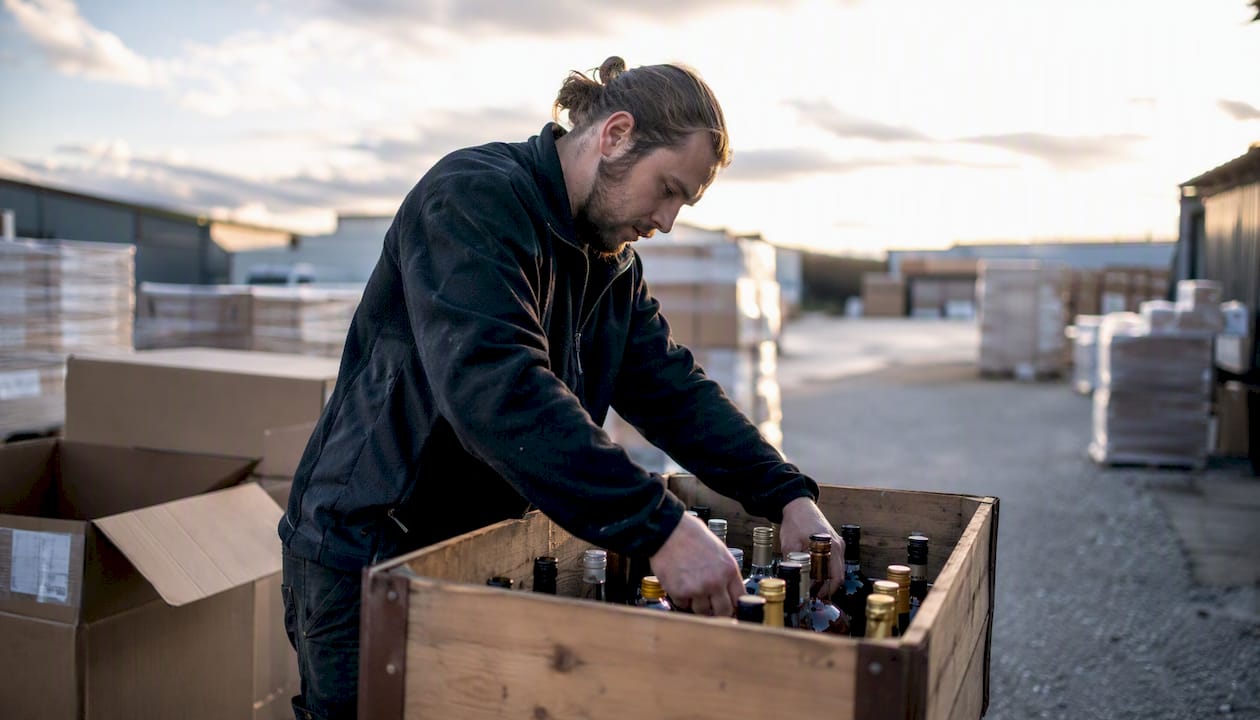
The Home Office’s revised section 182 guidance treats a sale as taking place where the alcohol is “appropriated to the contract”, which in plain terms means the location where the specific bottle or case is picked, packed, and set aside for that customer’s order. That is very often your warehouse or fulfilment centre, not your website’s server, and not a call centre taking phone orders. Many retailers wrongly assume the point of sale is wherever the transaction is processed digitally, when the licensing question actually turns on where the physical stock is handled.
Practically, this means:
If you run a shop with a small delivery add-on, picking orders from the shop floor, your existing premises licence probably already covers it, provided the operating schedule mentions delivery as an activity. If it doesn’t, you may need to vary the licence to add it explicitly.
If you run a dedicated online operation with a separate warehouse, that warehouse is very likely the premises that needs its own licence, distinct from any retail shop you also operate. Storing alcohol in an unlicensed unit and dispatching it to customers from there is a common and entirely avoidable compliance gap.
Age verification for delivery sales carries its own weight here. A driver handing over a bottle at the doorstep is making the sale in law, which means your operating schedule needs to specify how age is checked at the point of delivery, not just at the point of order online. A tick-box age confirmation on a website checkout does not, on its own, satisfy the objective of protecting children from harm. Robust operators train delivery staff to request photo ID on the doorstep and to refuse the handover, taking the stock back, if the recipient looks under 25 and can’t prove otherwise.
Buying alcohol for resale: AWRS and wholesaler due diligence
Every UK retailer buying alcohol to resell must check that their wholesaler is registered under HMRC’s Alcohol Wholesaler Registration Scheme, and this has been a legal requirement since 1 April 2017.
The Alcohol Wholesaler Registration Scheme exists to stop illicit and duty-unpaid alcohol entering the retail supply chain. Every legitimate wholesaler holds a Unique Registration Number (URN), and you’re expected to check that number against HMRC’s public database before you buy, not after a delivery arrives and questions get asked later.
Getting this wrong carries real consequences. Buying from an unapproved wholesaler can lead to penalties for the retailer, not just the wholesaler, and HMRC has the power to seize stock it believes has come through an unregistered supply chain. A trading standards or HMRC visit that finds unverified stock on your shelves is a genuinely bad afternoon, and one that’s entirely preventable.
Build AWRS checks into your ordering routine rather than treating them as a one-off task:
- Ask every new wholesaler for their URN before placing a first order, and verify it directly against HMRC’s database rather than taking their word for it.
- Re-check periodically, since registrations can be revoked or suspended.
- Keep date-stamped records of every check, a saved screenshot of the HMRC verification result is a simple, low-effort way to demonstrate due diligence if you’re ever asked.
- Apply the same scrutiny to a supplier’s brand-new sales rep or a heavily discounted “too good to miss” pallet deal; unusually cheap stock is one of the more common warning signs of grey-market alcohol.
Woodford’s own approach to distribution builds this kind of compliance discipline into the sourcing relationship from the outset, which is one of the reasons independent retailers work with an established distribution partner rather than chasing every discount pallet that lands in their inbox. If you want a deeper look at sourcing exclusive brands the right way, that groundwork on supplier vetting pays off well beyond alcohol lines too.
What happens after you apply: representations, hearings and appeals
Once your application clears the 28-day public notice period, one of two things happens: either nobody objects and the licence is granted, or someone raises a relevant representation and the process gets a little more involved.
Representations can come from:
- Responsible authorities, including the police, the fire service, environmental health, and safeguarding bodies, who review every application as a matter of course.
- Local residents and businesses, who can object on grounds tied to the four licensing objectives, crime and disorder, public safety, public nuisance, and protection of children, though not on grounds like commercial competition.
- Other interested parties, such as local councillors representing affected wards.
If a relevant representation is made, the licensing authority must hold a hearing to consider it unless every party involved agrees it isn’t necessary, a point confirmed in local authority guidance on objections. At the hearing, you’ll be expected to explain your operating schedule in detail and respond directly to the concerns raised, so turning up without a clear answer for how you’ll manage noise, deliveries, or underage sales risk is a weak position to be in.
It’s worth knowing that a hearing doesn’t automatically mean refusal. Licensing authorities frequently resolve objections by negotiating additional conditions rather than rejecting the application outright, tighter CCTV requirements, restricted delivery hours, or an agreement to review the licence after six months. Being open to amending your operating schedule before the hearing, rather than digging in, often heads off a contested decision altogether.
Practical steps to avoid a contested hearing in the first place:
- Talk to your local police licensing officer informally before you submit, particularly if your premises has any history of complaints.
- Check the licensing authority’s public register early to see whether nearby premises have faced objections, which gives you a sense of local sensitivities.
- Be willing to adjust trading hours or delivery arrangements proactively rather than waiting for someone to demand it.
If the licence is refused, or granted with conditions you consider unreasonable, you can appeal to the magistrates’ court within 21 days of the decision. Appeals are a genuine option, but they’re also costly and slow, so most experienced retailers treat negotiation at the representation stage as the far more efficient route.
Mandatory conditions, enforcement and common offences
Every premises licence authorising alcohol sales carries mandatory conditions set out in the Licensing Act, and local authorities frequently attach further conditions specific to your premises on top of those baseline requirements.
The core mandatory conditions include the requirement to name a DPS with a valid personal licence, a ban on irresponsible promotions (unlimited “drink all you can” style offers), a requirement that age verification policies are in place for anyone who appears under 18, and rules around the provision of free tap water on request where alcohol is served for consumption on the premises, as explained in Common pests in fish and chip shops: what managers need to know. Local authorities commonly layer on additional standard conditions covering CCTV retention periods, Challenge 25 signage, and specific delivery hour restrictions.
The most common offences retailers actually get caught on are depressingly consistent across enforcement data reported by trading standards teams nationally:
- Selling alcohol to someone under 18, whether knowingly or through a failure of due diligence at the till.
- Selling to a person who is already drunk.
- Selling alcohol without a valid licence in place, including trading after a DPS has left without a replacement being named.
- Persistently failing to promote the licensing objectives, which can trigger a full licence review even without a single dramatic incident.
Enforcement typically escalates in stages: an informal warning or advisory visit first, then a formal written warning, then potentially a review of the licence itself triggered by police or environmental health, and in serious or repeated cases, prosecution. A licence review can result in additional conditions, suspension, or in the most serious cases, revocation, which for a retail business is close to catastrophic.
Pro Tip: Run a mock trading standards visit on your own shop once a quarter. Walk in as if you’re an inspector: check the licence summary is displayed, check refusals are logged, check your Challenge 25 signage is visible, and check your DPS authorisation records are current. It takes twenty minutes and routinely catches the small gaps that turn into big problems.
What premises licences typically cost and how long they take
Premises licence application fees run on a banding system tied to the rateable value of your premises, and the figures published by GOV.UK show fees commonly ranging from £100 at the lowest band to £1,905 for the largest premises. Most independent retail shops fall well within the lower to middle bands, but you should check your own premises’ rateable value against your specific local authority’s published fee schedule before budgeting, since bands are set nationally but administered locally.
Beyond the initial fee, there’s an annual subsistence fee to keep the licence active, again scaled to the same banding structure. Failing to pay it on time can put your licence at risk of lapsing, which is an entirely avoidable own goal.
On timing, budget for around six to eight weeks for a straightforward, uncontested application, and three months or more if representations are made and a hearing is scheduled. The most frequent causes of delay are incomplete operating schedules, plans that don’t meet the prescribed format, and public notices that aren’t displayed for the full 28 days.
To find your exact fee band and local processing times, go directly to your local authority’s licensing pages, most publish a fee schedule and an indicative timeline alongside their application forms, and cross-check that against the national premises licence guidance so you know what’s set centrally versus what your specific council administers.
Staying compliant day to day: training, records and self-audits
Getting the licence is the easy part compared with staying compliant for years afterwards, and the retailers who run into trouble are almost always the ones who treat licensing as a one-off box-tick rather than an ongoing operational discipline.

Staff training should happen at induction and then be refreshed at least annually, covering Challenge 25, spotting signs of intoxication, and what to do if a customer becomes aggressive when refused a sale. Keep signed training records for every staff member who’s authorised to sell alcohol; if an incident ever leads to a licence review, a well-documented training history is one of the strongest pieces of evidence you can put in front of the authority.
Written authorisation matters just as much as training. When the DPS isn’t on-site, and legally they don’t need to be for every sale, other staff selling alcohol should be operating under a clear, dated, signed authorisation from the DPS. A simple one-page template covering the staff member’s name, the date range, and the DPS’s signature is enough, and it’s the single easiest piece of paperwork to have ready if police or licensing officers ask who’s actually responsible for oversight that day.
Build a routine self-audit into your week rather than waiting for an external prompt:
- Check your refusals register is being filled in consistently, not just after a spot-check reminder.
- Verify your AWRS URN records for current wholesalers are up to date and re-checked periodically.
- Review your incident log for any pattern worth flagging to your DPS or addressing in training.
- Confirm your licence summary and public notice-style displays are still visible and legible at the till point.
Pro Tip: Store your AWRS verification screenshots, staff training records, and DPS authorisations in one shared folder, digital or physical, that any manager can access instantly. When an inspection happens, and it happens with little warning, the ability to produce everything in under a minute makes a genuinely strong impression.
Retailers thinking about wider compliance beyond alcohol specifically will find useful crossover in Woodford’s broader guide to UK food compliance essentials, much of the record-keeping discipline that keeps a food business audit-ready applies directly to alcohol licensing too. And if your premises hosts on-site consumption alongside retail, it’s worth reviewing your shop floor merchandising against what your premises plan actually shows the licensing authority, mismatches between the two are a surprisingly common source of awkward questions during inspections.
A practical checklist for independent retailers
Pulling the whole process together, here’s a sequence Woodford recommends running through before you submit anything, and again once your licence is live.
Before you apply:
- Confirm which licence type you actually need: premises licence for ongoing retail sales, TEN for a one-off event.
- Identify and secure written consent from your DPS, confirming they hold a current personal licence.
- Draft your operating schedule around your actual trading pattern, not a generic template pulled from the internet.
- Get your premises plan drawn to the prescribed format, showing points of sale and storage areas clearly.
- Check your local authority’s public register for nearby objections or licensing sensitivities before you submit.
After you’re licensed:
- Display your licence summary and public notice as required.
- Set a recurring calendar reminder for your annual subsistence fee.
- Schedule staff refresher training and log every session.
- Build AWRS URN checks into your standard wholesaler onboarding process.
- Run a quarterly self-audit against the checklist above.
The pitfalls that cause the most delays and refusals are strikingly repetitive across councils: incomplete or overly generic operating schedules, plans that don’t match the prescribed format, public notices taken down before the 28 days are up, and DPS nominations made without genuinely checking the named person holds a current personal licence. Every one of these is avoidable with a careful first pass through the application, rather than a rushed submission followed by months of back-and-forth with your licensing officer.
Where to check the official guidance and legislation
Everything in this guide draws on primary sources you can and should check directly rather than relying solely on secondhand summaries, licensing rules do shift, and your local authority’s own published position always takes precedence over general guidance.
Start with GOV.UK’s alcohol licensing pages for the current framework and fee bands, and the premises licence guidance for the application process itself. The Home Office’s section 182 guidance is the detailed interpretive document licensing authorities themselves work from, particularly useful if you’re dealing with an online or delivery sales question. The Licensing Act 2003 itself is the underlying legislation, and for wholesaler checks, HMRC’s AWRS guidance is the definitive reference.
Every local authority maintains a public register of premises licences and pending applications, usually searchable on its own website, and this is worth checking early if you want a sense of how your specific council has handled similar applications or objections nearby.
If your application faces a serious objection, a licence review is triggered, or you’re facing potential prosecution, that’s the point to bring in a solicitor who specialises in licensing law rather than trying to navigate a hearing alone. The cost of proper advice at that stage is almost always smaller than the cost of losing a licence you’ve built a business around.
Frequently asked questions
Do I need a personal licence to sell alcohol in my own shop? Not necessarily. You need a premises licence for the shop, and that licence must name a DPS who holds a personal licence, but that doesn’t have to be you. Many owners nominate a trusted manager as DPS instead.
How much does an alcohol license cost for a small UK retail shop? Fees are banded by the premises’ rateable value and commonly range from £100 to £1,905, with most small independent shops falling in the lower bands. Check your exact figure with your local licensing authority.
Can I sell alcohol online without a premises licence? No. The premises where alcohol is picked and packed for dispatch, often a warehouse rather than a shop, needs its own licence or must be covered by an existing one, since the sale is treated as taking place where the goods are appropriated to the contract.
What happens if my DPS leaves the business? You must nominate a new DPS holding a valid personal licence and submit the variation to your licensing authority. Trading without a valid DPS in place means you cannot lawfully sell alcohol at all.
Do I need to check my wholesaler’s AWRS registration every time I order? You should verify a new wholesaler’s URN before your first order and periodically re-check it, since registrations can be revoked. Buying from an unapproved wholesaler risks penalties and stock seizure, regardless of whether you knew the supplier’s status had changed.
How long does a temporary event notice take to process? TENs require a minimum notice period before the event, and police or environmental health can object within that window. Submit well ahead of your event date, since a late or objected notice can force you to cancel or postpone.
What’s the difference between licensing rules in England, Scotland and Northern Ireland? England and Wales operate under the Licensing Act 2003 through local councils. Scotland uses separate legislation administered by licensing boards, and Northern Ireland has its own distinct system through licensing courts. A licence from one nation doesn’t transfer to another.
This article is general information, not a substitute for advice from a qualified lawyer. Consult a qualified legal professional about your own circumstances before acting on anything here.


