Why maintain food standards: a guide for professionals
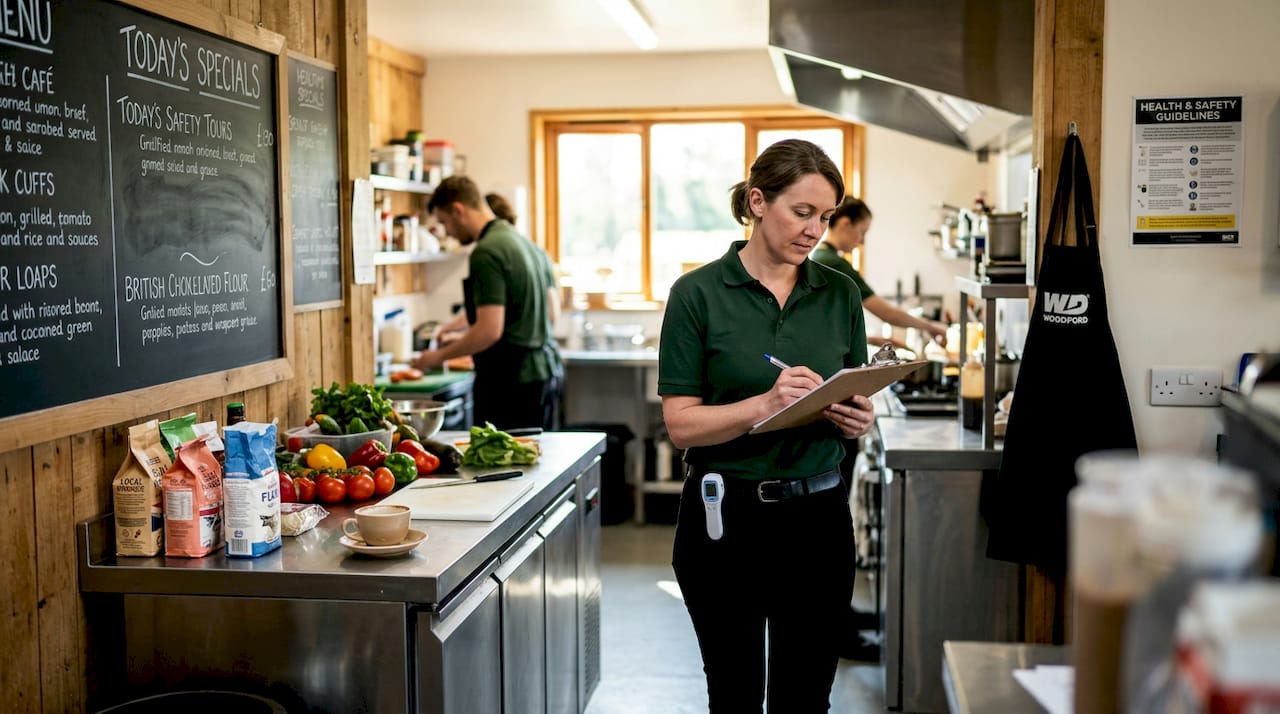
TL;DR:Maintaining food standards extends beyond preventing illness to building consumer trust, regulatory credibility, and economic resilience.Effective food safety practices, risk-based governance, and transparent communication foster consumer confidence and reduce costly recalls.
Food professionals often reduce the question of why maintain food standards to a single answer: preventing illness. That framing is too narrow, and it leaves out the bigger picture. The importance of food standards spans consumer trust, regulatory credibility, economic resilience, and the long-term viability of every business in the supply chain. When standards slip, the consequences reach far beyond a product recall. They reshape how consumers, regulators, and trading partners perceive your entire operation for years to come.
Table of Contents
- Key takeaways
- Why maintain food standards: the safety fundamentals
- Consumer trust and the cost of losing it
- Economic benefits of upholding food standards
- Evolving approaches to food standard governance
- My perspective: food safety is a habit, not a system
- How Woodford supports your food standards commitments
- FAQ
Key takeaways
| Point | Details |
|---|---|
| Safety is the foundation | Preventing foodborne illness depends on consistent temperature control, hygiene, and cross-contamination management every day. |
| Trust must be earned continuously | Consumer confidence is built through visible compliance and transparent communication, not just crisis response. |
| Standards protect economic interests | Harmonised standards reduce trade friction, lower recall costs, and give businesses a credible competitive position. |
| Risk-based governance is the future | Moving beyond binary pass/fail compliance towards proportionate, ongoing risk assessment reflects where regulation is heading. |
| Food safety is a management habit | Embedding preventive practices into daily operations is more effective than reacting to failures after the fact. |
Why maintain food standards: the safety fundamentals
The most direct answer to why uphold food quality starts with biology. Pathogens including Salmonella, Listeria monocytogenes, and E. coli O157 do not announce themselves. They proliferate silently when temperature controls fail, when surfaces are not sanitised correctly, or when raw and ready-to-eat foods share the same preparation space.
Food regulations control risk across the entire chain from farm to table. That means addressing pest prevention, hygiene protocols, storage conditions, cooking temperatures, and inspection schedules within a single coherent framework. The practical implications for your operation are specific and measurable.
The core food safety measures every professional should have embedded in their systems include:
- Storing chilled food below 4°C to keep it out of the bacterial danger zone of 4°C to 60°C
- Cooking meat, poultry, and eggs to verified safe internal temperatures before service or distribution
- Separating raw and ready-to-eat products at every stage, from intake through to dispatch
- Handwashing protocols that are practised consistently by all staff, not just posted on a wall
- Avoiding high-risk practices such as washing raw poultry, which spreads contamination rather than reducing it
Inspection frequency is not arbitrary. Risk-based scheduling considers the volume of food handled, the proportion of raw products, and the vulnerability of the customer base. A facility supplying care homes or schools faces more frequent oversight than a low-volume ambient goods distributor, and rightly so.
Pro Tip: Adopt Active Managerial Control principles rather than waiting for inspections to identify gaps. AMC embeds ongoing monitoring into daily routines and catches deviations before they become incidents.
Health inspectors also recognise that staff turnover is one of the most persistent threats to consistent standards. Many departments now provide multilingual training support to address this directly. That is not a courtesy. It is an acknowledgement that food safety is a continuous management challenge, not a one-time certification exercise.
Consumer trust and the cost of losing it
The need for food safety measures is often framed in terms of liability. The more strategically important framing is trust. Consumer trust depends on three things: competence, honesty, and a genuine belief that the people supplying their food care about their wellbeing. Lose any one of those, and you do not just lose a customer. You trigger a reappraisal of everything your brand represents.
“Trust is eroded by misinformation and restored by transparent crisis communications, visible hygiene ratings, and messages endorsed by trusted voices.” — Food Standards Agency, 2026
The food industry has historical evidence of exactly how severe that erosion can be. Scandals involving mislabelled products and contaminated supply chains have reshaped consumer behaviour in ways that persisted long after the original incidents were resolved. The brands that recovered fastest were those that had already invested in visible compliance and clear communication before the crisis hit.
Specific practices that sustain consumer confidence include:
- Displaying food hygiene ratings prominently and proactively, not just when required
- Providing clear allergen and ingredient information across all channels, including digital
- Communicating quickly and transparently when an incident occurs, rather than allowing a vacuum for rumour to fill
- Partnering with independent retailers and distributors who maintain equivalent standards, since your reputation is only as strong as your weakest supply chain link
How packaging communicates trust is an underestimated element of this. Clear, accurate labelling that goes beyond legal minimums signals to the consumer that your brand operates at a higher standard than compliance alone demands.
Building trust is not a marketing function. It is an operational one. The question of how food standards protect consumers is ultimately answered by whether consumers can see and feel that protection in every interaction with your product.
Economic benefits of upholding food standards
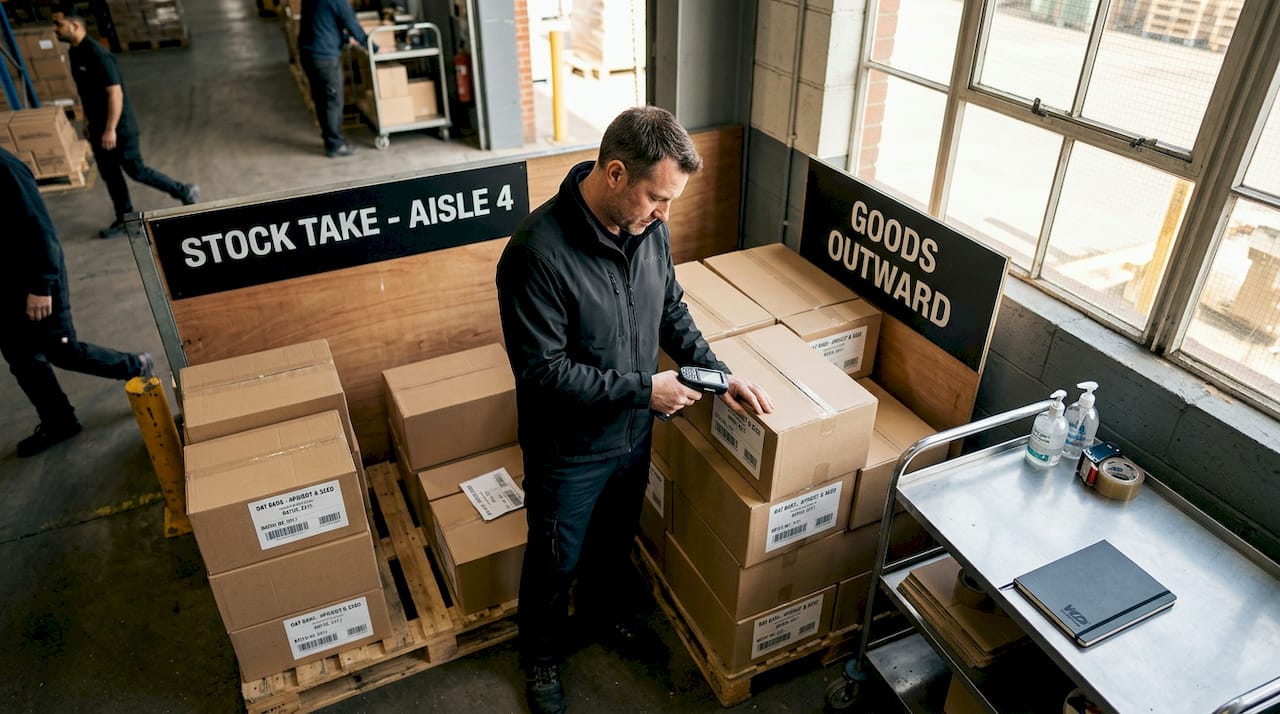
The business case for maintaining food quality guidelines is straightforward when you look at the costs of failing to do so. Product recalls are expensive. Legal proceedings cost more. The reputational damage compounds both, and it takes years to reverse.
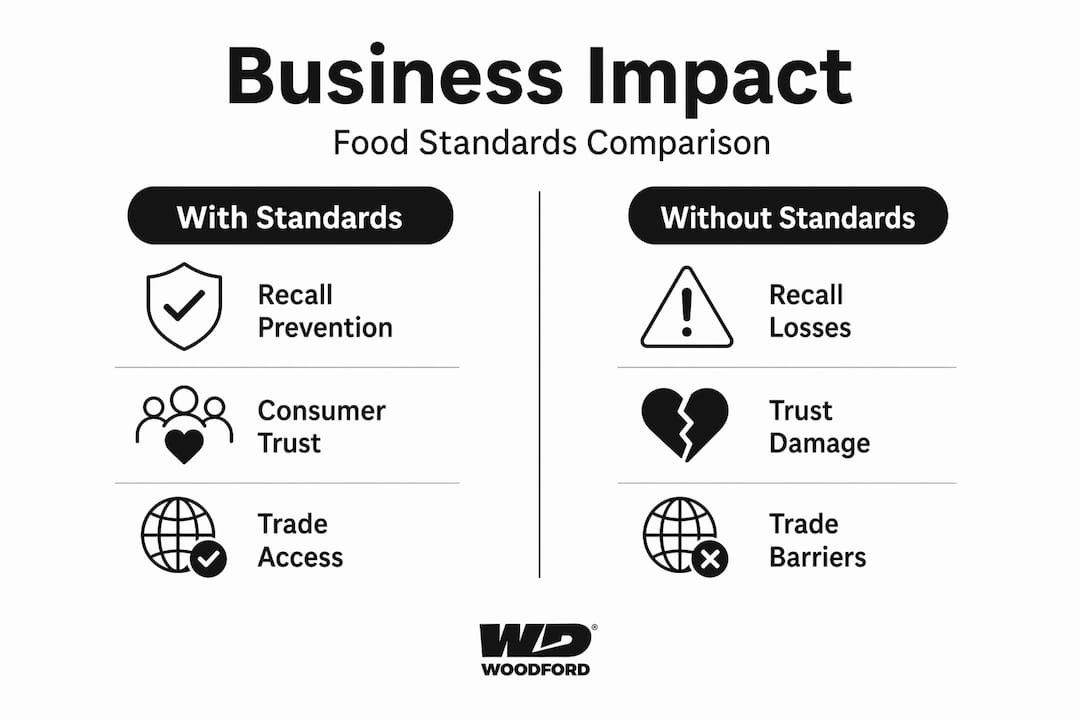
The economic argument runs in the other direction too. Harmonised international standards reduce trade friction, enable businesses to access new markets, and create a level of predictability that makes supply chain planning significantly more reliable. For UK businesses operating across the post-Brexit regulatory environment, internationally aligned standards are not just good practice. They are a practical trading necessity.
| Business outcome | With standards maintained | Without standards maintained |
|---|---|---|
| Product recall frequency | Low, with early detection systems in place | Higher risk, often discovered post-distribution |
| Market access | Wider, including export opportunities | Restricted, particularly in regulated markets |
| Brand reputation | Stable and credible with trade buyers | Vulnerable to single incidents causing lasting damage |
| Regulatory relationship | Collaborative and predictable | Adversarial, with heightened scrutiny and costs |
| Consumer loyalty | Built on consistent experience and transparency | Fragile and difficult to rebuild after incidents |
The impact of food regulations on business also includes a less obvious benefit: reducing food waste. Businesses that manage temperature, storage, and stock rotation properly simply lose less product. That directly improves margin without requiring any change to pricing or volume.
Pro Tip: Treat UK food compliance not as a cost centre but as a risk management tool. The cost of consistent compliance is predictable and manageable. The cost of a single major incident is neither.
Food standards and public health are frequently framed as regulatory burdens on business. The inverse is closer to the truth. Businesses that embed standards deeply into their operations tend to have lower operational risk, stronger relationships with trade buyers, and more durable consumer loyalty than those that treat compliance as a minimum threshold to clear.
Evolving approaches to food standard governance
Food safety governance is not static. The conversation has shifted from binary compliance thinking, where a business either passes or fails an inspection, towards a more nuanced understanding of graduated risk and proportionate oversight.
| Governance approach | Traditional model | Evolving model |
|---|---|---|
| Inspection basis | Fixed schedules and pass/fail outcomes | Risk-based frequency, tailored to operation profile |
| Focus | Reactive enforcement after incidents | Proactive risk identification and management |
| Communication style | Regulatory authority to business | Collaborative and educational partnership |
| Scope | Single-site compliance | Whole supply chain and systemic risk |
Policy researchers advocate for structured trade-off assessments that integrate food safety with sustainability and food security considerations. That means professionals in this sector increasingly need to think about how their food safety decisions interact with environmental commitments and supply chain equity, not just immediate hygiene outcomes.
The complexity of global supply chains adds a further dimension. A business sourcing ingredients from multiple countries is navigating different regulatory frameworks simultaneously. Codex Alimentarius standards serve as the scientific foundation that many national systems build upon, and understanding where your suppliers’ certifications sit within that hierarchy matters more than it once did.
Practically, businesses adapting to this complexity should focus on three things. Audit your supply chain with the same rigour you apply to your own facility. Build relationships with suppliers who can demonstrate their own food safety management systems clearly. And treat every change in your operation, whether a new supplier, a new product line, or a change in processing method, as a trigger for reassessing your food safety risk profile rather than assuming existing controls still apply.
The benefits of food safety governance in this evolving context also include competitive positioning. Compliance as a competitive edge is no longer a theoretical concept. Retailers and foodservice operators increasingly use supplier compliance credentials as part of their sourcing decisions, particularly in the independent retail sector where buyer relationships are closer and more selective.
My perspective: food safety is a habit, not a system
I have seen how businesses in the food sector approach standards differently, and the distinction that matters most is not the quality of their documentation. It is whether food safety is treated as a living habit or a static system that gets reviewed annually.
In my experience, the operations that maintain the strongest track records are the ones where food safety behaviours are normalised at every level of the team, from the warehouse to the boardroom. When a new member of staff asks why something is done a certain way and the answer is “because it is the right way to protect the customer,” that is a business with a genuine food safety culture. When the answer is “because the inspector expects it,” that is a business waiting for a problem.
I have also noticed that the trust question is consistently underestimated. Businesses invest significantly in product quality, yet communicate almost nothing about the standards behind that quality. Consumers and trade buyers cannot see what they are not shown. Transparency about your food safety practices is not a risk. It is a differentiator.
What I have learned from watching both successes and failures is that the regulatory environment is becoming more sophisticated, not more lenient. Graduated risk assessment and whole-supply-chain scrutiny will only become more prominent. The businesses that adapt now, by treating food safety as a management discipline rather than a compliance checkbox, will have a structural advantage that is very difficult for competitors to replicate quickly.
— Nadim
How Woodford supports your food standards commitments
At Woodford, we understand that the brands you stock and distribute are a direct reflection of your own standards. Every product in the Woodford brand portfolio is curated with food safety, quality, and regulatory compliance as non-negotiable criteria. We work exclusively with producers who can demonstrate consistent standards throughout their supply chains, so the products arriving with your customers carry the credibility your business reputation depends upon.
Independent retailers need more than products. They need supply chain partners who share their commitment to quality and help them stay ahead of regulatory expectations. Woodford’s distribution model is built precisely around that. Explore our food sector compliance insights, or browse the brands we represent to see how we put these principles into practice.
FAQ
Why is maintaining food standards so important for businesses?
Maintaining food standards protects businesses from product recalls, legal liability, and reputational damage while also enabling access to regulated markets. Consistent standards build consumer trust and create a more predictable, lower-risk operation over time.
How do food standards protect consumers directly?
Food standards reduce exposure to pathogens, allergens, and contaminants by requiring temperature control, hygiene practices, and clear labelling throughout the supply chain. Regulatory frameworks and inspections verify that these controls are applied consistently.
What is risk-based inspection scheduling?
Risk-based inspection scheduling adjusts the frequency of regulatory visits based on the volume of food handled, the proportion of raw products, and the vulnerability of the customer base. Higher-risk operations receive more frequent oversight to ensure proportionate protection.
How do international food standards affect UK businesses?
Harmonised international standards, particularly those grounded in Codex Alimentarius, reduce trade barriers and make it easier for UK businesses to export and source globally. Alignment with these standards also provides predictability when working with overseas suppliers and buyers.
What is the link between food safety and consumer trust?
Consumer trust in food depends on perceived competence, honesty, and care from producers and distributors. Visible compliance, transparent labelling, and clear communication during incidents all contribute to maintaining that trust over time.
Recommended
- UK food compliance: essential laws and best practices - WOODFORD - Bringing quality foods your way
- Food sector compliance: What every UK brand must know - WOODFORD - Bringing quality foods your way
- Compliance as a competitive edge in UK food wholesale - WOODFORD - Bringing quality foods your way
- How to identify food trends: a guide for UK retailers - WOODFORD - Bringing quality foods your way