
Why build supplier relationships: a guide for food businesses
TL;DR:Strong, trust-based supplier relationships enhance supply chain resilience and operational performance beyond simple transactions.Aligning on cultural, operational, and strategic compatibility improves collaboration, risk management, and innovation.Implementing structured management, segmentation, and technology tools fosters effective supplier partnerships and supply stability.
Strong supplier relationships are defined as trust-based, long-term partnerships that go beyond price negotiation to create mutual accountability, shared goals, and genuine operational resilience. For wholesalers, independent food retailers, and food brand owners, these connections determine whether your supply chain bends or breaks under pressure. Sainsbury’s £5bn commitment to long-term farm contracts signals what the industry already knows: transactional procurement is no longer sufficient. The businesses winning on shelf space, margin, and availability are the ones investing in supplier relationship management as a core commercial discipline, not an afterthought.
Why build supplier relationships: the core business case
The most direct answer is this: suppliers who trust you perform differently for you. Building closer, non-transactional relationships leads suppliers to go the extra mile when demand spikes, logistics fail, or a product recall threatens your operation. That responsiveness cannot be bought through a contract clause. It is earned through consistent communication, fair dealing, and shared investment in outcomes.
The benefits of supplier partnerships extend well beyond goodwill. Consider what strong ties deliver in practice:
- Supply stability. Long-term agreements give suppliers the confidence to invest in capacity, staffing, and quality improvements that directly benefit you. Sainsbury’s multi-year farm agreements, with 60% of own-brand fresh produce suppliers on contracts over five years by end-2026, demonstrate how investment confidence flows in both directions.
- Risk mitigation. Suppliers who share data with you openly allow early detection of potential shortages, certification lapses, or capacity constraints. This shifts your team from reactive firefighting to proactive planning.
- Operational transparency. PepsiCo uses BRCGS Directory Pro to gain real-time visibility on supplier certifications globally, reducing administrative burden and improving risk decisions. That is the standard independent retailers and food brands should be moving towards.
- Cost efficiencies. Trusted partners share forecasts, flag issues early, and reduce the hidden costs of emergency sourcing, duplicated compliance checks, and last-minute substitutions.
- Innovation access. Suppliers bring new product ideas, ingredient developments, and category insights to the buyers they trust. If you are purely transactional, you are last to hear about them.
“Trust-based, mutually informed cycles between buyers and suppliers enable early issue detection and agile responses, not merely better communication.” SAP, 2026
The importance of supplier relationships is not abstract. Every day without them is a day your competitors with stronger ties are getting better pricing, earlier access to new lines, and faster resolution when things go wrong.
How does supplier compatibility affect relationship quality?
Compatibility between buyer and supplier is the foundation that determines whether a relationship actually works in practice. A 2025 MDPI study found that partner compatibility indirectly boosts supply chain robustness by improving collaboration quality. That finding matters because it reframes how you should approach supplier selection.

Compatibility operates across three dimensions. Cultural fit refers to shared values around quality, transparency, and ethical trading. Operational fit means your systems, processes, and timelines align well enough to avoid constant friction. Strategic fit means both parties are heading in the same direction commercially, whether that is growth in premium food categories, sustainability commitments, or geographic expansion.
When these three dimensions align, collaboration quality rises. When they do not, even the most detailed contract cannot compensate. A supplier with different quality standards, slower response times, or conflicting priorities will underperform regardless of what the paperwork says. Compatibility and relationship quality weigh more heavily than contract terms alone in driving collaborative supply chain benefits.
| Compatibility dimension | What to assess | Why it matters |
|---|---|---|
| Cultural | Values, ethics, quality standards | Determines trust and long-term alignment |
| Operational | Systems, lead times, communication style | Reduces day-to-day friction and errors |
| Strategic | Growth plans, category focus, sustainability goals | Ensures the relationship scales with your business |
Pro Tip: Before committing to a new supplier, run a structured compatibility review covering all three dimensions. A brief site visit and a conversation about their five-year plan will reveal more than any questionnaire.
Practical supplier selection should therefore go beyond price and accreditation. Ask how a supplier handled their last major disruption. Ask what their communication process looks like when something goes wrong. The answers tell you more about compatibility than any formal tender document.
What practical strategies help you build and manage supplier relationships?
Building trust with suppliers requires structure, not just goodwill. The following approaches give wholesalers, independent retailers, and food brand owners a repeatable framework for supplier collaboration strategies that actually hold up under pressure.
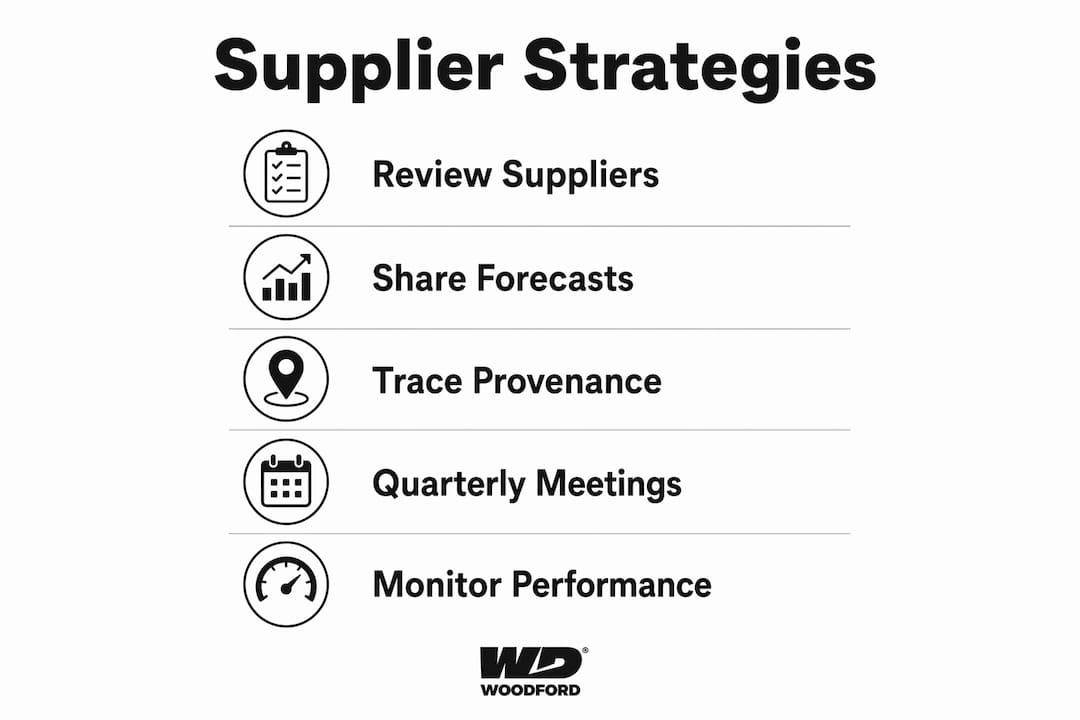
- Segment your suppliers using a prioritisation framework. The Kraljic Matrix, a foundational tool in supplier relationship management, categorises suppliers by supply risk and profit impact. Strategic partners warrant deep investment in communication and joint planning. Commodity suppliers require efficiency and compliance. Knowing which is which stops you wasting relationship capital in the wrong places.
- Commit to longer-term agreements where possible. Short-term contracts signal low commitment and invite suppliers to deprioritise you when capacity is tight. Sainsbury’s approach of locking in multi-year farm contracts is not just good PR. It gives suppliers the certainty to invest in the infrastructure that serves you better. For independent retailers and food brands, even a two-year agreement with a key supplier changes the dynamic significantly.
- Use technology to make transparency real. Real-time certification monitoring tools like BRCGS Directory Pro shift supplier assurance from annual audits to live, verified data. This makes trust actionable rather than assumed, and reduces the administrative overhead that strains smaller teams.
- Pre-align on exception handling. Demand spikes, product recalls, and logistics failures are not exceptional events in food supply chains. They are routine. Agreeing in advance on escalation paths, communication protocols, and decision-making authority means your team and your supplier’s team respond in hours, not days.
- Diversify without diluting. Maintaining strong relationships with multiple suppliers within a portfolio reduces disruption risk more effectively than single-sourcing. The goal is relationship depth across a resilient portfolio, not dependency on one partner however trusted they may be.
Pro Tip: Schedule a quarterly business review with your top five suppliers. Bring data on volumes, forecasts, and any service issues. Suppliers who see you as a planning partner, not just a purchase order, will prioritise your account when capacity is constrained.
Learning how to build supplier connections in the food sector also means understanding provenance and traceability. Mutual trust and shared information help food retailers and brands prevent shortages and improve supply chain responsiveness. That is not a soft benefit. It is a measurable operational advantage.
Relationship-based vs transactional supplier management: what is the difference?
Transactional supplier management treats every purchase as an isolated event. The buyer seeks the lowest price, the supplier delivers the minimum required, and neither party invests in the other. This approach has a clear advantage: it is simple and requires little ongoing effort. The risks, however, are significant.
Transactional procurement creates fragility. When disruption hits, suppliers with no loyalty to you will redirect capacity to their preferred customers first. You have no early warning of quality issues, no flexibility on payment terms during a cash crunch, and no access to the new product development conversations happening with buyers they actually value. For food businesses operating in categories with tight margins and complex supply chains, this fragility is a genuine commercial risk.
Relationship-based supplier management operates differently across every dimension that matters:
- Responsiveness. Trusted suppliers prioritise your urgent requests. Transactional suppliers process them in queue order.
- Agility. Partners who know your business can adapt to your needs without lengthy renegotiation. Transactional suppliers require a new contract for every change.
- Innovation. Suppliers share new product ideas, reformulations, and category insights with buyers they trust. Transactional buyers hear about them after everyone else.
- Risk visibility. Open information sharing means you know about a supplier’s capacity constraint before it becomes your stock-out. Transactional relationships offer no such early warning.
The modern food supply chain, with its exposure to climate events, geopolitical disruption, and regulatory change, makes resilient supplier selection a strategic necessity. Frameworks that integrate operational and disruption risks into supplier selection decisions are now standard practice among leading food businesses. The question is not whether to invest in relationships. It is how to do so efficiently across a portfolio of the right partners.
| Feature | Transactional approach | Relationship-based approach |
|---|---|---|
| Primary focus | Price and compliance | Trust, collaboration, and shared outcomes |
| Supplier loyalty | Low | High |
| Risk visibility | Reactive | Proactive |
| Innovation access | Limited | Prioritised |
| Resilience under disruption | Fragile | Robust |
How Woodford helps you build the right supplier partnerships
Strong supplier relationships start with working alongside the right distribution partner. Woodford is the UK’s leading strategic food wholesaler, connecting ambitious independent retailers with quality food brands through exclusive distribution, trend-led curation, and dependable logistics. If you are a food brand looking to reach independent retailers, or a retailer seeking strategic food brands that come with reliable supply and genuine category expertise, Woodford provides the infrastructure and relationships that make it work. Understanding how food distributor contracts are structured is a practical first step. Explore the full range of Woodford’s services to see how we support your supply chain from sourcing to shelf.
Key takeaways
Strong supplier relationships are the single most effective way to build supply chain resilience, improve responsiveness, and access commercial advantages unavailable through transactional procurement.
| Point | Details |
|---|---|
| Relationships drive responsiveness | Trusted suppliers prioritise your account during disruptions, reducing stock-outs and delays. |
| Compatibility determines success | Cultural, operational, and strategic fit between buyer and supplier predicts collaboration quality more reliably than contract terms. |
| Segmentation focuses effort | Use a prioritisation framework like the Kraljic Matrix to direct relationship investment towards your highest-impact suppliers. |
| Technology makes trust operational | Real-time certification monitoring tools shift supplier assurance from annual audits to live, verified data. |
| Diversify across a resilient portfolio | Relationship depth across multiple suppliers reduces concentration risk without sacrificing the benefits of strong ties. |
FAQ
What is supplier relationship management?
Supplier relationship management (SRM) is the systematic approach to evaluating, developing, and managing supplier partnerships to maximise value and minimise risk. It covers everything from supplier segmentation and performance monitoring to joint planning and exception handling.
Why nurture supplier relationships rather than just switching suppliers?
Switching suppliers is costly and disruptive. Nurturing existing relationships builds the trust and mutual understanding that make suppliers more responsive, more transparent, and more willing to invest in your account over time.
How does supplier compatibility affect supply chain resilience?
A 2025 MDPI study found that partner compatibility in cultural and operational dimensions improves collaboration quality, which in turn strengthens supply chain risk-response capability. Compatibility is a stronger predictor of resilience than contract terms alone.
What is the Kraljic Matrix and why does it matter for food businesses?
The Kraljic Matrix categorises suppliers by supply risk and profit impact, allowing food businesses to direct relationship investment towards strategic partners while managing commodity suppliers for efficiency. It is a foundational tool in supplier relationship management best practice.
How many suppliers should a food retailer or wholesaler maintain close relationships with?
Research advises maintaining relationship depth across a portfolio of resilient suppliers rather than concentrating on a single source. The right number depends on your category complexity, but diversification across key supply relationships reduces disruption risk significantly.


