Top food retail trends to inspire your independent shop
TL;DR:UK retail is experiencing rapid change with increased sales and online shopping growth.Livestream shopping and sensory in-store experiences are key trends for independents to boost sales.Independents’ agility and authenticity offer a competitive advantage, emphasizing fast adaptation and community connection.
UK retail is shifting faster than at any point in recent memory. Retail sales volumes rose 1.3% in 2025, with food stores recording growth for the first time since 2021 and online spending claiming 28.3% of all retail in December 2025 alone. For independent food retailers and brands, this pace of change is both a challenge and an opportunity. The shops that thrive are not the ones with the biggest budgets. They are the ones that spot what shoppers want next and act on it quickly. This guide covers the evidence-backed food retail trends shaping 2026, with practical ideas you can apply straight away.
Table of Contents
- Livestream shopping: The new digital shop window
- Multi-sensory experiences: Why in-store matters more than ever
- Year-round seasonality: Capturing value beyond the main holidays
- Omnichannel and AI: Balancing tech with the human touch
- Wellness and value: Meeting the health-conscious and value-driven customer
- What most trend lists miss: Independent agility and authenticity
- Partner with Woodford for trend-led retail growth
- Frequently asked questions
Key Takeaways
| Point | Details |
|---|---|
| Embrace livestream selling | Livestream and interactive digital events are fast-growing channels for boosting engagement and revenue. |
| Leverage in-store experiences | Multi-sensory shopping environments drive loyalty and outperform simple discounting strategies. |
| Experiment with year-round seasonality | Testing seasonal and event-focused lines through the year brings steady footfall and greater innovation. |
| Balance tech with human service | Integrating AI and omnichannel tools is vital, but genuine, personalised service remains your shop’s edge. |
| Prioritise health and value | Catering to health-conscious, value-driven shoppers is critical for sustained sales growth. |
Livestream shopping: The new digital shop window
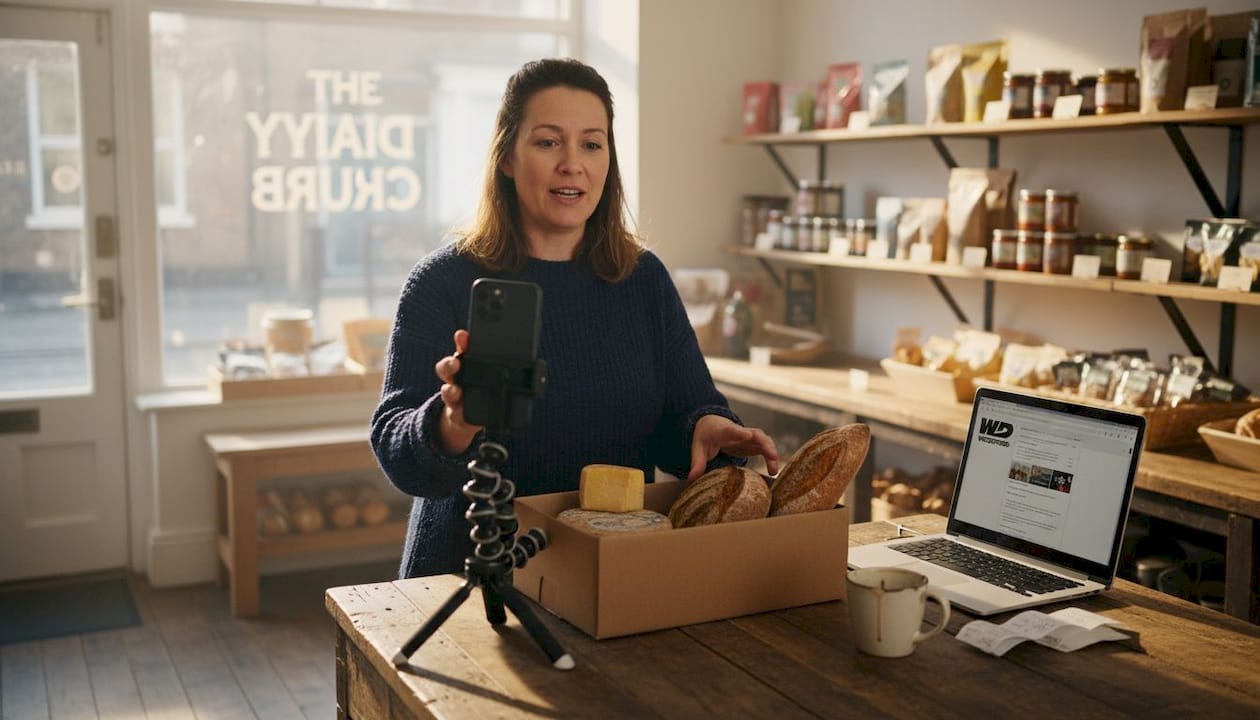
Livestream shopping is no longer a novelty reserved for tech-savvy brands. It is fast becoming a genuine sales channel for independent food retailers who want to connect with customers in real time. Think of it as a digital version of a market stall demo, where personality and product knowledge drive purchases on the spot.
The numbers back this up. TikTok Shop live-shopping sales surged 68% over Black Friday and Cyber Monday, confirming that live selling is pulling serious commercial weight. For independents, this is significant because you do not need a production team or a large following to get started.
Here is a simple way to begin:
- Choose one platform (TikTok or Instagram Live are strong starting points)
- Pick a product with a story, something artisan, local, or seasonal
- Schedule a short 20-minute session and promote it 48 hours in advance
- Engage viewers by answering questions live and offering a limited-time discount code
- Review your sales data and comments to refine the next session
“The best livestreams feel like a conversation, not a commercial. Shoppers buy from people they trust.”
The key benefit is immediacy. Viewers can ask questions, see the product up close, and buy within seconds. This creates impulse sales that a static product listing rarely achieves. If you are still thinking about adapting food retail strategies for the digital era, live selling is one of the lowest-cost entry points available.
Pro Tip: Batch your food logistics tips planning around your livestream schedule. If you know a session will shift stock fast, make sure your fulfilment is ready before you go live, not after.
Multi-sensory experiences: Why in-store matters more than ever
Beyond digital, the physical shop offers something e-commerce simply cannot replicate: the full power of human senses. Sight, sound, smell, taste, and touch are all levers that independent retailers can pull to create experiences that keep shoppers coming back.
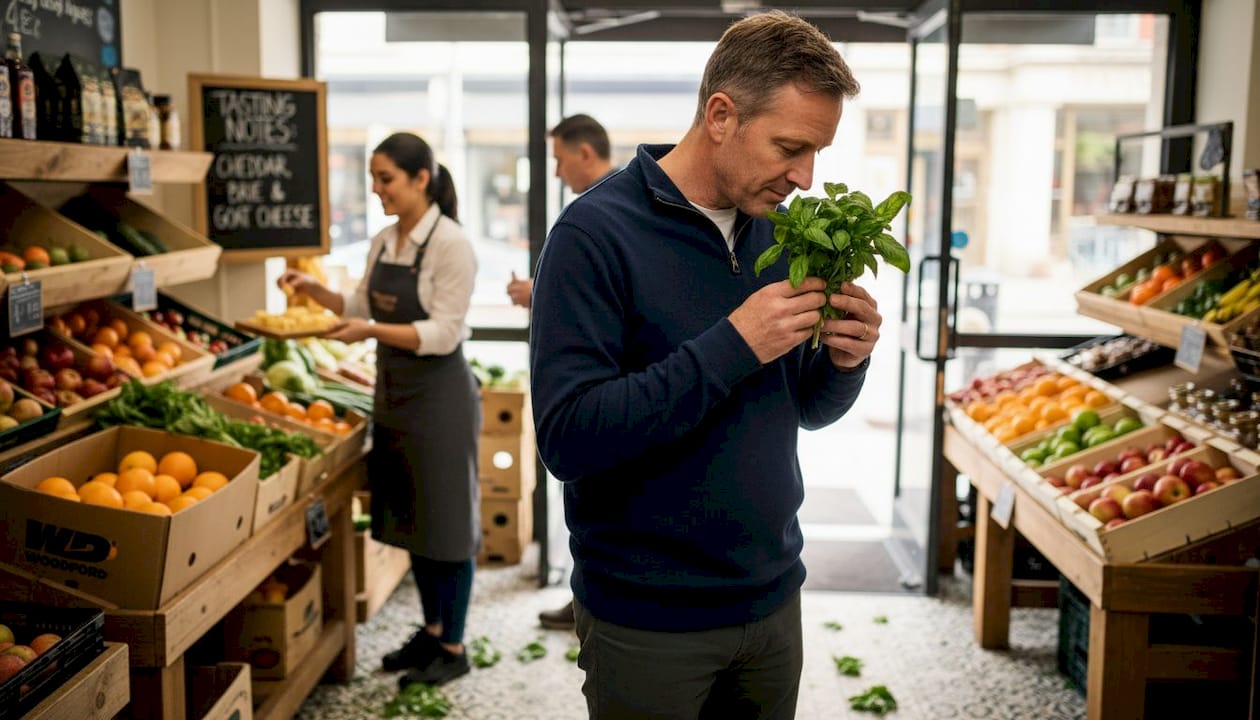
Fragrance influences buying behaviour more powerfully than discounts, according to recent research into multi-sensory retail. That is a striking finding. It means a well-chosen ambient scent, perhaps fresh bread, roasted coffee, or seasonal spice, can do more for your basket size than a price promotion.
Here are practical, cost-effective ways to build sensory appeal in a small space:
- Use a small diffuser with food-relevant scents near your entrance
- Offer regular in-store tastings, even one product per week creates a habit
- Curate background music that matches your brand tone (relaxed, artisan, vibrant)
- Display products at different heights and textures to invite touch
- Use warm lighting to make food look more appetising
Dwell time is the metric that matters here. The longer a shopper stays in your store, the more they spend. Sensory cues extend dwell time without any discounting required. A cheese counter with samples and a story card will consistently outperform a shelf with a price sticker.
Pro Tip: When building store strategies around sensory retail, start with smell and taste. These two senses have the strongest link to memory and emotional response, which means shoppers are more likely to associate your store with positive feelings and return.
Sensory retail is not about spending more. It is about being intentional with what you already have.
Year-round seasonality: Capturing value beyond the main holidays
Sensory in-store experiences pair brilliantly with dynamic, event-driven product ranges. The old model of stocking for Christmas and Easter is giving way to something far more agile: year-round seasonality built around a rolling calendar of events, sports, cultural moments, and even quirky micro-holidays.
Halloween shopping now starts from August, with small item sales up 150%, and agile independents are testing seasonal products in real time to see what lands. This is a genuine advantage over large chains, which plan ranges 12 to 18 months ahead and cannot pivot quickly.
Here is how to build a year-round seasonal testing habit:
- Map out your retail calendar for the next six months, including sports fixtures, cultural events, and national food days
- Identify two or three moments where a limited product range makes sense
- Source a small trial quantity (low risk, low cost)
- Measure sell-through rate within the event window
- Repeat with the winners and drop the rest
The broader retail context supports this approach. UK food store sales rose for the first time since 2021 in 2025, suggesting shoppers are spending again when given the right reasons to do so.
| Event | Opportunity window | Product ideas |
|---|---|---|
| Halloween | August to October | Themed confectionery, spiced drinks |
| World Cup / Euros | Tournament weeks | Snack bundles, international flavours |
| Valentine’s Day | January to February | Premium gifting, artisan chocolates |
| National BBQ Week | May to June | Marinades, premium meats, sauces |
For deeper guidance on spotting the next opportunity early, trend analysis tips can help you build a more structured approach to your seasonal planning.
Omnichannel and AI: Balancing tech with the human touch
The modern retail landscape blurs online and offline, demanding a hybrid approach. Shoppers, particularly Gen Z, move fluidly across channels. They might discover a product on TikTok, check your website, then visit in store to buy. If any part of that journey is broken, you lose the sale.
Omnichannel integration is now essential, with Gen Z making frequent trips across channels and predictive retail tools using data to protect margins through smarter demand forecasting. AI is no longer only for large retailers. Affordable tools now help independents forecast stock needs, identify slow movers, and reduce waste.
Here is where AI adds genuine value for independents:
- Demand forecasting to avoid over-ordering seasonal lines
- Automated reorder alerts linked to sales data
- Social listening tools to spot emerging product trends early
- AI-generated product descriptions for online listings
However, there is a critical counterpoint. AI shifts discovery towards AI Engine Optimisation, but the human touch is what differentiates independents from the generic, algorithm-driven experience shoppers are increasingly tired of.
| Automated approach | Personal approach |
|---|---|
| Chatbot customer service | Staff who know regulars by name |
| Algorithm-led recommendations | Curated picks with a personal note |
| Generic email campaigns | Handwritten loyalty cards |
| Standard product pages | Storytelling about provenance |
The omnichannel outlook is clear: technology handles the operational load, but relationships close the sale. A strong food brand strategy will weave both together, and understanding your distribution channels guide ensures your stock keeps pace with demand across every touchpoint.
Wellness and value: Meeting the health-conscious and value-driven customer
Alongside technology and multi-sensory selling, wellness and value have moved firmly to centre stage. UK shoppers are not just buying food. They are making deliberate choices about what goes into their bodies and how far their money stretches.
The data is compelling. Protein sales rose 9.6% and fibre sales climbed 14.1% over 26 weeks, while supplements grew 18.4%, with one in four households now actively prioritising health in their food choices. These are not niche numbers. They represent a mainstream shift.
At the same time, HFSS regulations are forcing a rethink across the industry. Some businesses are complying minimally, but the smarter independents are using the rules as a prompt to innovate with genuinely healthier promotions and product ranges.
Here is how to act on the wellness trend without overhauling your entire range:
- Introduce a dedicated wellness section, even a small shelf with clear signage
- Stock high-protein snacks, fibre-rich foods, and functional drinks alongside your core range
- Use shelf labels that highlight nutritional benefits, not just price
- Partner with a local nutritionist for a free in-store event to build credibility
- Communicate value through quality and provenance, not just cost per unit
Value and wellness are not opposites. Many shoppers will pay more for a product they trust and understand. Clear storytelling about ingredients, sourcing, and benefits is one of the most powerful tools an independent has over a supermarket. Exploring brand acceleration strategies can help you articulate that story more effectively.
Pro Tip: Do not wait for customers to ask about health credentials. Train your staff to mention them naturally during conversations. A brief, genuine recommendation from a knowledgeable team member converts far better than any shelf label.
What most trend lists miss: Independent agility and authenticity
Here is something worth saying plainly. Most trend reports are written with large retailers in mind, then retrofitted for independents as an afterthought. But the trends covered here, livestreaming, sensory retail, seasonal agility, omnichannel, wellness, all point to one core advantage that independents already possess: the ability to move fast and mean it.
A supermarket cannot genuinely pivot its range in a week. You can. A chain cannot train every member of staff to have an authentic conversation about provenance. You can. Growth through adaptation is not about copying what large retailers do. It is about doing what they cannot.
The independents we see succeeding are not chasing every trend. They are choosing one or two that fit their identity and their customers, then executing with real conviction. A shop known for its local sourcing does not need to launch a full livestream channel. But it might do one live session a month with a local producer, and that single touchpoint builds loyalty that no algorithm can replicate.
Authenticity is not a marketing strategy. It is an operational reality for independents who know their community. Lean into that. The trends are tools. Your identity is the advantage.
Partner with Woodford for trend-led retail growth
If you are ready to put these trends into action, Woodford is built to support exactly that. As the UK’s leading strategic food wholesaler, Woodford connects ambitious independent retailers with visionary food brands that are already aligned with the trends shaping 2026. From wellness-led products to artisan seasonal ranges, our curated selection means you can stock what shoppers actually want, without the guesswork.
Browse our brands to discover trend-led products ready for your shelves, or if you represent a food brand looking to reach independent retailers at scale, explore our brand owner opportunities. We handle the logistics, the curation, and the strategy so you can focus on your customers.
Frequently asked questions
What are the most effective ways for small shops to trial food retail trends?
Test trends with pop-up tastings, limited edition launches, and live digital events to gauge customer response cheaply. Agile independents test quirky seasonal products in real time, which keeps risk low and learning fast.
How can independents balance AI technology with a personal touch?
Use AI for forecasting and stock management, but focus your energy on community and in-person service that sets you apart from chains. The human touch is what differentiates independents from the AI-driven, impersonal experience shoppers are increasingly rejecting.
What food trends are driving sales for independent shops in 2026?
Healthier products, value-led offers, multi-sensory experiences, and livestream selling are the top drivers backed by current sales data. Protein and fibre sales are up significantly, and livestream shopping continues to grow as a direct sales channel.
How do HFSS regulations affect UK food retail trends?
Retailers are either complying minimally or using the rules as a prompt to develop healthier, more innovative product options and promotions. HFSS regulations are reshaping how independents think about their ranges and in-store promotional strategies.
Recommended
- Why adapt to food trends: boost independents’ growth - WOODFORD - Bringing quality foods your way
- Strategic food brands for UK independent retailers - WOODFORD - Bringing quality foods your way
- Food logistics tips for UK independent retailers in 2026 - WOODFORD - Bringing quality foods your way
- What is brand acceleration in food: a guide for UK retailers - WOODFORD - Bringing quality foods your way