Role of wholesalers in inventory management
TL;DR:Wholesalers play a critical role in food inventory management by handling batch rotation, demand forecasting, and real-time stock visibility.Their expertise reduces costs, prevents spoilage, and improves supply chain resilience through technology and strategic partnerships.Collaborative data sharing and automation are essential for retailers seeking reliable, efficient supply chains in the food industry.
Most retailers and brand owners think of wholesalers as order-takers who shift boxes from A to B. That framing undersells what a capable wholesale partner actually does, particularly in the food industry where expiry dates, temperature control, and fluctuating demand make inventory management genuinely difficult. The role of wholesalers in inventory management extends far beyond storage and delivery. Done well, it means your stock is tracked, rotated, and replenished with a level of precision that most independent retailers simply cannot replicate alone. This article explains exactly how that works, and why it matters to your bottom line.
Table of Contents
- Key takeaways
- Role of wholesalers in inventory management
- How wholesalers reduce costs and supply risks
- Technology that powers modern wholesale inventory
- The strategic partnership between wholesalers and retailers
- Common pitfalls and how to avoid them
- My perspective: wholesalers must earn their place in the supply chain
- How Woodford helps you get this right
- FAQ
Key takeaways
| Point | Details |
|---|---|
| Wholesalers manage complex stock | Skilled wholesalers handle batch rotation, expiry tracking, and demand forecasting that food retailers cannot easily do in-house. |
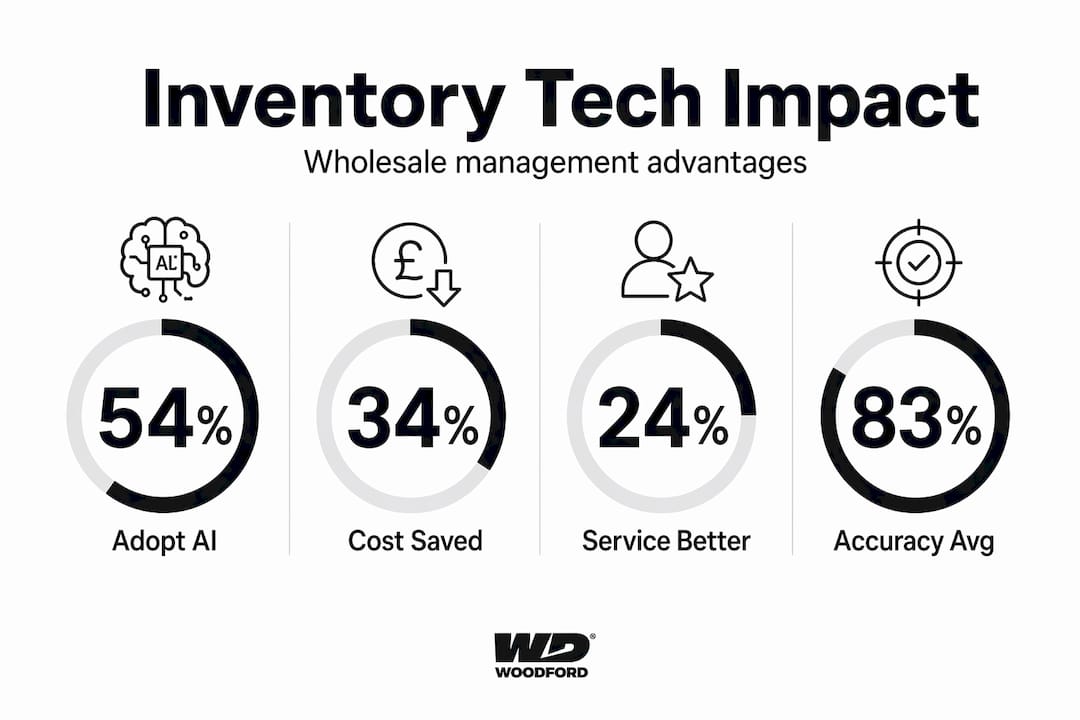
| Data accuracy drives everything | Average wholesale inventory accuracy sits at 83%, but top performers hit 95%, which directly reduces stockouts and waste. |
| AI is reshaping forecasting | AI-powered tools cut stockouts by 15% and reduce carrying costs by 20%, making demand planning far more reliable. |
| Strong partnerships outperform transactions | Sharing sales data with your wholesaler improves demand planning and builds supply chain resilience for both parties. |
| Technology mitigates common pitfalls | Real-time inventory tracking, ERP integration, and automated batch rotation reduce the most costly wholesale inventory errors. |
Role of wholesalers in inventory management
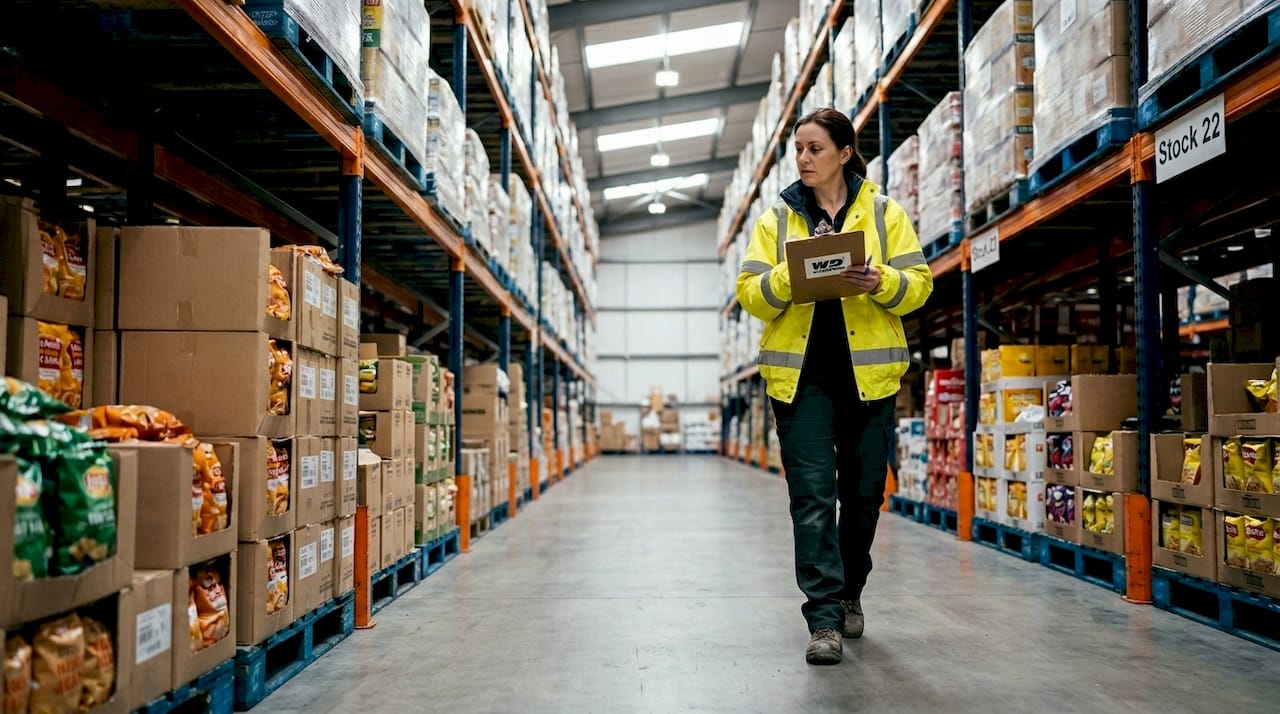
The food sector has a particular set of demands that make inventory management more complex than almost any other category. A wholesaler operating in this space is not simply warehousing product. They are managing sell-by dates, complying with food safety regulations, handling cold chain integrity, and balancing order consolidation across dozens of SKUs at once.
The core functions look like this:
- Bulk purchasing and warehousing. Wholesalers buy in volume and store product centrally, reducing the capital burden on individual retailers and brand owners who cannot afford to tie up cash in large stock holdings.
- Batch and expiry tracking. In food wholesale, knowing which batch arrived first is not optional. Automated batch rotation through FEFO (First Expired, First Out) is mandatory for compliance and spoilage prevention.
- Order consolidation. Rather than coordinating multiple supplier deliveries, retailers receive consolidated shipments through a single wholesale partner, which cuts logistics costs and reduces the risk of stock gaps.
- Real-time inventory visibility. Wholesalers with modern warehouse management systems provide up-to-the-minute stock data, which is the foundation for accurate ordering decisions on the retail side.
Pro Tip: When evaluating a wholesale partner, ask specifically about their FEFO compliance and whether their warehouse management system is integrated with their order management platform. These two factors alone will tell you a great deal about how seriously they take inventory accuracy.
The importance of wholesalers in the food supply chain is most obvious when something goes wrong. A retailer with a direct supplier relationship has little buffer when a delivery fails or a batch fails a quality check. A wholesaler with strong inventory control strategies and diversified sourcing absorbs that disruption before it reaches the shelf.
How wholesalers reduce costs and supply risks
The financial case for working with a competent wholesale partner is stronger than many retailers realise. Advanced demand planning reduces inventory costs by 34% and improves service levels by 24% among distributors who apply it rigorously. Those numbers are not theoretical. They reflect what happens when replenishment decisions are driven by data rather than habit.
Here are the specific tactics wholesalers use to deliver that kind of result:
- Demand forecasting. Using historical sales data, seasonal trends, and promotional calendars, wholesalers project future demand with far greater accuracy than a single retailer can achieve alone.
- Automated replenishment. When stock falls below a defined threshold, reorder triggers fire automatically. This removes the human error that causes both stockouts and overbuying.
- Safety stock management. Wholesalers hold buffer stock calibrated to lead times and demand variability. Around 22% of distributors hold over 90 days of stock precisely because market volatility demands it.
- FEFO batch rotation. In food specifically, rotating stock by expiry date rather than arrival date is the single most important tactic for reducing spoilage losses and maintaining compliance.
- ERP integration. When a wholesaler’s warehouse management system connects directly to their ERP, stock movements update in real time, which eliminates the data lag that leads to ghost stock and phantom availability.
The risk of getting this wrong is substantial. Inventory inaccuracies cost businesses up to 10% of annual revenue in wholesale sectors, a figure that accounts for dead stock, emergency procurement, and lost sales. For an independent food retailer operating on thin margins, that exposure is simply not acceptable.
Technology that powers modern wholesale inventory
The gap between average and excellent in wholesale inventory management is increasingly a technology gap. Real-time tracking systems improve inventory accuracy by approximately 35% compared to periodic manual counting. That is a structural advantage that compounds over time.
Here is how the technology stack typically breaks down for a high-performing food wholesaler:
| Technology | Function | Benefit to retailers |
|---|---|---|
| AI demand forecasting | Predicts future demand using multiple data inputs | Fewer stockouts, less overstock |
| Warehouse management system (WMS) | Manages physical stock movements and locations | Faster, more accurate order fulfilment |
| ERP integration | Connects financials, procurement, and inventory | Single source of truth for stock data |
| Barcode and RFID scanning | Tracks individual units and batches in real time | Accurate batch and expiry management |
| eCommerce platform integration | Syncs online and offline order channels | Consistent availability across all channels |
The adoption of AI specifically is accelerating. 54% of wholesale distributors are now adopting new demand planning techniques including AI to manage economic volatility, and AI-powered forecasting has been shown to reduce stockouts by 15% and carrying costs by 20%.
Pro Tip: Before asking your wholesaler about their AI capabilities, ask about their data hygiene. AI forecasting is only as good as the underlying data. A wholesaler with clean, accurate, well-maintained inventory records will get far more value from any forecasting tool than one whose data is fragmented or out of date.
For retailers thinking about how wholesalers manage inventory at a technical level, the honest answer is that the best operators treat food inventory management as a continuous process, not a periodic exercise. That shift in mindset is what separates partners who reduce your costs from those who simply pass on their own inefficiencies.
The strategic partnership between wholesalers and retailers
The role of wholesalers in supply chain performance is most powerful when the relationship moves beyond transactional. When both parties share data and align on planning, the outcomes are measurably better for everyone involved.
What a genuinely strategic wholesale partnership looks like in practice:
- Sales data sharing. When retailers share EPOS data with their wholesaler, forecasting accuracy improves significantly. The wholesaler can see what is actually selling and adjust replenishment accordingly, rather than relying on order history alone.
- Supply chain finance support. Supply chain finance allows wholesalers to maintain liquidity and support supply continuity during periods of disruption, protecting both parties when market conditions tighten.
- Multi-channel allocation. As retailers operate across physical stores, online platforms, and foodservice channels simultaneously, wholesalers coordinate stock allocation to prevent one channel cannibalising another.
- Supplier diversification. A wholesaler sourcing from multiple producers gives retailers genuine resilience. If one supplier fails a quality audit or faces a production issue, the wholesaler can switch sourcing without the retailer ever noticing a gap.
The wholesalers and supply chain relationship works best when it is treated as a genuine commercial partnership. Transparency on both sides, around sales performance, promotional plans, and demand shifts, creates the conditions for the kind of proactive inventory management that actually changes outcomes.
Common pitfalls and how to avoid them
Even capable wholesalers make inventory management mistakes, and understanding where things go wrong helps retailers protect themselves.
- Inventory data lag. When stock updates are batched rather than real-time, retailers make ordering decisions based on stale information. This is one of the most common causes of unintentional overstock.
- Poor batch and expiry tracking. Without automated batch rotation compliance, food wholesalers risk sending short-dated product to retail shelves, triggering returns, waste, and potential compliance issues.
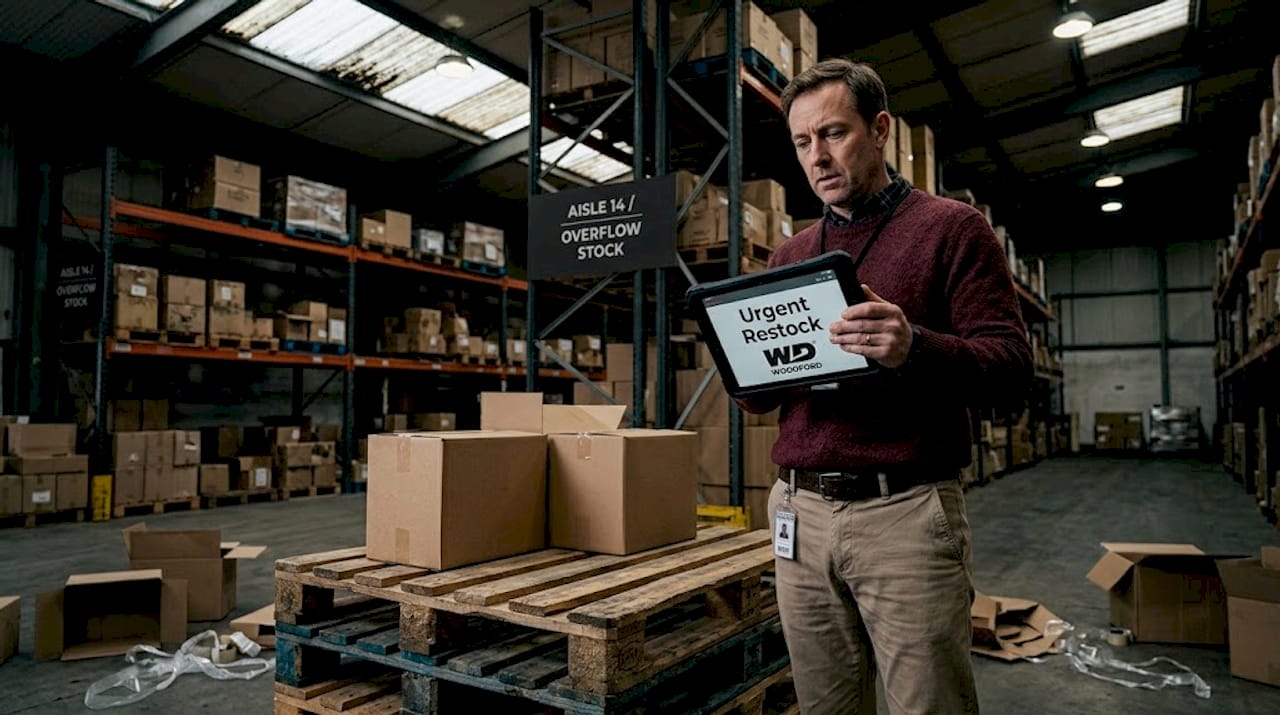
- Reserved stock confusion. In B2B wholesale, stock is often reserved against orders before it is physically picked. Without clear visibility of available versus committed stock, retailers can order product that does not actually exist in usable form.
- Complex pricing errors. B2B wholesale pricing involves customer-specific tiers, promotional discounts, and volume breaks. When these are managed manually, pricing errors bleed into invoicing and create downstream disputes that damage the relationship.
Pro Tip: Ask your wholesale partner for a monthly inventory accuracy report. The average accuracy across the sector is around 83%. If your wholesaler cannot tell you their accuracy rate, that itself is the answer.
The remedy in almost every case is a combination of better technology and more frequent communication. Wholesalers in supply management who invest in real-time systems and maintain open dialogue with their retail partners avoid the majority of these problems before they become costly.
My perspective: wholesalers must earn their place in the supply chain
I have spent years watching food wholesalers operate at both ends of the performance spectrum. The ones who struggle in 2026 are almost always the ones still running inventory on intuition and outdated spreadsheets. The ones who thrive have made a genuine commitment to data accuracy first, and automation second.
The mistake I see repeatedly is wholesalers who invest in AI forecasting tools before sorting out their underlying data quality. Wholesalers shifting to data-driven operations are the ones remaining relevant amid growing D2C competition, but the shift has to be built on a clean foundation. Garbage in, garbage out still applies, regardless of how sophisticated the algorithm.
What I have seen work, consistently, is when a wholesaler treats end-to-end inventory visibility as a shared asset with their retail partners. Not a proprietary advantage to be guarded. When both sides can see the same stock picture in real time, the commercial relationship becomes genuinely collaborative rather than adversarial. That is where the real margin improvements come from, for everyone in the chain.
— Nadim
How Woodford helps you get this right
Woodford works with independent food retailers and ambitious brand owners across the UK who want a wholesale partner that takes inventory management seriously. We combine exclusive distribution with real supply chain expertise, so the brands on your shelves are backed by the kind of stock management that keeps them there reliably.
If you are looking to work with UK food wholesalers who understand the commercial pressures you face, Woodford is the place to start. Whether you need better visibility into available stock, more consistent fulfilment, or access to trend-led brands that are already flying in the independents sector, our food distribution network gives you the infrastructure to compete with confidence. Get in touch to find out how we work and whether Woodford is the right fit for your business.
FAQ
What is the role of wholesalers in inventory management?
Wholesalers manage bulk purchasing, warehousing, batch and expiry tracking, demand forecasting, and automated replenishment on behalf of retailers. In the food sector, this includes FEFO stock rotation and real-time inventory visibility to prevent spoilage and stockouts.
How do wholesalers reduce inventory costs for food retailers?
Advanced demand planning by wholesalers reduces inventory costs by 34% and improves service levels by 24%, according to industry research. The savings come from fewer stockouts, reduced overstock, and more accurate replenishment driven by data rather than guesswork.
Why does inventory accuracy matter so much in food wholesale?
The average wholesale inventory accuracy is around 83%, with errors leading directly to stockouts, overstock, and wasted product. In food specifically, inaccurate batch tracking can also create compliance failures and costly product recalls.
What technology do wholesalers use to manage food inventory?
High-performing food wholesalers use warehouse management systems, ERP integration, barcode and RFID scanning, AI-driven demand forecasting, and eCommerce platform connectivity. Together these tools provide real-time stock visibility and automated replenishment.
How can retailers get more from their wholesale partnerships?
Sharing EPOS sales data with your wholesaler is the single most effective step. It gives your wholesale partner the demand signal they need to forecast accurately and maintain the right stock levels, which reduces both shortages and excess inventory across your supply chain.
Recommended
- Wholesale logistics explained: A guide for UK food retailers - WOODFORD - Bringing quality foods your way
- Types of food wholesalers to boost your grocery store - WOODFORD - Bringing quality foods your way
- Streamline UK food wholesaling workflow: boost efficiency - WOODFORD - Bringing quality foods your way
- How to manage food inventory for better profit - WOODFORD - Bringing quality foods your way