Food retail channels explained for industry professionals

TL;DR:Food retail channels are defined sales routes from supply chains to consumers, categorized by format and shopping mode. Each channel, such as supermarkets, convenience stores, or online grocery, requires distinct fulfillment, inventory, and marketing strategies. Effective channel planning aligns product positioning with shopper missions to build durable retail relationships.
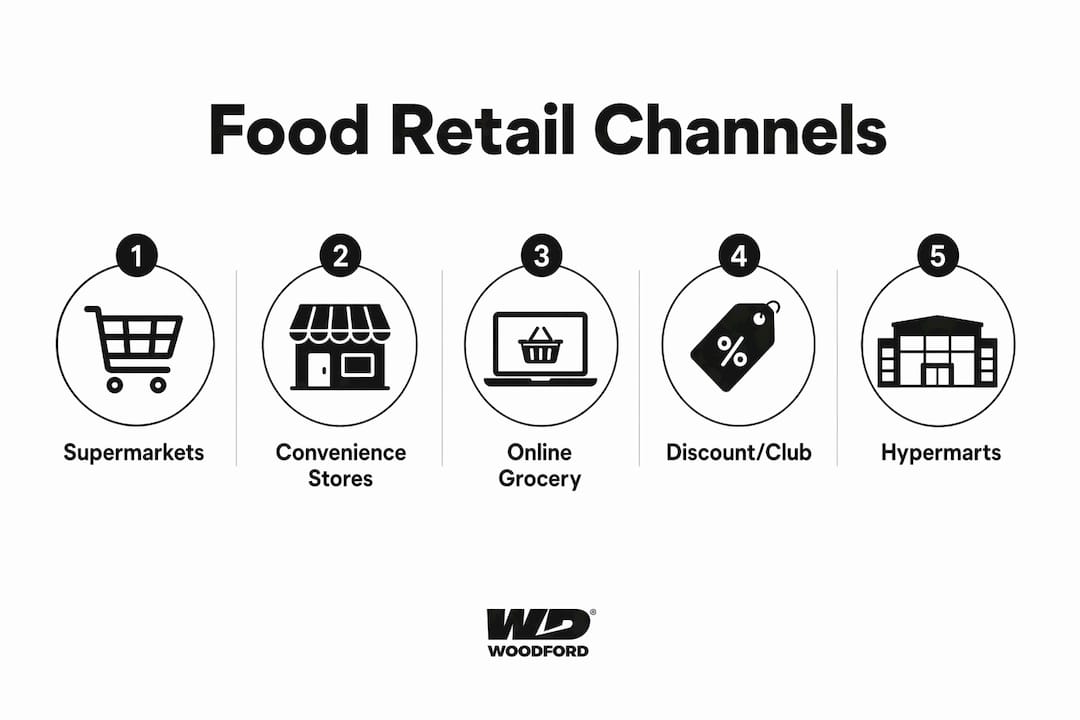
A food retail channel is the specific sales route through which food products move from the supply chain to consumers, defined by retail format, shopping mode, and fulfilment method. Understanding these routes is not optional for food marketers and brand managers. It is the foundation of every distribution decision you make, from SKU assortment to logistics planning. The food retail industry segments these routes into supermarkets, convenience stores, club and discount formats, and online grocery, each with distinct operational demands and consumer behaviours.
What is a food retail channel and how are the main types categorised?
A food retail channel classifies by two primary variables: retail format and shopping mode. Format refers to the physical or digital structure of the store. Shopping mode refers to how the consumer interacts with it, whether in-store browsing, click-and-collect, or home delivery. Channel categorisation by these two variables is the standard used by FMI and NielsenIQ in their market reporting, and it is the most practical framework for distribution planning.
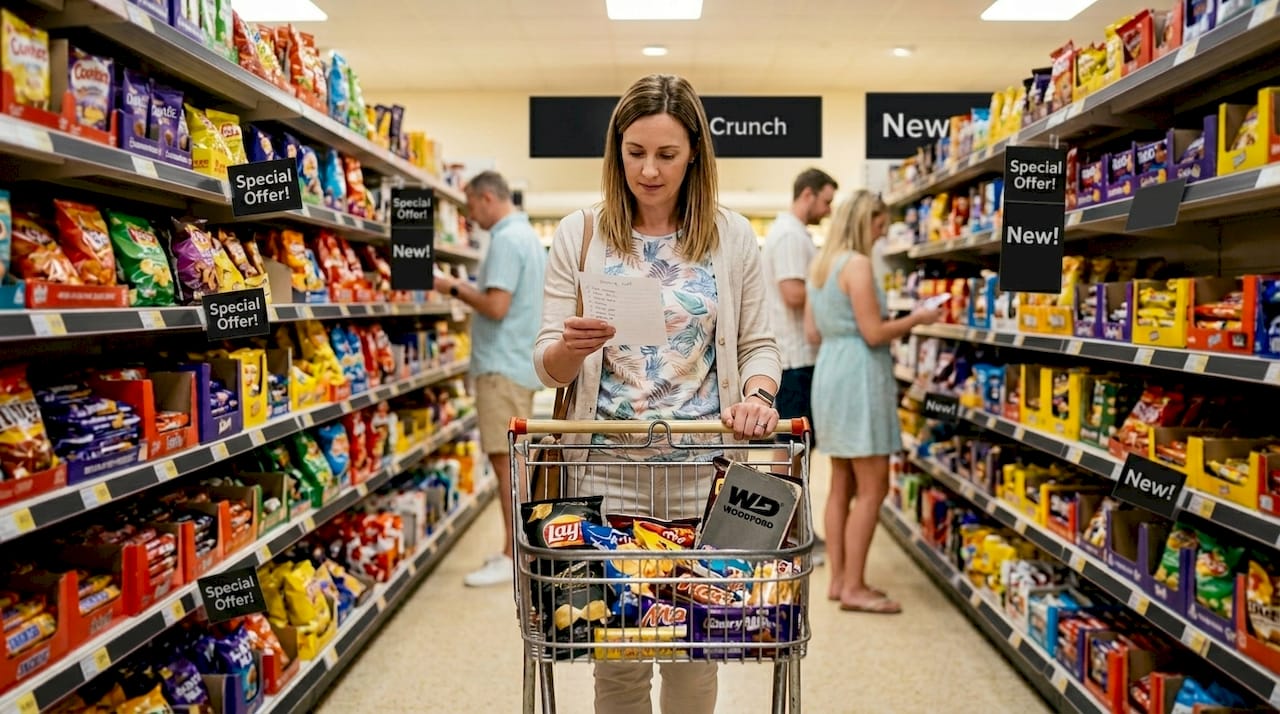
Supermarkets and hypermarkets
Supermarkets and hypermarkets are large-format, self-service stores carrying broad product assortments across fresh, ambient, chilled, and frozen categories. They operate on high-volume replenishment cycles, often with centralised distribution centres feeding multiple store locations. For food brands, this channel offers scale but demands consistent supply reliability and compliance with retailer-specific ranging and promotional requirements.
Convenience stores
Convenience stores operate on a fundamentally different logic. Smaller footprints, limited SKU depth, and faster checkout are designed for top-up shopping rather than the weekly main shop. Each retail channel requires distinct distribution systems, and convenience is the clearest example: frequent, smaller deliveries replace the bulk pallet drops that supermarkets expect. For independent convenience retailers in the UK, this means working with wholesalers who can deliver the right range at the right frequency.
Online grocery
Online grocery is the fastest-growing food retail channel by volume. It operates through digital platforms that enable direct-to-consumer delivery or click-and-collect, and it demands an entirely separate fulfilment infrastructure from physical retail. Online grocery sales in the US are projected to reach $452 billion by 2028, which signals that digital is no longer a secondary channel. It is a primary route to market that requires dedicated investment.
| Channel format | Typical store size | Shopping behaviour | Product mix depth |
|---|---|---|---|
| Supermarket/hypermarket | Large (2,500 sq m+) | Weekly main shop | Very broad, all categories |
| Convenience store | Small (under 280 sq m) | Top-up, impulse | Narrow, high-turn SKUs |
| Online grocery | Digital (no physical footprint) | Planned delivery or pickup | Broad, dependent on platform |
| Discount/club format | Medium to large | Bulk buying, value-led | Curated, limited range |
Pro Tip: When entering a new channel, map the shopping mission first. A product designed for impulse purchase in a convenience setting will not perform on a supermarket shelf without repositioning the pack size, price point, and placement.
How do food retail channels affect distribution and fulfilment?
Channel choice is the single biggest determinant of your distribution architecture. The operational gap between serving a supermarket and serving an online grocery platform is wider than most brand managers anticipate. Fulfilment economics and capacity constraints often limit omnichannel scaling far more than consumer demand does, which means the bottleneck is usually operational rather than commercial.
The contrast between in-store replenishment and online fulfilment is stark. Supermarkets receive large, scheduled deliveries to centralised distribution centres or direct to store, with replenishment driven by EPOS data and category management agreements. Online grocery, by contrast, requires individual order picking, packaging, and last-mile delivery or collection slot management. These are not variations of the same system. They are separate operating systems with different cost structures, lead times, and service level requirements.
For food brands and their distribution partners, this creates three practical implications:
- Inventory planning: Online channels require higher safety stock and more granular demand forecasting because individual order fulfilment amplifies variability compared to bulk store replenishment.
- SKU assortment: Convenience channels demand a tightly edited range of high-velocity lines. Listing a full portfolio in a convenience format wastes shelf space and dilutes sales density.
- Replenishment cycles: Supermarkets typically replenish on weekly or twice-weekly schedules. Convenience stores in high-footfall locations may need daily or near-daily top-ups.
Treat each retail channel as a different operating system with unique replenishment rhythms and assortment needs. The brands that struggle are those that apply a single logistics model across all channels and wonder why service levels collapse. Retail format distinctions affect forecasting and logistics more than any branding decision.
Pro Tip: Work with your logistics partner to build channel-specific inventory buffers rather than a single pooled stock position. This prevents a spike in online orders from depleting the stock allocated to your convenience or supermarket accounts.
Understanding food distribution channels in detail is the prerequisite for building a fulfilment model that does not break under pressure.
What trends are shaping food retail channels in 2026?
Omnichannel is not a trend. It is the current state of grocery shopping. Nearly 94% of grocery shoppers now purchase both online and in-store, which means the question is no longer whether to operate across channels. It is how to integrate them without creating operational fragmentation. This figure from FMI’s vice president of industry relations confirms that single-channel food retail strategies are structurally inadequate for 2026.
Retailer apps and digital discovery tools have become the primary entry point for omnichannel journeys. A shopper might discover a product through a retailer’s app, add it to a digital basket, and then purchase it in-store or via delivery depending on convenience. Retail media networks, the advertising inventory that major grocery retailers sell on their digital platforms, now influence purchasing decisions at the point of intent rather than the point of sale. For food brands, this means digital visibility within a retailer’s own ecosystem is as commercially significant as physical shelf placement.
The key trends reshaping food retail channels in 2026 include:
- Delivery speed expectations: Consumers now expect same-day or next-day fulfilment as standard, compressing the operational window for online grocery providers.
- Click-and-collect growth: Pickup models reduce last-mile delivery costs for retailers while maintaining the convenience of online ordering for shoppers.
- Retail media investment: Food brands are allocating significant budget to sponsored placements within grocery retailer apps and websites, treating them as a distinct media channel.
- Digital-physical integration: Physical stores increasingly serve as fulfilment hubs for online orders, blurring the operational boundary between in-store and online channels.
Adapting to food retail trends is not about chasing every new format. It is about identifying which shifts are structurally permanent and building your channel strategy around them.
How does channel blurring affect food marketing strategies?
Only about half of grocery purchases now occur in traditional grocery stores. The rest are split across mass retailers, convenience formats, club stores, discount operators, and digital platforms. This channel blurring is the most disruptive structural shift in food retail over the past decade, and it has direct consequences for how food brands allocate marketing investment and distribution resource.
The practical effect is that your competitor set is no longer defined by store format. A premium ambient food brand that previously competed only within the supermarket grocery aisle now faces competition from the same product category sold through a discount club, a convenience chain, or a direct-to-consumer subscription. Each of these formats attracts different shopper missions and price expectations, which means a single brand positioning rarely translates cleanly across all of them.
| Channel type | Primary shopper mission | Key competitive pressure | Marketing priority |
|---|---|---|---|
| Supermarket | Weekly main shop | Range breadth, price matching | Category management, promotional compliance |
| Convenience | Top-up, impulse | Speed, location, limited range | Visibility, pack size, impulse triggers |
| Online grocery | Planned delivery | Fulfilment speed, digital discovery | Retail media, search placement, reviews |
| Discount/club | Value, bulk buying | Price per unit, pack size | Value messaging, volume formats |
Successful food brands respond to channel blurring by selecting channels deliberately rather than pursuing distribution everywhere. A product with a premium positioning and a higher price point will perform better in supermarkets and online grocery than in a discount club format where the value proposition is misaligned. Strategic channel planning for UK food brands requires matching the product’s consumer profile to the dominant shopper mission of each channel.
Digitising traditional retail operations also creates a competitive advantage in this fragmented environment. Real-time sales and inventory monitoring enables channel networks to scale without service level losses, as demonstrated by Masan Consumer’s retail digitisation programme. Brands that can see channel-level sell-through data in real time make faster ranging and replenishment decisions than those relying on monthly reports.
Key takeaways
Effective food retail channel strategy requires matching your product’s consumer profile and operational capabilities to the specific demands of each channel format.
| Point | Details |
|---|---|
| Channel definition matters | A food retail channel is the defined sales route from supply chain to consumer, categorised by format and shopping mode. |
| Each channel is a separate system | Supermarkets, convenience stores, and online grocery each require distinct fulfilment, inventory, and assortment strategies. |
| Omnichannel is the baseline | Nearly 94% of grocery shoppers use both online and in-store channels, making integrated strategies non-negotiable. |
| Channel blurring expands competition | Only half of grocery purchases occur in traditional grocery stores, so your competitor set now spans mass, convenience, and digital formats. |
| Channel selection should be deliberate | Match your product positioning and price point to the dominant shopper mission of each channel before committing distribution resource. |
Why most food brands underestimate channel complexity
The most common mistake I see food brands make is treating channel selection as a distribution admin task rather than a strategic decision. A brand secures a listing in a supermarket, then assumes the same product, pack size, and price point will work in convenience or online. It rarely does. The shopper mission, the price sensitivity, and the competitive set are different in every format.
What I find more interesting is the operational blind spot. Brands invest heavily in product development and marketing, then discover that their logistics partner cannot service a convenience account with the delivery frequency it requires, or that their online listings are invisible because they have not invested in retail media. The commercial opportunity is real, but the operational infrastructure has to match it.
The brands that perform consistently across multiple channels are those that treat each one as a distinct business unit with its own P&L logic. They do not ask “how do we get this product into more stores?” They ask “which channels align with our margin structure, our consumer profile, and our operational capacity?” That is a harder question, but it is the right one.
The food distribution cycle for UK retailers is more complex than it appears from the outside. The brands that understand it at an operational level are the ones that build durable channel relationships rather than short-lived listings.
— Nadim
How Woodford supports food brands across retail channels
Woodford works with food brands and independent retailers across the UK to make channel strategy practical rather than theoretical. As the UK’s leading strategic food wholesaler, Woodford provides exclusive distribution, trend-led curation, and logistics support that removes the operational barriers between ambitious food brands and the retail channels where their consumers shop.
If you are a food brand assessing which retail channels to prioritise, or an independent retailer looking to stock products that are already positioned for your shopper profile, Woodford’s expertise covers the full channel picture. Explore Woodford’s curated brands to see how strategic placement across UK independent retail channels translates into commercial results. For brands seeking to understand how UK distributors support independent food retail success, Woodford’s model is built precisely for that purpose.
FAQ
What is a food retail channel?
A food retail channel is the specific sales route through which food products travel from the supply chain to the end consumer, defined by retail format and shopping mode. Common formats include supermarkets, convenience stores, online grocery platforms, and discount or club stores.
What are the main types of food retail channels?
The main types are supermarkets and hypermarkets, convenience stores, online grocery, and discount or club formats. Each operates with a different store size, shopper mission, and fulfilment model, requiring separate distribution and marketing approaches.
How does channel choice affect food distribution strategy?
Channel choice determines replenishment frequency, inventory depth, fulfilment infrastructure, and SKU assortment. Fulfilment constraints rather than consumer demand are the primary limiting factor when scaling across multiple channels simultaneously.
What does omnichannel mean in food retail?
Omnichannel in food retail means integrating online and in-store shopping into a single, connected consumer experience. 94% of grocery shoppers now use both channels, making omnichannel integration a structural requirement rather than a competitive advantage.
Why is channel blurring important for food marketers?
Channel blurring means that roughly half of grocery purchases now occur outside traditional grocery stores, in mass retail, convenience, and digital formats. Food marketers must account for this expanded competitive set when planning channel selection and brand positioning.
Recommended
- Understanding the food distribution cycle for UK retailers - WOODFORD - Bringing quality foods your way
- Wholesale logistics explained: A guide for UK food retailers - WOODFORD - Bringing quality foods your way
- Types of food distribution channels to boost your supply chain - WOODFORD - Bringing quality foods your way
- Food distributor contracts explained for UK brands - WOODFORD - Bringing quality foods your way