Examples of food retail partnerships in 2026
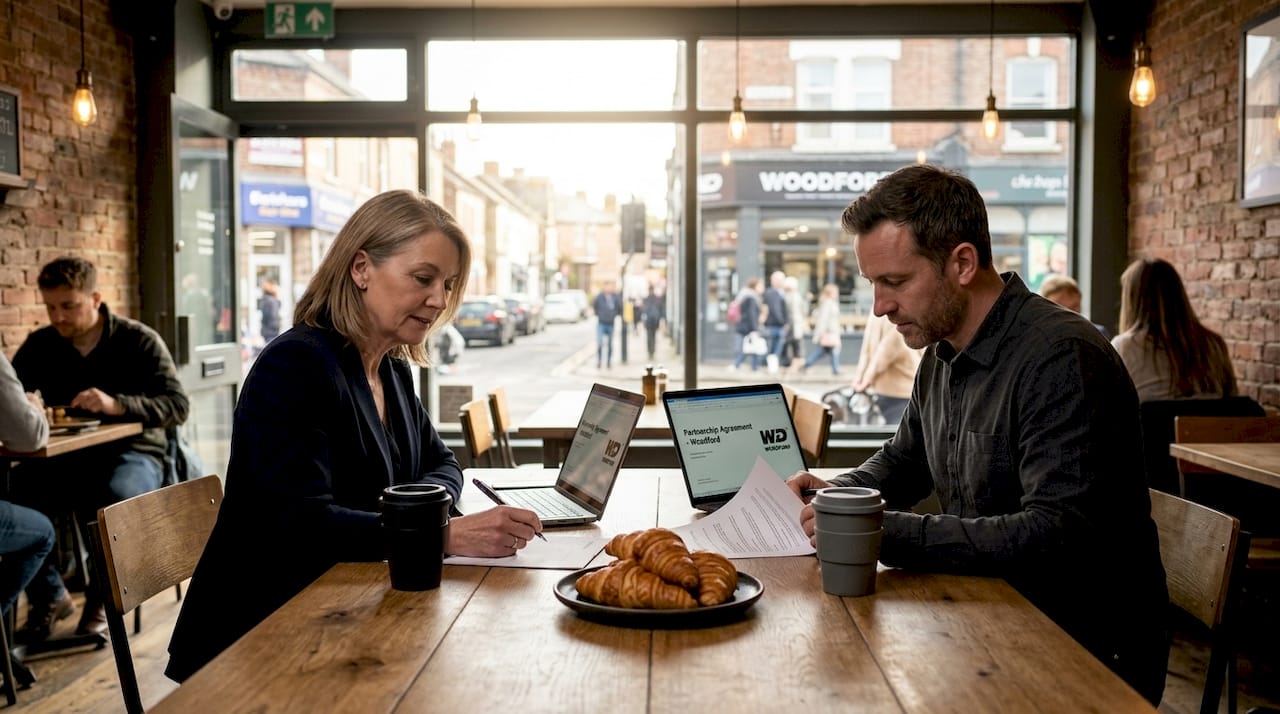
TL;DR:Choosing the wrong retail partnership wastes resources and damages brand positioning, leading to poor commercial results.Successful partnerships should align goals, enable operational integration, maintain brand control, and include measurable incrementality.
Choosing the wrong retail partnership does not just waste budget. It derails brand positioning, confuses customers, and burns internal resource. The examples of food retail partnerships covered here span digital commerce, in-store media networks, and co-branded product collaborations. Each one has been selected because it offers a clear, transferable lesson. Whether you are an independent grocery retailer looking to compete with the nationals, or a food brand seeking the right route to shelf, these food partnership case studies will give you a sharper framework for every decision you make.
Table of Contents
- Key takeaways
- 1. How to evaluate examples of food retail partnerships
- 2. RSA America and URM Stores: centralised digital transformation at scale
- 3. Raley’s and Grocery TV: building an in-store retail media network
- 4. Fareway and Instacart: keeping brand control in digital commerce
- 5. Taco Bell and Zab’s: a co-branded flavour collaboration
- 6. King’s Hawaiian and Minions: experiential co-branded marketing
- 7. Comparing partnership types: a strategic overview
- My honest take on picking the right food retail partnership
- How Woodford helps you find and manage the right retail partnerships
- FAQ
Key takeaways
| Point | Details |
|---|---|
| Shared KPIs drive results | Partnerships aligned on sales performance goals consistently outperform those measured only on impressions or clicks. |
| Centralisation reduces burden | Centralised digital and loyalty operations let independent retailers compete without managing fragmented technology themselves. |
| Brand control is non-negotiable | Even when outsourcing digital infrastructure, retaining ownership of the customer experience is what separates strong alliances from risky ones. |
| Limited editions create urgency | Co-branded product collaborations with defined windows generate consumer buzz and in-store engagement that evergreen ranges rarely match. |
| Measure incrementality, not just activity | Retail media partnerships prove their worth through matched-control sales lift studies, not click-through rates. |
1. How to evaluate examples of food retail partnerships
Before studying any specific case, you need a framework. Not every food industry partnership that looks good on a press release will translate into real commercial impact for your business.
The most reliable filter is goal alignment. If your prospective partner is optimising for brand awareness whilst you are trying to drive volume, you will spend months misreading each other’s results. Retail media partnerships achieve best results when both parties target a single shared objective, such as sell-through rate, rather than treating it as a media buy.
Beyond goals, consider these dimensions when assessing any potential food retail alliance:
- Operational integration capability. Can your systems actually talk to theirs without a six-month IT project?
- Customer engagement potential. Does the partnership reach the shopper at a moment that changes purchasing behaviour?
- Scalability. Can this work across 10 stores and 200 stores without the model breaking?
- Brand control. Will your identity remain intact, or will it be diluted?
- Measurement sophistication. Are you able to prove causation, not just correlation?
The last point is underrated. Incrementality measurement using matched control stores is now considered best practice for proving that a partnership genuinely generated new demand rather than simply capturing sales that would have happened anyway.
Pro Tip: Before signing any partnership agreement, ask your prospective partner to walk you through how they have measured success for a previous collaboration. Vague answers about “reach” and “awareness” tell you everything you need to know.
2. RSA America and URM Stores: centralised digital transformation at scale
This is one of the most instructive food partnership case studies for independent grocery retailers in 2026. RSA America and URM Stores launched a strategic digital transformation partnership designed to bring enterprise-grade technology to 265 independent grocers across the United States.
The core structure of the alliance works like this. URM manages centralised operations for loyalty programmes, digital marketing, retail media, and AI-driven personalised promotions. Individual retailers benefit from the platform without needing to hire their own digital teams or integrate their own technology stacks. More than 60 stores went live immediately, with over 100 in the onboarding pipeline at launch.
What makes this one of the stronger strategic food retail partnerships to study is the balance it strikes:
- Retailers retain local system ownership and customer relationships
- Central URM operations handle campaign execution and technology burden
- AI personalisation scales across all stores without individual retailer effort
- Independent grocers gain technology parity with national chains at a fraction of the cost
Centralised loyalty and campaign execution like this directly addresses one of the biggest disadvantages independent retailers have faced for years. The national chains could afford the data infrastructure. Now, through collaborative food retail alliances, independents can access the same capabilities without the capital expenditure.
The lesson for UK independent retailers is direct. If you are operating without a loyalty programme or digital personalisation, a partnership with a platform provider that centralises execution may be a faster and more cost-effective route than building in-house.
3. Raley’s and Grocery TV: building an in-store retail media network
In-store retail media is no longer a future opportunity. It is a present revenue stream, and the Raley’s and Grocery TV partnership is one of the most compelling examples of retail cooperation in this space.
Raley’s launched its in-store media network with Grocery TV across 208 stores, covering multiple banners including Raley’s, Bel Air Markets, Nob Hill Foods, Bashas’, and Food City. The network connects to Grocery TV’s broader ecosystem, which spans more than 6,700 stores across 120 retail partners, giving advertisers immediate scale alongside Raley’s regional shopper data.
Key advantages of this food store collaboration:
- Fast implementation with minimal internal technology resource required
- Immediate access to advertiser demand through an established media marketplace
- Shopper engagement at the point of purchase, when buying decisions are still live
- Community-specific content capability, which builds trust with diverse regional audiences
Pro Tip: If you are considering a retail media partnership, prioritise platforms that bring their own advertiser demand. Building inventory is only half the job. You need someone willing to fill it from day one.
The regional grocery sector is where this type of partnership proves its worth most clearly. Raley’s was already a trusted local brand. By layering a media network on top of that trust, it created a channel that both serves its existing shoppers and generates incremental revenue from brands that want to reach those shoppers in a credible context.
For food brand owners, this is a significant development. In-store digital screens at point of purchase, backed by first-party retailer data, represent some of the most precise targeting available in food merchandising strategy today.
4. Fareway and Instacart: keeping brand control in digital commerce
The Fareway and Instacart partnership is one of the clearest examples of how a food retailer can adopt enterprise digital infrastructure without handing over its customer relationships.
Fareway, a Midwestern grocery chain, partnered with Instacart to deploy the Storefront Pro platform. The result is a fully branded digital experience across web, app, and in-store pickup, all powered by Instacart’s technology but presented entirely as a Fareway experience. Critically, there are no markups on products. Customers pay the same prices online as they do in store.
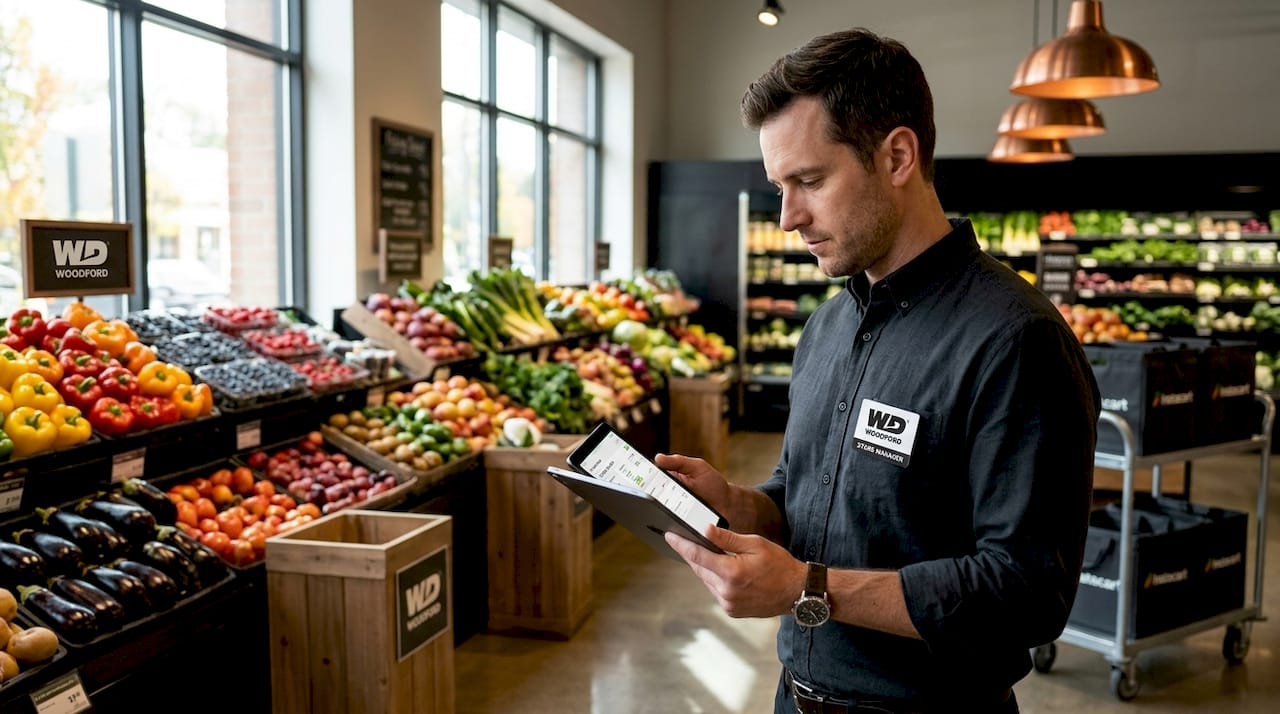
This matters more than it might initially appear. In most third-party grocery delivery arrangements, the retailer loses visibility of the customer and often loses price integrity too. Storefront Pro flips that model.
What this food retail alliance demonstrates:
- Outsourcing digital infrastructure does not require surrendering brand identity
- No-markup pricing protects customer trust and removes a common reason shoppers avoid online grocery
- A unified digital presence across channels reduces friction at every stage of the purchase journey
- Instacart’s platform currently supports over 310 grocers, meaning the technology is mature and well-tested
Retaining brand and customer experience control despite outsourcing commerce infrastructure is a subtle but genuinely crucial consideration. Retailers that sign away their customer data or their pricing integrity in exchange for digital convenience often discover the full cost later, when churn rates climb and branded loyalty collapses.
5. Taco Bell and Zab’s: a co-branded flavour collaboration
Not all successful food collaborations are between retailers and technology platforms. Some of the most effective food industry partnerships are product-level, built around flavour innovation and limited availability.
Taco Bell’s partnership with Zab’s hot sauce produced the Datil Pepper Nacho Fries, priced at $5.49 and marketed as Taco Bell’s first-ever hot sauce collaboration. The product leaned into a genuinely differentiated flavour profile, the Datil pepper, which is rare enough to generate culinary curiosity but familiar enough in the sweet-heat category to convert casual buyers.
The strategic logic is straightforward. Taco Bell gains menu novelty and credibility with flavour-forward consumers. Zab’s gains national reach and brand awareness it could not buy at any media price. Both brands gain the coverage that comes from a genuinely unexpected combination.
For grocery retailers and food brands considering co-branded approaches, the Taco Bell and Zab’s model illustrates a few transferable principles. A smaller artisan brand brings authenticity that a national brand cannot manufacture internally. A national brand brings distribution and marketing reach that an artisan brand cannot afford independently. The result is greater than either could achieve alone, which is the definition of a successful food collaboration.
6. King’s Hawaiian and Minions: experiential co-branded marketing
King’s Hawaiian’s partnership with Illumination’s Minions and Monsters franchise demonstrates what happens when a food brand commits fully to integrated co-branded marketing rather than treating it as packaging exercise.
The limited-edition Shake 'Em Banana Bites launched nationwide with television advertising, in-store displays, and a co-branded NASCAR sponsorship. The product hit major grocery retailers from 20th May and was supported by a campaign that spanned multiple touchpoints simultaneously.
| Element | Taco Bell and Zab’s | King’s Hawaiian and Minions |
|---|---|---|
| Partner type | Artisan hot sauce brand | Entertainment franchise |
| Campaign scope | Product and menu press | TV, in-store, and live events |
| Target audience | Flavour enthusiasts | Families and film fans |
| Shelf availability | Limited time, QSR channel | Major grocery retailers nationwide |
| Primary brand benefit | Credibility and novelty | Broad consumer reach and cultural relevance |
The King’s Hawaiian example is particularly relevant for grocery retailers because it shows how entertainment IP partnerships drive in-store theatre. A well-executed branded display for a limited-edition product tied to a film release gives shoppers a reason to stop, engage, and photograph. That organic social amplification is increasingly valuable in collaborative food marketing where paid media costs continue to rise.
7. Comparing partnership types: a strategic overview
The examples above cover three distinct models. Each suits different business contexts and carries different trade-offs.
| Partnership type | Scalability | Investment level | Brand control | Complexity |
|---|---|---|---|---|
| Digital platform (e.g. Instacart) | High | Medium to high | High if negotiated well | Medium |
| In-store media network (e.g. Grocery TV) | High | Low to medium | Medium | Low |
| Co-branded product | Medium | Low to high depending on scope | High | Low to medium |
| Centralised loyalty platform (e.g. RSA/URM) | Very high | Medium | Medium to high | Medium to high |
Digital platform partnerships offer the clearest route to a consistent online presence but require careful contractual attention to data ownership and pricing control. In-store media networks are the lowest-friction entry point and generate revenue from day one. Co-branded products are high-impact when the pairing is genuinely surprising or culturally relevant, but they require creative alignment and manufacturing coordination. Centralised loyalty platforms are transformative for independent retailers but demand organisational buy-in across multiple stakeholders.
The right choice depends on where your biggest gap sits today. If you cannot compete digitally, a platform partnership addresses that gap fastest. If you have strong footfall but are not monetising it through advertising, a media network is the most direct route to new revenue.
My honest take on picking the right food retail partnership
I’ve reviewed a lot of food partnership case studies over the years, and the ones that fail share a common trait. The retailer or brand signed up for a partnership that solved a problem the other side had, not the problem they had themselves.
I’ve seen retailers adopt digital loyalty platforms because they were impressed by the technology, not because they had a clear customer retention problem to solve. The result is an underused system and a contract that becomes an embarrassment at the next budget review.
The cases I find genuinely useful, including the RSA and URM model and the Fareway and Instacart arrangement, work because someone on each side asked a precise question before signing anything. What specific commercial outcome does this partnership produce, and how will we measure it within 90 days?
The emerging pressure in 2026 is incrementality measurement. Advertisers and retailers alike are pushing to move beyond impressions and asking whether a partnership genuinely moved the needle. The Chobani and Walmart deli screen study, which isolated over $1 in incremental ROI using matched control stores, is the kind of benchmark that is going to define expectations for serious players.
My practical advice: run a 60 to 90 day pilot with clear pre-agreed metrics before committing to any major partnership. The brands and retailers doing this well treat the pilot as a paid learning exercise. Those results tell you more than any proposal document ever will.
— Nadim
How Woodford helps you find and manage the right retail partnerships
At Woodford, we work with independent retailers and ambitious food brands across the UK to identify the kind of partnerships that actually shift volume. Whether you are looking to source exclusive food brands for your retail range, or you are a brand seeking smarter distribution into independent stores, our team brings the relationships and the category knowledge to make those conversations productive. We handle distribution, logistics, and trend-led curation, so you spend less time on coordination and more time on growth. Explore what is possible by visiting Woodford and starting a conversation with our partnerships team.
FAQ
What are the main types of food retail partnerships?
Food retail partnerships fall into four main categories: digital commerce platforms, in-store retail media networks, centralised loyalty and marketing programmes, and co-branded product collaborations. Each suits different business sizes, budgets, and strategic goals.
How should food retailers measure the success of a partnership?
Incrementality measurement using matched control stores is the most reliable method, as it isolates genuine new sales rather than simply capturing activity that would have occurred anyway. Shared KPIs agreed before launch, such as sell-through rate or basket size, provide the clearest baseline for evaluation.
Can independent retailers benefit from food retail alliances?
Yes. The RSA America and URM Stores model shows that centralised platforms can give independent grocers access to loyalty technology and AI-driven promotions without the capital investment of building their own systems, allowing them to compete with national chains on a much more level footing.
What makes a co-branded food product partnership successful?
The most effective co-branded food partnerships pair brands with genuinely complementary identities, such as an artisan flavour brand with a national QSR chain, and use limited availability to create urgency. Integrated campaigns across in-store, television, and live events amplify reach well beyond the product itself.
How do in-store retail media networks generate value for food retailers?
They monetise existing footfall by selling advertising inventory to brands that want to reach shoppers at the point of purchase. Partnerships with established media network providers, such as the Raley’s and Grocery TV arrangement, accelerate this by bringing ready-made advertiser demand from day one.
Recommended
- UK food retailers: lead with 2026’s top food trends - WOODFORD - Bringing quality foods your way
- Boost sales with innovative food marketing strategies - WOODFORD - Bringing quality foods your way
- Food logistics tips for UK independent retailers in 2026 - WOODFORD - Bringing quality foods your way
- Ambient food explained: a retailer’s guide to new opportunities - WOODFORD - Bringing quality foods your way