Benefits of curated food ranges for UK retailers
TL;DR:The UK food retail market is highly saturated, emphasizing the importance of curated ranges for competitive advantage. Curated selections reduce choice fatigue, enhance trust, and boost customer lifetime value while managing operational costs effectively. Building a strong, story-led range with excellent packaging and clear communication is essential for differentiation and long-term success.
The UK food retail market has never been more saturated. Thousands of products compete for finite shelf space, and consumers are increasingly walking away from retailers who simply pile high and sell cheap. The real benefits of curated food ranges become clear when you consider what the alternative costs you: unsold stock, confused shoppers, and a brand identity that stands for nothing. For wholesalers and independent retailers who want to compete on quality rather than volume, curation is the most powerful commercial tool available right now.
Table of Contents
- Key takeaways
- 1. The real benefits of curated food ranges start with solving choice fatigue
- 2. Selection criteria: what makes a food range worth curating
- 3. Financial advantages: margins, lifetime value, and waste reduction
- 4. Customer trust and reduced mental load
- 5. Brand differentiation and premium positioning
- 6. Time-saving benefits that you can market directly
- 7. Successful curated food range categories and formats
- 8. How to implement and communicate your curated range
- My honest view on why curation is non-negotiable now
- How Woodford helps you build a curated range that performs
- FAQ
Key takeaways
| Point | Details |
|---|---|
| Curation reduces choice fatigue | Focused selections convert browsers into buyers by offering meaningful rather than maximum choice. |
| Higher customer lifetime value | Curated subscription and discovery models can generate 3 to 5 times more value per customer than one-off purchases. |
| Packaging drives premium pricing | Strong design and clear provenance storytelling justify higher price points and build lasting trust. |
| Data plus human judgement wins | Effective curation combines analytics with category expertise to stay relevant and reduce waste. |
| Storytelling builds loyalty | Educational content about product origin and quality converts first-time buyers into repeat customers. |
1. The real benefits of curated food ranges start with solving choice fatigue
Choice fatigue is measurable and costly. When shoppers face too many options, a significant percentage abandon their purchase entirely rather than make a decision they are not confident about. For independent retailers with limited floor space, stocking 40 varieties of hot sauce is not a competitive advantage. It is a conversion killer.
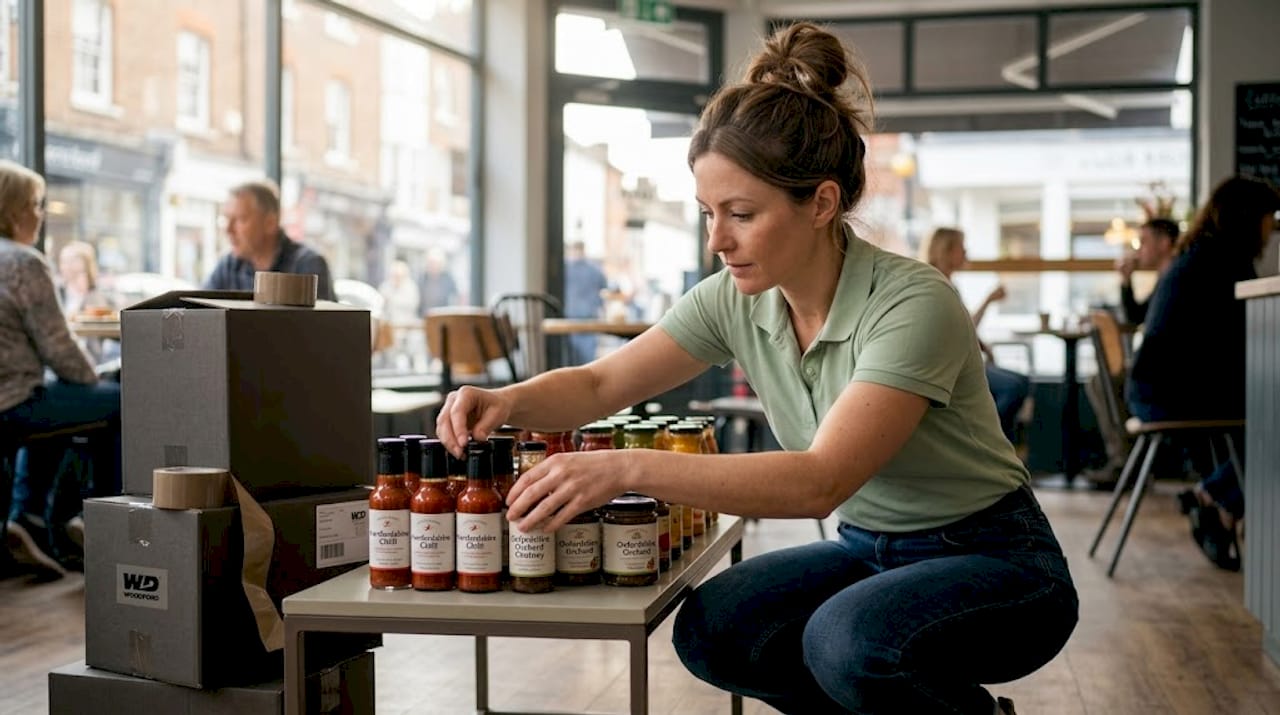
Curated ranges remove that friction. When you select 6 hot sauces that each represent a clear flavour profile, provenance story, or dietary need, you give customers a reason to trust your judgement rather than do their own research. That trust is the foundation of repeat business.
The same logic applies to wholesalers. When your catalogue is tightly curated around quality and trend relevance, buyers spend less time filtering and more time ordering. That is a practical advantage that compounds over every interaction.
2. Selection criteria: what makes a food range worth curating
Before you can benefit from curation, you need a clear framework for what belongs in your range and what does not. The decisions that matter most are rarely about individual products. They are about coherence.
Start with consumer signals. Health, convenience, and provenance are the three dominant purchase drivers in UK food retail right now, and understanding how they intersect for your specific customer base determines which products earn their place. A curated range built around clean-label, traceable ingredients will resonate very differently in an urban neighbourhood shop than in a rural farm shop, even if some of the products overlap.
Consider these selection criteria before committing to any new range:
- Consumer fit: Does this product solve a real need for your existing customer base, or are you hoping to attract a new audience without a plan?
- Category coherence: Does this product strengthen the story of your existing range, or does it create confusion?
- Quality and provenance: Can you explain where this product comes from and why that matters? If not, it does not belong in a curated range.
- Margin and volume balance: Premium products with strong margins but modest velocity can outperform high-volume low-margin lines over a full year.
- Brand values alignment: Does this supplier share your standards on ingredients, packaging, and ethics?
- Packaging quality: Will this product look credible sitting alongside your other curated lines?
Retailers using data combined with human judgement in curation consistently outperform those who rely on either alone. The data tells you what is selling. Your category expertise tells you what should sell, and why.
Pro Tip: Run a 90-day pilot with any new curated line before committing to full stock. Track units sold, return rate, and unprompted customer comments. Those three signals together give you a reliable picture of whether the product earns permanent shelf space.
3. Financial advantages: margins, lifetime value, and waste reduction
The curated food range benefits that most directly affect your bottom line are financial, and they work in your favour on both sides of the ledger.
On the revenue side, food subscription and curated models generate 3 to 5 times higher customer lifetime value than one-off purchases. A customer spending £60 on a single order becomes worth up to £600 annually once they are enrolled in a discovery box or curated subscription format. That is not a minor uplift. It is a structural shift in how you think about customer value.
On the cost side, focused ranges reduce the operational drag that comes with managing too many SKUs. Fewer lines means more predictable stock rotation, lower wastage, and simpler ordering cycles. For independent retailers operating on tight margins, the savings from reduced write-offs alone can make curation financially worthwhile.
“The primary benefit sold is not the product itself. It is the time and mental effort saved by trusting someone else’s judgement.” Source: Specialty food boxes as the backbone of modern allergen-aware kitchens
Private label is worth a specific mention here. Private label food products remove multiple cost layers from the supply chain, giving retailers greater pricing flexibility and stronger margins than branded equivalents. In categories like snacks, sauces, and ready meals, this translates into real competitive advantage when your private label range is positioned with strong design and clear quality cues.
4. Customer trust and reduced mental load
One of the most underappreciated curated food selection perks is what it does to the mental effort required from your customer. Every product on a curated shelf carries an implicit endorsement. You have already done the quality check, the provenance audit, and the ingredient review. Your customer does not have to.
Curated ranges reduce mental load by eliminating the need for customers to verify every product’s credentials themselves. In a market where consumers are increasingly sceptical of health claims and sustainability labels, being the retailer whose judgement is trusted is a significant commercial asset.
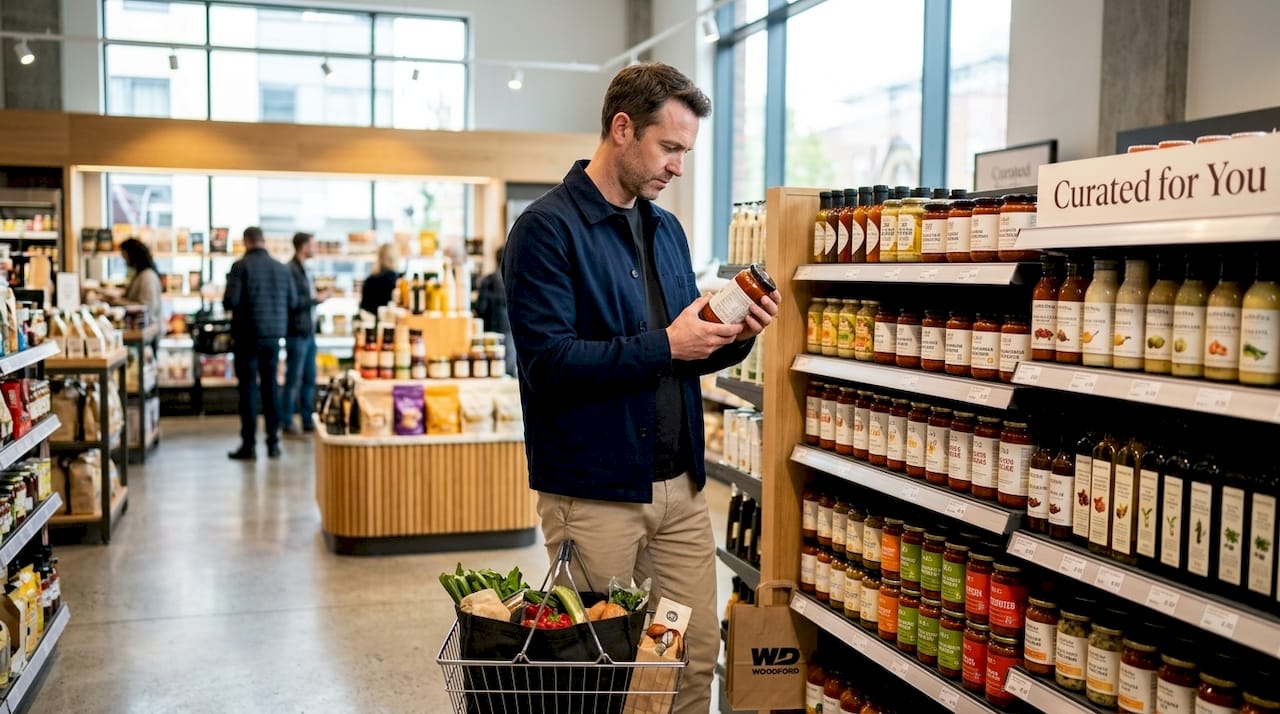
This is especially true for allergen-aware shoppers and those with specific dietary requirements. A curated range that has been thoughtfully assembled with clear labelling removes a genuine anxiety from the shopping experience, and that kind of relief creates loyalty that is very difficult for a competitor to displace.
5. Brand differentiation and premium positioning
The advantages of curated food extend well beyond stock management. They shape how your business is perceived. A retailer or wholesaler known for a discerning, well-edited range occupies a different position in the market than one competing on breadth alone.
Packaging and premium design play a critical role in this positioning. When every product on your shelf has been chosen partly because it looks credible alongside your other lines, the cumulative effect is a retail environment that feels considered and high-quality. Customers respond to that subconsciously before they have read a single label.
For wholesalers, this translates into being the preferred partner for independent retailers who are themselves trying to build a premium identity. Premium packaging is a strategic tool that enhances perceived value and makes curated private label ranges credible enough to sit alongside established brands. That credibility is what justifies a higher wholesale price and protects your margin.
6. Time-saving benefits that you can market directly
Curated meal solutions save consumers up to 10 hours per week on meal-related tasks, including shopping, preparation, and clearing up. That is a genuine consumer benefit, and it is one that retailers can actively market rather than simply offer.
When you frame your curated range as time-saving and stress-reducing rather than merely premium, you expand the audience. Time-poor parents, busy professionals, and older shoppers who find extensive choice exhausting all respond to this message. The product is the same. The story changes the audience.
This is why how you communicate your curated range matters almost as much as the range itself. A shelf with no context is just products. A shelf with a short explanation of why these items were chosen, who produces them, and how they fit together is a curated experience.
7. Successful curated food range categories and formats
Certain categories lend themselves particularly well to curation, and knowing where to focus first can sharpen your commercial decisions.
Private label snacks, sauces, and condiments are among the fastest-growing curated categories for independent retailers. They offer strong margins, high repeat purchase rates, and clear opportunities for provenance storytelling.
Ambient and shelf-stable products deserve particular attention because they reduce the supply chain complexity that often makes curation feel operationally difficult. Understanding the ambient food opportunity is a practical starting point for retailers building their first curated range without the risk of short shelf-life waste.
Clean-label and provenance-focused lines are growing strongly among premium buyers who read ingredients and research suppliers. A curated selection built around single-origin, minimal-ingredient, or certified products can command a 20 to 30 per cent price premium over comparable standard lines.
Curated discovery boxes and subscription formats represent the highest-value format for customer retention. They create recurring revenue, expose customers to new products within a trusted framework, and generate the kind of purchase habit that is extremely difficult for competitors to break. Local and artisan coffee is a compelling example: thoughtful curation builds consumer trust and drives repeat purchasing in ways that commodity ranges simply cannot replicate.
Pro Tip: When launching a new curated category, use a comparison table in your marketing materials or on your website to show clearly how your curated selection differs from a standard supermarket range. Feature provenance, certifications, and ingredient quality side by side. Shoppers who see the comparison convert at significantly higher rates.
8. How to implement and communicate your curated range
The benefits of personalised food selections only materialise if customers understand what makes your range different. The product quality alone is rarely enough. You need to communicate the curation actively.
Here is a practical implementation framework:
- Tell the product story: Every curated line should have a short origin story available at the point of purchase, whether on shelf labels, your website, or social media. Where it comes from, who makes it, and why you chose it are the three questions to answer.
- Train your staff: Your team should be able to explain the range fluently. If they cannot tell a customer why a product is on the shelf, the curation is invisible. A brief monthly briefing on new additions is enough to keep knowledge current.
- Use digital content to build trust: Educational content and provenance storytelling convert better and build stronger loyalty than promotional discounts. A short explanation of what clean-label means, or a behind-the-scenes video with a supplier, reinforces your editorial credibility.
- Refine with data: Track which products in your curated range perform best, which generate the most enquiries, and which underperform. Use that information to rotate lines seasonally rather than letting the range stagnate.
- Set price architecture deliberately: Your curated range should span two or three price tiers so customers can enter at an accessible level and trade up as their trust in your judgement grows.
Learning to identify emerging food trends is one of the most valuable skills a buyer can develop, because it means your curated range stays ahead of consumer demand rather than catching up to it.
My honest view on why curation is non-negotiable now
I have worked with enough independent retailers and wholesalers to know that the ones who resist curation usually frame it as a risk. What if I stock fewer products and miss a sale? What I have found is that the question itself reveals the problem: they are optimising for coverage rather than conversion.
In my experience, the retailers who thrive are not the ones with the most SKUs. They are the ones whose customers walk in already trusting the selection. That trust does not come from volume. It comes from consistency, transparency, and the visible evidence that someone has made considered decisions on the customer’s behalf.
Curation is now what good retail looks like. It is not a niche strategy for upmarket delis. It is table stakes for any independent that wants to compete with the convenience and familiarity of a supermarket on something other than price. The retailers I have seen build real loyalty are the ones who commit to a clear editorial identity for their range and then communicate it relentlessly.
My prediction is straightforward. Over the next three to five years, the independent retailers and wholesalers who invest in curated, story-led ranges will define their categories. The ones who keep adding SKUs without a coherent selection strategy will find themselves squeezed from both ends: by discounters on price and by curators on quality. There is no middle ground left.
— Nadim
How Woodford helps you build a curated range that performs
At Woodford, curation is the core of what we do for UK wholesalers and independent retailers. Our portfolio is built specifically around the categories and formats that drive the strongest performance for independent retail: ambient, premium, clean-label, and provenance-led products that arrive with the logistics sorted and the storytelling ready.
If you are looking to build or sharpen your curated food offering, explore our brand portfolio to see the ranges we distribute exclusively to independent retailers across the UK. Each brand has been selected against the same criteria this article describes: quality, market relevance, coherent brand identity, and genuine consumer demand. You can also read our thinking on food brand strategy for independent retailers to understand how curation fits into a broader commercial plan. We are here to make the selection process faster, smarter, and more profitable for you.
FAQ
What are the main benefits of curated food ranges for independent retailers?
Curated food ranges increase conversion by reducing choice fatigue, improve customer trust through provenance transparency, and deliver stronger margins through focused stock management and premium positioning. They also create the conditions for higher customer lifetime value through repeat purchasing and subscription formats.
How does curation reduce operational costs for wholesalers?
Tighter product selections mean fewer SKUs to manage, more predictable stock rotation, and significantly lower wastage from unsold inventory. Wholesalers who curate their catalogues around trend-relevant, high-margin lines spend less time managing slow-moving stock and more time building profitable retailer relationships.
Why does packaging matter in a curated food range?
Premium packaging drives trust and justifies higher price points by communicating quality before the product is even opened. In a curated range, consistent packaging quality across lines reinforces the retailer’s editorial credibility and makes the overall offer feel cohesive rather than assembled by chance.
What food categories work best for curation?
Private label snacks, sauces, and condiments, along with clean-label ambient products and provenance-focused ready meals, are among the highest-performing curated categories for UK independent retailers. Subscription and discovery box formats within these categories deliver the strongest customer retention figures.
How do I communicate a curated range to customers effectively?
Use in-store storytelling, staff training, and A+ digital content to explain why each product was chosen, where it comes from, and how it fits the range. Customers who understand the curation logic become loyal advocates rather than one-time buyers.
Recommended
- Strategic food brands for UK independent retailers - WOODFORD - Bringing quality foods your way
- How to identify food trends: a guide for UK retailers - WOODFORD - Bringing quality foods your way
- Food brand strategy drives UK retail success in 2026 - WOODFORD - Bringing quality foods your way
- How to source exclusive food brands for your UK shop - WOODFORD - Bringing quality foods your way