
UK grocery pallet sizes: what operations teams need to know

The standard UK grocery pallet footprint is 1,200 × 1,000 mm. That single dimension drives almost every downstream decision in UK grocery logistics: how you configure your racking, how many pallets fit a curtainsider, which pooled-pallet provider your retailer will accept, and whether your load clears the goods-in gate at a customer’s CFC. The GS1 UK Perfect Order programme is explicit: pallets destined for UK customers must use this footprint, be of strong construction, and carry no overhang.
The most-used pallet types and their immediate constraints:
- Full pallet: 1,200 × 1,000 mm footprint, typically up to ~2,200 mm total height (pallet deck included), max gross weight varies by carrier and retailer.
- Half pallet: same footprint, ~1,200 mm total height; used for promotional and display builds.
- Quarter pallet: same footprint, ~800 mm total height; common for convenience and impulse categories.
- Euro pallet: 1,200 × 800 mm; accepted on some inbound EU flows but generally not the default for UK domestic grocery.
Retailer supplier manuals are the decisive document. Even conforming to general industry standards will not avoid rejection if a retail CFC requires a specific pooled pallet or a stricter height and weight band.
Key takeaways
The 1,200 × 1,000 mm footprint is the non-negotiable starting point for UK grocery palletisation; everything else, from height bands to pooled-pallet choice, flows from that single dimension.
| Point | Details |
|---|---|
| Standard UK footprint | 1,200 × 1,000 mm with no overhang; required by GS1 UK and most retailer supplier manuals. |
| Height and weight bands | Full pallet ~2,200 mm total height; half ~1,200 mm; quarter ~800 mm; always verify retailer-specific caps. |
| Pooled-pallet providers | CHEP, LPR, and IPP are the main UK grocery pooling providers; confirm which your retailer accepts before ordering. |
| GS1 label placement | Two identical labels (short and long face); barcode within 400–800 mm above floor for pallets over 1,000 mm tall. |
| Woodford distribution | Woodford handles UK grocery logistics end-to-end, including pallet-compliant fulfilment for independent retailers. |
Table of Contents
- What standards actually govern UK grocery pallet dimensions?
- Height bands, weight limits and booking tiers for grocery pallets
- UK pallet vs Euro pallet: which footprint should you use?
- Pooled pallets, owned pallets and the providers you will meet in supplier manuals
- What retailers actually check at goods-in: the supplier manual in practice
- GS1 pallet labelling: barcode placement and traceability rules
- How to choose the right pallet specification for a grocery load
- When non-standard pallet sizes make sense — and what they cost you
- Woodford handles the logistics so your products reach shelves compliantly
- Sources
What standards actually govern UK grocery pallet dimensions?
ISO 6780:2003 defines the principal dimensions and tolerances for flat pallets used in inter-modal handling, covering both the 1,200 × 1,000 mm and 1,200 × 800 mm footprints. The standard sets tolerances on length, width, and deck height that matter the moment pallets enter automated material handling equipment (MHE): a deck that sits even a few millimetres outside tolerance can cause a conveyor jam or a scan failure.
Typical deck height for a standard wooden grocery pallet runs around 144–150 mm. That figure is not cosmetic. In a racking bay designed for 2,200 mm total pallet height, the deck height directly reduces the usable product height available to you. Plan for it when specifying case heights and layer counts.
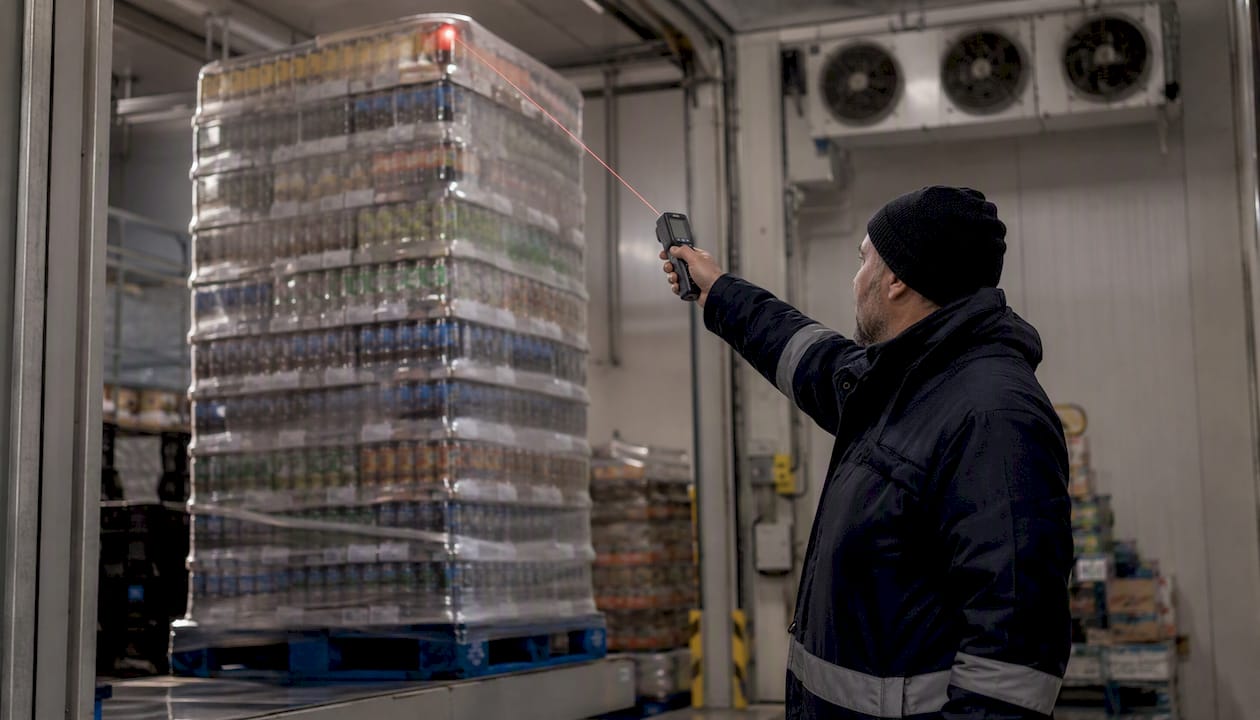
Pro Tip: When designing case sizes for a new SKU, subtract the pallet deck height from your target total pallet height first. Building a case spec that leaves you 5 mm short of a full layer is a common and avoidable waste.
The GS1 UK Perfect Order guidance feeds directly into pallet acceptance at goods-in: no overhang, strong construction, and correct label placement. These are not suggestions. Retailers running automated CFCs will reject a pallet that fails any one of them, and the cost of re-palletising at the gate is always yours.
ISPM 15 applies to all wooden packaging material moving between the UK and the EU or overseas markets. Post-Brexit, UK–EU pallet movements require ISPM 15-compliant treatment and marking on wooden pallets. Pooled plastic pallets are exempt, which is one reason some suppliers running cross-border flows have shifted part of their fleet to plastic. For domestic UK-only flows, ISPM 15 does not apply, but it is worth confirming with your pooled-pallet provider whether their wooden stock carries the mark, since mixed-destination depots can create compliance gaps.
Height bands, weight limits and booking tiers for grocery pallets
Carriers and grocery retailers use height bands to price, book, and plan loads. The bands below are the working figures most UK grocery operations use; always verify against your specific carrier tariff and retailer supplier manual.
The Ocado supplier manual sets specific height and weight limits by temperature regime, with chill and frozen lines operating under tighter height caps than ambient, reflecting the physical constraints of their automated CFC racking. The Ocado Supplier Manual (September 2024) lists maximum pallet heights and weights for each temperature band alongside a list of approved pooled-pallet providers — if your pallet type is not on that list, the load will not be accepted regardless of its physical dimensions.
Double-stacking is permitted by some ambient consolidators when pallets are light enough and the load is stable, but most grocery retailers prohibit it at goods-in. If your carrier allows double-stacking for trunk movements, confirm the retailer will accept the pallets once unstacked and that the base pallet has not been compromised in transit.
Statistic callout: A standard 13.6 m curtainsider typically accommodates around 26 standard 1,200 × 1,000 mm pallets on a single-stack floor load. That figure is a planning baseline; actual count depends on loading pattern and any mixed-height constraints.
UK pallet vs Euro pallet: which footprint should you use?
The 200 mm difference in width between a UK pallet (1,200 × 1,000 mm) and a Euro pallet (1,200 × 800 mm) has consequences that compound across a full trailer. UK vehicle and racking design is largely optimised around the 1,200 × 1,000 mm footprint, so running Euro pallets through a domestic UK network means accepting either wasted floor space or a mixed-footprint racking layout that adds handling complexity.
The arithmetic is straightforward. A full curtainsider of Euro pallets gives you more units per trip on paper, but if your UK retail customer requires 1,200 × 1,000 mm, you are re-palletising before delivery anyway. The question is where that labour sits: at your own goods-in, at a 3PL cross-dock, or at the retailer’s gate (where it costs you most).
For suppliers receiving inbound stock from EU manufacturers on Euro pallets and distributing outbound into UK retail on UK pallets, a deliberate goods-in re-palletising strategy is usually the most efficient approach. Centralising that labour at one point avoids repeated in-transit adjustments and keeps your outbound pallet spec consistent. The food distribution cycle guide on the Woodford blog covers where re-palletising fits within a broader inbound-to-shelf workflow.
When re-palletising is not viable, check whether your retailer will accept Euro pallets on specific inbound lanes. Some do, particularly for direct-from-EU supplier flows, but this is always an exception that requires written confirmation from the buyer or logistics team.
Pooled pallets, owned pallets and the providers you will meet in supplier manuals
Most UK grocery retailers specify pooled pallets in their supplier manuals, and three providers dominate: CHEP, LPR, and IPP.
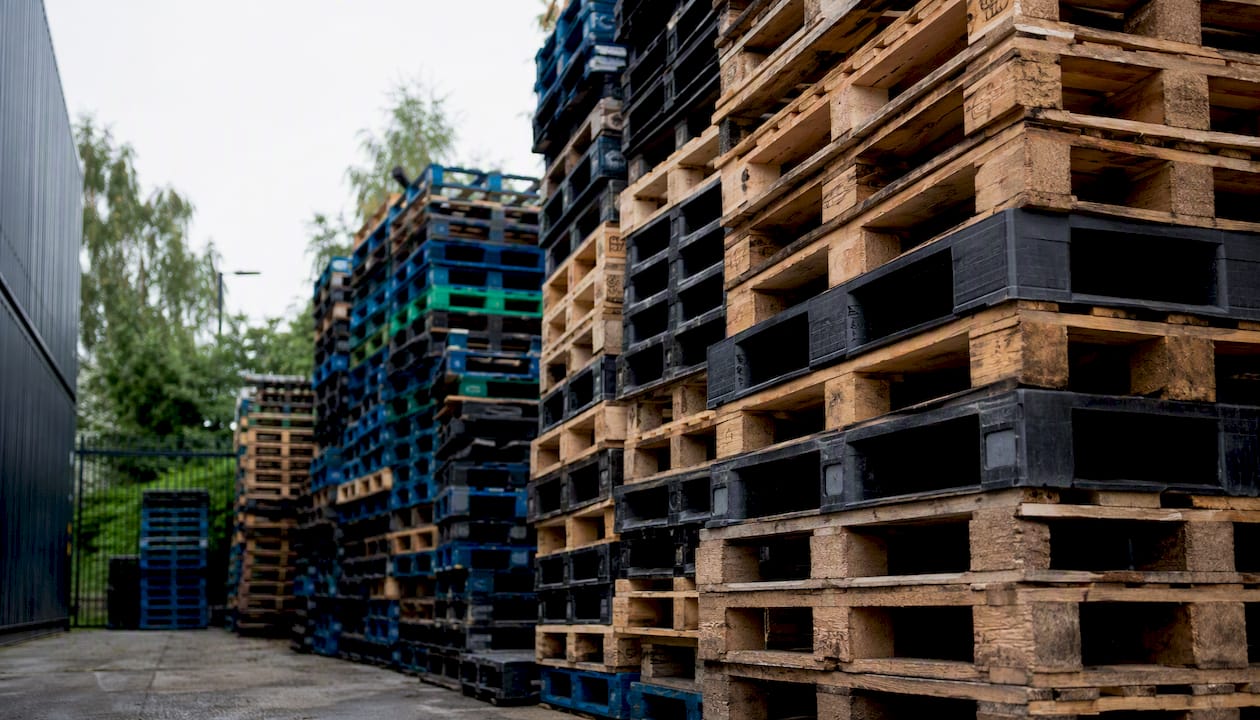
CHEP’s UK wooden pallet is the 1,200 × 1,000 mm blue pallet that most UK logistics managers know on sight. CHEP operates on a hire model: you pay for pallet use and return, and CHEP manages inspection and repair. For grocery suppliers, CHEP acceptance is near-universal across major UK retailers.
LPR (La Palette Rouge) operates a similar pooling model with red pallets, more common in continental European flows but accepted by a growing number of UK grocery customers. IPP (Integrated Pallet Pooling) runs a comparable service and is listed as an approved provider in several UK retailer supplier manuals.
Pooled pallets reduce the capital tied up in owned pallet stock, but they introduce chargeback risk. A pallet returned damaged, lost in the supply chain, or sent to a non-participating depot generates a hire charge. Track your pooled pallet movements carefully — the cost of poor visibility compounds quickly across high-volume grocery flows.
Owned pallets make sense when your flows are closed-loop (e.g. factory to your own DC), when you need a specific plastic specification for hygiene reasons, or when your retailer does not accept pooled stock. Plastic pallets are easier to clean, carry no ISPM 15 obligation, and are increasingly preferred in chilled and frozen environments where wooden pallets can harbour moisture and bacteria.
- Pooled wooden (CHEP/LPR/IPP): lower capital cost, widely accepted, chargeback risk, ISPM 15 applies for cross-border moves.
- Owned wooden: full control, no hire fees, maintenance and storage cost falls on you.
- Plastic (owned or pooled): hygienic, ISPM 15-exempt, higher unit cost, check retailer acceptance before committing.
For warehouse hygiene, particularly in chilled and frozen environments, wooden pallets require regular inspection. Pest ingress via wooden packaging is a real operational risk; warehouse pest control is a practical complement to pallet hygiene protocols, especially in facilities handling both ambient and chilled stock.
Pro Tip: Before switching to plastic pallets for a chilled flow, confirm your retailer’s MHE accepts the specific plastic pallet profile. Deck thickness and entry-point geometry vary between plastic pallet manufacturers and some automated systems are calibrated only for wooden pallet profiles.
What retailers actually check at goods-in: the supplier manual in practice
Supplier manuals are where general industry standards become specific, enforceable rules. The Ocado Supplier Manual (September 2024) is one of the most detailed publicly available examples and illustrates what a modern automated CFC requires.
Ocado’s mandatory checks at goods-in include:
- Footprint conformity: 1,200 × 1,000 mm (width 1,000 mm, length 1,200 mm). No exceptions.
- Pallet construction standard: wooden pallets must conform to British Standard BS 2629.
- No overhang: product must not extend beyond the pallet deck on any side.
- Approved pooled providers: only pallets from the listed approved providers are accepted; non-listed pallets are rejected.
- Height limits by temperature regime: separate maximum pallet heights apply to chill, frozen, and ambient lines.
- Weight limits: maximum gross pallet weights are specified and enforced at goods-in.
- Label placement: GS1-compliant pallet labels in the correct positions (see Section 7 below).
Non-conformance consequences are immediate: the load is rejected, re-palletising is at the supplier’s cost, and repeated failures can trigger a formal supplier review. The compliance edge this creates for well-prepared suppliers is real: retailers actively prefer suppliers whose pallets clear goods-in first time, every time.
Pro Tip: Request the current supplier manual from every retail customer before your first delivery, not just at onboarding. Manuals are updated, and a height limit that changed six months ago will still cause a rejection today if your team is working from an old version.
GS1 pallet labelling: barcode placement and traceability rules
Two identical GS1 pallet labels are required: one on the short side and one on the long side of the pallet. The GS1 UK Perfect Order guidance sets precise barcode height bands that determine whether a scanner on a conveyor or at a goods-in gate will read the label reliably.

For pallets taller than 1,000 mm, the barcode must sit no higher than 800 mm and no lower than 400 mm above the floor. For pallets shorter than 1,000 mm, place the barcode as high as possible within the 32–800 mm band.
Label placement checklist for pallet build and despatch:
- Place one label on the short face, one on the long face, both at the correct height band for the pallet’s total height.
- Keep a clear Quiet Zone around the barcode: no print, tape, or product within the minimum clear margin specified by GS1.
- Do not place labels over pallet joints, strapping, or wrap that could obscure or distort the barcode.
- Confirm labels are printed at the correct resolution and that the barcode symbology matches the retailer’s specification (typically GS1-128 for pallet-level).
- Check label adhesion before despatch: a label that peels in a chilled environment causes the same scan failure as a misplaced one.
Statistic callout: GS1 UK specifies that for units taller than 1,000 mm, barcodes must fall within the 400–800 mm height band above the floor to guarantee reliable scanning on automated conveyor systems.
Label errors are one of the most common causes of scan failures in automated CFCs. The fix is almost always procedural: a laminated placement guide at the pallet-build station costs nothing and eliminates the problem.
How to choose the right pallet specification for a grocery load
Before you build a pallet or raise a purchase order for pooled stock, work through this checklist:
- Confirm the retailer’s supplier manual. Footprint, construction standard, approved providers, height and weight limits by temperature regime. This document overrides everything else.
- Set your footprint. UK domestic flows: 1,200 × 1,000 mm. EU inbound: plan your re-palletising point.
- Determine the temperature regime. Ambient, chill, or frozen — each carries different height and weight caps. Do not assume ambient limits apply to a mixed-temperature load.
- Select your pallet material and provider. Pooled wooden (CHEP, LPR, IPP) for most UK retail flows; plastic for hygiene-critical or cross-border flows where ISPM 15 compliance is a concern.
- Calculate your usable height. Subtract the pallet deck height (~144–150 mm) from the retailer’s maximum total pallet height to get the product stack height available.
- Check stackability and fork entry. Four-way entry is standard for UK grocery; confirm racking compatibility if the pallet will be stored at height.
- Validate label placement. Apply GS1 height band rules before despatch, not at the gate.
Pro Tip: Validate your pallet specification against the retailer’s MHE acceptance criteria before committing to a high-volume flow. Even a 5 mm overhang on a case corner can cause a jam on an automated conveyor, and the cost of a single rejected vehicle load far exceeds the cost of a pre-shipment check.
Safe manual handling of pallets also requires attention to gross weight. The Health and Safety Executive sets guidance on manual handling loads; pallet weights above 500 kg require mechanical handling equipment at all points in the chain. Build that assumption into your warehouse layout and food logistics planning from the outset.
When non-standard pallet sizes make sense — and what they cost you
Most UK grocery flows run on the standard 1,200 × 1,000 mm footprint, but several non-standard sizes appear regularly:
- Half UK pallet (600 × 1,000 mm or 1,200 × 500 mm): used for promotional display builds and short-run NPD launches where a full pallet would be excessive.
- Half Euro pallet (800 × 600 mm): common in continental retail; rarely accepted by UK grocery CFCs without prior agreement.
- Quarter pallet (600 × 400 mm): convenience and impulse formats; check retailer acceptance individually.
- Display pallet: pre-built retail-ready unit, often on a quarter or half footprint; requires case-size planning that accounts for the display structure’s own weight and height.
Bespoke or oversized pallets carry real commercial costs. Carriers classify loads that exceed standard pallet dimensions as “ugly freight,” attracting surcharges that can add materially to per-pallet transport cost. Truck utilisation drops when non-standard footprints prevent efficient floor loading, and special handling requirements at goods-in add dwell time.
Statistic callout: A 13.6 m curtainsider holds around 26 standard UK pallets on a single-stack floor load. A mixed load of non-standard sizes can reduce that count significantly, raising cost per pallet delivered.
Re-palletising onto standard footprints is almost always cheaper than absorbing ongoing surcharges, particularly for high-frequency grocery flows. The exception is a genuinely closed-loop flow where the non-standard size is optimised for a specific vehicle or racking configuration that you own end-to-end.
Woodford handles the logistics so your products reach shelves compliantly
Getting pallet specification right is one part of a much larger compliance picture for food and beverage brands entering UK independent retail. Woodford takes on the full logistics and fulfilment burden for the brands it distributes, including pallet-compliant despatch, retailer-specific documentation, and goods-in coordination with independent retailers across the UK.
Where a new brand or a growing wholesale supplier would otherwise spend weeks mapping supplier manuals, pooled-pallet accounts, and GS1 labelling requirements, Woodford’s distribution model absorbs that complexity. The focus stays on the product and the retail relationship, not the paperwork.
If you are a food or beverage brand looking for a distribution partner that handles UK grocery logistics correctly from day one, explore Woodford’s wholesale distribution service or browse the wholesale logistics guide to see how the model works in practice.


