
Turn shelf space into sales: Non alcoholic drinks trends UK retailers can test
The non-alcoholic drinks category has moved well past novelty status: it’s now a premium, occasion-led segment growing on its own commercial logic rather than as a diet substitute for beer or wine. Low- and no-alcohol beer alone sold 200 million pints in the UK in 2025, while A significant share of British adults say they’re drinking less than they were two to three years ago. For brands and retailers, the message is blunt: stock, price and merchandise this category as a growth line in its own right, not as an afterthought next to the beer fridge.
TL;DR:Sales of low and no alcohol drinks reached 200 million pints in the UK in 2025, with the segment now a permanent fixture rather than a trial.Ready-to-drink cocktails and no/low beers are the safest choices for shelf space, while functional and premium non-alcoholic wines are better for testing future growth.Consumer motivations include health concerns, moderation habits, social image, and curiosity, with taste and price still barriers to wider adoption.Placement strategies such as adjacency merchandising and occasion-led displays significantly boost sales and impulse purchasing of alcohol-free options.Small, targeted pilot programs with clear messaging and specific KPIs are recommended for brands and retailers to validate demand before larger rollouts.
WoodfordBring More Choice To ShelvesWoodford connects independent retailers with trend-led food and drink brands through exclusive distribution and hassle-free logistics.Explore Woodford
Table of Contents
- Non-alcoholic drinks trends: market size and short-term forecasts
- Why shoppers are switching: moderation, health and cultural shifts
- Product and format trends shaping the category
- Retail and on-trade implications: availability, pricing and placement
- Commercial opportunities and an action checklist for brands and retailers
- How Woodford helps independents act on these trends
- Sources
- FAQ
Non-alcoholic drinks trends: market size and short-term forecasts
Mintel’s UK Low- and No-Alcohol Drinks Market Report projects continued expansion through to 2031, with ready-to-drink formats and no/low beer leading the charge, that growth isn’t evenly spread across the category, and treating “non-alcoholic drinks” as one homogenous line on a planogram is where a lot of buyers go wrong.
The headline numbers: Low/no beer hit close to 3% of the total UK beer market in 2025, on the back of 200 million pints sold — a volume that has pulled major brewers into permanent draught listings rather than seasonal trial runs.
Segment performance breaks down roughly like this for anyone building an assortment plan:
- No/low beer: the most mature segment, now moving from novelty SKU to permanent fixture in both retail and on-trade draught lines.
- Alcohol-free spirits and RTDs: the fastest-growing pocket of the category, driven by canned cocktails and single-serve formats that mimic full-strength presentation.
- Non-alcoholic wine: smaller in volume but growing in premium tiers, helped by de-alcoholisation technology that better preserves flavour.
- Functional and mood-focused drinks: an emerging territory, still small, but the one drawing the most product development investment right now.
For a buyer deciding where to commit shelf space this quarter, RTDs and no/low beer are the safest bets. Functional drinks and premium non-alcoholic wine look more like a 2027–28 opportunity, worth testing in a handful of stores rather than a full rollout.
Why shoppers are switching: moderation, health and cultural shifts
The shift isn’t really about people quitting alcohol. It’s about people drinking differently, on different days, for different reasons. YouGov and Portman Group research found that 36% of UK drinkers now consume low/no products regularly or occasionally, and 24% of those who tried an alternative said it actually reduced their overall alcohol intake. That’s a meaningful behaviour change, not a passing dry-January spike.
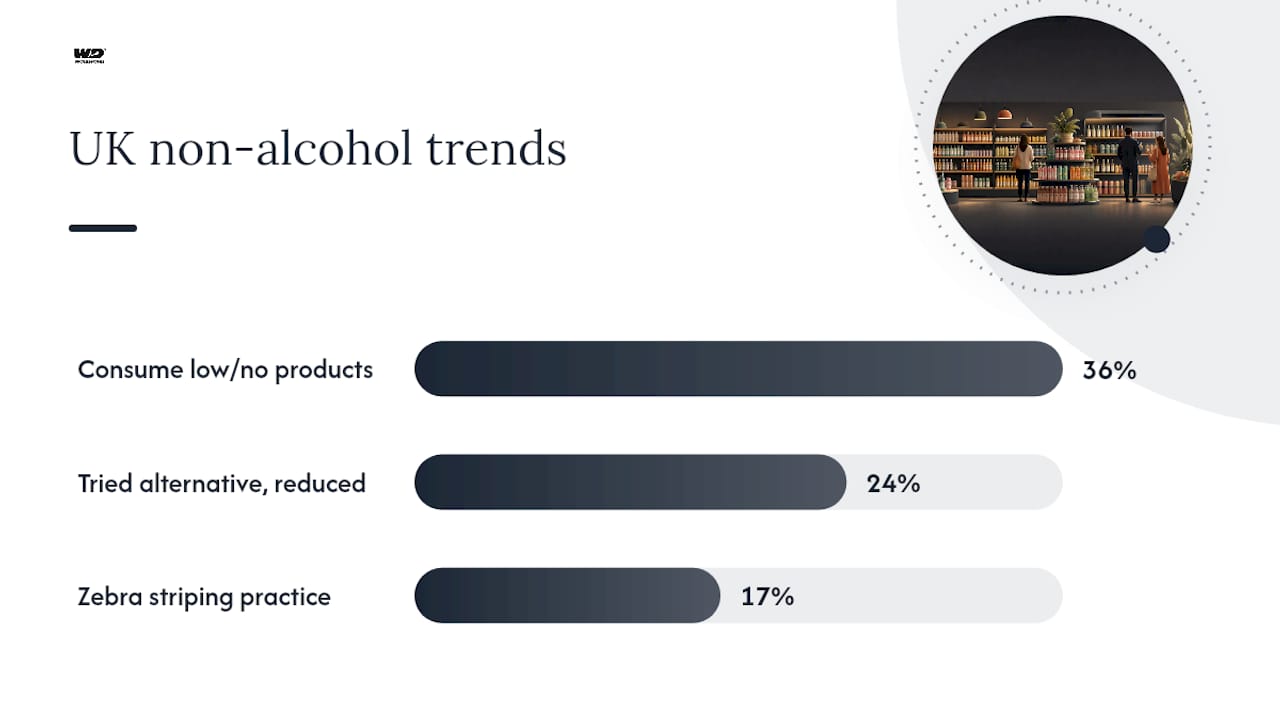
A term worth knowing if you’re not already using it: “zebra striping” — alternating alcoholic and non-alcoholic drinks across a single evening rather than choosing one or the other. Harris Poll UK data shows 17% of British adults do this, rising to 27% among 25 to 34 year olds. That age group is the one to watch on shelf and menu design.
The main drivers behind the switch:
- Health and wellness concerns, reinforced by wider public interest in moderation rather than abstinence.
- Social and workplace culture, where being seen with a drink in hand matters more than what’s actually in the glass.
- Curiosity and taste discovery, especially among Gen Z shoppers who treat alcohol-free options as a category to explore, not a compromise.
The two barriers that still hold people back are taste (many shoppers assume alcohol-free automatically means bland) and price (a premium alcohol-free spirit that costs nearly as much as the real thing is a hard sell without a clear reason why). Both are solvable with better in-store education and honest pricing, which we’ll come back to.
Product and format trends shaping the category
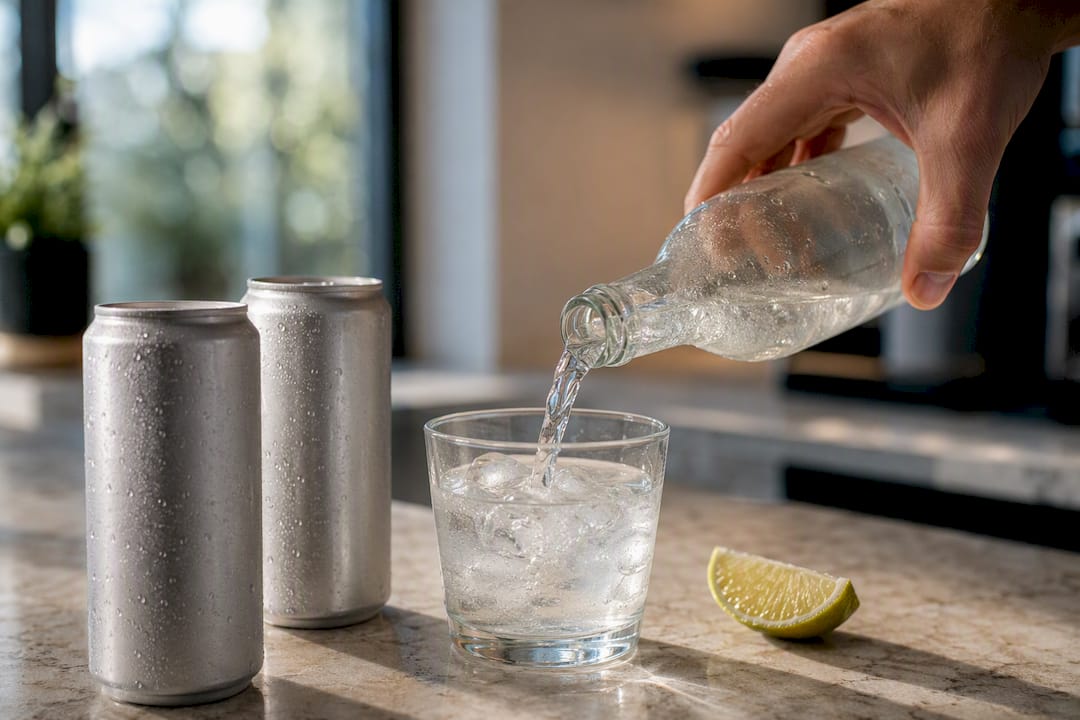
RTDs and canned cocktails are doing the heavy lifting on category growth right now. They’re convenient, they photograph well for social media, and they let a retailer stock a “cocktail hour” occasion without needing a mixologist behind the counter. Single-serve formats in particular are winning listings that a full bottle of alcohol-free spirit would never get, simply because the trial barrier is so much lower.
Functional formulation is the other big story. Trade coverage from FoodNavigator points to ingredients like L-theanine, adaptogens and mood-focused botanicals as the new differentiators, replacing the old “tastes just like the real thing” pitch with a “does something for you” pitch instead. That’s a genuinely different marketing conversation, and it opens up shelf space next to functional soft drinks as much as next to beer and wine.
Premiumisation runs through all of it:
- Craft positioning, small-batch language and visible provenance on-label.
- Flavour complexity built through techniques like membrane-based alcohol removal, which preserves more of a wine or spirit’s original character than older heat-based methods.
- Sensory claims (barrel-aged, botanically distilled, cold-pressed) borrowed directly from the alcoholic category playbook.
The products winning listings now are the ones that look and taste premium enough to justify sitting on the same shelf as their alcoholic equivalent, not tucked away as a diet alternative.
Retail and on-trade implications: availability, pricing and placement
Pricing is where a lot of retailers trip up. Mintel’s research flags a clear consumer expectation that low/no alternatives should cost less than full-strength drinks, given there’s no duty on the alcohol itself. Charge a premium price without an obvious reason (better ingredients, harder-to-source functional botanicals, a genuinely superior taste) and shoppers will simply walk past it.
Three moves worth testing on the shop floor:
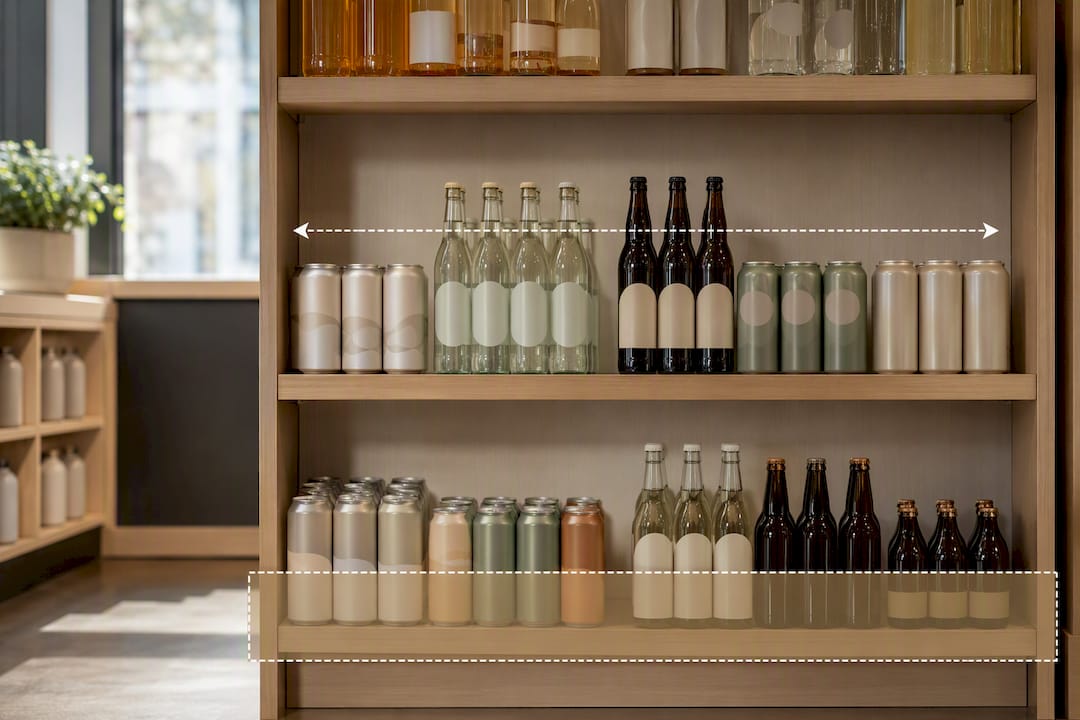
- Adjacency merchandising. Place alcohol-free spirits and RTDs next to their full-strength counterparts rather than isolating them in a small “free-from” section. This is what drives the zebra-striping basket, where a shopper buys both.
- Occasion-led displays. Build a “school night” or “designated driver” fixture rather than a generic non-alcoholic bay. Context sells the product faster than the label does.
- Limited-time trial offers. A short, visible promotion gets a hesitant shopper to try a £4 canned cocktail once. Repeat purchase then depends entirely on whether the taste delivers.
For on-trade venues, draught availability matters more than most operators assume. The 200 million pints of low/no beer sold in the UK happened largely because it moved from bottle-only to permanent tap lines. Staff training and sampling shift perceptions faster than menu copy ever will. Good visual merchandising does the rest, particularly for shoppers who’ve never consciously noticed the category before.
Pro Tip: Put your alcohol-free SKU at eye level next to the equivalent alcoholic product, not below it. Shoppers scan horizontally by category before they scan vertically by price, and adjacency is what triggers the impulse add.
Commercial opportunities and an action checklist for brands and retailers
None of this requires a full category reset. Small, measurable pilots beat sweeping range changes, especially for independents working with limited backroom space.
Worth testing in the next quarter:
- A small-batch RTD display near the checkout or snacks aisle, tied to a specific occasion (Friday night, match day, dry January follow-through).
- Weekday bundle deals pairing an alcohol-free spirit with mixers or snacks at a combined price.
- Clear on-shelf messaging covering calorie count, function (relaxation, focus, social occasion) and responsible drinking cues, avoiding any claim that overstates health benefit.
Three numbers to track once the pilot is live:
- Sell-through rate against the shelf space allocated, not just total units sold.
- Basket attachment — whether the alcohol-free purchase pulls in snacks, mixers or other higher-margin lines.
- Repeat rate within four to six weeks, which tells you far more about genuine demand than week-one sales spikes ever will.
Price elasticity is worth watching separately. A product that sells well at launch price but drops off sharply after a promotion ends usually signals the value story isn’t landing, not that demand has disappeared.
How Woodford helps independents act on these trends
Spotting the trend is one thing. Getting the right SKUs onto shelf without tying up weeks of buyer time is another. A wholesale partner can work as the link between the alcohol-free brands driving this growth and the independent retailers who need to stock them without the logistics headache.
What that looks like in practice:
- Curated, trend-led assortments that separate the segments worth stocking now from the ones still worth watching.
- Distribution partnerships that give independents access to premium and functional launches before they saturate the wider market.
- Logistics and fulfilment built for small-batch trials, so a retailer can test a new line without committing to large minimum orders.
A sensible starting point for most independents is a small launch pack, paired with point-of-sale templates and a straightforward sell-through dashboard, giving buyers a working trend analysis approach to validate demand before scaling further. Get in touch with Woodford to talk through what a launch pack could look like for your store.
Sources
This article draws on data from Mintel, the Harris Poll UK, YouGov/Portman Group, FoodNavigator and Morning Advertiser, alongside Drinkaware’s research on alcohol-free drinking behaviour.
- Four in ten Britons are drinking less, but quality and moderation are reshaping alcohol choices — The Harris Poll UK
- YouGov survey shows continuing demand for Low and No-Alcohol drinks as more UK adults choose moderate consumption - Portman Group
- UK Low- and No-Alcohol Drinks Market Report 2026 | Mintel Store
- How alcohol-free drinks are reshaping beverage markets — FoodNavigator
- Health, value and availability drive growth in the UK low and no-alcohol market — Morning Advertiser
FAQ
What are the current trends in non-alcoholic beverages?
Growth is concentrated in RTDs, no/low beer and functional formulations using ingredients like adaptogens and L-theanine, with premiumisation and occasion-led marketing replacing the old “tastes like the real thing” pitch.
What is Gen Z using instead of alcohol?
Gen Z shoppers are gravitating towards canned mocktails, alcohol-free RTDs and functional drinks positioned around mood or focus, often mixing them with alcoholic drinks across a single occasion rather than avoiding alcohol entirely.
What are some trendy non-alcoholic drinks?
Canned alcohol-free cocktails, no/low draught beer, botanically distilled alcohol-free spirits and functional wellness drinks with adaptogens or nootropics are the formats currently winning retail listings.
What is the most popular non-alcoholic drink?
No/low beer remains the largest and most established segment, with 200 million pints sold in the UK in 2025, though RTDs and canned cocktails are growing fastest.


