
How to manage supply chain for UK food wholesale in 2026
What does effective food supply chain management actually involve?
Managing a food supply chain in UK wholesale distribution means keeping legal compliance, cold chain logistics, traceability, and supplier relationships working together without gaps. Get any one of those wrong and you risk spoilage, a failed inspection, or a product recall.
Here is what the core of it looks like in practice:
- Register your food business with your local authority at least 28 days before trading begins
- Implement HACCP-based food safety procedures using tools like the Safer Food Better Business (SFBB) guide
- Maintain full traceability records covering every supplier and every business you supply, kept up to date and ready for inspection
- Manage cold chain temperature continuously during transit and storage to prevent spoilage
- Plan for disruption with buffer stock, diversified sourcing, and contingency supplier relationships
- Use technology including GPS tracking, IoT sensors, and demand forecasting software to reduce waste and improve delivery reliability
- Work with a distribution partner like Woodford to handle logistics, compliance, and route-to-shelf for independent retail channels
The UK’s food distribution sector faces what Fresh Logistics describes as a “triple threat” of labour shortages, rising energy costs, and Brexit-driven customs complexity. Independent retailers and food brands managing their own wholesale logistics feel all three acutely.
Table of Contents
How to register your food business and stay compliant with UK food law
Every food business in the UK must register with its local authority at least 28 days before it starts trading. There is no fee, but operating without registration is a legal offence.
Registration alone is not enough. You must also have food safety management procedures in place based on HACCP principles. For smaller businesses, the Food Standards Agency’s SFBB pack provides a practical, ready-to-use framework.
Once trading, your traceability obligations under UK food law require you to record every supplier and every business you supply, including names, addresses, product types, quantities, and transaction dates. These records must be available for inspection at any time. If a product needs to be withdrawn or recalled, those records are what allow you to act quickly and limit harm.
Key registration and compliance steps:
- Register with your local authority at least 28 days before opening
- Build a HACCP-based food safety management system, or use the SFBB guide if your processes are straightforward
- Keep traceability records for all suppliers and customers, updated continuously
- Train all food handlers in hygiene and allergen management before they start work
- Review your procedures regularly, especially when your product range or processes change
For independent food brands sourcing ingredients locally, traceability also supports UK compliance requirements and can accelerate retailer onboarding by demonstrating a clean, auditable supply chain from day one.
Woodford’s UK food compliance guide covers the full legal framework in detail, including labelling obligations and what authorised officers look for during inspections.

Key takeaways
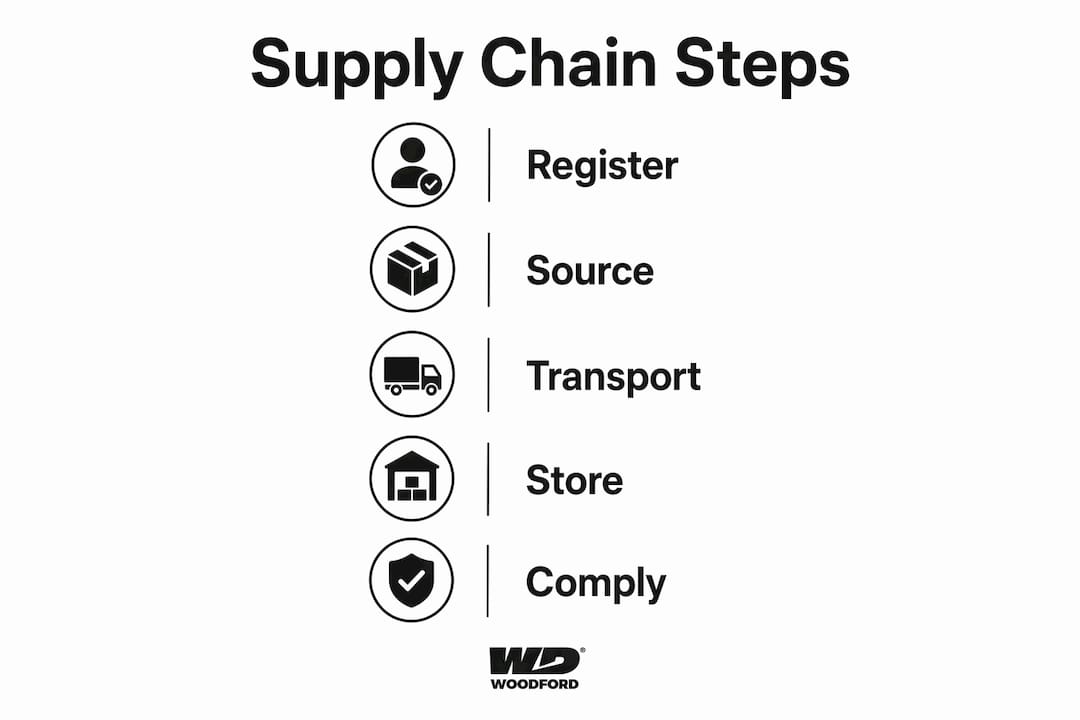
Effective food supply chain management in the UK requires legal registration, HACCP-based safety systems, continuous traceability records, and cold chain controls working together from day one.
| Point | Details |
|---|---|
| Register early | Submit your local authority registration at least 28 days before trading begins. |
| HACCP is mandatory | All food businesses must have safety procedures based on HACCP principles or equivalent good practice. |
| Traceability records | Keep supplier and customer records updated and accessible for inspection at all times. |
| Cold chain control | Monitor temperatures continuously during transit and storage to prevent spoilage and financial loss. |
| Plan for disruption | Use buffer stock and diversified sourcing to maintain supply continuity against Brexit and logistics shocks. |


