
Chilled food logistics UK: what procurement teams should pick
Use a specialist temperature-controlled logistics partner that meets ATP, HACCP and real-time monitoring standards. That is the short version. For UK food buyers weighing chilled food logistics UK options, the fastest route to a safe answer is a provider with certified fleet coverage, documented compliance and live telemetry on every run, not a generalist courier bolting on a chiller unit.
Before you request a quote, confirm three things with any supplier:
- A valid ATP certificate or permanent plate for any cross-border movement.
- A written HACCP policy with sample temperature logs, not a verbal assurance.
- Evidence of real-time telemetry, such as a portal login or exported log from a comparable run.
When you send an RFQ, include the temperature zone, pallet count, collection postcode and required delivery window. That is enough for a serious provider to price accurately within a day or two.
Key Takeaways
Reliable chilled food logistics in the UK depends on verified ATP and HACCP compliance, real-time temperature telemetry, and depot coverage that supports next-day delivery windows.
| Point | Details |
|---|---|
| Legal threshold is 8°C | Food temperature, not vehicle air temperature, must stay at or below 8°C in storage and transit. |
| ATP is mandatory for cross-border moves | Any international perishable shipment needs ATP-approved equipment and certification. |
| Telemetry beats promises | Insist on real-time IoT logging with portal access, not a verbal assurance of monitoring. |
| Depot density drives speed | Providers with hubs in the North and Midlands typically support faster next-day windows. |
| Woodford offers integrated cold-chain distribution | Multi-temperature handling, ATP/HACCP alignment and a digital portal in one supplier relationship. |
Table of Contents
- What chilled food logistics UK covers: products and temperature zones
- What are the UK compliance rules for chilled transport?
- Which fleet and monitoring features actually reduce risk?
- How much UK coverage and European access do you need?
- How does a chilled shipment move from collection to shelf?
- What should procurement check before signing a contract?
- What trends are shaping UK cold chain capacity in 2026?
- Getting a tailored quote from Woodford
- Frequently asked questions
- Sources
What chilled food logistics UK covers: products and temperature zones
Chilled distribution isn’t one job. A capable partner needs to handle several product categories at once, often on the same vehicle, without cross-contaminating temperature zones.
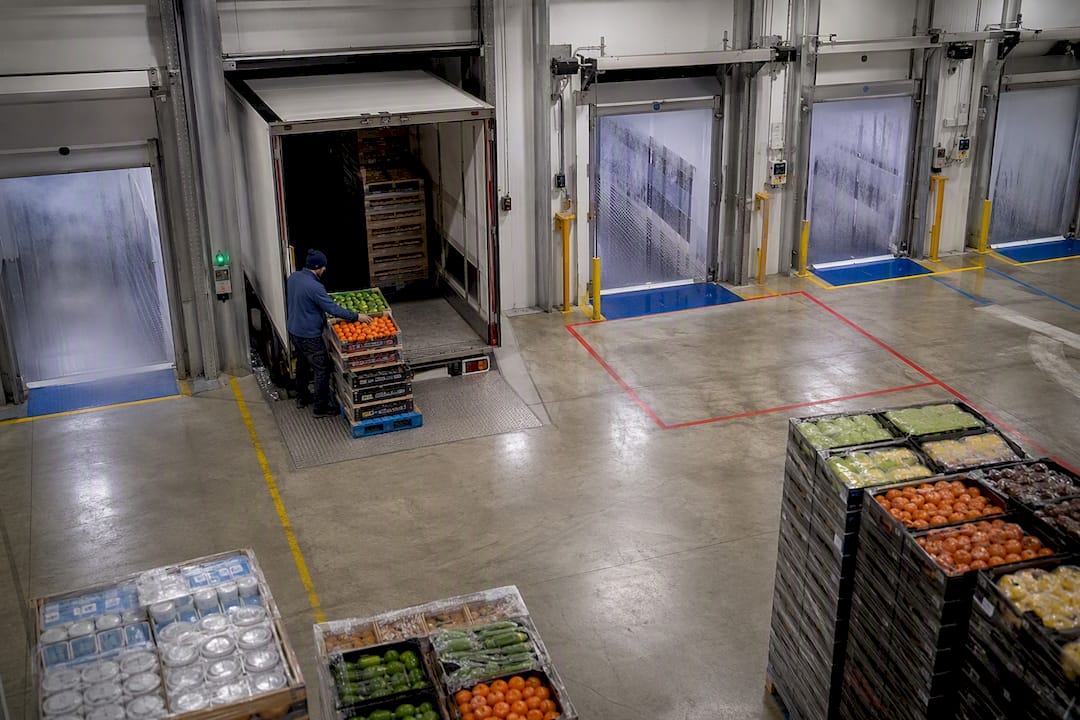
Typical categories include products of animal origin (POAO), dairy, fresh produce, ready meals, frozen goods, delicatessen lines, ambient-sensitive confectionery and, in some cases, pharmaceuticals. Each carries its own tolerance for temperature drift, and mixing them badly on one trailer is where problems start.
| Product group | Typical band | Handling note |
|---|---|---|
| Frozen | ≤ −18°C | Certified freezer units; no partial thaw cycles |
| Chilled (general) | 1–8°C | Working target often set at 5°C for buffer |
| Fresh dairy | 1–5°C | Never allow freezing; damages texture and packaging |
| Red meat | Below 7°C pre-transport | Special authorisation needed for “warm meat” movements |
| Confectionery (temperature-sensitive) | Ambient to chilled | Avoid heat exposure near loading bays |
Meat is a particular edge case. Slaughterhouses must get red meat below 7°C before transport, and moving it warmer requires a specific authorisation from the Food Standards Agency, with veterinary oversight attached. If a supplier handles meat and can’t explain this rule unprompted, that’s worth noting.
What are the UK compliance rules for chilled transport?
The legal baseline is simple to state and easy to get wrong in practice. Food likely to support pathogen growth must be kept at or below 8°C during storage and transport, and this refers to the food’s own temperature, not just what the vehicle’s dashboard reads. A trailer showing 6°C tells you nothing if the product core is sitting at 10°C because it was loaded warm.
The legal threshold is 8°C for chilled food temperature, not vehicle air temperature — a distinction that catches out buyers who only ask for a fleet spec sheet. Gov, and Schedule 4 of the Food Safety and Hygiene (England) Regulations 2013 details the exemptions and tolerance periods that apply.
Cross-border moves add another layer. Any operator carrying perishable goods internationally to or from the UK needs to comply with the ATP agreement, which covers 49 countries beyond the UK. That means ATP-approved equipment and a certificate of compliance or permanent plate. Operating without it isn’t a grey area; it can attract fines and hold up consignments at the border.
What to ask for, specifically:
- A sample temperature log from a comparable route, not a generic template.
- Calibration certificates for monitoring equipment.
- Written corrective-action procedures for temperature excursions.
- The ATP certificate itself, if any leg crosses a border.
Red flags: no written HACCP policy, reluctance to share sample logs, or vague talk of “we monitor everything” with nothing to show for it.
Pro Tip: Ask for a temperature log from a run similar to yours in product type and route length. A generic marketing PDF tells you nothing; a real log with timestamps tells you everything about operational discipline.
Which fleet and monitoring features actually reduce risk?
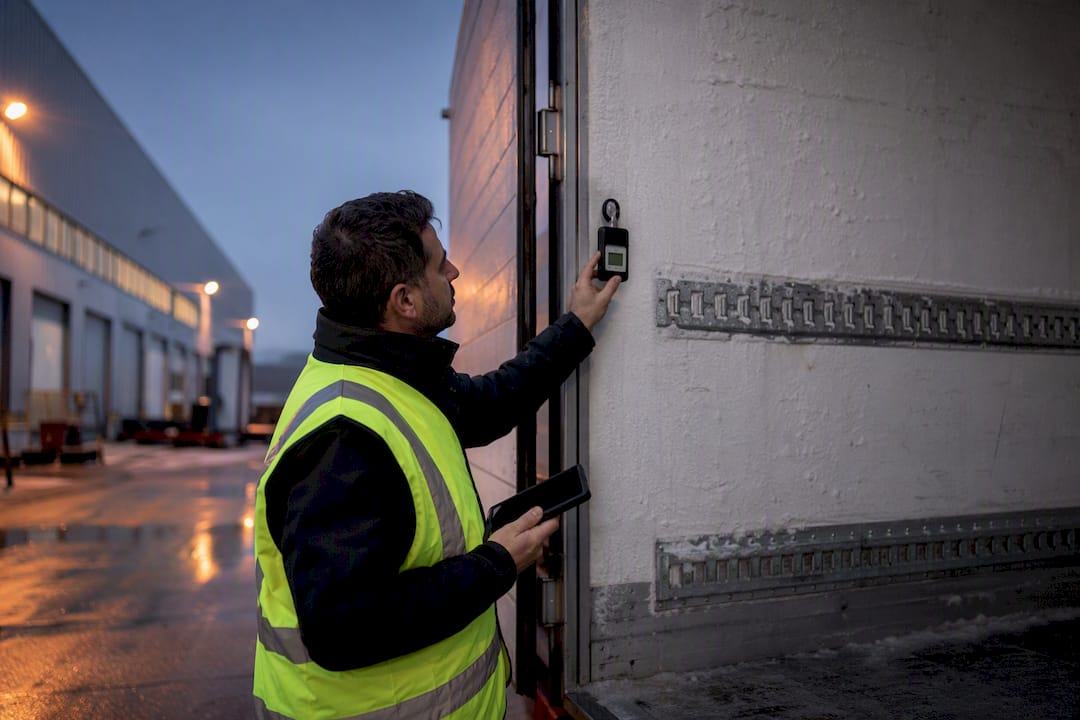
Fleet specification and telemetry are where most cold-chain failures either get caught early or slip through. Ask what vehicle types a provider runs: multi-temperature trailers, tail-lift vans for awkward drop points, curtain-siders for mixed loads, and certified freezer units for anything below −18°C. Insulation standard matters more than most buyers realise, particularly on longer routes or multi-drop last-mile runs where doors open repeatedly.
On monitoring, look for:
- Real-time IoT temperature logging with tamper-proof records.
- Geofencing and door-open alerts tied to automated exception reports.
- Portal or API access to your own data, plus a clear retention policy.
- Planned preventive maintenance and calibration schedules, not reactive fixes.
Data access matters as much as the sensor itself. A provider with excellent telemetry but no portal for you to query it is asking you to trust a black box.
Ask for a redacted temperature log and a route telematics snapshot before you sign anything. It’s a fair request, and any operator confident in their systems will hand it over without fuss.
Pro Tip: Favour providers that feed temperature data into a customer-facing portal rather than an internal-only system. Searchable, exportable audit trails save you weeks during a recall or a retailer compliance review.
How much UK coverage and European access do you need?
Depot density drives speed. A provider with cold-chain capacity concentrated in the North and Midlands, near major consolidation hubs, tends to hit next-day windows more reliably than one running long single-leg journeys from a solitary site.
Network features worth prioritising:
- Single-depot, multi-temperature consolidation, so chilled and frozen don’t need separate trucks.
- Scheduled trunking between depots rather than ad hoc runs.
- Cross-dock capability paired with genuine local last-mile partners.
For anything moving between Great Britain and Northern Ireland, ask specifically how the provider handles Windsor Framework paperwork. It’s a live operational detail, not a footnote, and a supplier who hasn’t thought about it will cost you time at the worst possible moment. Ask for a depot map or a couple of real transit-time examples between key nodes before you commit volume to any one network.
How does a chilled shipment move from collection to shelf?
A chilled consignment passes through several handoffs, and each one is a point where temperature can drift if the process isn’t tight.
- Order intake and slot booking at the collection point.
- Pick-and-pack with chilled staging, keeping product off ambient docks.
- Pre-shipment conditioning of the vehicle before loading.
- Documented despatch temperature check, recorded at the point of loading.
- Monitored transit with live telemetry running throughout.
- Depot cross-dock, where used, ideally under 30 minutes dwell.
- Last-mile delivery with a temperature record captured at proof of delivery.
Excursions cluster at loading, unloading and depot dwell, exactly where doors open and product sits briefly at ambient temperature. Good operators mitigate this with pre-conditioning, conditioned gel packs sized to the transit risk, and restricted door-opening protocols, an approach Hydropac’s guidance on preventing temperature excursions sets out well, including the practice of working to a 5°C target as a buffer beneath the legal 8°C limit.
Pro Tip: Ask for the supplier’s written SOP on handling excursions, including how quickly they notify you and what corrective steps follow. If they can’t produce one on request, that tells you something about how often it happens.
What should procurement check before signing a contract?
Certification is the starting point, not the finish line. Confirm ATP where cross-border moves apply, ask about HACCP and, where relevant, BRCGS alignment, and get specifics on telemetry, depot footprint, insurance limits and how the provider handles a genuine incident, not just a hypothetical one.
Build your RFQ around these questions:
- Can you supply a sample temperature log and recent calibration records?
- What training do drivers and warehouse staff receive on cold-chain handling?
- What are your SLA terms for delivery windows and temperature tolerance?
- How do you handle claims or a product recall?
- What does pricing look like for a typical pallet run and per-stop charge?
Pricing in UK chilled logistics moves on a handful of levers: temperature zone (frozen usually costs more than chilled), pallet size, route density, how tight the delivery window is, extra handling needs, and a seasonal premium around peak ambient months when refrigeration works harder. A dense multi-drop route in the Midlands will price differently to a single long-haul run into rural Scotland, even at the same pallet count.
Steps to follow when shortlisting:
- Request ATP and HACCP documentation upfront, not after a verbal agreement.
- Ask for two or three sample logs from comparable runs.
- Get a written SLA covering delivery windows and excursion response times.
- Confirm insurance and liability limits for high-risk product categories.
Reject any supplier who won’t share logs, has no ATP cover where it’s needed, gives vague answers on corrective action, or offers uninsured carriage for high-risk goods. None of that is negotiable.
What trends are shaping UK cold chain capacity in 2026?
Capacity is expanding, and buyers should factor that into their planning rather than assume supply is static. Investment in cold-store capacity and automation has been picking up, part of a broader shift as the sector underpins a substantial share of the UK’s food and pharmaceutical economy, according to recent reporting on cold chain expansion.
The Cold Chain Federation’s Cold Chain Report tracks cold-store numbers, refrigerated vehicle stock and net-zero progress across the sector, giving procurement teams a genuine benchmark rather than a sales pitch when assessing a provider’s scale claims.
Retailers now expect near-total supply-chain visibility, pushing providers towards AI-assisted route optimisation and IoT telemetry as standard rather than a premium add-on. Build KPI clauses into contracts that reflect this: data access service levels, and firm notification timelines when something goes wrong.
Pro Tip: Write excursion notification timelines into the contract itself, not just the onboarding conversation. Verbal promises don’t hold up during a recall.
Getting a tailored quote from Woodford
Woodford runs integrated chilled distribution with multi-temperature handling across a single depot network, aligned to ATP and HACCP standards with real-time monitoring on every consignment. That combination matters because it removes the coordination headache of juggling separate frozen, chilled and ambient carriers, which is often where costs and errors creep in for independent retailers and brand owners alike.
When you contact Woodford for a quote, come with your temperature zone, pallet volumes, collection postcode and delivery window ready, the same detail any serious RFQ needs. Woodford will share sample SOPs, calibration records and customer references so you can verify capability before committing volume, and orders run through a digital ordering portal that keeps monitoring data and order history in one place rather than scattered across email threads. If you’re a brand owner rather than a retailer, the exclusive distribution model for brand partners is worth a separate look, since the terms and support differ from standard wholesale supply.
Reach out through Woodford’s site to start a quote request, and expect a response scoped against your actual temperature zone and volume, not a generic rate card.
Frequently asked questions
What temperature must chilled food be kept at during transport in the UK? Chilled food likely to support pathogen growth must stay at or below 8°C, measured as the food’s own temperature rather than the vehicle’s ambient reading. Many operators target a temperature notably below 8°C as a working buffer.
Do I need ATP certification for domestic-only chilled deliveries? ATP applies specifically to international carriage of perishable goods to or from the UK. Domestic-only runs don’t require it, but any provider also handling European routes should hold current certification anyway.
How do I check if a chilled logistics provider is genuinely compliant? Ask for a written HACCP policy, a sample temperature log from a comparable route, calibration certificates for monitoring kit, and their ATP certificate if cross-border work is involved. A provider that hesitates on any of these is worth questioning further.
What does chilled food logistics typically cost in the UK? Pricing depends on temperature zone, pallet volume, route density, delivery window tightness and seasonal demand. Frozen generally costs more than chilled, and tight next-day windows carry a premium over standard schedules.
How long does end-to-end chilled delivery usually take? From collection to shelf, a well-run chilled route often completes within a single day for regional UK deliveries, though multi-depot or cross-border moves add transit time for cross-docking and customs paperwork.


